
There's something quietly satisfying about walking into a room where every element feels intentional. The lighting is calibrated, the furniture is arranged with purpose, and the ceiling—often an afterthought—actually contributes something meaningful to the overall composition. In contemporary interior design, ceiling beams have evolved from purely structural necessities into decorative statements that anchor a room's aesthetic. For homeowners and designers working on modern polished interiors, smooth satin wood grain PU faux beams offer a compelling solution that marries visual refinement with practical advantages.
Modern interiors demand surfaces that reflect light evenly and create a sense of openness. The smooth satin finish on these faux beams accomplishes exactly that. Unlike heavily textured or distressed wood alternatives, satin-finished beams present a clean, refined surface that catches ambient light without appearing overly glossy or artificial. The wood grain pattern remains visible but understated, providing visual interest without competing with other design elements in the room.
The Appeal of Satin Finishes in Contemporary Design
Satin finishes have dominated modern interior aesthetics for good reason. They strike a delicate balance between matte and high-gloss surfaces, offering warmth without excessive shine. In ceiling applications, this proves particularly valuable because direct overhead lighting can create harsh reflections on overly glossy surfaces. Satin-finished beams diffuse light softly, contributing to an atmosphere that feels both sophisticated and approachable.
Interior designers frequently specify satin finishes for clients who want wood aesthetics without the visual weight of traditional rustic beams. The smooth surface implies craftsmanship and attention to detail, qualities that resonate with homeowners pursuing minimalist or transitional design directions. A beam with a satin finish suggests that someone made a deliberate choice to soften the natural rawness of wood, adapting it for a more curated living environment.
The polyurethane construction allows manufacturers to achieve consistent satin sheens across entire beam runs. Natural wood beams often display uneven patinas and varying absorption rates that create patchy appearances when finished. PU faux beams eliminate this variability, ensuring that every inch of beam surface presents the same smooth, uniform satin appearance from end to end.
Wood Grain Realism Without Maintenance Burdens
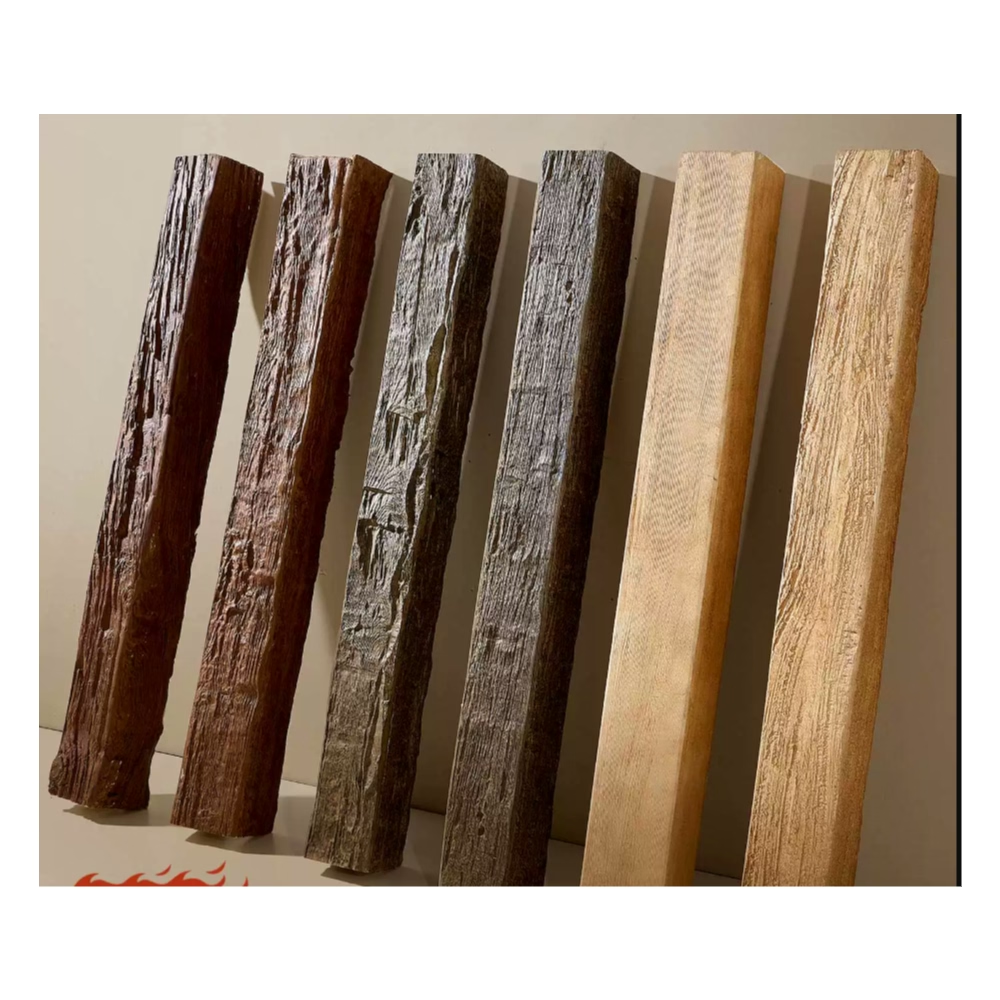
Advancements in manufacturing have transformed PU faux beams into remarkably convincing wood representations. The wood grain pattern isn't simply printed onto the surface—it features subtle embossing that creates genuine depth perception. Running your hand along a quality faux beam reveals the same tactile experience as touching natural wood, complete with grain valleys and subtle ridging.
This realism matters because it allows designers to specify faux beams in contexts where authentic wood would traditionally be expected. Open-plan living spaces, kitchen-dining combinations, and great rooms all benefit from ceiling beams that read as genuinely wooden from across the room and up close. Visitors won't notice anything amiss, and homeowners enjoy the confidence that comes with specifying materials that perform reliably over time.
The maintenance profile of PU faux beams differs dramatically from natural wood alternatives. Real wood beams require periodic sealing, can absorb moisture, and may develop cracks or splits as they age and dry out. PU beams resist moisture absorption entirely, making them suitable for kitchens and bathrooms where natural wood might eventually show water damage. Cleaning requires nothing more than occasional dusting or wiping with a damp cloth—no specialized wood cleaners or protective treatments needed.
Installation Advantages for Modern Construction
Contemporary building practices increasingly favor materials that simplify installation without compromising aesthetics. PU faux beams align perfectly with this priority. The lightweight nature of polyurethane—approximately one-third the weight of natural wood—means that a single person can handle beams that would otherwise require two or three workers to position safely.

This weight reduction also benefits the structural considerations of ceiling installation. Natural wood beams impose meaningful load requirements on ceiling joists and support structures. PU faux beams add negligible weight, allowing installation in contexts where structural reinforcement would otherwise be necessary. This opens possibilities for adding beams to upper floor ceilings, basement remodels, and spaces where building codes might restrict heavy ceiling additions.
The smooth surface of these beams also simplifies finishing work. Since PU beams arrive pre-finished with the satin coating already applied, there's no need for on-site painting, staining, or sealing. This eliminates the mess, odor, and drying time associated with traditional wood finishing. Contractors appreciate the time savings, and homeowners appreciate not having to vacate spaces during finishing work.
Design Applications Across Modern Interior Styles
Modern polished interiors encompass several distinct aesthetic directions, and smooth satin wood grain beams adapt well to most of them. In ultra-minimalist spaces, beams can serve as the primary wood element, adding warmth to an otherwise monochromatic palette. The understated grain pattern provides enough visual texture to prevent sterility without introducing clutter or visual noise.
Transitional interiors—those that blend contemporary and traditional elements—benefit from beams that occupy a middle ground between rustic and sleek. A satin-finished beam suggests refinement while maintaining wood's inherent warmth. This makes it easier to bridge design vocabularies when combining, for example, a modern kitchen island with more traditional dining furniture.
Great rooms and open-plan layouts frequently incorporate beams to define functional zones without resorting to walls or dividers. A beam running perpendicular to kitchen and living areas creates a subtle boundary that preserves the open feel while introducing architectural interest. The smooth satin finish ensures these structural declarations feel deliberate rather than accidental.

Color Coordination and Finish Selection
Selecting the right wood tone for a satin-finished beam requires considering the room's existing color palette. Lighter wood tones like maple or birch work well in spaces with white or grey walls, contributing warmth without darkening the overall effect. Medium tones such as oak or ash provide more presence while remaining versatile enough for most neutral color schemes.
The satin finish itself has subtle warmth that distinguishes it from cooler grey or beige wood alternatives. This warmth becomes particularly apparent in rooms with warm artificial lighting or abundant natural sunlight streaming through windows. The beams seem to glow gently rather than appearing flat or chalky, which contributes to an overall sense of quality and considered design.
Sample ordering allows designers and homeowners to evaluate how specific beam finishes interact with actual room conditions—wall colors, lighting temperatures, and surrounding materials. What appears perfect in a catalog may need adjustment when placed in context. Many suppliers offer small sample pieces at reasonable cost, enabling informed decisions before committing to full installation.
Long-Term Value Considerations
Evaluating ceiling beams for long-term value requires looking beyond initial installation costs. Natural wood beams carry ongoing maintenance expenses—periodic resealing, crack repair, potential refinishing after water exposure. Over a twenty-year horizon, these maintenance costs can approach or exceed the original price premium for natural wood.
PU faux beams eliminate most of these ongoing expenses. The factory-applied finish resists fading, peeling, and water damage under normal conditions. This durability translates into stable aesthetics over time, with beams continuing to look freshly installed years after initial placement. For rental properties or commercial spaces where maintenance budgets are fixed, this predictability proves especially valuable.
The environmental profile of PU beams also warrants consideration. While natural wood might seem inherently sustainable, the reality depends heavily on sourcing practices. PU beams made from quality manufacturers use resources efficiently, and their long service life reduces the replacement cycle compared to less durable alternatives. For projects pursuing green building certifications, the lifespan and recyclability of materials factor into overall assessment.
Making the Specification Decision
Choosing ceiling beams involves balancing aesthetic preferences, budget constraints, practical requirements, and long-term maintenance considerations. For modern polished interiors where clean lines and refined surfaces take priority, smooth satin wood grain PU faux beams offer a solution that addresses every category.
The decision becomes particularly clear when considering the alternative scenarios. Installing natural wood beams requires accepting their maintenance demands, weight constraints, and installation complexity. The visual payoff—genuine wood authenticity—may not justify these tradeoffs, especially given how convincingly modern PU beams replicate wood aesthetics.
Designers working on spec homes, model units, or commercial projects often default to PU faux beams precisely because they deliver guaranteed outcomes. There's no risk of warping during installation, no concerns about delivery damage, and no variability in final appearance. Every beam looks identical, every installation proceeds predictably, and every client receives exactly what the design intended to specify.
The smooth satin wood grain beam category continues expanding as manufacturers develop increasingly sophisticated wood grain patterns and finish options. What began as a practical compromise has evolved into a respected design category with its own aesthetic identity. For modern interiors seeking polished wood presence without compromise, these beams deserve serious consideration.
Technical References
ASTM standards cited in every specification
Test Data
Lab results from internal testing program
Updated 2026
Reviewed against current product specs


