
Architecture has always explored the tension between straight lines and organic curves. Ancient builders used arches to distribute weight efficiently while creating visual interest. Contemporary designers continue this tradition, incorporating curved elements to soften spaces and suggest movement. For ceiling applications, curved beams present both opportunities and challenges. The opportunities involve creating truly distinctive interiors with flowing architectural lines. The challenges involve manufacturing curved wood elements that maintain consistent appearance while meeting structural requirements. Polyurethane faux beams address these challenges elegantly, enabling curved ceiling designs that would be prohibitively difficult or expensive using natural wood.
Curved ceiling beams transform ordinary rooms into memorable spaces. A gentle arch sweeping across a living room ceiling creates a sense of movement, guiding the eye and providing visual architecture that walls alone cannot achieve. In dining spaces, curved beams can frame a table area, establishing hierarchy within open floor plans. The curved form feels both timeless and contemporary, appealing to clients who want something distinctive without committing to overtly avant-garde aesthetics.
The Manufacturing Advantage of Polyurethane
Natural wood presents fundamental challenges when manufacturers attempt to create curved beams. Wood fibers must be steamed, bent, and held in position while they dry and set. This process works reasonably well for gentle curves but becomes increasingly difficult and unreliable for tighter radii. The resulting pieces often show checking, splitting, or spring-back as the wood releases internal stress over time.
Polyurethane casting eliminates these problems entirely. The material begins as a liquid that flows into molds of any shape, accommodating curves of any radius consistently. Once cured, polyurethane holds its shape indefinitely without internal stresses that could cause future movement or cracking. This manufacturing reliability translates into consistent quality across every piece produced.
The seamless nature of molded polyurethane beams addresses another common problem with natural curved wood: joints and seams. Natural wood beams curved through steam bending typically require multiple pieces joined together, creating potential failure points and visual discontinuities. A molded polyurethane beam can span entire curved spans as a single continuous piece, eliminating seams entirely.
Design Applications for Curved Ceiling Beams
Great rooms and living spaces benefit enormously from curved ceiling beams. These expansive areas often suffer from cavernous, undefined character that makes them feel uncomfortable despite their size. Curved beams add human scale and visual interest that transforms overwhelming volume into engaging architecture. A series of parallel curved beams can suggest tent-like shelter, grounding a large space while maintaining openness.

Kitchen designs increasingly incorporate curved beams, particularly in islands and breakfast nook areas. The kitchen—historically purely functional—has evolved into a social hub where families gather and entertain. Curved beams introduce architectural warmth that balances the hard surfaces and sharp corners typical of kitchen design. The effect feels simultaneously cozy and impressive.
Bedroom ceilings with vaulted or cathedral configurations present natural opportunities for curved beams. Rather than accepting whatever angle the roof structure provides, designers can introduce sweeping curves that soften transitions between walls and ceilings. The effect works particularly well in master suites where creating a sense of retreat and comfort takes priority over maximizing storage or working space.

Structural Considerations and Installation
Despite their lightweight construction, polyurethane curved beams can be specified with sufficient strength for most residential ceiling applications. The material accepts mounting hardware securely, and manufacturers provide engineering guidance for span limits and support requirements. In most cases, the existing ceiling structure provides adequate support, with beams either suspended from overhead joists or mounted directly to existing surfaces.
The lightweight nature of polyurethane proves especially valuable for curved applications. Natural curved wood beams impose significant load requirements on support structures, potentially requiring additional framing or reinforcement. PU beams add minimal weight, reducing structural demands and enabling installation in contexts where heavier materials would be impractical.
Installation professionals appreciate working with materials that behave predictably. Polyurethane curved beams arrive ready for mounting without requiring adjustment, reinforcement, or field modification. The consistent cross-section and uniform weight distribution simplify positioning and attachment. What might require hours of skilled labor with natural curved wood becomes a straightforward installation with PU alternatives.
Aesthetic Coordination and Finish Options
Curved beams benefit from smooth finishes that emphasize the flowing nature of the design. Irregular textures or heavy distressing distract from the clean lines that make curved beams visually effective. Smooth polyurethane accepts a variety of finish options, including paint, stain, and pre-finished coatings that complement any interior palette.
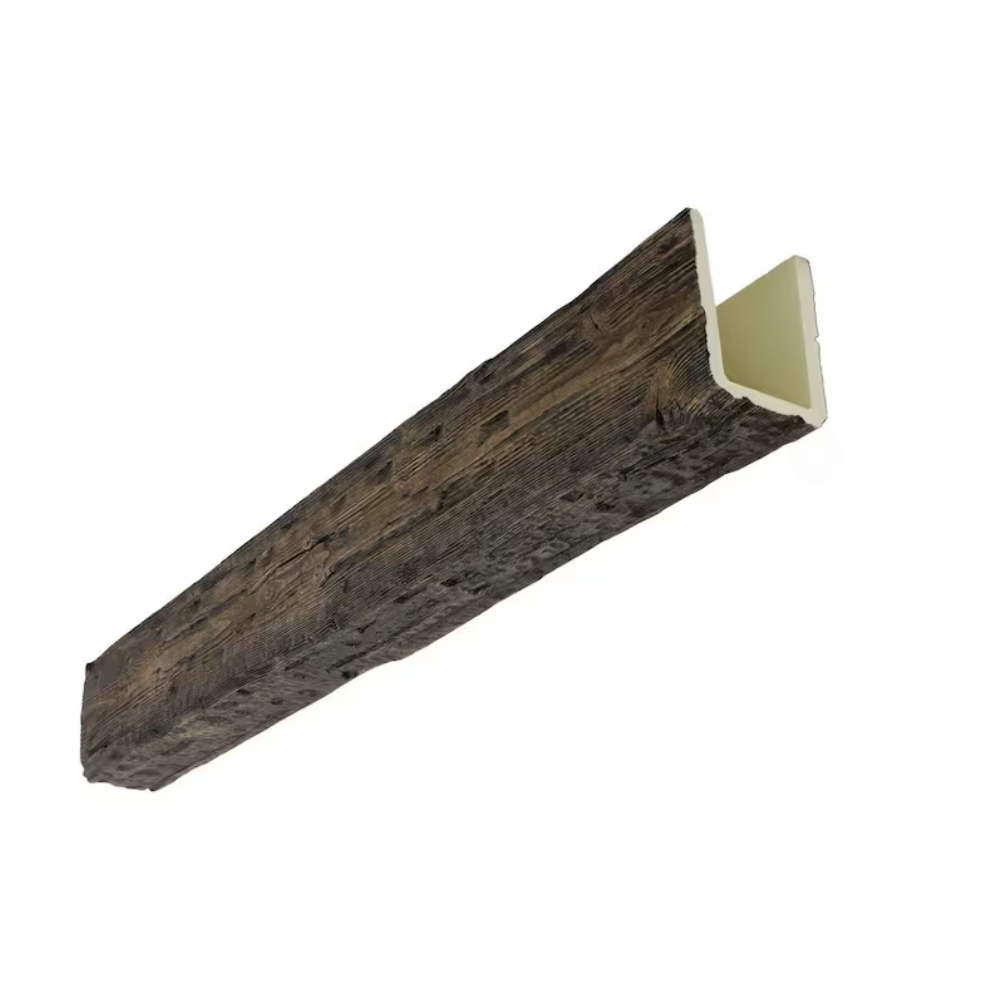
For contemporary interiors, smooth white or light grey curved beams create architectural statements without overwhelming other design elements. The curve itself becomes the visual interest, supported by restrained color choices that keep attention on the form. In more traditional settings, wood-toned finishes bring warmth to curved designs, suggesting the material authenticity of natural wood while maintaining the manufacturing advantages of polyurethane.
Lighting integration extends the design possibilities further. Recessed fixtures can follow curved beam paths, creating ribbon lighting effects that emphasize the architectural form. The smooth surface of polyurethane beams accommodates fixture mounting without requiring drilling into dense natural wood or dealing with irregular grain patterns that might interfere with clean fixture alignment.
Cost-Benefit Analysis for Projects
Evaluating curved beam options requires comparing initial costs, installation expenses, and long-term value propositions. Natural curved wood beams command premium prices due to the skilled labor and material waste involved in steam bending. The process often results in lower yields as pieces fail to hold their shapes or develop defects during manufacture.
Polyurethane curved beams avoid these cost drivers. The molding process produces consistent results with minimal material waste, and the manufacturing doesn't require specialized skilled labor for each piece. These savings translate into lower consumer prices while delivering superior consistency and quality.
Installation savings compound the material cost advantages. Faster installation reduces labor expenses, and the elimination of structural reinforcement requirements saves additional money. For projects with fixed budgets, polyurethane curved beams may enable design ambitions that would exceed budget if natural wood were specified.
Environmental and Practical Considerations
Modern building practices increasingly emphasize lifecycle assessment rather than focusing solely on initial costs or material authenticity. Polyurethane curved beams perform well across environmental metrics when evaluated holistically. The manufacturing process generates minimal waste compared to wood working, and the long service life reduces replacement frequency.
The practical advantages of polyurethane extend beyond environmental considerations. Natural curved wood beams may develop checking or splitting over time, particularly in dry climates or with HVAC systems that reduce indoor humidity. Polyurethane resists these degradation mechanisms, maintaining appearance and structural integrity indefinitely under normal interior conditions.
Moisture resistance proves valuable in kitchens, bathrooms, and other areas where humidity fluctuates. Natural wood absorbs moisture and releases it as conditions change, potentially causing dimensional changes, warping, or finish failures. Polyurethane's moisture resistance eliminates these concerns, enabling curved beam installations in spaces where natural wood would be impractical.
Specification Guidance for Professionals
Interior designers and architects specifying curved beams should consider several factors when evaluating polyurethane options. The radius and span of the required curves influence which manufacturers can accommodate the specifications. Some production methods work better for gentle, sweeping curves while others handle tighter radii more effectively.
Finish selection requires attention to how the beam surface will interact with surrounding ceiling materials and lighting conditions. Sample evaluation under actual installation conditions prevents costly errors. Many manufacturers provide sample pieces specifically for this purpose, enabling designers to confirm color accuracy and surface appearance before committing to full orders.
Mounting methods vary depending on the specific installation context. Direct mounting to existing ceiling surfaces works for some applications while others require suspended mounting from overhead structure. Consulting manufacturer documentation and engineering specifications ensures appropriate attachment methods that meet both aesthetic and safety requirements.
The availability of matching straight beam sections enables hybrid installations where curved and straight elements combine. This flexibility allows designers to transition from curved beams to straight runs at room edges or transitions between ceiling planes. The ability to mix elements while maintaining consistent appearance expands the design possibilities considerably.
Technical References
ASTM standards cited in every specification
Test Data
Lab results from internal testing program
Updated 2026
Reviewed against current product specs

