
Interior design trends come and go, but neutral palettes maintain their appeal decade after decade. There's something fundamentally appealing about rooms that breathe—spaces where walls, floors, and ceilings recede enough to let furniture, artwork, and inhabitants take center stage. Achieving this effect requires careful material selection, choosing elements that contribute warmth and interest without demanding attention. Soft maple finish polyurethane beams occupy this sweet spot perfectly, providing wood's inherent warmth in a refined package that suits elegant neutral interiors.
Maple has long been prized in furniture making for its fine grain, consistent color, and ability to accept stains evenly. The wood ranges from nearly white to light amber, with grain patterns that remain subtle even when pronounced. This subtlety makes maple particularly valuable in neutral interior schemes where visual noise must be minimized. Soft maple finishes on polyurethane beams capture this essential character, delivering warmth without overwhelming surrounding surfaces.
The challenge with natural maple beams involves practical realities. True maple wood beams would require careful sourcing, significant weight considerations for ceiling applications, and ongoing maintenance to preserve their appearance. Polyurethane alternatives address each of these concerns while maintaining the visual characteristics that make maple desirable in the first place.
Understanding Maple's Visual Character
Maple wood presents a distinctive combination of qualities that distinguish it from other popular wood species. The grain typically runs straight and close, creating fine linear patterns rather than the bold cathedrals found in oak or the complex swirls of walnut. This understated grain becomes particularly apparent in quartersawn cuts where the pattern shifts to subtle vertical figuring called "tiger stripe" or "bird's eye" depending on the specific character of the wood.
The color range spans from creamy white to warm honey, with considerable variation even within individual boards. This variability, while prized in solid maple furniture where it creates visual interest, can prove challenging for ceiling beam applications where consistent appearance matters. Polyurethane manufacturing allows precise color matching across entire beam runs, ensuring that all pieces display identical maple tones from end to end.
The smooth surface of maple wood contributes to its refined character. Unlike oak with its prominent open grain or hickory with its dramatic texture, maple presents a relatively uniform surface that feels satisfyingly smooth to the touch. This tactile quality translates to ceiling applications where indirect lighting reveals subtle surface characteristics. The smooth maple finish on polyurethane beams reproduces this refined tactile quality convincingly.
Designing with Soft Maple Tones
Elegant neutral interiors typically employ layered neutral palettes rather than single grey or beige tones. The layering might combine warm whites with greige (grey-beige) walls, stone-colored flooring, and cream upholstery. Soft maple beams fit naturally into this palette, providing a wood tone that bridges warm and cool neutrals without introducing discordant undertones.

The living room represents the most common application for soft maple beams. These spaces typically feature comfortable seating arrangements where family members spend significant time. The beams add architectural interest overhead while maintaining the relaxed comfort that residential interiors demand. A soft maple beam run across a living room ceiling creates visual anchoring that helps organize furniture arrangements below.
Bedroom applications benefit equally from soft maple beams. Master suites especially often emphasize calm, restful atmospheres where overly dramatic design elements feel out of place. The gentle warmth of soft maple contributes to cozy sleeping environments without introducing visual stimulation that might interfere with relaxation. Paired with soft lighting and natural textiles, maple beams help establish the retreat-like quality that premium bedrooms should deliver.
Weight and Installation Advantages
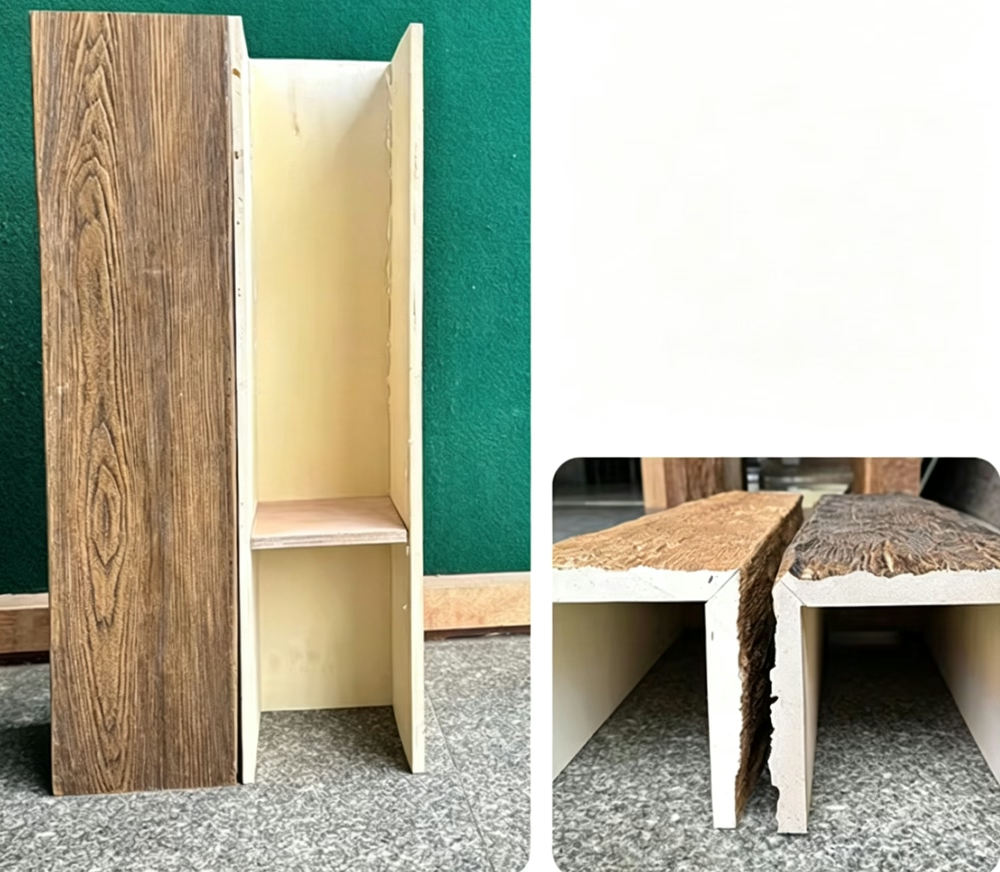
The practical advantages of polyurethane construction become particularly apparent with ceiling applications. Natural maple beams of meaningful size impose significant weight on ceiling structures, potentially requiring additional support framing or limiting the spans that can be achieved safely. Polyurethane reduces this weight by approximately two-thirds, enabling longer spans and lighter support requirements.
This weight reduction simplifies installation considerably. A beam that would require multiple workers to position and secure when made from natural wood can often be installed by a single person working with basic tools. The installation process itself proceeds more quickly, reducing labor costs and minimizing disruption to ongoing household activities.
The consistency of polyurethane also benefits installation. Natural wood beams may arrive with slight variations in dimension, surface condition, or color that require adjustment during installation. Polyurethane beams arrive precisely as specified, with consistent cross-sections and uniform surface quality. This predictability simplifies planning and execution, reducing the potential for delays or complications on installation day.
Finish Durability and Maintenance
Polyurethane beams with soft maple finishes maintain their appearance without the ongoing care that natural wood requires. Natural maple darkens with age and exposure to light, potentially developing uneven patinas as different areas receive varying amounts of illumination. The factory-applied finishes on quality polyurethane beams resist this UV-induced darkening, maintaining consistent color over years of service.
Cleaning presents no special challenges. Dust accumulation on ceiling beams, which could be difficult to address with natural wood surfaces, becomes a simple matter of occasional dusting or wiping with a damp cloth. The smooth finish doesn't trap dirt or require specialized cleaning products, and there's no risk of damaging sealants through excessive moisture exposure.
Moisture resistance provides additional practical benefits. Kitchens and bathrooms, where natural maple furniture might require careful humidity control, accommodate polyurethane beams without concern. The material won't swell, warp, or develop water stains even in consistently humid environments. This opens ceiling beam possibilities for spaces where wood's moisture sensitivity would otherwise preclude installation.
Cost Considerations and Value Analysis
Budget planning for ceiling beams requires evaluating both initial costs and lifetime expenses. Natural maple beams command premium prices reflecting the cost of the wood itself plus the specialized labor required to produce quality ceiling beams. These costs multiply quickly when covering substantial ceiling areas with multiple beam runs.
Polyurethane alternatives require no exotic materials or specialized labor, enabling more accessible price points for comparable visual results. The savings become more pronounced on larger projects where material quantities increase. For whole-home installations or commercial projects spanning multiple spaces, the cost differential can be substantial.
Long-term value considerations favor polyurethane as well. Natural wood beams may require refinishing after several years, particularly in bright locations where UV exposure accelerates aging. The cumulative cost of periodic refinishing can exceed the original price premium over a beam's service life. Polyurethane beams' factory finishes typically carry multi-year warranties against defects, and the finishes themselves maintain appearance far longer than field-applied alternatives.
Specification and Selection Guidance
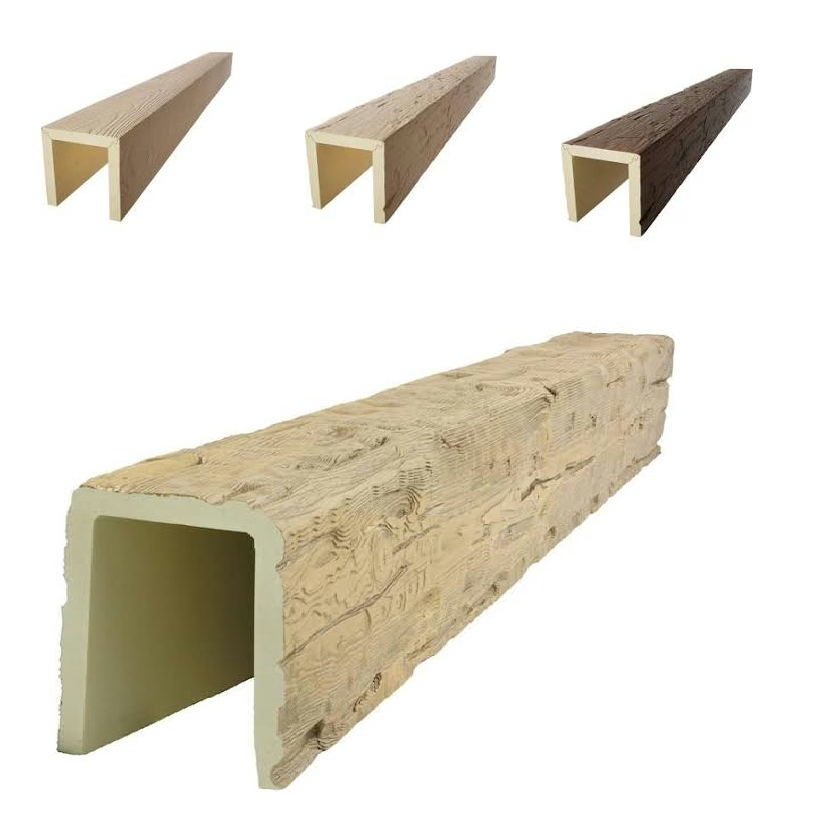
Selecting soft maple finish beams requires evaluating several factors to ensure appropriate specification. The specific maple tone should complement existing materials and planned finishes throughout the space. Maple tones vary considerably, ranging from nearly white to pronounced golden honey. Obtaining samples and evaluating them in actual installation conditions prevents mismatches that could prove costly to correct.
Beam dimensions must balance visual presence with proportional appropriateness. Oversized beams can overwhelm smaller rooms while undersized beams may disappear visually in larger spaces. Design professionals can provide guidance on dimensional recommendations based on ceiling height, room dimensions, and overall design objectives.
Profile selection influences the beam's contribution to interior character. Some profiles emphasize sharp, contemporary lines while others present more traditional or transitional appearances. The soft maple finish works across various profiles, but the specific character of the beam profile should align with the overall design direction established for the space.
Professional Installation Considerations
While some homeowners successfully install polyurethane beams as DIY projects, professional installation ensures optimal results. Experienced installers understand mounting requirements, can address unexpected conditions in existing construction, and possess the tools and techniques to achieve clean, professional-looking joints at beam connections.
Professional installation also provides warranty protection that may be voided by improper handling or mounting. Manufacturer warranties typically require installation according to specified methods using recommended hardware. Professional installers familiar with these requirements ensure that warranty coverage remains intact.
The investment in professional installation typically pays for itself through reduced completion time and elimination of costly errors. For projects where timing matters—such as staged renovations or properties being prepared for sale—professional installation provides reliable scheduling that DIY approaches cannot guarantee.
Technical References
ASTM standards cited in every specification
Test Data
Lab results from internal testing program
Updated 2026
Reviewed against current product specs


