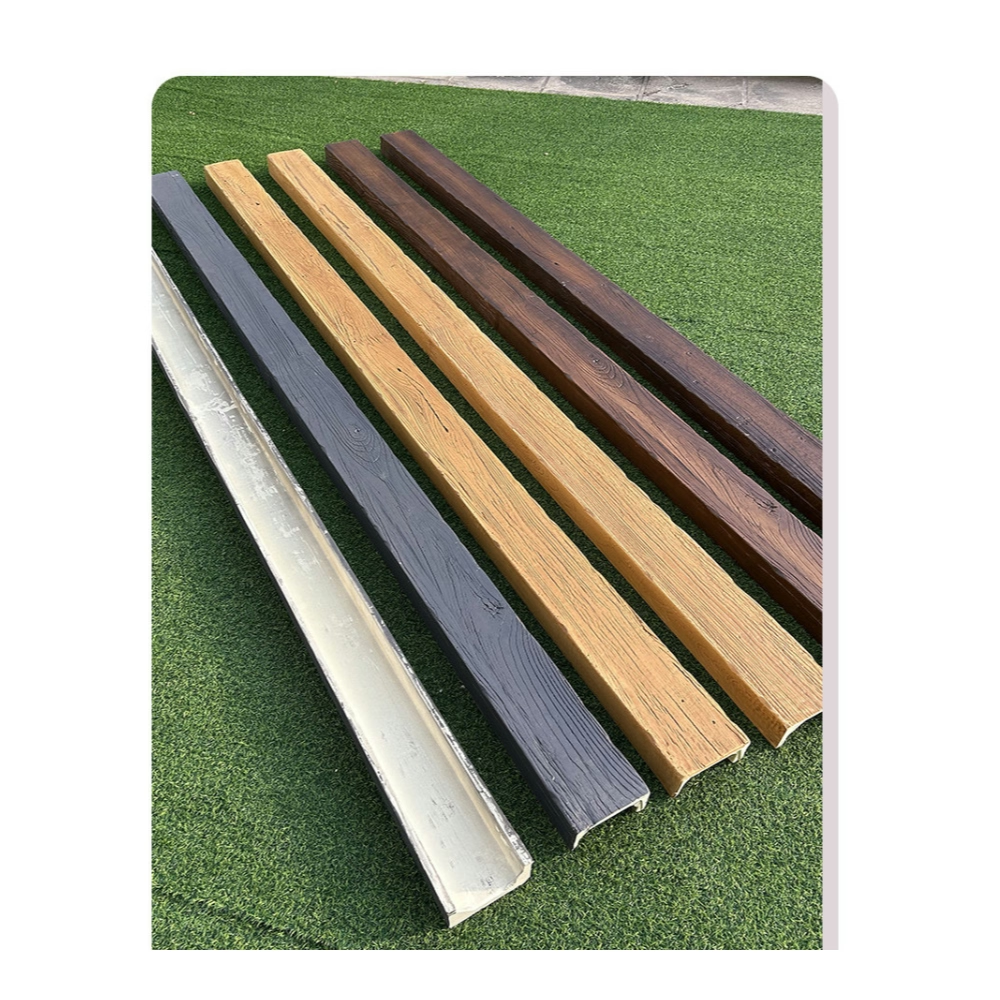
Home improvement projects carry a reputation for complexity that discourages many homeowners from attempting work that could genuinely improve their living spaces. Ceiling beams— often dismissed as professional territory requiring construction expertise— represent one such category where perceived difficulty exceeds actual challenge. The introduction of snap-fit quick assembly systems has transformed ceiling beam installation from specialized construction into accessible assembly that determined homeowners can complete successfully without hiring contractors or accumulating specialized tools.
The snap-fit concept borrows from manufacturing and furniture assembly principles where interlocking components enable secure connections without fasteners, adhesives, or specialized skills. Applied to ceiling beams, this approach produces systems where main beam sections interlock with mounting rails, end caps nest into position with satisfying clicks, and the overall assembly proceeds through logical steps that builders and non-builders alike can follow.
This accessibility opens ceiling beam installation to a broader audience than traditional construction methods could serve. Apartment dwellers seeking to soften stark ceilings, renters who want upgrade potential without permanent modifications, and first-time homeowners building confidence through manageable projects all benefit from installation approaches that don't require contractor relationships or tool collections to execute successfully.
Understanding Snap-Fit System Architecture
Snap-fit ceiling beam systems consist of mounting infrastructure and decorative beam components designed to interconnect. The mounting infrastructure— typically aluminum or steel rails— attaches to ceiling surfaces using conventional fasteners appropriate for the substrate. Once mounted, these rails provide the structural connection that supports beam weight and maintains positioning.
The decorative beam components snap onto these rails through interlocking features engineered for secure, lasting connection. The snap mechanism might involve flexible clips that engage rail channels, friction-fitting joints that hold components in place, or positive-locking features that provide tactile confirmation of proper seating. Each system implements the snap-fit principle according to specific engineering approaches, but all share the characteristic of enabling connection without tools.

This two-part approach separates structural requirements from aesthetic considerations. The mounting rail handles load transfer and positioning, allowing the beam component to focus entirely on appearance. The beam itself doesn't need to incorporate structural features that might complicate manufacturing or installation— it simply needs to look good and connect reliably.
Advantages Beyond Simple Installation
While the tool-free assembly represents the most immediately apparent benefit, snap-fit systems offer additional advantages that extend beyond installation convenience. The engineered connections between components tend to be more consistent than field-assembled alternatives, where fastener placement, adhesive application, and other variables introduce inconsistency. Professional results become more achievable because the system guides installers toward correct execution.
Disassembly capability provides flexibility that permanent installations cannot match. Should access behind beams become necessary— for wiring, plumbing, or structural work— snap-fit systems can be removed and reinstalled without damage. This reversibility proves valuable in rental properties, shared spaces where circumstances change frequently, and commercial environments where maintenance access requirements are unpredictable.
The manufacturing precision that enables snap-fit assembly also benefits appearance. Components arrive pre-finished with consistent quality that field finishing cannot match. The interlocking features maintain consistent spacing and alignment throughout installation, producing the clean joint appearance that distinguishes professional work from amateur attempts.

Installation Scenarios and Timing
Snap-fit ceiling beam installation typically requires an afternoon for a single room, compared to days that conventional beam installation might consume. This time efficiency results partly from the simplified assembly process and partly from the elimination of finishing work that conventional installations require. Homeowners can complete projects over weekends rather than scheduling around contractor availability.
The process-friendly nature of snap-fit installation accommodates interruptions without penalty. Unlike adhesives that must set continuously or finishes that shouldn't be disturbed during drying, snap-fit assembly can pause at any point and resume later without consequence. This flexibility suits busy schedules and enables completion in multiple short sessions when continuous blocks of time aren't available.
For those who appreciate documentation, many manufacturers provide video tutorials demonstrating proper technique. These resources show actual installations from start to finish, enabling viewers to understand the process before committing to a project. Seeing experienced installers handle components and navigate common challenges builds confidence that written instructions alone might not provide.
Tool Requirements and Preparation
Despite the tool-free assembly claim, some preparation tools remain helpful for snap-fit installation. A level ensures that mounting rails install without slope that would create visible misalignment. A tape measure enables accurate spacing and positioning. A pencil marks reference lines that guide rail installation.
These basic tools— likely already present in most households— suffice for preparation work. The beams themselves require no cutting, drilling, or modification during installation, eliminating the specialized equipment that conventional approaches demand. Measurement focuses on positioning rather than fabrication, a fundamentally simpler task.
Ceiling preparation involves cleaning surfaces and identifying structural elements that will support rail mounting. Unlike conventional beams that might require ceiling reinforcement or specialized mounting hardware, snap-fit systems typically mount using standard fasteners appropriate for the ceiling substrate. Locating ceiling joists or rafters ensures secure attachment; mounting rails must engage solid structure rather than hanging from ceiling finish materials alone.
Support Requirements and Weight Considerations
Snap-fit systems, like all ceiling beam installations, must address support requirements that ensure lasting performance. The engineered load capacity of rail systems specifies maximum spans and minimum support points that installers must respect. Following manufacturer guidelines ensures that beams remain secure indefinitely without sagging, pulling away, or other failures.
Polyurethane's lightweight nature proves particularly valuable for snap-fit applications. The reduced weight compared to natural wood means that mounting rails can support longer spans with fewer intermediate supports. This capability enables cleaner installation appearances with fewer visible hardware elements interrupting beam runs.
Weight distribution across multiple mounting points ensures that no single connection bears excessive load. Spacing mounting rails according to manufacturer specifications distributes beam weight appropriately, preventing the stress concentrations that might cause failure at individual attachment points. This engineered approach replaces the intuition-based mounting that conventional installations sometimes employ.
Finishing and Appearance
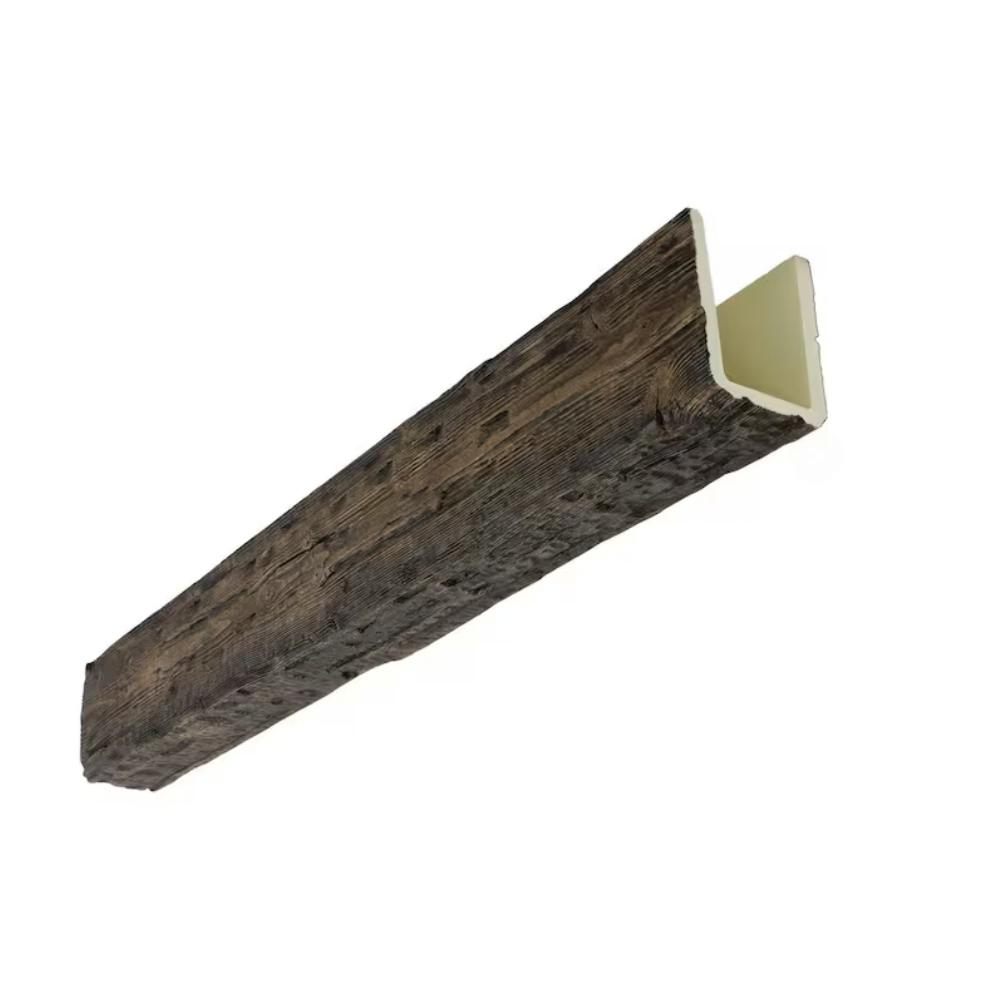
Snap-fit PU faux beams arrive pre-finished with factory-applied surfaces that eliminate on-site finishing work. The wood grain patterns, colors, and surface textures are applied under controlled conditions that ensure consistency across all components. This factory finishing produces results that field application cannot reliably match, regardless of installer skill.
The snap-fit connection points are designed to appear seamless when properly assembled. Joints between beam sections align precisely, hiding connection points from normal viewing distances. End caps and transition pieces complete the appearance by covering termination points cleanly. The overall effect is a beam installation that appears to be a solid, continuous wood element rather than an assembled system.
For homeowners seeking specific appearances, many snap-fit systems offer multiple finish options ranging from natural wood tones to painted whites and greys. This selection enables coordination with existing interior palettes without requiring custom finishing work. The chosen finish arrives applied and ready for installation, further simplifying the path from purchase to completion.
Long-Term Performance and Care
Installed snap-fit beams require minimal maintenance beyond occasional dusting or cleaning. The durable finishes resist wear from normal household conditions, maintaining appearance through years of service. No periodic refinishing, sealing, or other maintenance interventions are required to preserve appearance.
The secure connections that snap-fit systems provide maintain their grip over time without loosening. Unlike mechanical fasteners that might work loose through vibration or thermal cycling, the engineered snap connections resist these failure modes. Homeowners can trust that properly installed beams will remain secure without periodic inspection or retightening.
Should damage occur— from impact, water exposure, or other mishap— individual components can be replaced without disturbing surrounding elements. This repairability extends the useful life of snap-fit installations significantly, as localized damage doesn't require complete system replacement. Replacement components snap into existing infrastructure without requiring disassembly of adjacent sections.
Technical References
ASTM standards cited in every specification
Test Data
Lab results from internal testing program
Updated 2026
Reviewed against current product specs