Coastal living never really goes out of style. Even people who have never spent a morning watching fog lift off the ocean are drawn to the visual language of sandy shores, driftwood, and sun-bleached timber. That appeal is not accidental. Light, airy interiors with natural textures evoke a slower pace of life, and in a world that feels increasingly fast and digital, that longing for calm is powerful. Sandy beach finish polyurethane faux beams capture this feeling and make it achievable in any room, regardless of whether the nearest ocean is ten miles or a thousand miles away.
The Sandy Beach Finish: What Makes It Distinct
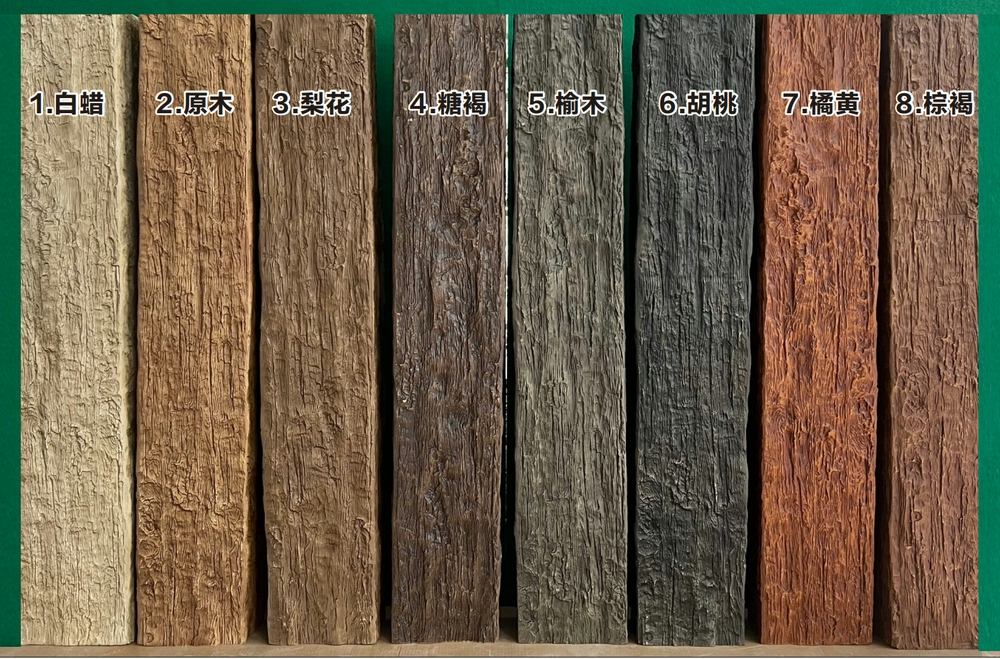
The sandy beach wood finish is characterized by its pale, warm tones and sun-washed appearance. Unlike darker wood finishes that suggest age, richness, or formality, sandy beach finish reads as fresh, relaxed, and approachable. The color palette typically falls somewhere between bleached oak and natural honey pine, with subtle gray undertones that prevent the wood from looking too yellow or artificial.
What elevates a quality sandy beach finish is the texture work. Real driftwood and sun-bleached timber develop a particular surface quality through exposure to salt air, moisture, and ultraviolet light. A well-made PU faux beam replicates these characteristics through careful texturing: soft grain lines that feel lightly worn rather than deeply carved, small natural knots that suggest age without distraction, and a matte surface that absorbs and reflects light in the way real timber does. When you run your hand across the surface, it should feel like wood that has been smoothed by years of coastal breeze.
Why Polyurethane Faux Beams Are Ideal for Coastal Interiors
The coastal environment presents specific challenges for interior materials. Salt air, humidity, and temperature fluctuations can affect real wood over time, causing warping, cracking, or surface degradation. Polyurethane faux beams sidestep these concerns entirely. PU is dimensionally stable, meaning it does not expand or contract with changes in humidity the way natural wood does. It resists moisture absorption, which makes it suitable for use in bathrooms, kitchens, and beach houses where humidity levels fluctuate regularly.
For commercial buyers and interior design professionals working on hospitality projects, these practical advantages translate directly into value. Beach resorts, boutique hotels, and coastal restaurants that want the warmth of timber ceilings without the maintenance demands find PU faux beams to be an elegant solution. The material installs cleanly, ages well, and requires no special treatment to maintain its appearance over years of use.

Designing a Coastal Ceiling with Sandy Beach Faux Beams
Entry and Foyer Spaces
First impressions matter, and a sandy beach finish beam spanning an entry ceiling sets the tone for everything that follows. In an entryway, a single long beam running the length of the ceiling immediately communicates warmth and character. Pair it with a console table in a matching pale wood finish, a rattan mirror, and a few natural fiber baskets for storage. The overall effect is welcoming without being overly decorative.
Open-Plan Living and Dining
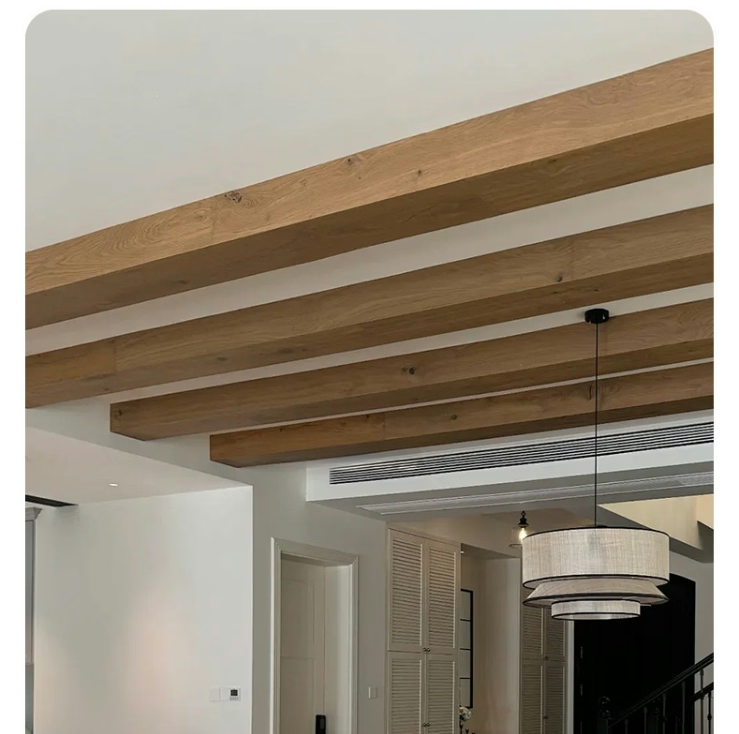
In open-plan spaces, sandy beach faux beams can serve a dual purpose: they define functional zones within the larger room while adding visual warmth to a ceiling that might otherwise feel too high or too plain. A series of parallel beams over a dining area, for instance, creates a subtle canopy effect that draws people toward the table without the weight of a physical structure. In the living area adjacent, a single cross beam adds architectural interest without cluttering the ceiling plane.
Consider the beam spacing carefully in open-plan designs. Beams placed too close together can make the ceiling feel busy. Beams spaced too far apart may not provide enough visual impact. A general guideline is to space beams at intervals equal to one-third to one-half of the ceiling height, but the specific proportions of the room should always take precedence over the rule.
Bedrooms and Retreat Spaces
The bedroom is perhaps the most natural fit for sandy beach finish faux beams. The pale, warm wood creates a sense of openness and airiness that promotes relaxation, and the natural texture adds just enough visual interest to prevent the ceiling from feeling flat. In a master bedroom, try a boxed beam treatment on a tray ceiling, or install exposed-look beams in a chevron pattern above the bed for a more dramatic effect.
Layer the room with textiles that echo the coastal palette: white linen bedding, a woven seagrass rug, curtains in undyed cotton or muslin. A few carefully chosen accessories — a piece of sea glass on the nightstand, a ceramic vase with dried pampas grass, a stack of weathered books — complete the look without overwhelming it.
Pairing Sandy Beach Beams with Wall Colors and Materials
The sandy beach finish pairs naturally with a range of wall colors and materials commonly used in coastal design. The safest choice is a clean white or off-white wall, which lets the beams become the primary source of warmth and texture in the room. Soft whites like Swiss Coffee, Alabaster, or Simply White create a gallery-like backdrop that feels bright and uncluttered.
For a slightly richer coastal palette, consider soft gray-blue tones like Sherwin-Williams Sea Salt, Benjamin Moore Palladian Blue, or a muted teal. These colors sit comfortably alongside sandy beach wood without competing for attention, and they reinforce the connection to water and sky that coastal design seeks to evoke.
Shiplap walls in white or a very light gray pair exceptionally well with sandy beach finish beams. The horizontal lines of shiplap add texture and visual interest to the walls, while the beams overhead provide vertical contrast. Together, the two materials create a layered, dimensional interior that photographs beautifully and feels genuinely inviting.
Practical Considerations for Trade Buyers
For distributors and retailers, sandy beach finish PU faux beams represent a strong seller across multiple customer segments. Homeowners undertaking renovation projects appreciate the ease of installation and the immediate visual impact. Interior designers value the consistency of finish and the ability to specify beams with confidence, knowing that the material will perform reliably across different environmental conditions.
When presenting these beams to trade customers, emphasize the finish quality and the specific aesthetic the sandy beach look delivers. Provide sample chips or photographs that show the texture and color in different lighting conditions, since the appearance of wood finishes can shift meaningfully between morning light, afternoon sun, and artificial lighting.
Stock a range of standard profiles and lengths to accommodate common project specifications. U-beams, box beams, and decorative corbels in matching sandy beach finishes give designers flexibility in creating cohesive ceiling treatments. Custom finish matching for large orders is also a value-add that distinguishes serious trade suppliers from casual resellers.
Longevity and Maintenance
One of the most compelling practical advantages of polyurethane faux beams is their minimal maintenance requirements. Unlike real wood, which may require periodic resealing, staining, or repairs, PU beams retain their appearance with routine cleaning. A soft cloth, mild soap, and water are all that is needed to remove dust or accumulated grime. The UV-stable finishes used in quality PU beams resist fading, which means the sandy beach color remains consistent even in rooms with significant natural light exposure.
For commercial installations in restaurants, hotels, or retail spaces, this low-maintenance characteristic translates to reduced ongoing costs and fewer service calls. The initial investment in quality PU beams pays dividends over years of attractive, trouble-free performance.
The sandy beach finish faux beam is more than a decorative choice. It is a statement about the kind of space you want to live, work, or relax in. Light, warm, and effortlessly connected to the natural world, this material brings a piece of the coast into any room.
Technical References
ASTM standards cited in every specification
Test Data
Lab results from internal testing program
Updated 2026
Reviewed against current product specs


