Light changes everything. A room that feels merely pleasant in daylight can become magical after dark, and the difference is almost always attributable to how the light is used. For spaces with decorative faux wood ceiling beams, uplighting is one of the most powerful techniques available. Instead of illuminating the room from above in the conventional way, uplighting reverses the direction. Light travels upward from the beam's lower surface, washing the ceiling and creating a warm, enveloping glow that makes the room feel larger, softer, and more atmospheric.
The effect works because wood has a natural warmth that responds beautifully to light from any angle, but particularly from below. When light strikes the underside of a beam and bounces upward, it illuminates the grain texture, the color depth, and the dimensional profile of the wood. The ceiling plane above receives a wash of reflected light that is softer and more diffuse than direct downlighting. The result is a room that feels illuminated rather than lit.
Understanding Uplighting for Faux Wood Beams
Uplighting for ceiling beams comes in several forms, each with distinct characteristics and applications. The right choice depends on the beam profile, the ceiling height, the desired atmosphere, and the practical constraints of the space.
Direct uplighting is the most straightforward approach: fixtures installed in the ceiling or mounted to the wall are aimed directly at the underside of the beam. The light travels upward and strikes the beam surface, bouncing back down and outward to illuminate the surrounding area. This technique works best with solid-profile beams that have sufficient depth to catch and display the light effectively.
Indirect uplighting bounces light off the ceiling plane before it reaches the beams, creating a softer, more diffused effect. This approach suits rooms with very high ceilings where direct uplighting would create a harsh pool of light at the beam level with little spill into the room below. Indirect uplighting is also preferable in minimalist interiors where visible light fixtures would conflict with the clean aesthetic.
Grazing is a technique borrowed from museum and retail lighting design. Fixtures are positioned close to the beam surface and aimed at a shallow angle that runs along the grain of the wood. This catches every imperfection, knot, and texture variation in the beam surface, creating dramatic shadows and highlights that emphasize the natural character of the wood. Grazing works best with beams that have interesting grain patterns or weathered textures.

Choosing Light Fixtures for Beam Uplighting
LED Puck Lights
LED puck lights are small, circular fixtures designed for surface or recessed mounting. They are among the most versatile options for beam uplighting because they are available in a range of sizes, finishes, and color temperatures. For faux wood beam applications, brushed nickel or matte white finishes blend inconspicuously with most beam colors, while warm white color temperatures around 2700K to 3000K complement the amber tones in wood finishes.
Puck lights can be installed in the ceiling plane between beams, aimed at the adjacent beam undersides, or mounted directly to the beam surface in the case of hollow beam profiles. Many modern puck lights are slim enough to fit in the narrow space between a beam and the ceiling plane, making them nearly invisible when the lights are off.
LED Strip Lighting
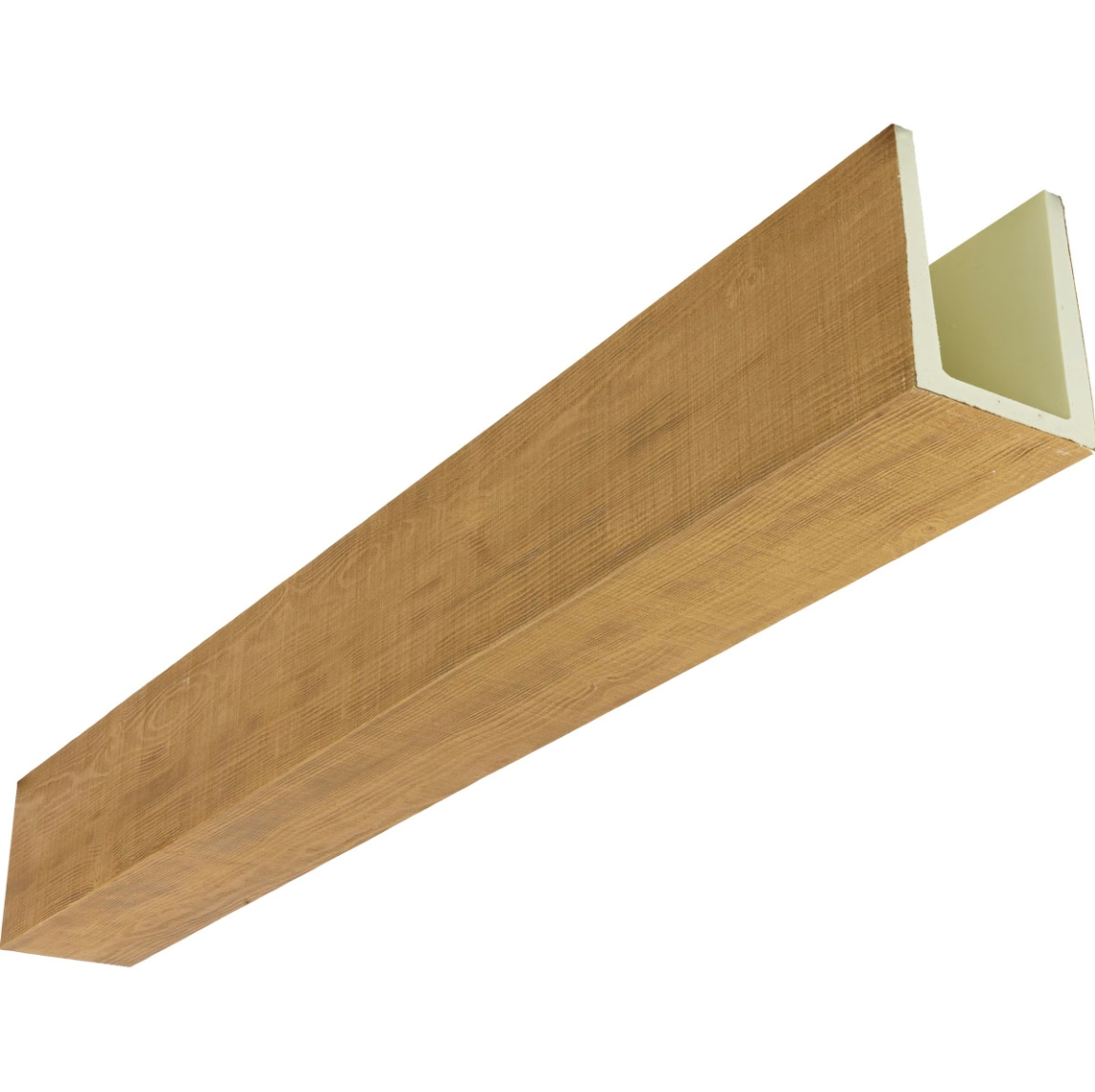
LED strip lights offer the most uniform uplighting effect and are ideal for running along the full length of a beam. Adhesive-backed strips can be mounted in the V-channel of U-shaped beams or along the inner edges of box beams, creating a continuous ribbon of light that illuminates the entire beam uniformly.
The key specification to pay attention to with LED strips is the beam angle and the lumens per meter. A wide beam angle produces softer, more diffused light, while a narrow angle creates a more concentrated effect. Higher lumen output is generally preferable for uplighting because the light travels a longer path from the source to the ceiling plane and loses intensity along the way.
Recessed Downlights with Adjustable Trim
In some installations, particularly in rooms with exposed joist beams, recessed downlights positioned to throw light upward at an angle can achieve a similar effect to dedicated uplighting. Adjustable trim recessed fixtures allow the light direction to be fine-tuned after installation, which is useful when working with the irregular surfaces of authentic-looking faux beam textures.
Color Temperature and Its Effect on Wood Beams
Color temperature is measured in Kelvin and describes the warmth or coolness of white light. For wood beam uplighting, the goal is typically to enhance the natural warmth of the wood rather than compete with it. This means choosing color temperatures in the warm range: 2700K to 3200K.
At 2700K, LED light appears very warm and amber, similar to the glow of incandescent bulbs. This temperature makes honey oak, butternut, and butterscotch finishes look richer and more saturated. At 3200K, the light is slightly cooler and whiter, which suits lighter wood tones like natural pine and blonde oak. Above 3500K, the light begins to feel clinical next to wood finishes, introducing a blue-green cast that reads as cold and artificial.
For trade buyers specifying uplighting systems alongside faux beams, providing customers with a color temperature recommendation based on the specific beam finish is a valuable service. A simple chart matching finish color to recommended Kelvin range takes the guesswork out of fixture selection and reduces returns or dissatisfaction.
Room-Specific Uplighting Design
Living Room Uplighting
In living rooms, uplighting is typically used to create a relaxing evening atmosphere rather than task-focused illumination. The beams should glow softly, providing enough light for conversation and casual activities without functioning as the primary light source. Install uplighting fixtures on a dimmer circuit so the intensity can be adjusted from full glow for a dinner party to a barely perceptible ambient warmth for movie nights.
Pair uplighting with other light sources at different heights: floor lamps behind seating areas, table lamps on side tables, and perhaps a central fixture on a separate dimmer circuit for moments when more light is needed. The layered approach means no single light source bears the full burden of illuminating the room, and the overall effect feels more sophisticated and comfortable.
Bedroom Uplighting
Bedroom uplighting should be the most subtle of all applications. The goal is a gentle glow that adds warmth to the room without making it feel bright or stimulating. In a bedroom with beam ceilings, a few strategically placed puck lights aimed at the beams can provide enough ambient light for getting around at night without turning on overhead fixtures that would disrupt sleep preparation.
Consider linking the bedroom uplighting to a smart home system or a scene-setting control that brings the beams to a low glow when the room is in sleep mode. This level of control transforms the ceiling beams from a static design feature into a dynamic element that responds to the occupant's needs throughout the day.
Commercial and Hospitality Uplighting
Restaurants, boutique hotels, and bars with faux wood beam ceilings benefit enormously from well-designed uplighting systems. In these spaces, the ceiling is often the primary design element visible from the seating area, and the quality of the uplighting directly affects the perceived quality of the environment. Warm uplighting on wooden beams creates the sense of intimacy and warmth that encourages guests to linger, order more, and return.
For commercial installations, fixture longevity and maintenance access are critical considerations. Fixtures should be rated for commercial use, with adequate heat dissipation and reliability ratings. Recessed fixtures with accessible lamp更换 components reduce maintenance costs significantly compared to fixtures that require ceiling access for every bulb change.
Installation Practicalities
Installing uplighting for faux wood beams is generally straightforward, but there are a few practical considerations that affect the outcome. First, plan the fixture positions before the beams are installed. Running wire and positioning rough-in fixtures during the rough-in electrical phase, before the beams go up, is far easier than working around installed beams.
Second, consider the heat output of the fixtures, particularly with LED strips. While LEDs run cooler than incandescent sources, high-output strips in enclosed spaces can still generate enough heat to affect the adhesive bond over time. Use aluminum mounting channels for LED strips to dissipate heat and provide a clean mounting surface.
Third, use a consistent dimming system across all beam uplighting fixtures. Mixed fixture types on different dimmer circuits can create uneven light levels that feel accidental rather than designed. A single dimmer controlling all beam uplights, paired with separate controls for other room lighting, provides the flexibility to adjust the ceiling glow independently.
The combination of warm, textured faux wood beams and thoughtfully designed uplighting is one of those interior design pairings that delivers outsized impact relative to its cost. It is a technique that works in rooms of every size and style, and it is accessible enough for homeowners doing their own installations while being sophisticated enough for professional designers working on high-end projects.
Technical References
ASTM standards cited in every specification
Test Data
Lab results from internal testing program
Updated 2026
Reviewed against current product specs


