The shift toward remote work has transformed home offices from spare rooms into primary workspaces deserving professional-grade design treatment. Lighting, furniture, and finishes contribute to productive atmospheres, but ceiling details often receive less attention despite their significant impact on space perception. Dark wood faux beams offer sophisticated styling that elevates home office environments from improvised workspaces to executive-caliber facilities.
Dark Wood Psychology in Work Environments
Color psychology influences workplace effectiveness in ways that researchers have documented extensively. Dark wood tones convey authority, stability, and timelessness—characteristics that support focused, professional work. The visual weight of dark beams draws attention upward, creating ceiling presence that grounds spaces visually while suggesting established permanence.
Contemporary minimalist aesthetics sometimes resist traditional wood elements, but dark wood faux beams adapt readily to modern contexts. The key lies in proportional design that respects current spatial sensibilities while introducing warmth through material texture. Properly scaled beams enhance rather than overwhelm clean-lined modern interiors.
Executive home offices particularly benefit from dark wood treatments. The sophisticated atmosphere supports video conference visibility, creating professional backdrops that project competence and success. Clients, colleagues, and employers responding to video calls respond differently to backgrounds featuring quality architectural details.

Material Advantages for Office Applications
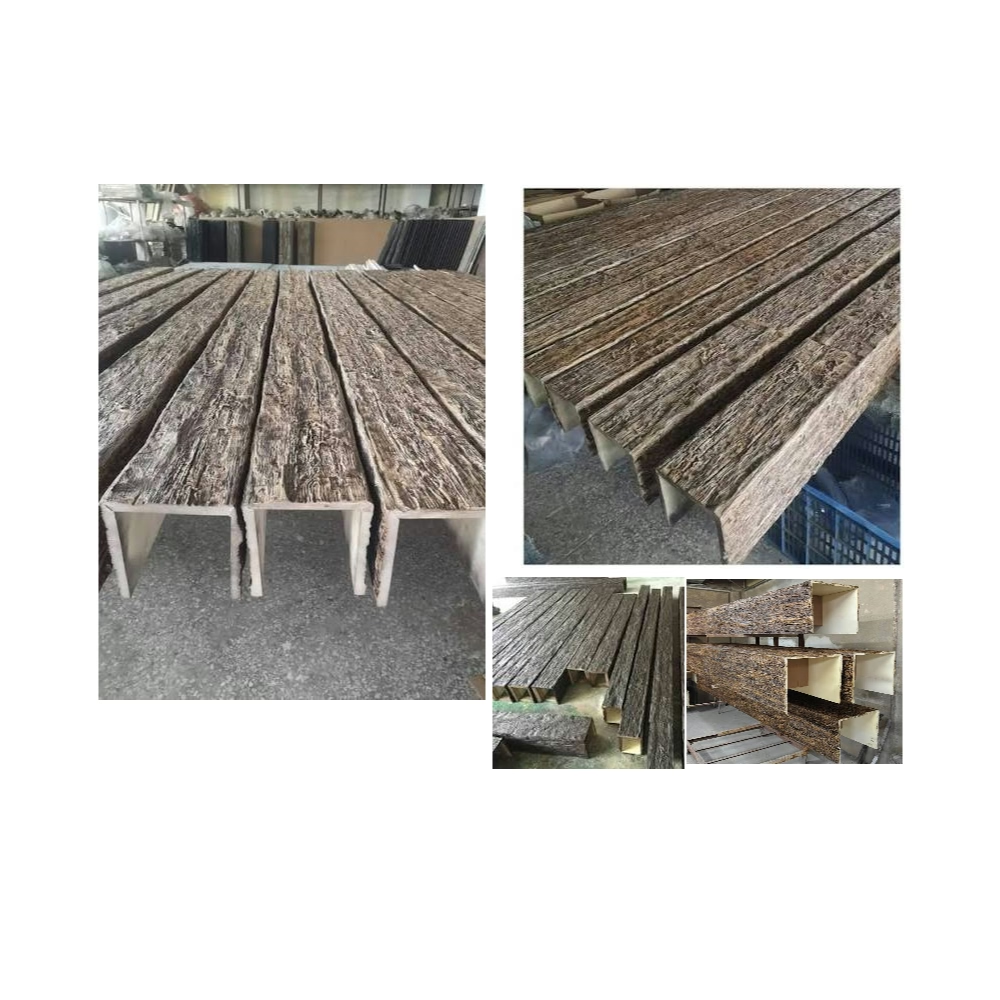
Home office installations must coexist with technology infrastructure that differs significantly from traditional residential spaces. Cable management, lighting systems, and ventilation requirements create ceiling complexity that demands flexible solutions. Polyurethane faux beams accommodate these technical needs while maintaining aesthetic continuity.
Lighting integration works particularly well with beam installations. Recessed fixtures tuck between beams cleanly, while surface-mounted options attach directly to beam faces. The dimensional stability of polyurethane accepts fixture mounting without the structural concerns that affect natural wood or composite alternatives.
Climate control considerations favor polyurethane as well. Home offices often operate with extended heating and cooling schedules that create humidity variations affecting natural wood. Polyurethane maintains dimensions regardless of environmental conditions, ensuring that beam installations remain properly fitted and aligned throughout annual cycles.
Design Approaches by Office Style
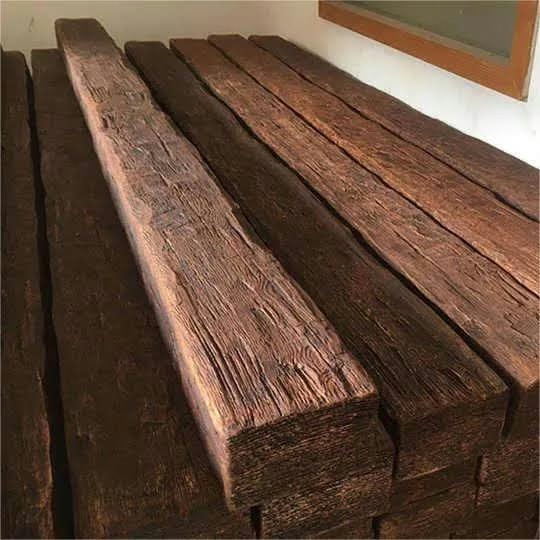
Tech-forward offices respond well to dark beams paired with contemporary lighting and minimal furnishings. The contrast between traditional wood textures and sleek modern elements creates visual interest that distinguishes these spaces from generic corporate environments. Dark walnut finishes particularly complement industrial design elements like exposed steel and concrete.
Traditional executive offices benefit from darker oak or mahogany reproductions that honor classical woodworking aesthetics. Crown moldings, corbel details, and other traditional millwork elements integrate seamlessly with dark beam installations. The overall effect suggests private library or professional study atmospheres conducive to concentrated work.
Transitional offices blending contemporary and traditional elements achieve balance through thoughtful beam selection. Medium-dark finishes that bridge light and deep tones work particularly well in these hybrid spaces. Beams sized proportionally to room dimensions maintain visual harmony while providing the architectural interest that elevates ordinary spaces.

Installation Considerations for Existing Construction
Retrofitting beams into completed home offices requires careful planning that addresses structural and aesthetic concerns. Ceiling height affects beam feasibility—rooms with limited vertical clearance may feel cramped with substantial beam installations, while high ceilings provide opportunity for dramatic treatments.
Load calculations ensure that ceiling structures support beam weight safely. While polyurethane weighs substantially less than equivalent wood sections, accumulated beam weight still requires proper mounting to ceiling joists or backing installed during construction. Professional assessment identifies structural requirements before purchase commitments.
Access to existing infrastructure complicates retrofits in older homes. Electrical wiring, HVAC ductwork, and plumbing pipes may conflict with beam placement in ways that require relocation or creative design adaptation. Surveying ceiling cavities before finalizing beam layout prevents installation conflicts.
Professional Positioning Through Design
Home office design increasingly influences career positioning in remote work economies. Professionals working from home require environments that support productivity while projecting competence to clients and colleagues encountered through video conferences. Quality design details communicate serious professional commitment in ways that affect client perceptions.
Real estate value reflects home office quality in measurable ways. Properties featuring dedicated professional office spaces command premium valuations compared to those with improvised work areas. The investment in quality ceiling treatments like dark wood beams contributes to property value that exceeds installation costs.
Business presentation benefits extend beyond residential applications. Home-based businesses, freelance professionals, and independent contractors all project their professional identity through visible workspace design. Dark wood beams contribute to executive atmospheres that support business positioning.
Maintenance for Professional Environments
Professional offices demand appearance consistency that supports business presentation. Polyurethane beams maintain pristine appearances without the periodic attention that natural wood requires. This maintenance-free characteristic proves particularly valuable for professionals focused on their work rather than building care.
Cleaning requirements remain minimal—occasional dusting maintains appearance between more thorough cleaning sessions. The dark wood finish conceals minor dust accumulation better than lighter alternatives, reducing cleaning frequency while maintaining professional presentation.
Scratch and dent resistance protects professional appearance during furniture moves, equipment installation, and regular office activities. Natural wood surfaces show impact damage readily, requiring repair or refinishing. Polyurethane absorbs incidental contact without visible damage, preserving professional presentation through years of use.
Dark wood faux beams transform ordinary rooms into executive-caliber home offices through sophisticated ceiling treatment. The combination of professional aesthetics and practical performance makes these beams particularly well-suited to the demands of contemporary work-from-home environments.
Technical References
ASTM standards cited in every specification
Test Data
Lab results from internal testing program
Updated 2026
Reviewed against current product specs


