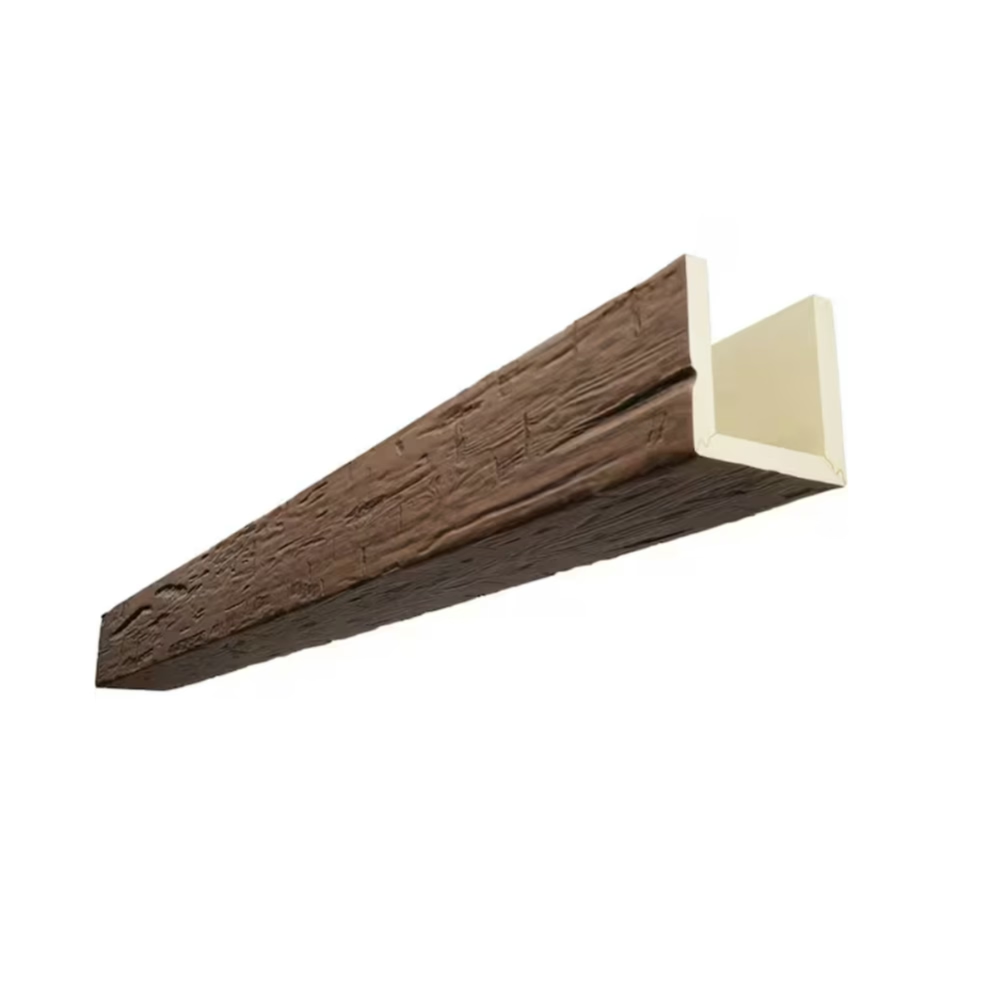
Small bedrooms present design challenges that ceiling treatments can address effectively when applied thoughtfully. The visual relationship between walls and ceiling determines perceived room volume, and beam installation offers proven techniques for spatial enhancement. Understanding how ceiling design affects perception helps homeowners and designers maximize small bedroom potential.
The Psychology of Ceiling Height Perception
Ceiling height dramatically influences how rooms feel despite identical square footage. High ceilings suggest grandeur and luxury, while low ceilings create intimacy but can feel confining. Bedrooms particularly suffer when ceilings feel oppressively close, undermining the restful retreat atmosphere that successful sleep spaces require.
Vertical visual elements draw attention upward, creating illusions of increased height. Lines, patterns, and architectural details that extend toward ceiling surfaces create perceptual pulling that suggests elevation beyond actual dimensions. Beam installations provide precisely these vertical references through their substantial three-dimensional presence.
Color and shadow affect perceived ceiling height as well. Darker ceiling surfaces appear lower, while lighter treatments recede visually. Beam installation creates shadow patterns that further influence perception, with properly directed lighting emphasizing vertical movement toward perceived ceiling height.
Beam Direction and Spacing Strategies
Running beams perpendicular to the shorter wall dimension creates the strongest height illusion. This orientation places the greatest vertical element extent in the direction of maximum elongation, directing visual attention along the longest axis. The result suggests proportions more favorable than room geometry actually provides.
Parallel beam spacing that decreases toward room edges creates perspective convergence suggesting depth beyond physical dimensions. This technique works particularly well in rooms with centrally located viewing positions, where the graduated spacing draws eyes toward far walls.
Single dramatic beams installed perpendicular to existing joist direction create strong vertical references without full ceiling coverage. This approach suits minimal-change renovations where complete beam installations prove impractical. The singular beam still provides substantial visual impact proportional to its dimensions.

Profile Selection for Small Rooms
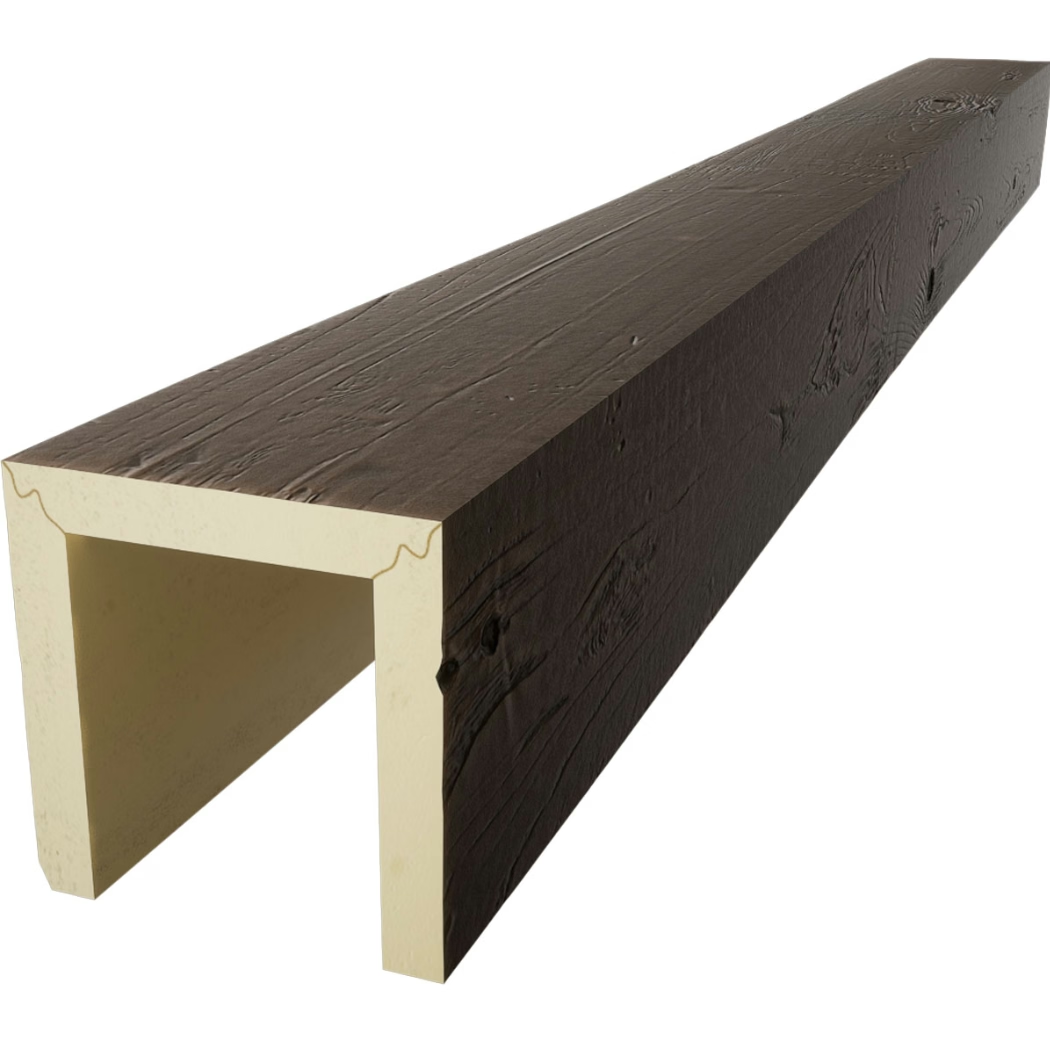
Slim-profile beams prevent the visual weight that heavy timbers create in confined spaces. The goal involves vertical emphasis without overwhelming small rooms with excessive mass. Quarter-round or half-round profiles provide subtle presence appropriate to intimate dimensions.
V-groove or tongue-and-groove ceiling treatments with beam-like framework multiply visual height through repeated vertical elements. These lighter treatments suit rooms where full beams would prove too substantial while still achieving height-enhancing effects.
Paint finishing influences perceived height significantly. Beams finished in darker tones than ceiling planes create stronger shadow definition and depth illusion. This contrast guides eyes along beam surfaces toward ceiling planes, reinforcing height perception through coordinated color relationships.
Light Fixture Integration
Recessed lighting between beams avoids the visual intrusion that surface-mounted fixtures create. The beam shadows actually enhance height perception by defining vertical surfaces clearly. Quality beam installation accommodates fixture routing without compromising appearance.
Suspended fixtures that hang from beam surfaces draw eyes upward along their vertical elements. Pendants, chandeliers, and fan fixtures with substantial downrod lengths provide exactly this vertical pull. Fixture selection should prioritize length and slim profiles over visual mass that might crowd small spaces.
Wall-washing light techniques that graze beam surfaces emphasize texture and create dynamic shadow play. These lighting approaches add visual interest while reinforcing the vertical orientation that height perception requires. Professional lighting design consultation helps optimize these effects.


Coordinated Color and Finish Strategies
Monochromatic color schemes that match beams to wall and ceiling surfaces create seamless visual flow. This approach eliminates hard boundaries that define room edges, suggesting space extension beyond physical limits. The continuous color pulls eyes across surfaces without interruption.
Contrast finishing that makes beams distinctly different from surrounding surfaces creates depth through shadow. The stronger the contrast, the more pronounced the beam effect. However, extreme contrast in small rooms may create visual busyness that undermines rather than enhances spaciousness.
Mirrored or glossy ceiling finishes supplement beam height effects through light reflection. These treatments multiply the visual depth that beams create while adding luminosity that brightens small spaces. Gloss finishes require careful consideration of reflection content but provide powerful spatial enhancement when properly applied.
Practical Installation Considerations
Lightweight polyurethane faux beams simplify installation in rooms where ceiling structure might not support heavy timber alternatives. The reduced weight eliminates structural reinforcement requirements that complicate beam installation in existing construction. This practical advantage makes beam treatments accessible to more small bedroom applications.
Low-profile mounting systems maintain minimal thickness that keeps beams from encroaching on headroom. Some mounting approaches actually elevate beams from ceiling surfaces, creating shadow gaps that enhance depth perception while reducing actual ceiling height reduction.
Maintenance access requires consideration in beam-adjacent fixture locations. Beams positioned around fixture locations should allow bulb changes and fixture maintenance without beam removal. Planning these details during design prevents access problems after installation.
Small bedroom transformation through ceiling beam installation requires careful attention to proportion, finish, and lighting coordination. When properly executed, these techniques create remarkable spatial enhancement that justifies the installation effort through daily living quality improvement.
Technical References
ASTM standards cited in every specification
Test Data
Lab results from internal testing program
Updated 2026
Reviewed against current product specs