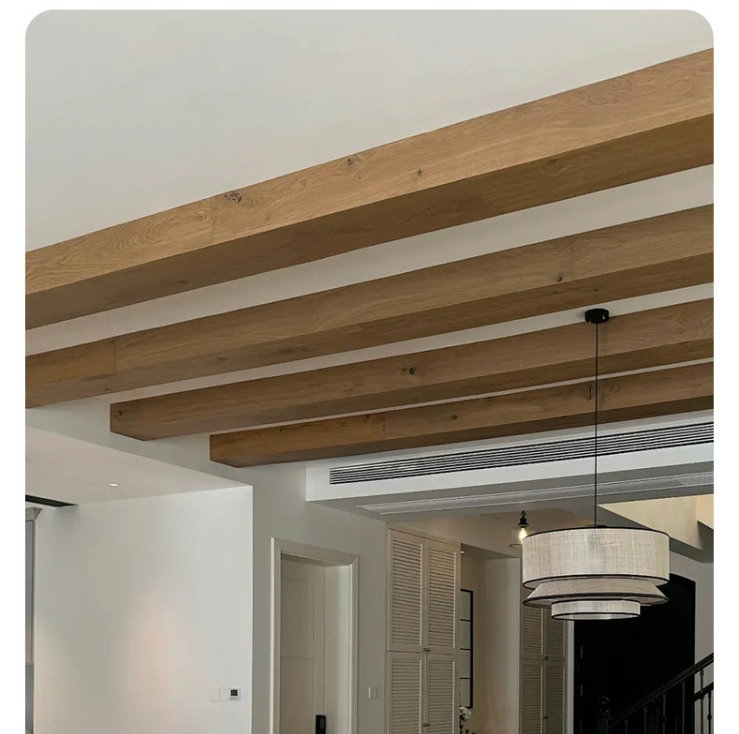
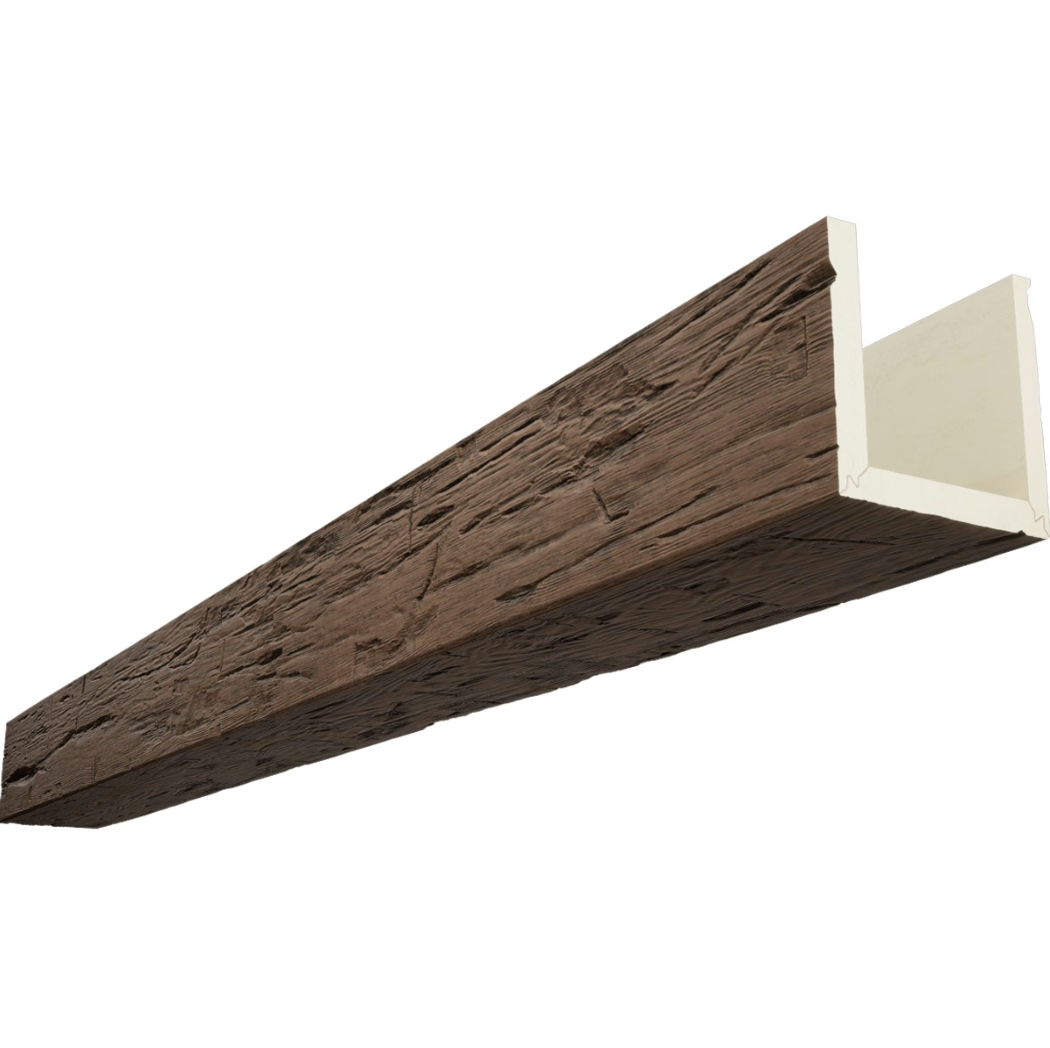
International trade in construction materials faces persistent tension between product size and shipping economics. Faux wood beams present particular challenges given their length relative to standard container dimensions. Flat-pack design approaches that ship accessories in compact configurations address these challenges while providing installation advantages that benefit buyers across distribution channels.
Why Flat-Pack Design Matters
Shipping costs for long items consume substantial portions of product margins, particularly for buyers importing from manufacturing centers like China. Container utilization efficiency determines whether shipments achieve competitive landed costs or arrive at prices that eliminate sourcing advantages. Flat-pack approaches improve utilization dramatically.
Warehouse and retail storage costs multiply with item length. Standard racking designed for conventional merchandise cannot accommodate beams without specialized infrastructure. Flat-pack accessories reduce storage requirements, enabling distribution through channels that standard beams cannot access efficiently.
Last-mile delivery to end customers costs escalate with item size. Beams requiring specialized vehicles and handling increase delivery charges that buyers must recover through pricing. Flat-pack accessories ship through standard courier services, dramatically reducing delivery expenses.
Accessory Flat-Pack Categories
Mounting bracket kits represent the most common flat-pack opportunity given their relatively compact dimensions. These hardware components ship disassembled with fasteners and instructions bundled efficiently. Professional installers appreciate receiving organized kits rather than loose hardware scattered through beam packages.
Decorative trim pieces including crown molding, corbels, and end caps flatten efficiently through nesting and compression. These accessories often ship in quantities that fill boxes completely without wasted space. The reduced package dimensions translate directly to shipping savings.
Joining hardware for beam splicing and corner construction typically ships separately from beams themselves. This separation enables efficient packaging while keeping hardware accessible during installation. Instructions clarify which hardware applies to specific beam configurations.


Assembly Requirements and Complexity
Flat-pack accessories require assembly that affects installation time and skill requirements. Buyers should evaluate whether assembly complexity suits their installation capabilities before committing to flat-pack purchases. Simpler designs with clear assembly sequences minimize these concerns.
Instruction quality determines whether assembly succeeds or fails in field conditions. Professional suppliers provide detailed illustrated instructions that anticipate common questions and potential confusion points. Poorly documented assembly frustrates installers and damages supplier relationships.
Assembly time accumulates across multiple accessories during large installations. Buyers should estimate assembly hours when evaluating flat-pack versus pre-assembled alternatives. The labor cost difference may outweigh shipping savings for projects with extensive accessory requirements.
Quality Preservation in Flat-Pack Form
Packaging design must protect accessories through shipping and handling without excessive material cost.Foam inserts, cardboard dividers, and sealed plastic bags all serve protection purposes that vary in effectiveness. Buyers should assess packaging quality during sample evaluation.
Component organization during shipping affects assembly efficiency significantly. Hardware sorted by installation phase rather than by type simplifies field work. Quality suppliers think through assembly sequences when designing packaging that supports rather than complicates installation.
Surface protection during flat-pack shipping prevents cosmetic damage that would require replacement. Polyurethane components resist shipping damage better than many materials, but corner protection and surface separation still matter for quality maintenance.


Cost-Benefit Analysis
Shipping cost savings from flat-pack accessories require comparison against assembly labor costs to determine net benefit. Projects with professional installers comfortable with assembly work benefit most, while DIY-focused buyers may prefer pre-assembled alternatives despite shipping disadvantages.
Storage cost reductions benefit retailers and distributors particularly. Warehouse space freed from awkward beam accessories enables more efficient operations that translate to cost advantages. These benefits flow through distribution channels to end buyers through competitive pricing.
Breakage and damage rates affect total procurement costs in ways that flat-pack design influences. Compact packaging reduces handling damage compared to extended profiles. However, assembly errors during field work may generate replacement requests that offset packaging advantages.
Supplier Selection for Flat-Pack Products
Supplier packaging capability varies substantially in the flat-pack category. Quality consciousness that extends to packaging design indicates overall operational professionalism that predicts reliable supply. Buyers should evaluate packaging samples during supplier assessment.
Customization availability for flat-pack designs affects project-specific requirements. Standard configurations suit common applications, but unique installations may require modified accessories that suppliers should accommodate. Communication about customization capabilities helps identify capable partners.
Lead time effects from flat-pack production differ from standard inventory items. The additional manufacturing step affects production scheduling that buyers must consider. Extended lead times may offset shipping advantages for time-sensitive projects.
Flat-pack PU faux wood beam accessories represent supply chain innovation that addresses real international trade challenges. When evaluated thoughtfully against project requirements and installation capabilities, these space-saving approaches provide meaningful procurement advantages.
Technical References
ASTM standards cited in every specification
Test Data
Lab results from internal testing program
Updated 2026
Reviewed against current product specs