Bulk beam procurement involves shipping economics that dwarf per-unit product costs for sufficiently large orders. Container utilization efficiency determines whether international sourcing achieves competitive landed costs or fails through excessive logistics expenses. Nested packaging approaches that maximize space utilization address these economics directly.
Container Shipping Fundamentals
Standard shipping containers offer specific internal dimensions that constrain cargo loading regardless of stated capacity. The 20-foot container provides approximately 33 cubic meters of usable space, while 40-foot containers offer roughly 67 cubic meters. Beam lengths that approach container dimensions affect loading efficiency significantly.
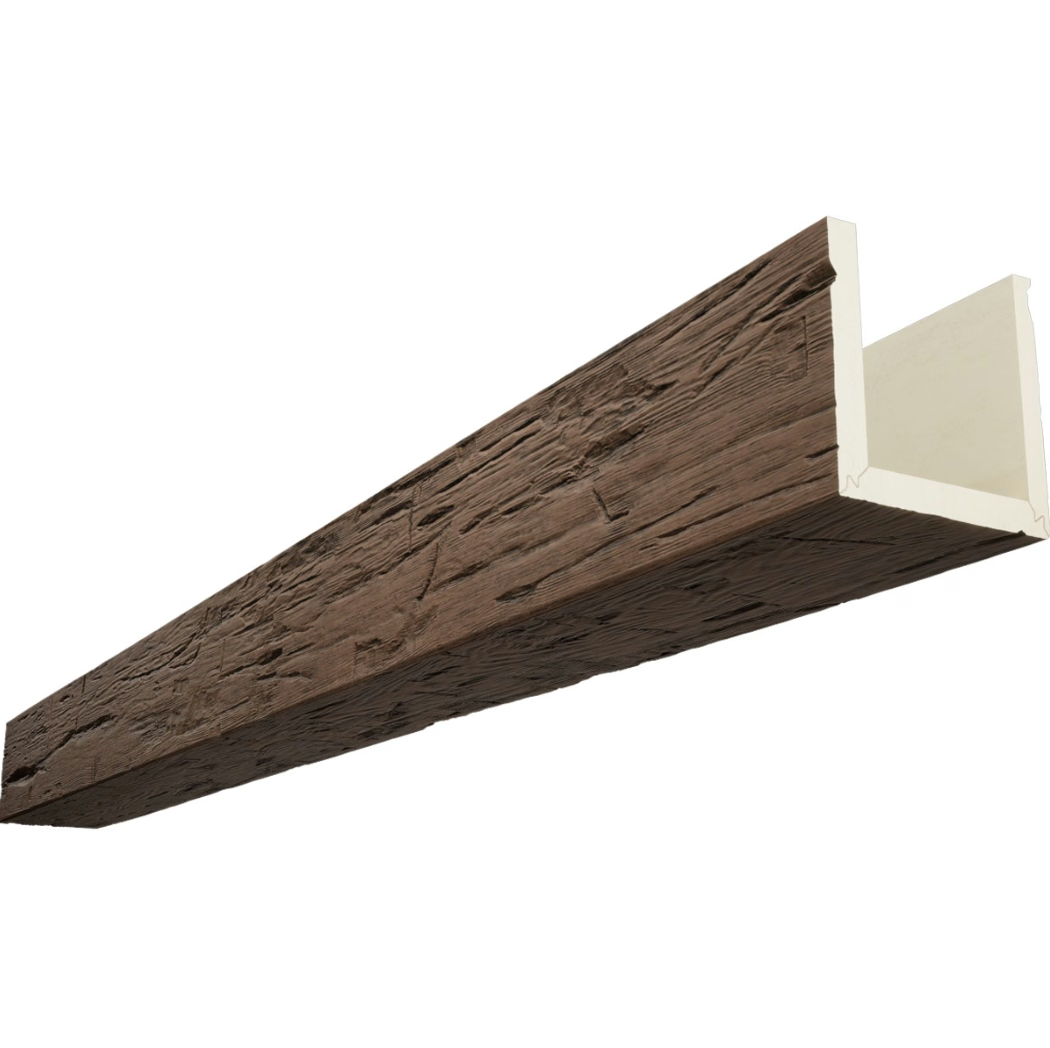
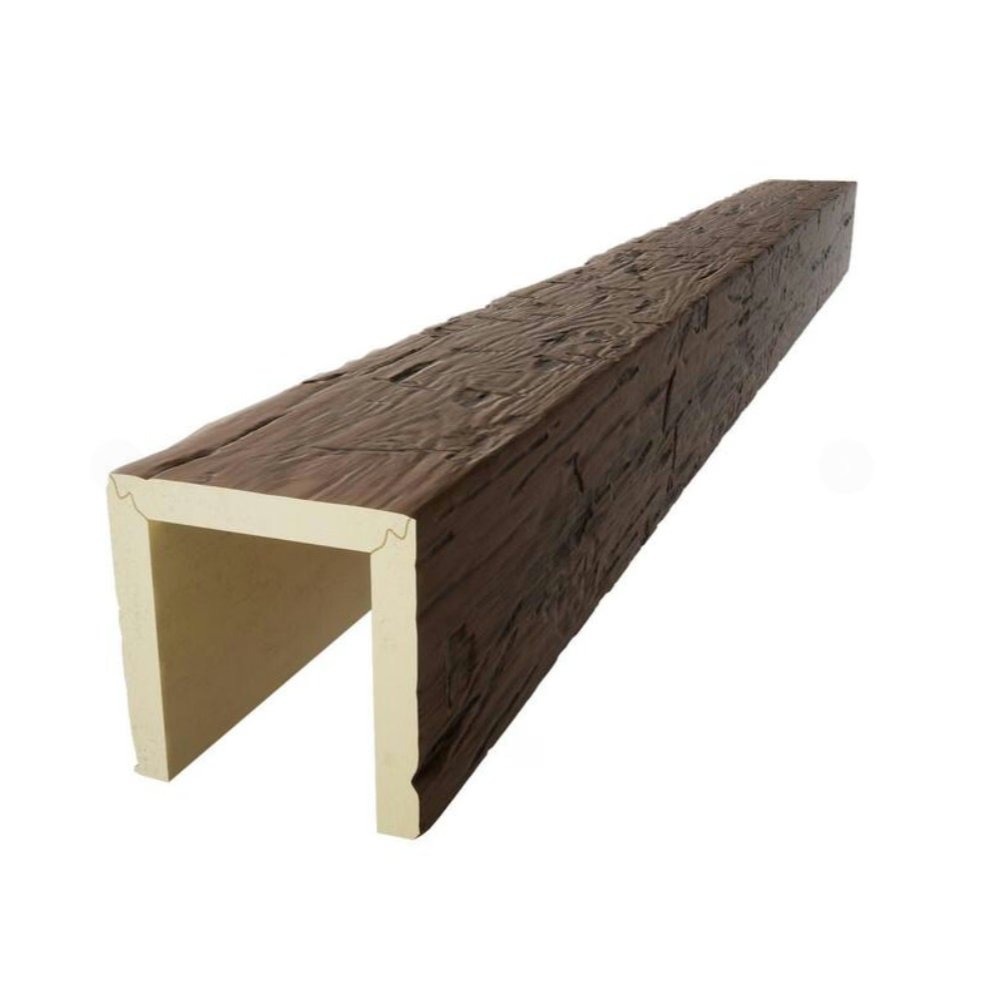
Linear cargo like beams wastes corner space in rectangular containers where length constraints leave unused areas. Nested arrangements that position shorter items within longer beam cavities recover some of this wasted space. This technique applies particularly well to hollow beam profiles that accommodate nesting internally.
Weight constraints interact with volume constraints in ways that affect optimal loading strategy. Dense cargo may weight-limit shipments before volume constraints, while lightweight cargo may leave weight capacity unused while filling volume. Understanding these relationships guides packaging optimization.
Nested Packaging Techniques
Concentric nesting places smaller cross-section beams inside larger hollow profiles, reducing the combined footprint significantly. This technique works only with hollow beam profiles but can improve container utilization by 20-30% in compatible shipments. The nesting requires sorting during production that adds manufacturing complexity.
Length optimization groups beams by length categories that nest efficiently. Rather than random-length ordering, nested shipments organize production around standard length hierarchies that maximize fitting efficiency. This approach requires buyer coordination with suppliers during order specification.
Cross-nesting alternates beam orientation to interlock profiles across stacking layers. This technique reduces the gaps between beams that occur with simple parallel stacking. The interlocking effect creates denser loads that utilize container volume more completely.

Protective Packaging Requirements
Nesting compression forces beams against each other in ways that require surface protection. Interleaving materials prevent surface damage at contact points during shipping handling. The cost of protection materials must factor against shipping savings to determine net benefit.
Corner protection prevents edge damage during nesting and handling. These vulnerable points require additional reinforcement that adds weight and material cost. Package design should address corner protection requirements explicitly rather than assuming standard packaging suffices.
Moisture barriers become more important in nested configurations where air circulation is limited. Condensation during shipping temperature fluctuations can accumulate in nested cavities, potentially affecting beam surfaces. Breathable moisture barriers that prevent liquid penetration while allowing vapor escape address this concern.
Cost Analysis for Nested Shipments
Per-unit shipping costs decrease substantially when nested packaging achieves improved container utilization. For shipments approaching weight limits, the improvement may prove modest, while volume-constrained shipments benefit most dramatically. Actual savings depend on specific shipment characteristics.
Packaging labor costs increase for nested configurations given the additional handling required. Workers must sort, nest, and secure beams in configurations more complex than simple stacking. These labor costs partially offset shipping savings that nested approaches provide.
Damage rates in nested shipments affect total cost comparisons with simple stacking. If nested protection proves inadequate, replacement costs and project delays may exceed any shipping savings. Historical damage data from supplier track records provides the best basis for comparison.


Planning for Nested Shipments
Order timing affects nested packaging feasibility given production scheduling constraints. Suppliers require advance notice of nested requirements to accommodate during manufacturing. Last-minute nested requests may prove impossible to fulfill given production realities.
Quality specifications should address nested shipment requirements explicitly. Surface quality standards must account for contact point conditions that nesting creates. Specification documents should clarify acceptable conditions at nested contact areas.
Receiving procedures require planning for nested shipments given the additional handling they require. Warehouse space for nesting disassembly, equipment for handling nested bundles, and labor for un-nesting should be available before shipment arrival. Planning prevents receiving bottlenecks that delay project schedules.
Supplier Capabilities Assessment
Production line configuration affects nested packaging capability significantly. Suppliers with dedicated nested packaging workflows achieve efficiency that ad-hoc approaches cannot match. Visiting supplier facilities or requesting production process documentation reveals operational capabilities.
Packaging engineering expertise distinguishes capable nested packaging suppliers from those attempting simple approaches. Professional suppliers employ packaging engineers who optimize nested configurations mathematically. This expertise translates to practical shipping advantages that random approaches cannot achieve.
Quality control for nested shipments includes inspection of packaged configurations before container loading. Identifying packaging failures before containers seal prevents transit damage that reaches destinations without opportunity for prevention. Professional suppliers inspect thoroughly at this critical stage.
Space-saving nested packaging for bulk faux wood beam shipments represents supply chain optimization that benefits both buyers and efficient suppliers. When procurement volumes justify the additional complexity, nested approaches deliver meaningful shipping cost reductions that improve international sourcing economics.
Technical References
ASTM standards cited in every specification
Test Data
Lab results from internal testing program
Updated 2026
Reviewed against current product specs