
Sarah Chen had lived in her 650-square-foot Shanghai studio for three years before she finally tackled the ceiling. The original space featured flat white drywall that made the room feel like a hospital corridor. She wanted warmth, character, and visual interest without the construction nightmare that typically accompanies major renovations in occupied apartments. Her solution involved polyurethane faux wood beams that transformed the space in a single weekend.
Urban apartments across global cities face a common challenge: limited square footage combined with the desire for distinctive interiors. Ceiling height often compounds this problem, with many modern apartments featuring standard 2.4-meter heights that can feel confining. Traditional wood beams, while beautiful, add significant weight and require structural reinforcement. PU faux beams solve this dilemma by delivering the aesthetic impact of solid timber while weighing a fraction of the original material.
The lightweight nature of polyurethane beams opens possibilities that simply weren't viable before. A single person can maneuver these beams into position, eliminating the need for professional installation crews or specialized equipment. This accessibility has made ceiling renovations achievable for tenants who cannot make permanent modifications to their living spaces. Many PU beams attach using adhesive systems that leave no lasting damage when removed.
Understanding Modern Apartment Ceiling Constraints
Contemporary apartment design presents unique obstacles that distinguish it from single-family home renovation projects. Building codes in multi-story structures typically prohibit modifications that alter structural elements, including the addition of heavy ceiling fixtures. Load calculations for floor assemblies above may not account for substantial permanent additions, creating potential compliance issues for overzealous renovators.
Beyond structural considerations, the practical realities of apartment living complicate major projects. Residents must coordinate with building management for any work requiring noise permits or elevator access. Construction debris disposal becomes a logistical puzzle when working within shared waste management systems. Projects that extend beyond standard working hours face complaints from neighboring residents, limiting the window for impactful work.
PU faux wood beams sidestep these challenges entirely. The material weighs approximately 1-2 pounds per linear foot, compared to 8-12 pounds for comparable dimensional lumber. This dramatic reduction means no structural assessment is required, no building permits are necessary, and installation generates minimal noise. A weekend project becomes genuinely achievable when the materials themselves don't require scaffolding or multiple helpers.
The manufacturing process for quality PU beams also allows for consistent quality control that natural wood cannot match. Each beam emerges from the mold with identical dimensions, eliminating the surprises that often accompany working with reclaimed or salvaged timber. For apartment renovators working within precise spaces, this predictability proves invaluable when planning layouts and calculating material quantities.
Design Strategies for Compact Spaces
Vertical visual illusions rank among the most powerful techniques available to designers working with limited square footage. Ceiling beams naturally draw the eye upward, creating the perception of greater height. When arranged strategically, these elements can make a 2.4-meter ceiling feel comparable to one exceeding 3 meters. The key lies in understanding how beam orientation, spacing, and proportion interact with room dimensions.
Single-direction beam installation works remarkably well in rectangular spaces. Running beams perpendicular to the room's longer axis creates the illusion of expanded width while maintaining visual flow toward focal points. This approach proves particularly effective in galley kitchens, narrow living rooms, and elongated studio layouts where the eye naturally travels the length of the space.
Cross-beam arrangements introduce complexity that some spaces benefit from and others suffer under. Large open areas can accommodate intersecting beam patterns without overwhelming the architecture, but cramped quarters quickly become visually chaotic with too many directional changes. The 1.5-meter spacing rule provides a useful starting point: rooms with ceiling heights under 2.7 meters should maintain spacing at or below 1.2 meters to preserve proportional aesthetics.

Color selection plays an equally important role in space perception. Darker beam finishes ground the ceiling while lighter surrounding surfaces reflect available light upward. This contrast creates depth without the oppressive weight that solid dark ceilings can impose. Many designers recommend selecting beam finishes that echo existing wood elements in the space—door frames, furniture legs, or accent furniture—creating visual cohesion across different scales.
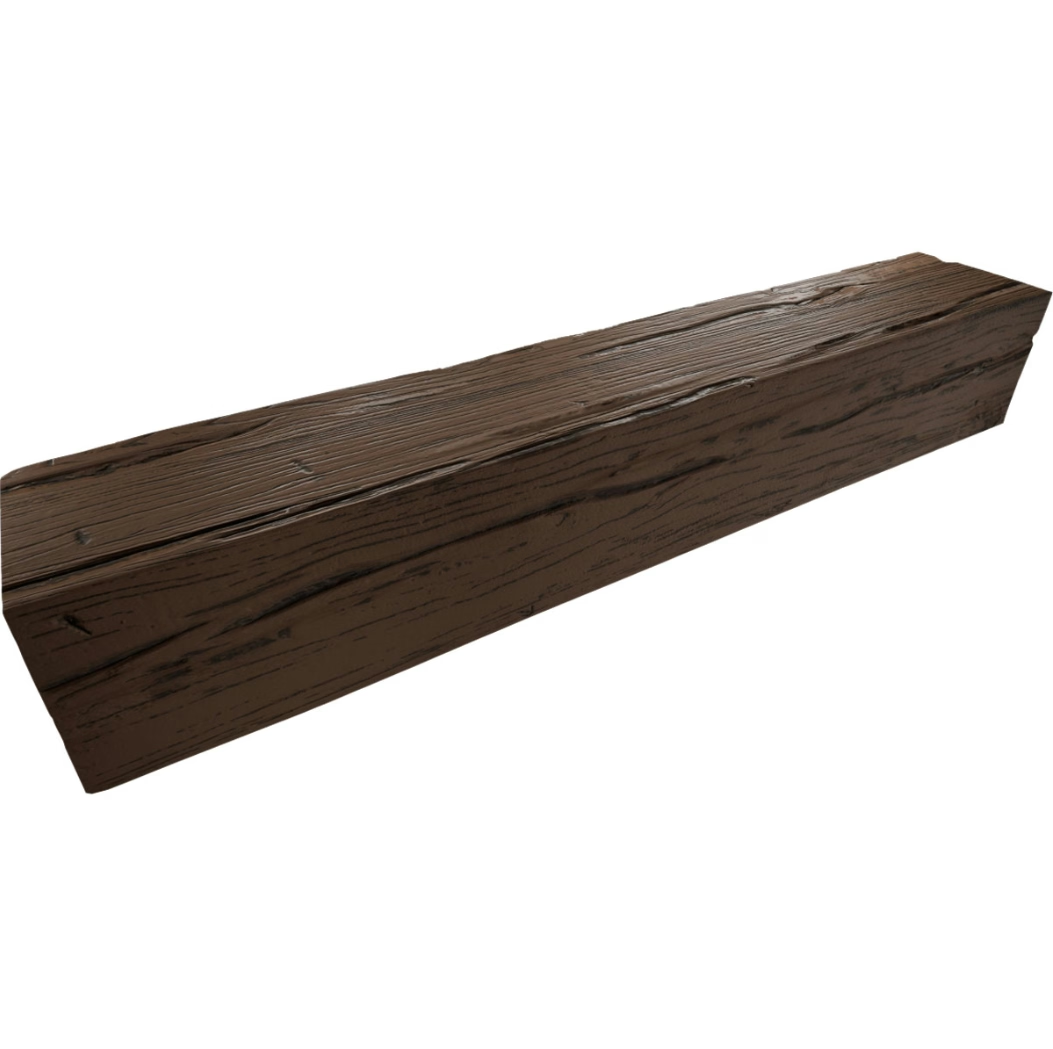
Installation Approaches for Renter-Friendly Application
The temporary nature of many apartment leases has traditionally discouraged significant renovations. PU faux beams, however, offer mounting solutions that satisfy both aesthetic ambitions and lease compliance requirements. Understanding these options empowers renters to pursue design improvements that remain removable upon move-out.
Adhesive mounting systems form the foundation of renter-friendly installation. Construction-grade liquid nails or specialized foam adhesive create strong bonds between polyurethane and various ceiling substrates. The key to success lies in surface preparation: ceilings must be clean, dry, and free from loose paint or debris. Primer application on both surfaces improves adhesion significantly, though test patches remain advisable in visible locations.
Mechanical fastening provides additional security where adhesive alone feels insufficient. Toggle bolts rated for ceiling use can anchor beams at strategic points without penetrating structural elements. The holes required are small and easily spackled during move-out, leaving minimal evidence of installation. Some installers combine both approaches—adhesive for continuous support and mechanical fasteners for positioning insurance.
Suspension systems represent the most sophisticated renter-friendly option. These kits include aircraft cables or decorative chains that descend from structural ceiling points, supporting beams at desired heights. The visual effect mimics exposed beam construction while maintaining complete separation from the original architecture. Installation requires drilling small anchor points, but these too are easily repaired during lease termination.
Maintenance Advantages for High-Density Living
Apartment buildings concentrate numerous households into shared spaces, making maintenance considerations critically important. Water damage from upstairs neighbors, humidity from adjacent bathrooms, and temperature fluctuations all challenge ceiling materials in ways single-family homes rarely experience. PU faux beams demonstrate remarkable resilience under these conditions.
Unlike natural wood, polyurethane does not absorb moisture. This characteristic prevents the swelling, warping, and mold growth that plagues wood ceilings in humid environments. Bathrooms and kitchens—traditionally problematic locations for wood ceiling elements—become viable applications for PU faux beams. The material maintains dimensional stability regardless of ambient humidity levels.
Temperature cycling affects natural wood more severely than most people realize. Each heating and cooling season causes microscopic expansion and contraction that gradually weakens structural integrity. PU faux beams experience no such degradation, maintaining their appearance and structural properties through thousands of temperature cycles. This durability translates directly into reduced maintenance requirements and extended replacement intervals.
Cleaning proves straightforward: a damp cloth removes dust and common contaminants without specialized products or techniques. The non-porous surface resists staining from cooking grease, tobacco smoke, and airborne pollutants that gradually discolor natural wood. For urban apartments near busy streets or industrial areas, this resistance to environmental soiling significantly reduces long-term care requirements.
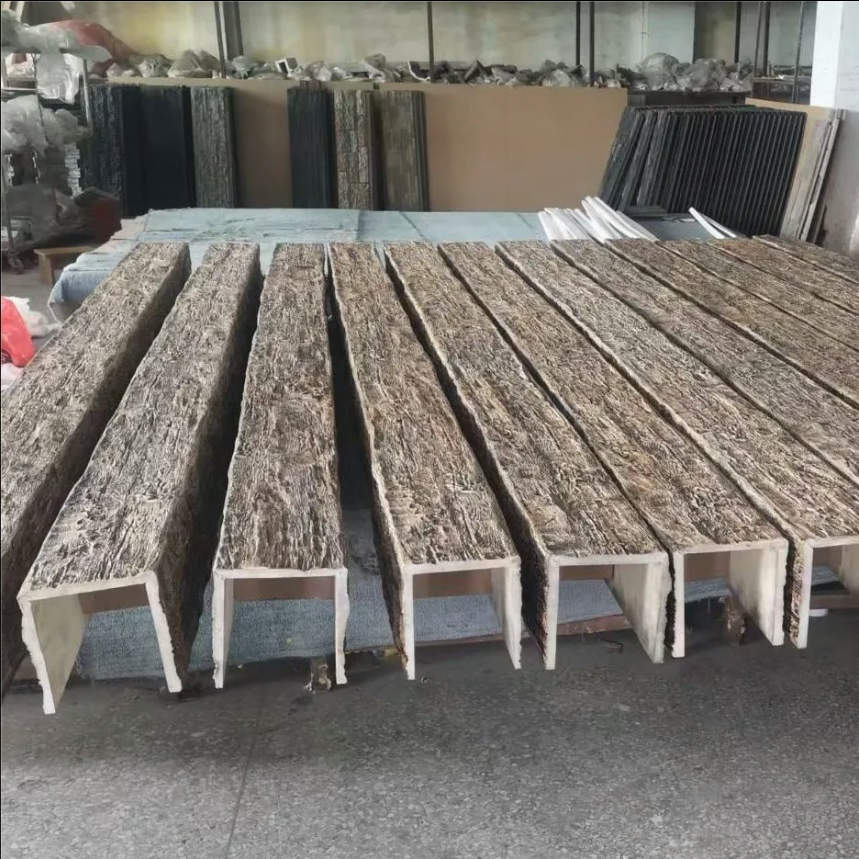
Cost Analysis for Budget-Conscious Renovators
Renovation budgeting in apartment contexts requires careful consideration of both material costs and installation expenses. PU faux beams typically cost 40-60% less than comparable natural wood products, with the gap widening for premium reclaimed or specialty timbers. This differential often covers the complete beam installation including all mounting hardware and finishing materials.
Professional installation quotes for traditional wood beams frequently exceed material costs by significant margins. Structural engineering assessments, specialized contractors, and equipment rental combine to create project costs that surprise even prepared homeowners. PU faux beam installation, by contrast, often falls within the capabilities of competent do-it-yourself renovators, eliminating labor costs entirely.
The move-out scenario deserves particular attention for renters calculating true project costs. Traditional renovations that permanently modify apartments rarely recover their costs through improved living conditions. PU faux beam installations that leave no lasting damage effectively convert a depreciating improvement into a temporary amenity with full cost recovery possible through reuse or resale.
Quality PU beams maintain their value remarkably well for secondary applications. The same beams installed in a first apartment often serve beautifully in subsequent homes, with proper storage between moves preserving their condition. This reusability fundamentally changes the economics of temporary housing, allowing residents to build permanent design elements that travel with them across multiple leases.
Technical References
ASTM standards cited in every specification
Test Data
Lab results from internal testing program
Updated 2026
Reviewed against current product specs


