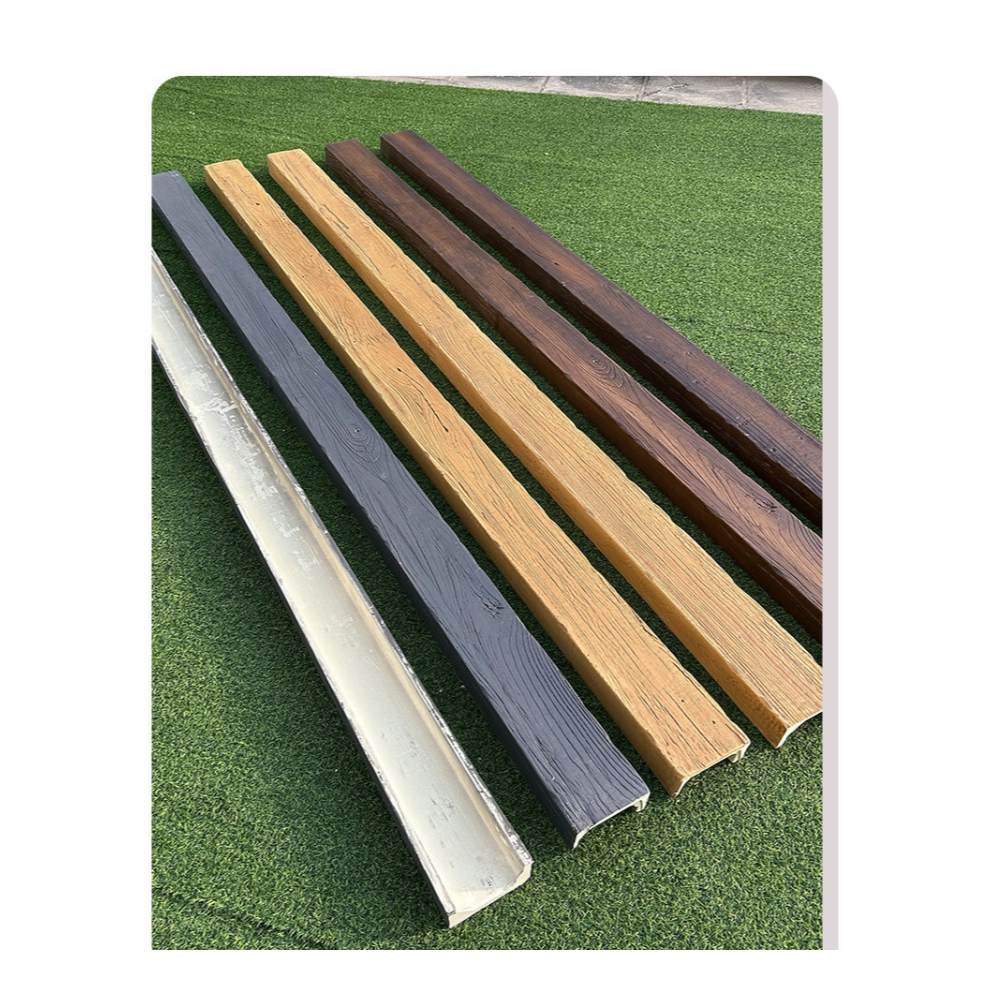
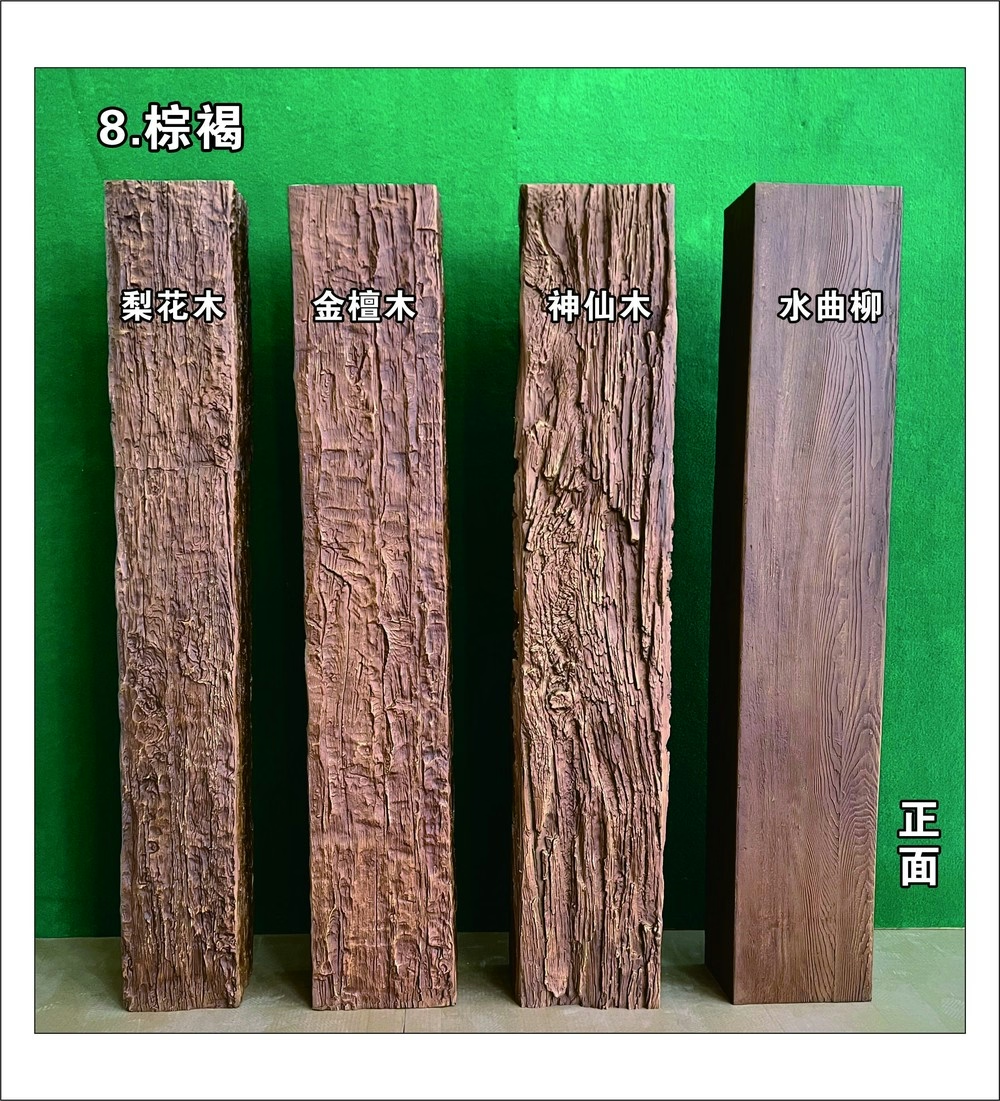
The quest for invisible mounting hardware has driven significant innovation in the faux beam industry. Installers and homeowners both prefer beam installations where support elements remain completely hidden, creating the impression of massive timber floating unsupported above living spaces. Yet achieving truly invisible mounting often proves impractical, particularly for longer spans or applications where adhesive bonding alone cannot guarantee lasting stability. Rubber straps bridge the gap between functional requirement and aesthetic preference, providing secure attachment while maintaining the authentic appearance that makes faux beams attractive.
James Morrison faced this dilemma during his mountain cabin renovation. The great room featured a dramatic 24-foot ceiling with exposed roof trusses that the design called for enclosing with parallel beam runs. Adhesive mounting seemed ideal until he realized the roof trusses weren't perfectly parallel—slight variations in spacing meant that adhesive-only installation would require extensive custom fitting. Rubber straps mounted to the truss structure provided the adjustability that accommodated these variations while remaining hidden from normal viewing angles once beams were positioned.
Rubber straps offer several advantages over rigid metal alternatives. The material's flexibility absorbs minor vibrations and thermal movement, preventing the stress concentrations that rigid hardware can create. Rubber's grip properties hold beams securely without requiring the aggressive tightening that metal straps demand. And rubber's natural appearance—dark and somewhat organic—blends more easily with beam surfaces than bright metal hardware.
Understanding Rubber Strap Mechanics
Rubber straps function through tension and friction rather than rigid mechanical fastening. Understanding these mechanics guides appropriate selection and installation practice.
Tension-based attachment uses straps pulled tight around beams, creating compressive force that prevents movement. The strap's elasticity maintains tension over time, compensating for any minor settling that occurs. Installation involves wrapping the strap around the beam, threading through a mounting point, and tightening to appropriate tension.
Friction-based grip complements tension by preventing lateral slippage between strap and beam surface. The rubber's coefficient of friction against PU foam surfaces exceeds that of metal against most materials, providing secure grip without damaging beam surfaces. This grip allows straps to support substantial loads without requiring penetrating fasteners through the beam itself.
Vibration absorption proves particularly valuable in certain applications. Buildings near railways, busy streets, or mechanical equipment generate vibrations that rigid mounting can amplify. Rubber's damping properties absorb these vibrations, preventing the rattling or buzzing that rigid mounting sometimes creates.
Strap Types and Selection Criteria
Rubber straps come in several configurations, each suited to different mounting scenarios and load requirements. Matching strap type to application ensures appropriate performance.
Standard rubber straps feature simple rectangular cross-sections with mounting holes at regular intervals. These versatile straps suit most beam mounting applications, with hole spacing determining adjustment increments. Width selection affects load capacity; wider straps distribute force over larger beam surfaces for heavier loads.
Reinforced rubber straps incorporate fabric or metal cores that increase tensile strength while maintaining rubber's grip properties. These hybrid straps suit applications where standard rubber cannot provide adequate load capacity. The reinforcement typically runs through the strap center, with rubber covering that maintains grip characteristics.
Specialty straps include configurations designed for specific applications: corner straps for intersecting beam configurations, suspension straps for lowered beam installations, and adjustable-length straps that accommodate variable mounting conditions. Understanding available options enables creative problem-solving for challenging mounting situations.
Installation Techniques for Secure Attachment
Proper installation technique ensures that rubber straps perform as designed throughout the installation's service life. The specific approach varies by strap type and mounting surface, but general principles apply across applications.
Mounting point preparation precedes strap installation. Points must be structurally sound, capable of supporting loads the strap will carry. Wood framing members typically accept screws directly; masonry or concrete requires appropriate anchors. Spacing between mounting points should follow manufacturer recommendations based on beam weight and strap capacity.
Strap threading through mounting points requires attention to prevent twisting or binding. Flat straps should align with their orientation throughout the path; twisting reduces effective width and load capacity. Routing straps through corners should maintain generous radii that prevent sharp bends.
Tensioning procedure affects both immediate security and long-term performance. Initial tension should secure the beam position while allowing minor adjustments. Final tension, applied after adjustments are complete, should be firm but not excessive—over-tightening risks beam deformation or strap failure over time.

Load Calculations and Safety Margins
Professional installations require understanding load requirements and ensuring adequate safety margins. Underestimating loads risks failure; overestimating wastes money on unnecessary hardware.
Beam weight calculations determine basic load requirements. Manufacturer specifications provide unit weights; multiplying by beam length yields total beam weight. Add estimated fixture loads—light fixtures, ceiling fans, decorations—for total load per mounting point.
Safety factors multiply calculated loads to account for uncertainties. Recommended safety factors range from 2:1 for static loads to 5:1 or higher for dynamic loads or vibration-prone environments. These factors ensure that strap capacity exceeds actual requirements substantially.
Load testing before final installation provides verification that selected hardware performs adequately. Temporary installation with gradual loading identifies any weaknesses before permanent completion. This testing proves particularly valuable for unusual applications or custom configurations.
Combining Rubber Straps with Other Mounting Methods
Rubber straps rarely provide the complete mounting solution for complex installations. Understanding how to combine strap attachment with adhesive, mechanical fastening, or other methods ensures comprehensive support throughout the assembly.
Adhesive and strap combination provides both immediate positioning and long-term security. Adhesive bonds the beam surface to the mounting substrate, while straps provide secondary support that prevents adhesive failure from causing collapse. This combination addresses the primary weakness of adhesive-only installations.
Mechanical fastening through straps provides adjustable connection points where direct fastening proves impractical. Straps mounted to structural elements create attachment points that beams can hang from or rest against, simplifying complex installations where direct approach isn't possible.
Suspension configurations use straps to create lowered beam installations where beams hang below structural ceiling planes. Multiple straps at appropriate intervals distribute load while maintaining beam alignment. This approach accommodates uneven ceiling surfaces and creates the appearance of greater ceiling height.
Maintenance and Inspection Protocols
Even properly installed rubber straps benefit from periodic inspection that identifies developing issues before failure occurs. Simple protocols extend installation life significantly.
Visual inspection twice yearly checks for signs of deterioration, including cracking, discoloration, or surface degradation. These symptoms indicate aging that may compromise performance. Early identification allows planned replacement before unexpected failure.
Tension verification ensures that straps maintain appropriate tightness. Minor tension loss over time is normal; significant loss indicates problems requiring adjustment. Retensioning per manufacturer guidelines restores appropriate security.
Environmental assessment identifies conditions that may accelerate strap deterioration. UV exposure, chemical contact, extreme temperatures, and physical abrasion all affect rubber lifespan. Addressing these conditions extends strap service life considerably.
Technical References
ASTM standards cited in every specification
Test Data
Lab results from internal testing program
Updated 2026
Reviewed against current product specs