
A ceiling installation is only as polished as its smallest details. The main beam segments may be beautifully textured and perfectly colored, but if the joints, edges, and transitions are left unfinished, the overall impression is one of incompleteness. This is where soffit accessories come into play — the trim pieces, closures, moldings, and decorative elements that transform a collection of beams into a cohesive architectural system. For interior designers and trade professionals, understanding the full range of available soffit accessories is one of the most effective ways to elevate a project from good to exceptional.
Understanding Soffit Accessories
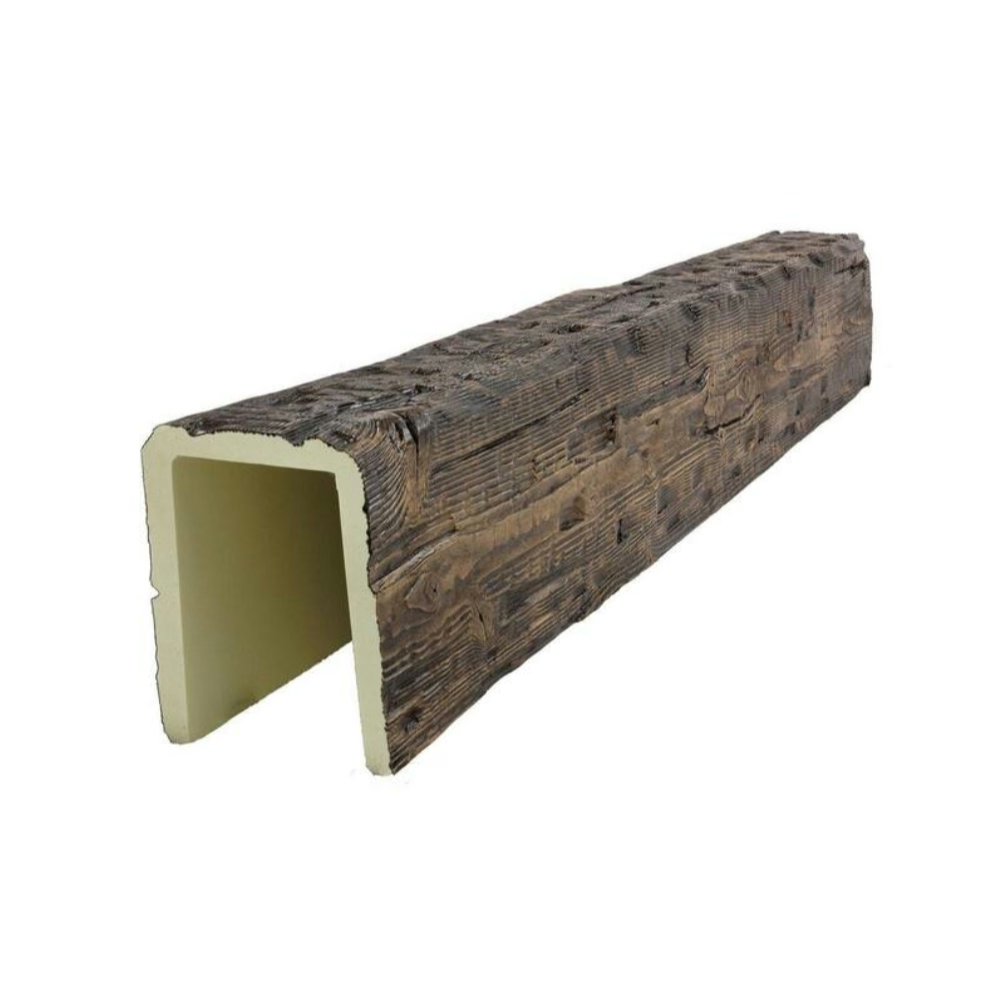
The term "soffit" in the context of beam installations refers to the underside visible surface of a ceiling structure. Soffit accessories are the components installed along this surface to cover gaps, hide fasteners, create transitions between different ceiling planes, and add decorative detail. In the world of polyurethane faux beams, these accessories are typically manufactured from the same or similar materials as the beams themselves, ensuring consistent color, texture, and expansion characteristics.
The primary benefit of matching accessory materials to the beams is visual coherence. A closure trim piece made from the same polyurethane formulation and finished in the same stain will blend seamlessly with the adjacent beam surface, creating the appearance of a single integrated system rather than a collection of mismatched parts.
Closure Trims and End Caps
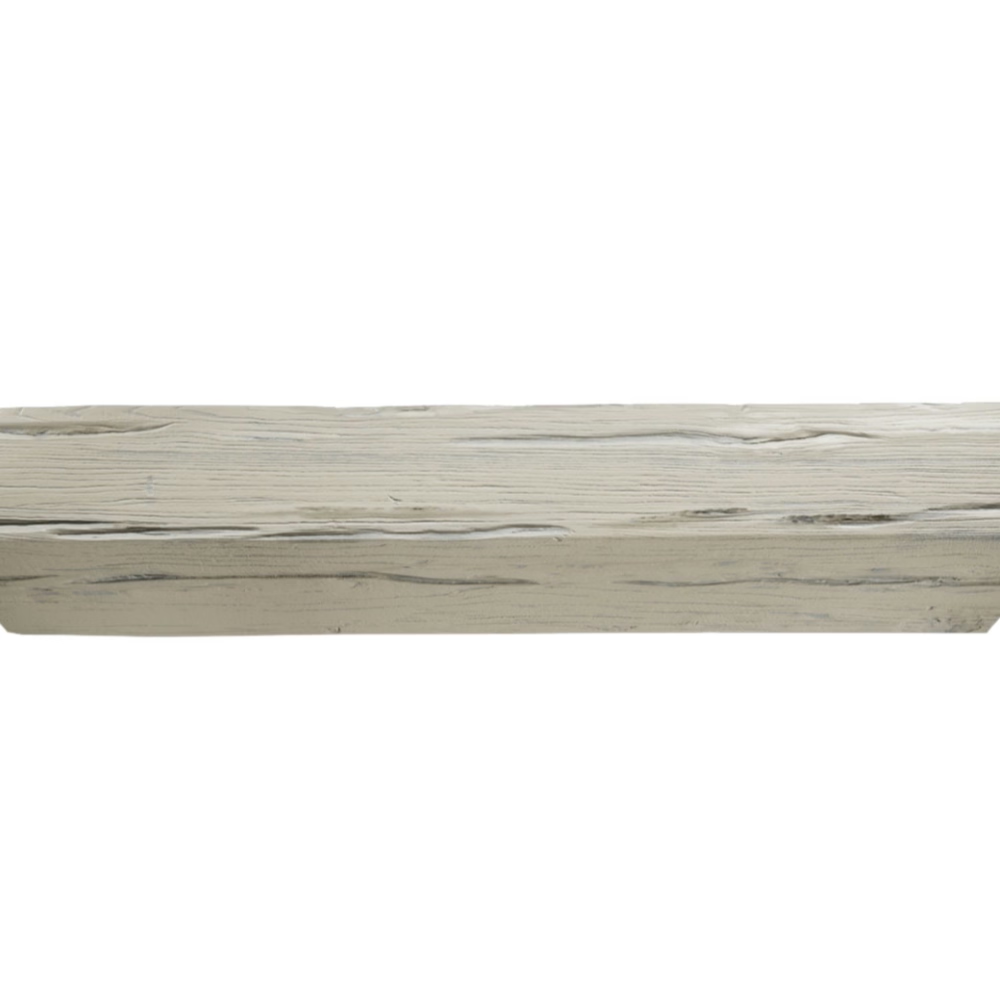
One of the most commonly needed accessories is the end cap or closure trim. When a beam terminates against a wall, a ceiling edge, or another structural element, the cut end of the beam needs to be finished cleanly. A properly designed end cap covers the cross-sectional surface of the beam, which would otherwise expose the polyurethane core and look unfinished. These caps are typically designed to press-fit or adhere over the beam end, creating a flush appearance that mirrors the beam's natural termination.
Closure trims serve a similar function along the length of a beam installation. Where two beams meet at a joint, a narrow trim strip can cover the junction and hide any slight misalignment or gap. In installations with multiple parallel beams, closure trims between beams create a unified ceiling plane that reads as a single architectural feature rather than a series of individual elements.
Crown and Dentil Molding Accessories
For projects aiming for a more traditional or classical aesthetic, crown molding accessories add significant visual impact. Polyurethane crown moldings are available in a range of profiles, from simple ogee and cove shapes to elaborate dentil trim patterns. These moldings are typically installed along the upper edges of beams where they meet the ceiling surface, or as decorative bands across beam faces.
The advantage of polyurethane crown moldings over traditional wood or plaster alternatives is remarkable lightness combined with excellent detail reproduction. Intricate dentil courses and complex molding profiles can be cast in polyurethane with sharp, consistent detail that would be difficult and expensive to achieve in wood. Installation is also simplified because the lightweight material does not require the heavy-duty fastening systems that solid wood moldings demand.
Light Channel and Vent Trims
Modern ceiling designs frequently incorporate lighting fixtures, ceiling fans, and ventilation systems that must be integrated with beam installations. Polyurethane soffit accessories address these practical needs with dedicated trims and housings designed to accept fixtures while maintaining the beam's visual appearance.
Light channel trims create recessed channels along beam faces or soffit surfaces that can accommodate LED strip lighting or linear light fixtures. These trims are designed to dissipate heat appropriately and provide a clean housing for the fixture while allowing the beam surface to remain the dominant visual element. Vent trims serve a similar function for ceiling ventilation grilles, providing a decorative frame around functional openings.
Decorative Medallions and Rosettes
Where beams intersect or where decorative fixtures attach to the ceiling, polyurethane medallions and rosettes add a finishing touch that elevates the entire installation. These ornamental elements are available in both traditional period designs and contemporary geometric patterns, allowing them to complement a wide range of interior styles.
Installing medallions around chandelier or ceiling fan mounting points serves a dual purpose. Aesthetically, they create a focal point that draws the eye upward and frames the fixture attachment. Practically, they cover the mounting hardware and ceiling box, creating a clean transition between the fixture and the surrounding beam system.
Sourcing and Specification
When specifying soffit accessories for a project, always source matching components from the same manufacturer or product line as the primary beams. While some generic trim products may appear similar at first glance, differences in surface texture, color depth, and expansion coefficients can create visible inconsistencies once installed. The extra cost of sourcing coordinated accessories is almost always worth the improved final appearance.
For large-scale commercial projects, consulting with the manufacturer early in the design phase can yield custom accessory designs that are precisely tailored to the project's architectural requirements. Many manufacturers offer tooling capabilities to create custom moldings, medallions, and trims for projects with specific design intent that cannot be met by standard catalog items.
Technical References
ASTM standards cited in every specification
Test Data
Lab results from internal testing program
Updated 2026
Reviewed against current product specs


