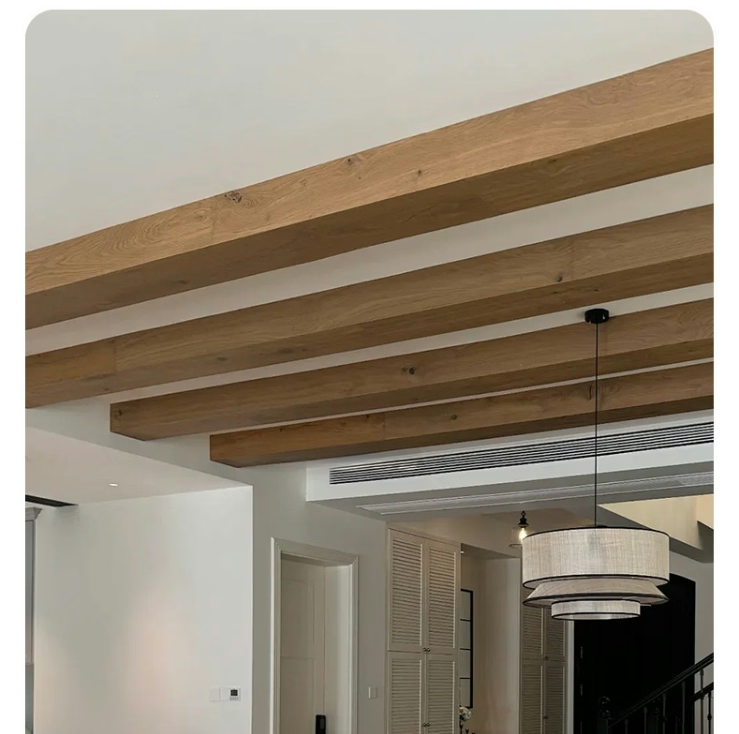
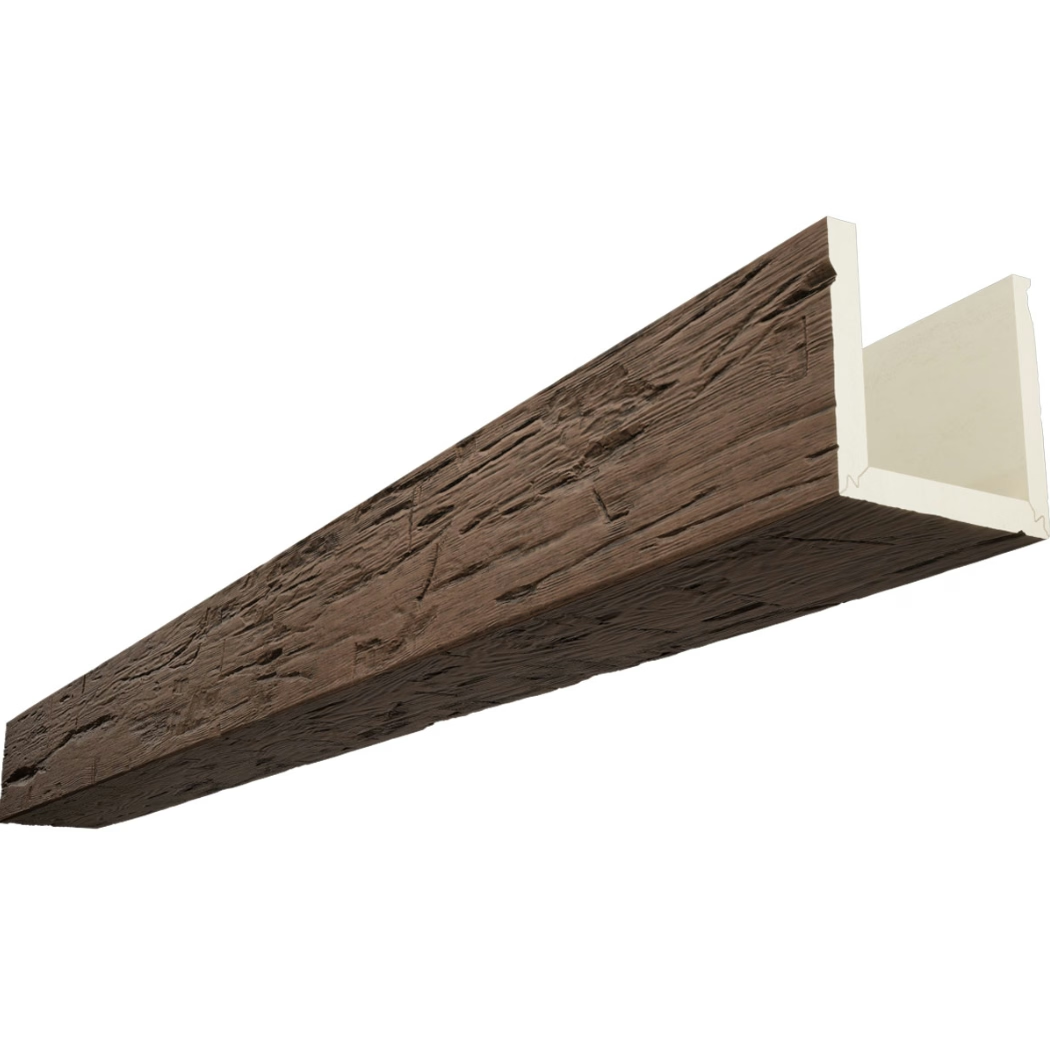
The professional worlds of photography, film production, retail display, and museum exhibition share a common need: ceilings that provide both visual appeal and the structural infrastructure for sophisticated lighting systems. Spotlight-ready PU faux wood beams have emerged as a preferred solution in these environments because they deliver the warm, character-rich aesthetic of timber beams while accommodating the precise lighting requirements that display work demands. Understanding how these beams are specified and installed for professional display applications is a valuable skill for trade professionals working in commercial interior design.
The Studio Environment's Unique Requirements
Photography studios and film production spaces face lighting demands that few other environments encounter. Lighting rigs must be positioned with millimeter precision to achieve the desired mood, depth, and subject definition. Ceiling-mounted track systems, C-stands with overhead arms, and purpose-built lighting grids all require ceiling structures that can support significant weight and provide reliable attachment points.
Real timber beams in these environments present a problem: they are heavy, making structural support expensive, and their irregular surfaces make precise lighting positioning difficult. PU faux beams solve both problems. Their lightweight construction reduces structural demands dramatically — a PU beam may weigh a fraction of its timber equivalent — while their smooth, consistent profiles provide predictable mounting surfaces for track systems and hardware.
The thermal consideration is equally important. Studios using continuous light sources or powerful tungsten fresnel fixtures generate significant heat at the ceiling plane. Polyurethane beams with appropriate thermal ratings handle this exposure better than real timber, which can warp, crack, or present fire hazards under sustained thermal stress.
Track Lighting Integration
Track lighting is among the most common lighting configurations in display environments, and integrating it with faux beams requires thoughtful specification. The track itself must be mounted to the ceiling structure — not to the decorative beam — but the beam's position can be coordinated with the track layout to create a harmonious visual relationship.
One popular approach positions beams parallel to or perpendicular to the track runs, with the track mounted to the ceiling plane between or alongside the beams. This preserves the beam's visual impact as an architectural element while keeping the functional lighting infrastructure separate and adjustable.
For environments where the lighting tracks should be less visually prominent, beams can be installed with a raised profile that positions the track behind the beam's leading edge, creating the appearance of light emerging naturally from the beam structure. This configuration works particularly well in retail environments where the ceiling is a significant element of the brand experience.
Display Showroom Applications
Retail showrooms and product display spaces benefit from the warmth that timber-style beams provide, counterbalancing the cooler, more clinical aesthetic that often characterizes retail environments. A furniture showroom with exposed faux timber beams on the ceiling creates a showroom-within-a-showroom atmosphere that helps products feel at home and encourages customers to envision those products in their own spaces.
In these applications, the spotlight-ready feature takes on a practical role: directional accent lighting that highlights specific products or display areas. Track-mounted spotlights or gimbal fixtures can be positioned to wash light across feature walls, illuminate display platforms, or create dramatic pools of light that draw attention to featured merchandise.
Museum and gallery applications take this concept further, using beam-integrated lighting to meet strict conservation requirements while maintaining an aesthetically appropriate environment. Faux beams can house specialized lighting — such as museum-grade LED systems with UV and infrared filtering — that protects sensitive artworks while providing the precise color rendering that art display demands.
Material Selection for Display Environments
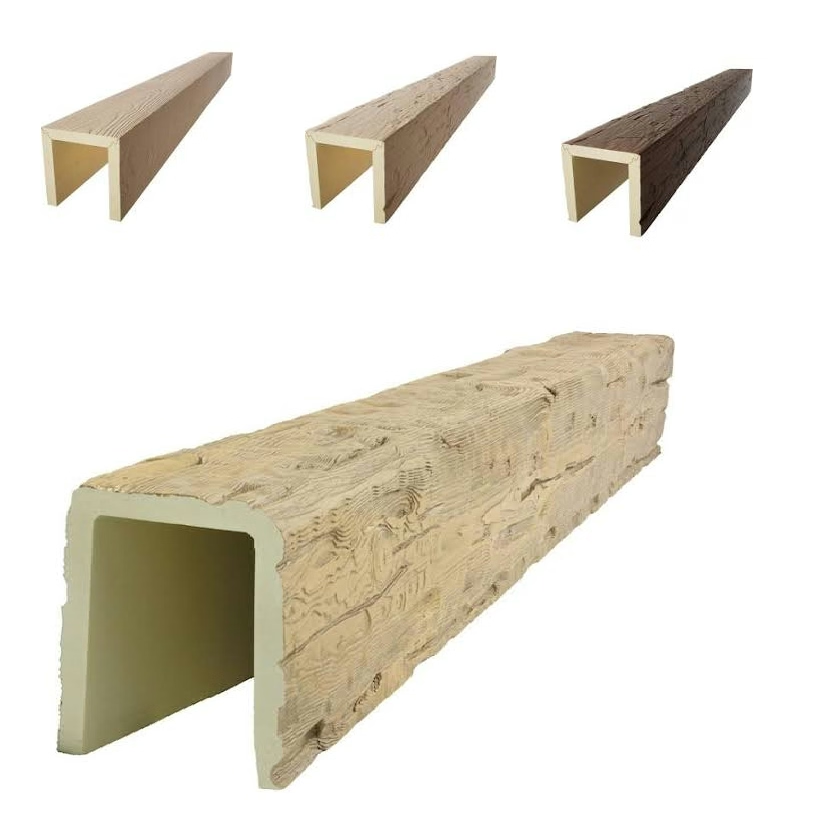
Not all PU beam formulations are equally suited to display environments. For studios using high-output lighting, beams with higher thermal resistance ratings should be specified. For galleries where color accuracy is paramount, beam finishes should be tested to verify they do not introduce color casts to the reflected light. For environments with food service or high humidity, such as restaurant display kitchens, beams with enhanced moisture resistance and easy-clean surface coatings may be appropriate.
Fire performance is a critical consideration in any commercial application. Verify that the beam product meets applicable fire classification requirements for the specific occupancy type and jurisdiction. Most quality PU beam manufacturers can provide fire test data and classification ratings, and in many jurisdictions, compliant materials may be required by code.
Installation for Commercial Display
Commercial installations typically involve more complex coordination than residential projects. The lighting designer, the general contractor, the ceiling installer, and the beam supplier all need to be in alignment regarding fixture positions, mounting requirements, and finish specifications. Establishing clear lines of communication among these parties early in the project prevents costly revisions during installation.
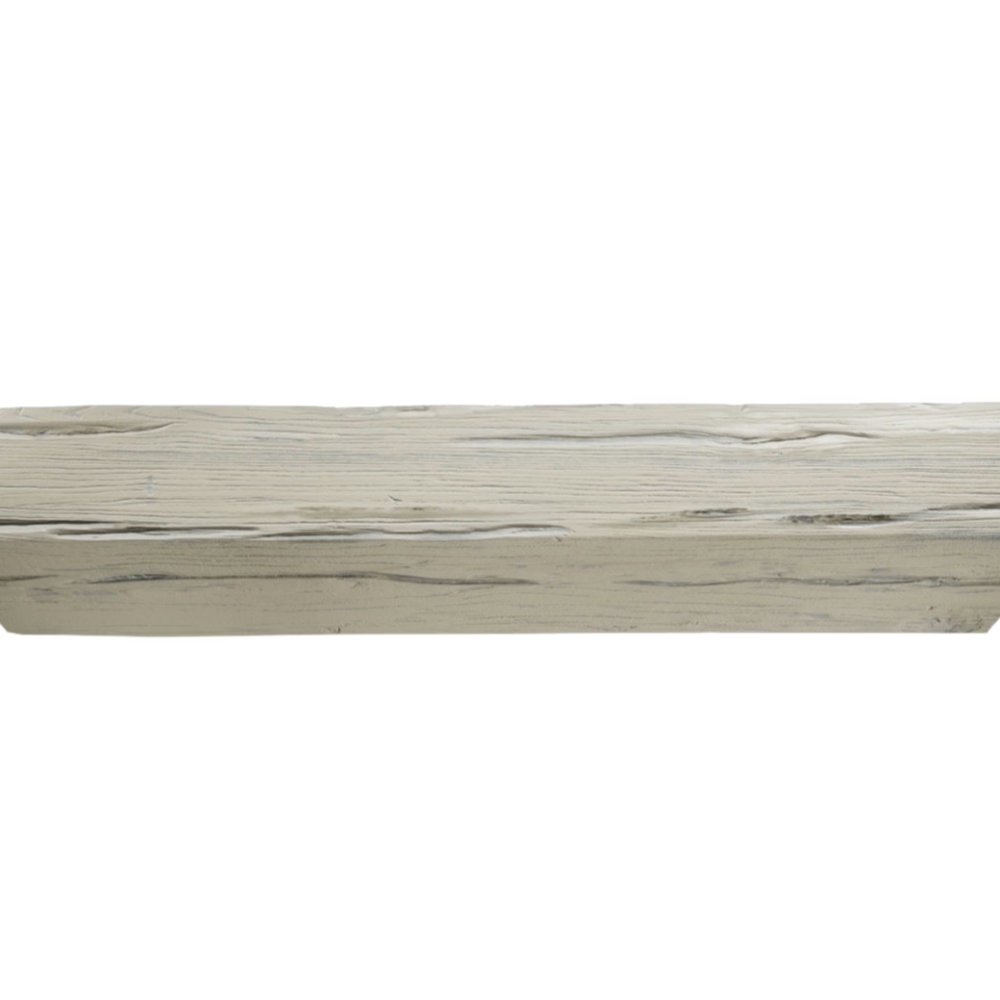
For very large installations — a sprawling retail chain with consistent beam specifications across multiple locations, for instance — sourcing all beams from a single production batch ensures color and texture consistency across the project. Any variations between batches are likely to be subtle but may be noticeable in the consistent lighting of a well-designed retail environment.
Documentation of the installed lighting configuration is as important in display environments as in any other commercial setting. As lighting needs evolve and fixtures are updated, having accurate as-built drawings that show beam positions, fixture locations, and wiring routes ensures that future modifications are completed efficiently and without damaging the beam installation.
Technical References
ASTM standards cited in every specification
Test Data
Lab results from internal testing program
Updated 2026
Reviewed against current product specs