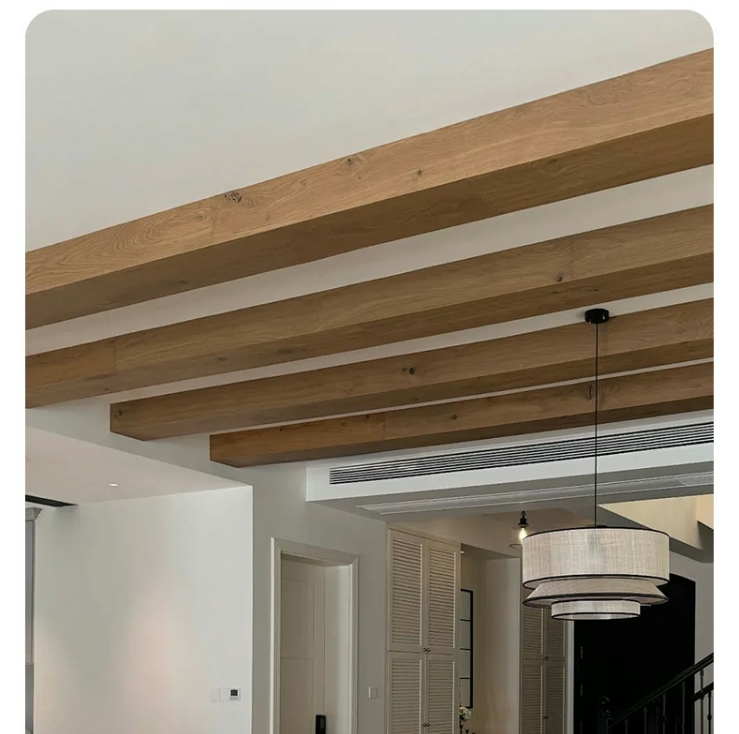
When a hotel chain renovates fifty properties across a region, or a real estate developer installs beams in five hundred new homes, or a theme park adds decorative timber ceilings to a dozen themed environments, the volume of beams required is measured not in dozens but in thousands. Supplying these massive orders requires manufacturing capabilities, quality systems, and logistics planning that go far beyond what is needed for individual retail or residential orders. Understanding what mass production capabilities mean for large project beam supply is essential for anyone managing significant commercial construction or renovation programs.
Production Capacity and Manufacturing Scale
The first indicator of a manufacturer's mass production capability is the physical scale of their production facilities. A manufacturer running a handful of molds in a small workshop will struggle to produce thousands of beam units within a realistic timeframe, while a manufacturer with purpose-built production lines and multiple molds can turn over large volumes efficiently.
Mold count matters because each mold can produce only one beam at a time, and the molding process itself requires a production cycle. Manufacturers with extensive mold libraries can run multiple products or sizes simultaneously, increasing effective throughput. The mold cycle time — how long each pour takes to set and release — determines the maximum production rate for each mold and, by extension, for the entire operation.
Facility space for staging and curing is equally important. PU beams require time after production for the material to fully cure before they can be finished, packaged, and shipped. Manufacturers with dedicated staging areas can manage large production runs without interrupting ongoing manufacturing. Limited staging space creates bottlenecks that slow production even when the molds themselves are operating efficiently.
Quality Systems for High-Volume Production
Maintaining quality consistency across thousands of units is one of the greatest challenges in mass production. In a small production run, an experienced operator can monitor each unit closely. At scale, quality must be built into the process through systematic controls, automated monitoring, and rigorous inspection protocols.
Color management is perhaps the most critical quality system for beam production. In high-volume production, stain and paint are mixed in large batches, and any variation in the base materials, mixing ratios, or application conditions can create differences between the first unit and the ten-thousandth. Leading manufacturers use automated color mixing systems, spectrophotometric color measurement, and documented color standards that maintain consistency across any production volume.
Statistical process control applies the same principles to all production parameters: material ratios, processing temperatures, cycle times, and finishing application rates. When these parameters are monitored systematically and adjusted based on statistical analysis rather than guesswork, the result is predictable, consistent output regardless of batch size.
Production Scheduling and Lead Time Planning
Large project orders require extended lead time for production planning. A manufacturer who can deliver fifty beams next week cannot necessarily deliver five thousand beams on the same timeline. Responsible manufacturers communicate their production capacity honestly and work with project managers to develop realistic schedules that account for the realities of manufacturing throughput.
Production scheduling for large orders typically involves dividing the total quantity into production lots, each of which can be completed within a manageable timeframe. Each lot is produced, finished, and staged before the next begins. This approach allows quality verification at each stage and provides natural checkpoints for the project team to review product before committing to the full order.
Buffer inventory — an additional percentage of the ordered quantity held in reserve — is a standard practice in mass production supply. This buffer covers breakage during finishing and packaging, shipping damage, and installation errors that require replacement pieces. For large projects, a buffer of five to ten percent of the total quantity is typical. Negotiating the buffer amount and who bears its cost should be part of the initial order agreement.
Logistics and Shipping for Large Quantities
The logistics of moving thousands of beams from a manufacturing facility to a project site — or to multiple project sites — requires careful planning that is distinct from standard shipping arrangements. Beam dimensions, even when hollow, create shipping challenges that compact products do not present.
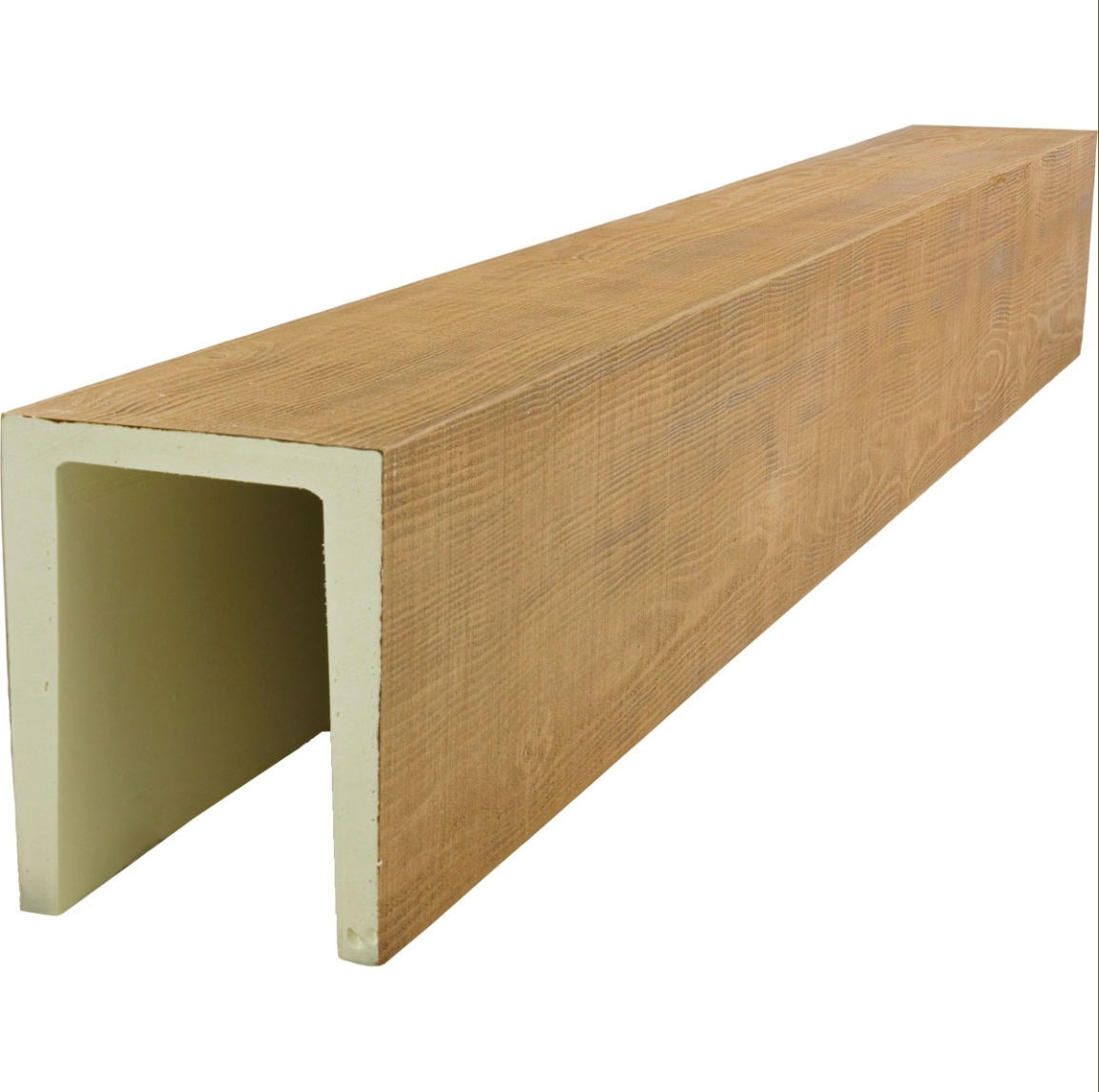
Packaging for mass production shipments must be engineered for palletization and container loading efficiency. Custom pallet configurations that maximize container or trailer utilization reduce freight costs per unit significantly. Unitized packaging — bundles of beams secured to pallets with protective wrapping — allows efficient loading and unloading with standard forklift equipment.
For international projects, containerization planning begins at the production design stage. A manufacturer who understands container dimensions and loading efficiency can design beam lengths and bundle configurations that minimize wasted space and maximize the quantity shipped per container. This directly affects the per-unit freight cost and the project's total landed cost.
Multi-site delivery planning adds another layer of complexity for projects that involve installation at several locations. Sequencing deliveries to match installation schedules at each site, coordinating with multiple receiving parties, and managing the logistics of partial shipments require experienced project management that not all manufacturers can provide.

Contract Structures for Large Project Supply
Large project orders are typically governed by formal contracts that define not just price and quantity but also quality specifications, inspection procedures, acceptance criteria, and remedies for non-conformance. These contracts protect both parties by establishing clear expectations and agreed-upon processes for addressing issues.
Quality specifications should reference specific standards, sample approvals, or test requirements that define what constitutes acceptable product. Vague quality requirements create disputes; precise specifications prevent them. The approved sample — signed and dated by both parties — is the most reliable reference for what the finished product must match.
Payment terms for large orders typically involve deposits, progress payments tied to production milestones, and a final payment upon delivery or acceptance. The specific structure should reflect the project's risk allocation and cash flow requirements. Both parties benefit from terms that are fair, clear, and documented before production begins.
Defect and non-conformance procedures should specify how damaged or non-conforming products will be handled, who is responsible for replacement costs, and what timeline applies. Having these procedures established before any issues arise prevents costly disputes that can derail project schedules.
Technical References
ASTM standards cited in every specification
Test Data
Lab results from internal testing program
Updated 2026
Reviewed against current product specs