
Modern apartment design has embraced an aesthetic of clean lines, neutral palettes, and open floor plans that appeals to many buyers and renters. But the same minimalism that makes model apartments easy to furnish can make them feel cold and impersonal when potential buyers or tenants walk through. Faux ceiling beams offer one of the most effective ways to introduce warmth, character, and architectural interest into these contemporary spaces — without the structural complications of real timber and without committing the space to a single decorative style permanently.
Why Developers and Stagers Choose Faux Beams
The appeal of faux beams for real estate staging is fundamentally about return on investment. Installing real timber beams in an apartment for staging purposes would be prohibitively expensive, and the permanence of real timber makes it impractical for spaces that will eventually be occupied by tenants with their own design preferences. Faux beams deliver the visual impact of timber at a fraction of the cost and can be installed, maintained, and potentially removed with far less complexity.
For property developers completing multiple units in a single building, the lightweight nature of PU beams offers practical construction advantages. Installing a ceiling beam system that weighs a small fraction of the equivalent timber system reduces the structural requirements and installation labor proportionally. In multi-story buildings, this weight reduction accumulates across many units into meaningful structural savings.
The ease of installation also benefits staging applications. Staging companies and property managers often need to prepare multiple units for viewing on compressed schedules. Faux beams can be installed in a single day by a small crew, transforming a blank ceiling into a dramatic architectural feature in time for a photo shoot or open house. The speed of transformation is itself a selling point for the product.
Design Strategies for Modern Apartment Staging
The challenge of staging modern apartments with beams is that contemporary spaces are defined by minimalism, and adding beams without careful consideration can create visual clutter that undermines the very qualities that make the space attractive. The key is restraint — selecting beam styles and installation approaches that enhance rather than compete with the modern aesthetic.
Narrow-profile beams in a simple, clean texture work better in contemporary spaces than the heavy, deeply textured beam styles that suit rustic or traditional interiors. A single beam across the center of a living room ceiling, or a pair of parallel beams running perpendicular to the room's longest wall, adds warmth and visual interest without overwhelming the space. The beam should feel like a deliberate design addition, not a jarring intrusion.
Color selection for modern apartment staging typically gravitates toward mid-tone natural finishes or light, washed-out whites and grays. Extremely dark beams can close in a space and make it feel smaller, which is the opposite of the effect most staging applications seek. A honey oak or natural pine finish reads well in the bright, neutral environments typical of contemporary apartments and photographs beautifully in listing images.
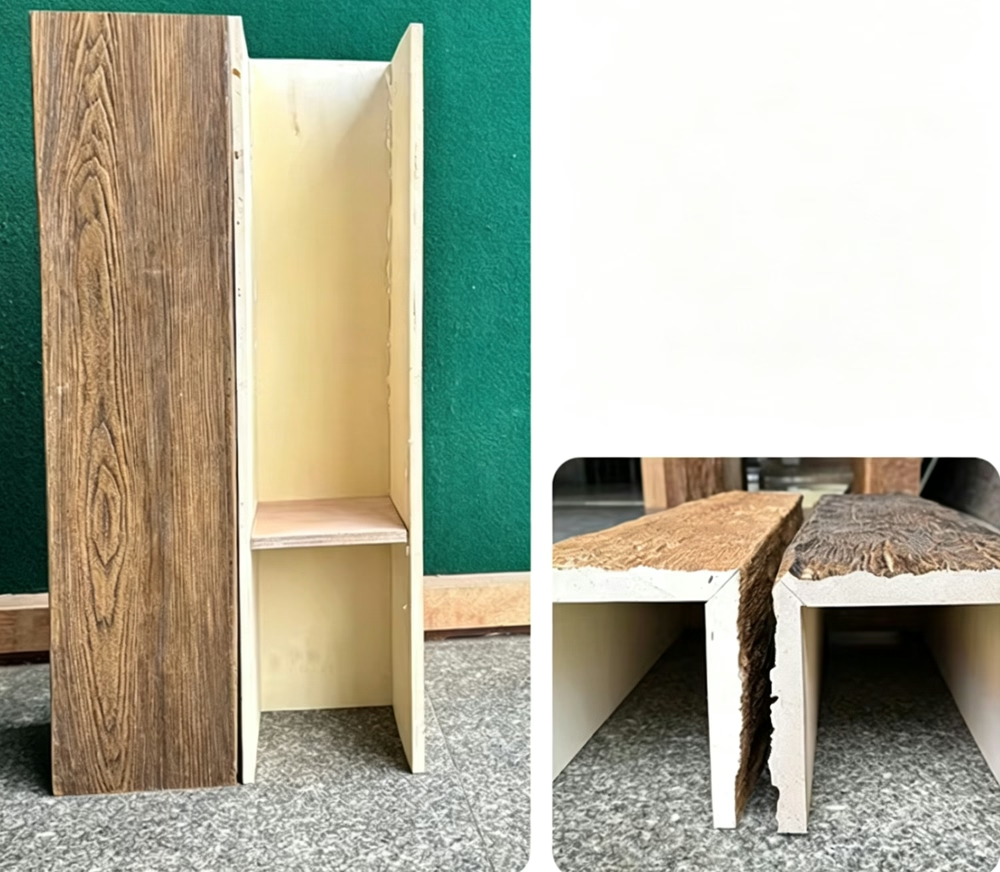
Cross-Beam Configurations for Visual Interest
The cross-beam configuration — two sets of beams running perpendicular to each other in a grid pattern — is one of the most dramatic ways to use beams in staging applications. In a large open-plan apartment, a cross-beam grid creates an immediate sense of architectural intention that photographs exceptionally well. The grid provides visual structure that makes the space feel designed rather than merely finished.
For staging purposes, the cross-beam grid should be scaled to the room's proportions. Beams that are too thick relative to the room's dimensions will dominate the space oppressively. Beams that are too thin will look trivial. The ideal proportion creates a visual framework that feels substantial without being heavy — a ratio of roughly one-eighth to one-tenth of the room's width is a good starting point for beam width selection.
In spaces with particularly high ceilings, the cross-beam grid serves the additional function of bringing the visual scale of the room down to a more intimate proportion. A room that feels cavernous with a plain ceiling becomes a grand, impressive space with a beam grid — the scale is the same, but the perception changes because the eye has more visual information to process.
Beams as Photography and Video Props
In the age of online property listings, the quality of listing photography and video can make or break a property's marketing success. Faux beams are extraordinarily photogenic architectural elements because they create strong shadows, add three-dimensional interest, and introduce natural material warmth that resonates with viewers on an emotional level.
Strong directional lighting amplifies the beams' shadow patterns and three-dimensional form in listing photos. A room photographed with the right lighting makes the beams the star of the image, conveying the sense of quality and architectural attention that justifies premium pricing. Beams photographed under flat, even lighting look much less impressive, which is worth considering when preparing a space for professional photography.
Video walkthroughs benefit from the movement of light across beam surfaces as the camera pans through a room. The texture and grain of the beam surface, caught in shifting light, adds life and texture to what might otherwise be a static architectural shot. For luxury listings that aim to convey an aspirational lifestyle, this visual richness is exactly what is needed.
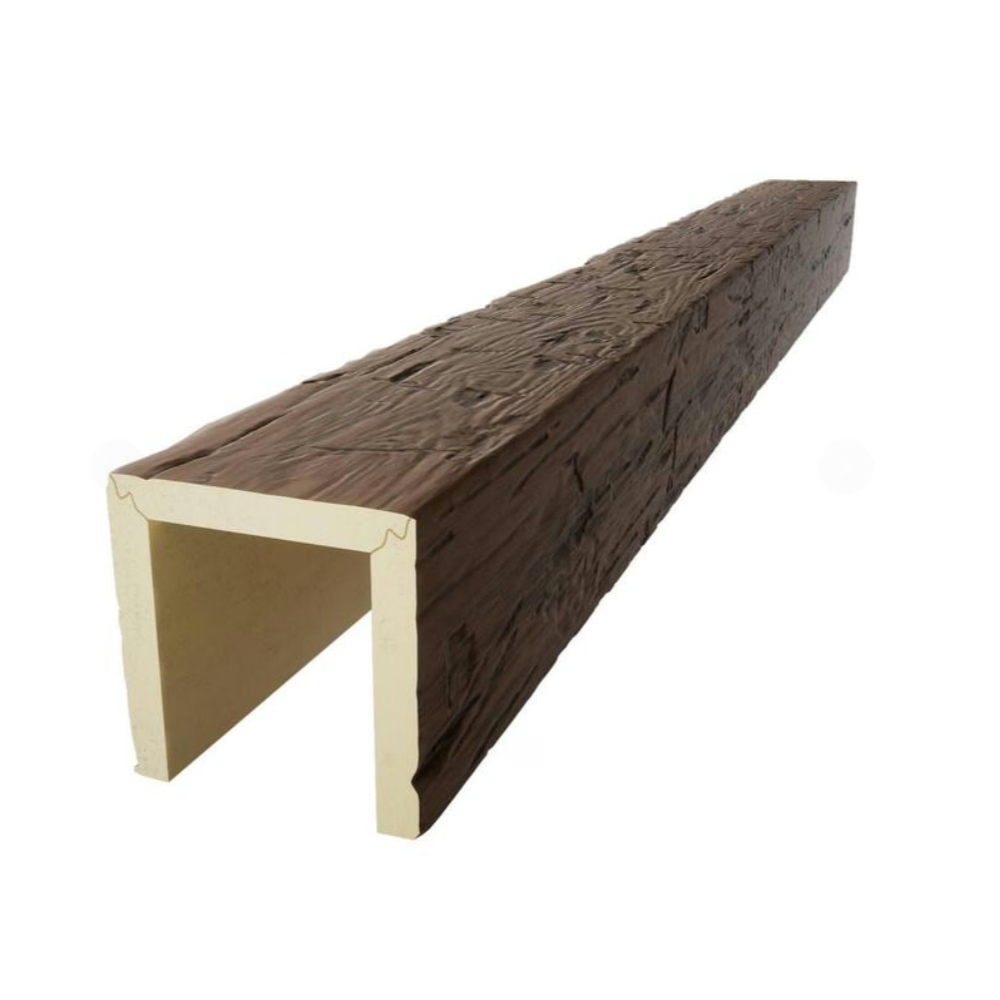
Cost Considerations for Property Staging
The economics of beam installation for property staging must be weighed against the expected return. In competitive real estate markets, any improvement that accelerates a sale or increases the sale price pays for itself. Properties that languish on the market often benefit from improvements that change the buyer's perception of the space, and beams can be precisely the kind of transformation that tips a property from overlooked to desirable.
For rental properties and multi-unit developments, the investment calculation is different. Beams that enhance the appeal of a rental unit can support higher rents and attract tenants more quickly, shortening vacancy periods. The durability of quality PU beams means this investment lasts for years without the maintenance demands of real timber, making it a sound ongoing improvement rather than a one-time staging expense.
Property managers who find beams to be a consistently effective staging tool may want to invest in reusable beam kits that can be installed and removed for different properties. While this approach is less common than permanent installation, the modular nature of most beam systems makes it technically feasible for teams that stage many properties per year.
Technical References
ASTM standards cited in every specification
Test Data
Lab results from internal testing program
Updated 2026
Reviewed against current product specs


