International trade in construction materials demands documentation precision that domestic transactions rarely require. Customs authorities worldwide demand specific information formats, tariff classifications, and proof of value before releasing imported goods. Polyurethane faux beams, shipped in containers from manufacturing centers to markets globally, must travel with complete documentation packages that facilitate rather than obstruct border crossing.
The commercial invoice serves as the primary document establishing transaction details for customs purposes. This document establishes the transaction value used for duty assessment, provides product descriptions for tariff classification, and identifies the parties involved in the sale. Errors or omissions in commercial invoices frequently cause shipment delays, storage charges, and unnecessary customs examinations.
The packing list provides physical description of shipped goods in formats that customs officers and freight handlers can quickly verify. carton counts, individual weights, and package dimensions allow rapid assessment of whether received goods match documentation. Discrepancies between packing lists and actual shipments trigger investigations that delay clearance while potentially imposing penalties on importers.
Commercial Invoice Requirements
Legitimate commercial invoices must include specific information elements that customs authorities have determined essential for proper assessment. Seller and buyer identification with complete addresses establishes the transaction parties. Product descriptions must be sufficiently detailed to enable tariff classification, including material composition, intended use, and any relevant technical specifications. Generic descriptions like "building materials" prove inadequate for customs purposes.
Transaction value documentation requires disclosure of the price actually paid or payable for the goods. This value includes not only the unit price but also any additional charges that might be incorporated into the commercial transaction. When related parties conduct transactions, customs authorities might require additional documentation establishing that prices reflect arm's length dealing. Transfer pricing documentation protects both importers and exporters from customs challenges.
Country of origin marking on commercial invoices enables customs to apply preferential tariff rates where applicable. Products manufactured in countries with trade agreements covering the destination market might qualify for reduced duties when origin documentation supports the claim. Incorrect or incomplete origin statements eliminate these benefits and might subject shipments to penalties.
Packing List Specifications
Effective packing lists provide hierarchical information structure that allows quick verification at multiple detail levels. Summary information at the document header identifies shipment totals: total cartons, total weight, total cubic measurement. Detail sections break these totals into individual orders, styles, or product categories. Line item details provide the granular information needed for specific verification.
Package-level information requires carton numbers corresponding to shipping labels, enabling rapid identification of specific packages within the shipment. Weights and dimensions for each carton allow freight cost verification and carrier capacity planning. When shipments include multiple product types, line item references connecting packing list entries to commercial invoice items facilitate coordinated review.
Special handling notations alert freight handlers and customs officers to items requiring attention. Fragile contents, orientation requirements, and climate sensitivity all affect handling procedures. When beams include hardware or accessories in separate cartons, referencing these relationships prevents separated components from causing installation delays.
Harmonized System Classification
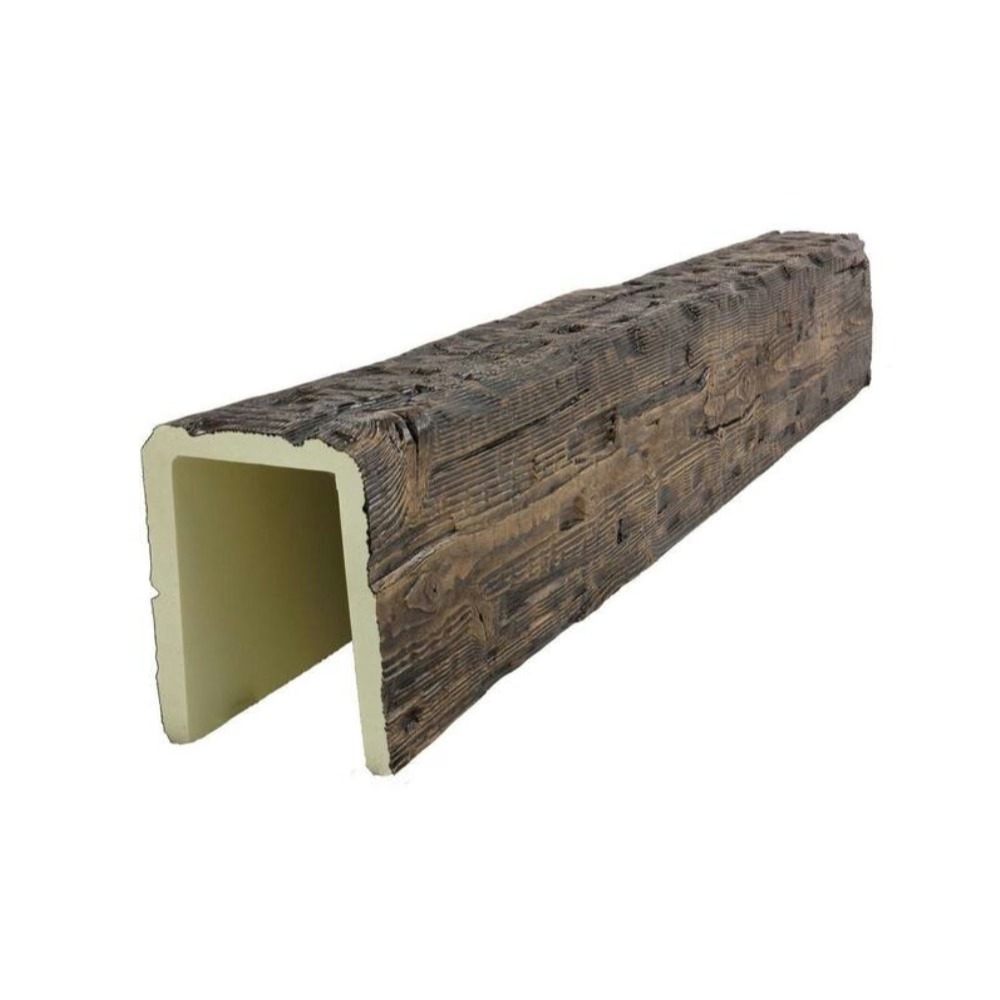
The Harmonized Commodity Description and Coding System provides the international framework for tariff classification. Understanding the appropriate HS code for polyurethane faux beams enables accurate duty assessment and compliance with import regulations. Different codes apply depending on specific product characteristics, including whether products are finished or unfinished, their dimensions, and their specific applications.
Misclassification of products either deliberately or accidentally creates significant compliance risks. Under-classification results in unpaid duties that customs authorities might assess retroactively with penalties and interest. Over-classification unnecessarily increases duty costs on properly classified goods. Neither outcome serves importers seeking efficient and compliant international procurement.
HS code interpretation varies somewhat between national customs authorities, despite the international framework underlying the system. Consulting with customs brokers or trade compliance specialists familiar with specific destination markets prevents classification errors that might prove costly. These specialists maintain current knowledge of classification decisions and ruling letters that affect specific product categories.
Incoterms and Delivery Documentation
International Commercial Terms (Incoterms) define the responsibilities of buyers and sellers at various points in the shipping transaction. These standard terms, recognized internationally, allocate risks and costs for transportation, insurance, and customs clearance. Documentation must reflect the agreed Incoterms accurately to ensure both parties understand their obligations.
EXW (Ex Works) terms place maximum responsibility on buyers, who arrange and pay for all transportation from seller's location. FOB (Free on Board) terms shift responsibility to sellers up to the point of loading onto vessels. CIF (Cost, Insurance, and Freight) terms include transportation and insurance costs in the seller's responsibility. Documentation must clearly indicate which terms govern the transaction.
Delivery documentation requirements vary by agreed Incoterms. When sellers arrange transportation, Bill of Lading or other transport documents must be properly completed and surrendered according to agreement terms. Incorrect documentation handling can prevent cargo release even when goods have arrived at destination. Understanding these requirements prevents costly delays in cargo collection.

Documentation Package Assembly
Assembling complete documentation packages before shipment departure prevents the scramble to correct deficiencies that often accompanies international shipping. Reviewing documents against checklists ensures nothing is overlooked. Having documents available before vessels depart allows corrections while options remain available rather than requiring expensive emergency procedures.
Digital documentation systems increasingly replace paper documents in international trade. Electronic bills of lading, blockchain-verified certificates of origin, and digitized customs submissions improve accuracy and reduce handling time. However, some documents still require original signatures or notarization, requiring hybrid approaches that combine electronic and paper documentation.
Archive procedures preserve documentation for the periods required by tax authorities and trade regulations. Many jurisdictions require transaction documentation retention for five years or longer. Organized archives enable rapid response to customs audits or trade compliance reviews while protecting against penalties that documentation failures might trigger.

Accurate commercial invoices and comprehensive packing lists protect all parties involved in international polyurethane faux beam trade. These documents facilitate efficient customs clearance while providing the transactional records that accounting and compliance functions require. Investing in documentation quality prevents the delays, penalties, and relationship damage that documentation errors inevitably cause.
Technical References
ASTM standards cited in every specification
Test Data
Lab results from internal testing program
Updated 2026
Reviewed against current product specs