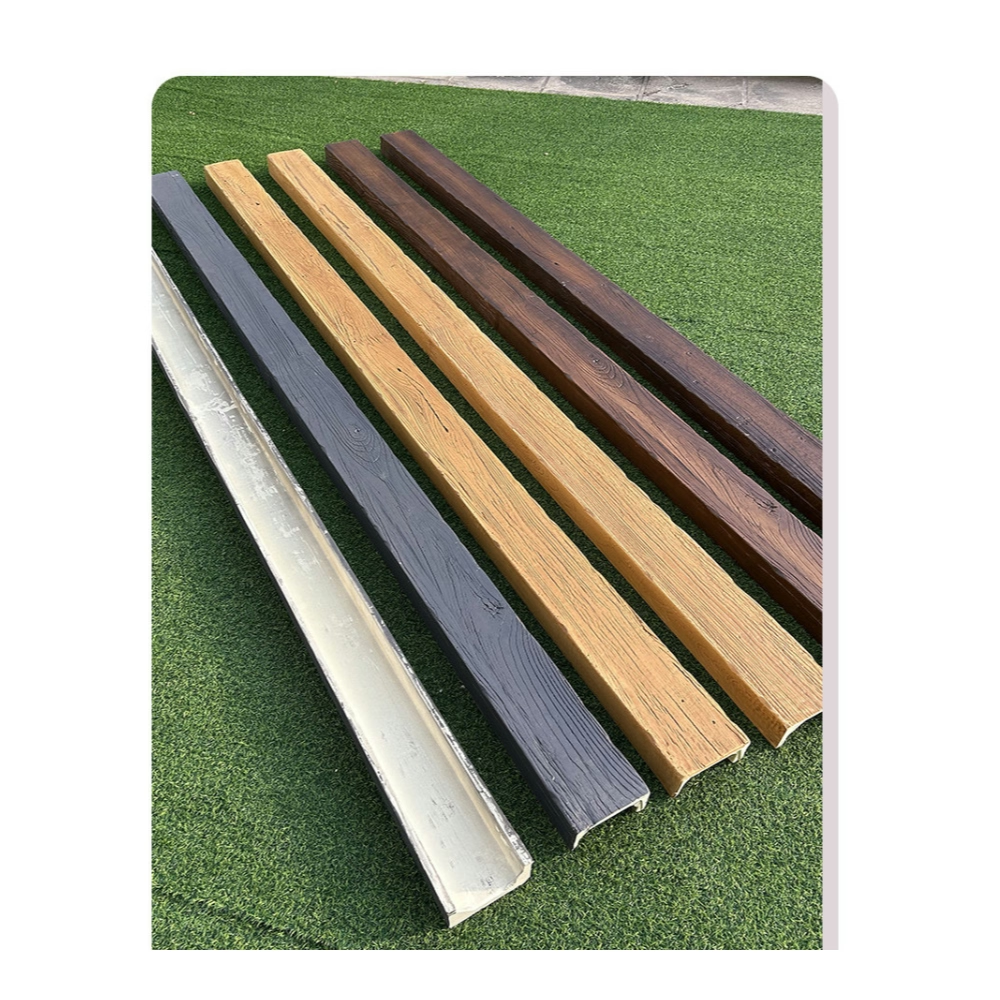
The metric system, formally known as the International System of Units (SI), provides the dominant measurement framework for construction in most countries worldwide. European markets, Asian markets, Australian construction, and increasingly North American engineering projects all reference metric dimensions for building components. Polyurethane faux beam manufacturers serving these markets offer products dimensioned in millimeters and centimeters, following the conventions that construction professionals in these regions expect.
Metric sizing for construction components typically references whole millimeters or rounded centimeter values. Unlike imperial dimensions that developed through historical evolution with irregular increments, metric sizing proceeds in logical decimal relationships. This consistency simplifies calculation and reduces specification errors that arise from fractional arithmetic.
Understanding metric sizing conventions helps prevent miscommunication when specifying beams for metric-market projects. The relationship between width, depth, and length dimensions in metric terms parallels imperial conventions, but the decimal-based system affects tolerance discussions, calculation procedures, and specification format. These differences require attention when communicating between metric and imperial contexts.
Common Metric Beam Dimensions
Standard metric widths for faux beams typically fall in ranges corresponding to common imperial sizes when converted. Widths of 100, 150, 200, 250, and 300 millimeters provide options across the spectrum from modest to dramatic installations. These dimensions offer approximately four, six, eight, ten, and twelve inch equivalents while following metric rounding conventions.
Depth specifications in metric units similarly reference common construction dimensions. Depths of 150, 200, 250, 300, and 350 millimeters provide visual weight appropriate for various ceiling heights and room scales. These dimensions correspond roughly to six, eight, ten, twelve, and fourteen inch imperial depths, though metric rounding creates slight differences from exact conversions.
Standard lengths in metric markets typically reference whole meters, with common options including two, three, four, five, and six meter lengths. These dimensions provide flexibility for ceiling spans while limiting individual beam handling weights. Custom lengths accommodate specific project requirements, though longer beams might require special shipping arrangements.
Metric Tolerance Conventions
Tolerance specification in metric terms follows decimal conventions that differ from fractional imperial approaches. Tolerances might be specified as plus or minus one millimeter for tight-tolerance applications, or broader ranges like plus or minus three millimeters for standard applications. These numbers reference actual metric measurements rather than fraction-of-an-inch equivalents.
Engineering drawings in metric typically dimension to the nearest millimeter, with tolerances implied by drawing scale or explicitly stated in title block notations. Understanding these conventions allows accurate interpretation of dimension strings and ensures ordered products match design intent. Minor dimensional variations that seem significant when converting to fractions often fall within normal tolerance ranges.
Statistical tolerance concepts, while not visually apparent in metric specifications, affect manufacturing consistency similarly to imperial production. Quality management systems maintain dimensional conformance within established tolerance ranges, providing the consistency that installation success requires. These systems operate identically regardless of whether dimensions are expressed metrically or imperially.

Conversion Considerations Between Systems
When projects involve both metric and imperial specifications, conversion accuracy becomes essential. Converting between systems requires understanding appropriate rounding approaches that prevent cumulative error accumulation. Professional conversion tools provide more accurate results than manual calculation, particularly for complex dimensional work.
Architectural projects that specify in one system but require manufacturing in another require careful coordination. A project specified in inches that sources beams from metric manufacturing regions requires conversion planning. Simply converting dimension strings without understanding tolerance implications can create fit problems that field adjustment addresses imperfectly.
Conversion tables and reference materials facilitate communication across measurement systems. Having reliable conversion resources available during specification and ordering prevents errors that casual mental conversion might produce. When significant quantities or precision dimensions are involved, confirming conversions through multiple methods provides confidence in accuracy.
Specification Formats in Metric Markets
Metric specification formats vary by region and industry practice. European norms often specify dimensions in millimeters only, without unit notation, assuming measurement system context. A dimension string reading "200 × 300 × 4000" would be interpreted as millimeters in European contexts. Asian markets might include unit indicators or use alternative conventions requiring verification.
Drawing scale conventions in metric markets reference metric units directly. A drawing at 1:50 scale indicates that one unit on the drawing equals fifty units in actual construction, with both values understood to reference millimeters. Understanding these conventions allows accurate interpretation of scaled dimensions when measuring from drawings.
Industry-specific standards in metric markets might establish particular dimension ranges or preferred sizes. European standards for construction products often define standard dimensions that products should follow, simplifying specification and ensuring availability. Checking applicable standards for specific project locations ensures specifications align with regional conventions.
Quality Documentation in Metric Terms
Test reports and certifications in metric markets reference metric dimensions and tolerances. Understanding these documents requires familiarity with metric terminology and units. Dimensional test results showing conformance to specified tolerances might reference millimeter deviations that appear small but fall within acceptable ranges.
Specification compliance documentation typically references the specific standards that products meet. European Harmonized Standards, ISO standards, and regional building codes establish performance requirements expressed in metric terms. These requirements might reference load capacities in kilograms or kilonewtons, thermal properties in watts per meter-kelvin, or fire performance in specific classifications.
When providing documentation for metric-market projects, ensuring all dimensions, tolerances, and performance values use appropriate metric units prevents confusion. Imperial values in documentation intended for metric markets invite misinterpretation. Professional practice maintains metric consistency throughout documentation packages.

Metric measurements for polyurethane faux beam products follow established conventions that serve international construction markets effectively. By understanding common metric dimensions, tolerance approaches, and specification formats, professionals working in these markets can specify beams accurately and coordinate successfully with manufacturers. These metric fundamentals complement the imperial knowledge that serves North American markets.
Technical References
ASTM standards cited in every specification
Test Data
Lab results from internal testing program
Updated 2026
Reviewed against current product specs