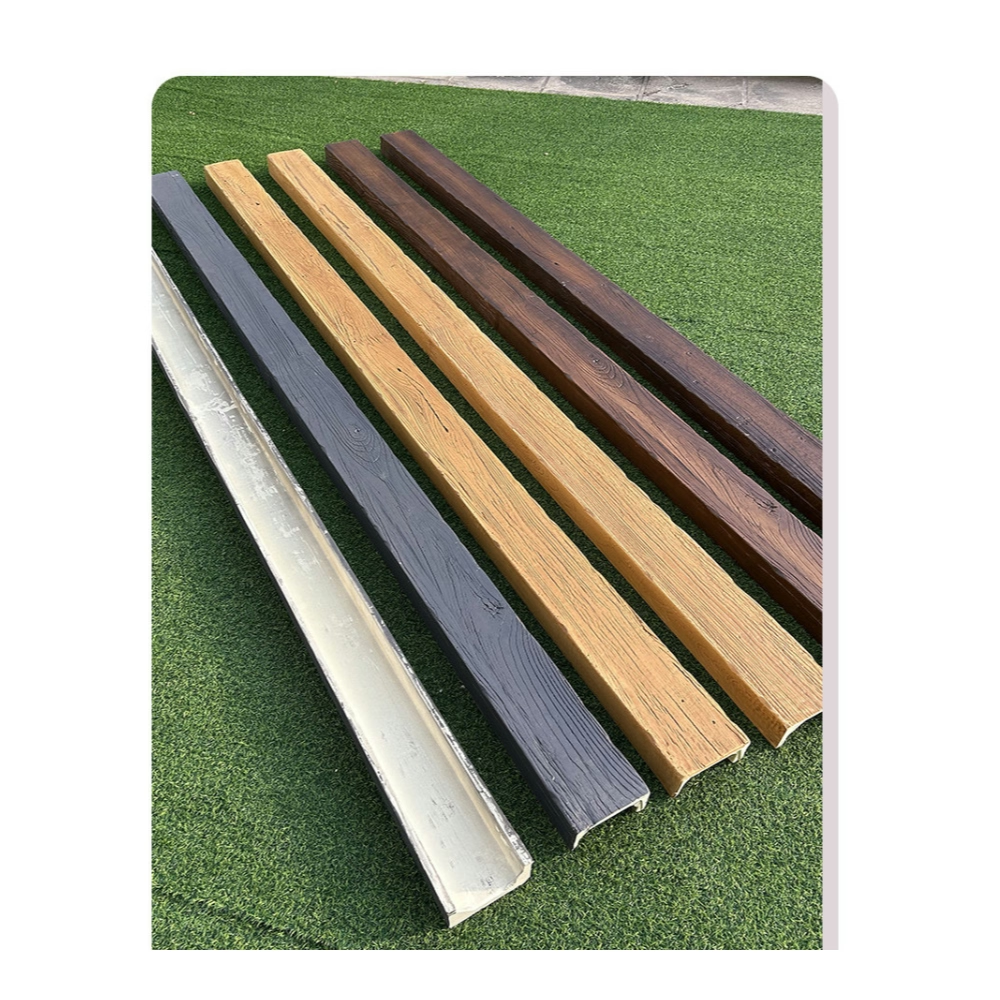
Secure attachment of ceiling beams requires understanding both the physical requirements of the installation and the capabilities of the mounting system. Polyurethane faux beams, despite their lightweight nature compared to natural timber, still require adequate attachment to maintain position and appearance over the service life of the installation. Standard mounting spacing guidelines provide starting points that experienced installers adjust based on specific project conditions.
The goal of mounting spacing is distributing attachment points sufficiently to prevent beam sagging, twisting, or movement while avoiding unnecessary penetration of the beam surface. Excessive fasteners create aesthetic compromise and potentially weaken beam structure, while insufficient spacing allows movement that eventually damages finishes or causes complete detachment. Finding the appropriate balance requires considering beam dimensions, span lengths, and ceiling conditions.
These guidelines represent typical recommendations that work well for common residential and light commercial applications. Specific projects might require deviation from these standards based on engineering analysis or unique conditions. When projects involve unusual spans, substantial loads, or challenging mounting surfaces, consulting with structural professionals provides guidance appropriate to specific circumstances.
Factors Affecting Spacing Requirements
Beam dimensions influence spacing requirements significantly. Wider beams spanning the same distance as narrower beams experience different stress patterns that might affect attachment spacing. Deep beams with substantial cross-sectional area resist bending more effectively than shallow beams of the same width. These physical realities translate into practical spacing recommendations that vary by beam size.
Span length directly affects the load that attachment points must resist. Longer beams spanning greater distances concentrate more force on end connections and intermediate supports. Increasing attachment density or adding intermediate support points addresses these increased loads. Ignoring span length in favor of one-size-fits-all spacing invites problems ranging from visible sagging to complete attachment failure.
Ceiling structure and condition affect what attachment methods work effectively. Solid wood joists provide excellent holding power for fasteners, while engineered I-joists might require specific attachment details. Steel beams might need welding or specialized clips rather than conventional fasteners. Concrete and masonry surfaces require different approaches entirely. Understanding the ceiling structure guides attachment spacing decisions.
Recommended Spacing for Common Applications
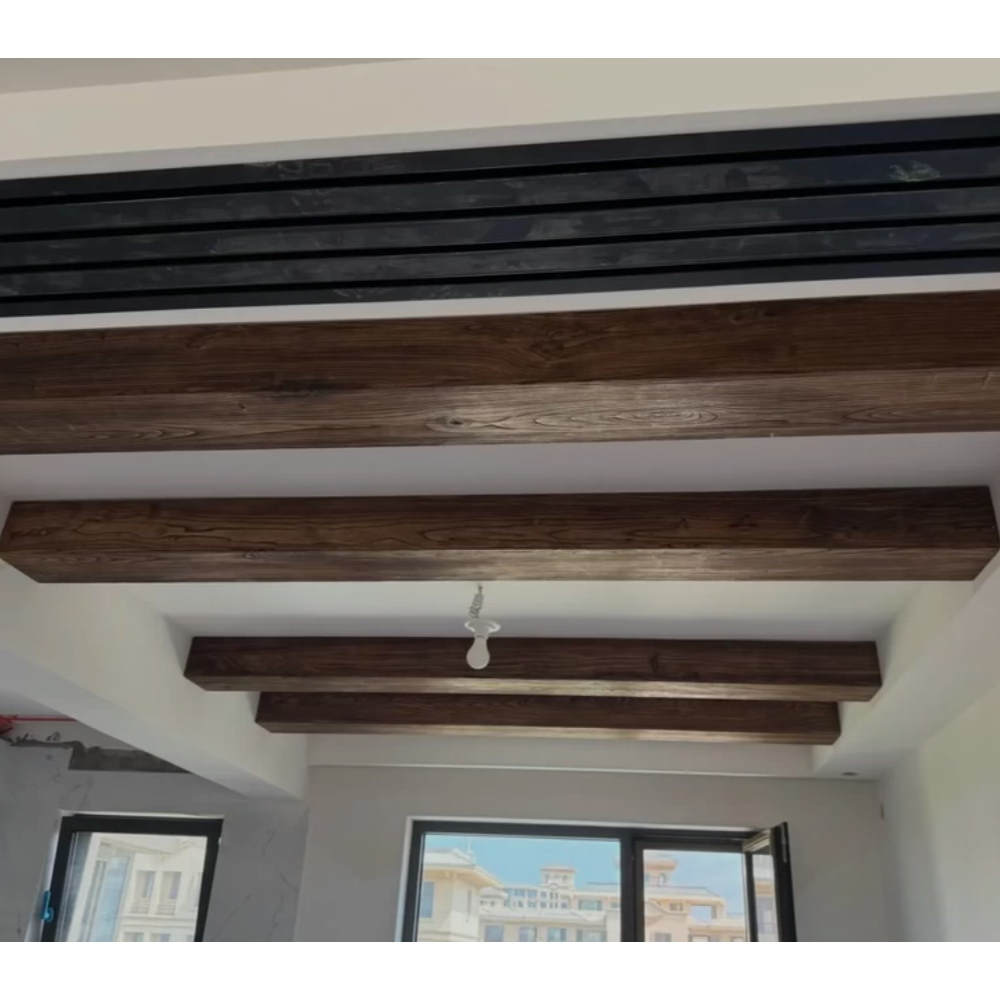
Residential ceiling installations with beams up to twelve inches wide and spanning up to twelve feet typically perform well with attachment points at thirty-two to forty-eight inch intervals along the beam length. This spacing distributes load effectively while remaining within fastener holding capacity for standard ceiling structures. Beams wider than twelve inches or spanning longer distances benefit from tighter spacing.
Supporting ledgers or backing boards installed perpendicular to beam direction provide continuous mounting surfaces that improve attachment security. When ceiling structures lack continuous backing, adding blocking between joists creates mounting points that support required spacing. This preparation investment pays dividends through secure, long-lasting installations that resist the movement that loosens attachments over time.
End spacing recommendations typically place first fasteners within four to eight inches of beam ends. This proximity to ends resists the rotational forces that longer cantilever moments create. Some installations add continuous running bonds along beam bottoms for additional security, particularly in commercial applications where ceiling access for maintenance might disturb beams.
Attachment Hardware and Methods
Construction adhesive applied between beams and mounting surfaces provides primary load transfer while filling minor irregularities in mounting surfaces. Premium construction adhesives designed for строительства applications provide strong, durable bonds when properly applied to clean, dry surfaces. Adhesive-only installation might suffice for shorter spans in light-duty applications, though mechanical fasteners add security for most situations.
Mechanical fasteners include screws, nails, and specialized construction fasteners designed for ceiling applications. Screws generally provide superior holding power compared to nails, particularly in engineered wood products where nails might split or withdraw over time. Coarse-thread screws designed for the specific mounting surface optimize holding power for each application.
Specialized beam hanging hardware provides engineered solutions for specific installation scenarios. Steel angles, brackets, and hanging straps attach to structural elements while supporting beams through various connection methods. These hardware options often simplify installation compared to direct fastening while providing predictable load capacity that field fastening might not achieve.
Load Considerations for Attached Elements
Beams that will support lighting fixtures, signage, or other added weight require enhanced mounting beyond standard spacing. Adding support points directly below intended attachment locations transfers loads to structural elements rather than relying on beam strength alone. Planning for these loads before installation prevents retrofit challenges that finished installations present.
The weight of attached elements determines the enhancement required for mounting systems. Lightweight items like small pendants might attach directly to beams using standard hardware. Substantial fixtures might require backing plates that distribute loads across multiple attachment points. Heavy items might need support cables or rods extending to structural elements above the beam plane.
Fire safety considerations affect hardware selection in some commercial applications. Hardware that maintains structural integrity during fire exposure might be specified for beams in certain occupancy classifications. Understanding these requirements ensures compliant installations that meet both aesthetic and safety objectives.
Inspection and Adjustment During Installation
Checking beam alignment during installation prevents problems that accumulate through the installation process. String lines stretched across ceiling spans provide reference for maintaining consistent height and alignment. Adjusting attachment points as installation progresses catches problems early when correction remains simple.
Testing attachment security before completing installation provides confidence in completed work. Pushing and pulling beams gently after initial attachment verifies that connections will resist normal forces. Any movement detected during testing indicates inadequate attachment that should be corrected before proceeding.
Documentation of attachment point locations assists future maintenance and modification. Recording fastener locations enables locating hidden attachments when hanging additional items or making repairs. Photographs showing attachment details provide reference that pure memory cannot reliably supply.

Standard mounting spacing guidelines provide a starting framework for installing polyurethane faux wood beams securely. By understanding factors affecting spacing requirements, applying appropriate attachment methods, and considering load requirements for attached elements, installers achieve durable installations that maintain appearance throughout their service life. These installation fundamentals support the aesthetic benefits that faux beams provide.
Technical References
ASTM standards cited in every specification
Test Data
Lab results from internal testing program
Updated 2026
Reviewed against current product specs