The rectangular profile represents the most fundamental beam shape, offering clean lines and balanced proportions that have graced architectural installations for centuries. Polyurethane faux wood beams in this standard profile provide the essential timber aesthetic without the design commitment that more dramatic or ornate profiles require. Their universal applicability makes them the default choice when specific requirements do not dictate alternative profiles.
Rectangular beams derive their versatility from geometric simplicity. The straight edges and right angles of this profile coordinate naturally with the orthogonal geometry that dominates most architectural construction. Unlike curved, tapered, or chamfered profiles that make specific stylistic statements, rectangular beams remain neutral design elements that support rather than compete with surrounding architectural features.
This neutrality proves particularly valuable in renovation contexts where beams must integrate with existing conditions. The straightforward geometry of rectangular beams simplifies coordination with existing trim, moldings, and architectural details. Design conflicts that might arise from more assertive profile choices become unlikely with this basic form.
Proportion and Visual Weight
The visual impact of rectangular beams depends significantly on the proportion between width and depth. A beam with equal width and depth presents a square cross-section, creating a bold, substantial appearance suitable for dramatic installations. More elongated proportions, where depth significantly exceeds width, create sleeker appearance more appropriate for contemporary contexts.
Depth-to-width ratios guide selection for specific applications. Ratios between 1:1 and 1.5:1 create balanced appearance suitable for most residential applications. Ratios exceeding 2:1 create contemporary appearance appropriate for modern interiors. The specific ratio selected should coordinate with ceiling height, room size, and companion design elements.
Face width affects how beams relate to surrounding wall and ceiling surfaces. Narrower beams read as trim elements, providing subtle detail without strong visual presence. Wider beams assert presence more aggressively, becoming significant design elements that require coordination with other prominent features. Matching beam width to the design importance intended helps achieve appropriate visual balance.
Surface Texture Options
Rectangular beams accept various surface textures that significantly affect their character and appearance. Smooth finishes create refined appearance appropriate for contemporary and transitional spaces. The consistent surface reflects light evenly, presenting a clean, manufactured aesthetic that aligns with modern design values.
Subtle wood-grain texture adds organic character while maintaining the clean geometry of rectangular profiles. This texture approach balances contemporary straight lines with traditional wood authenticity. Viewed from normal installation distances, the texture reads as authentic wood grain without strong period association.
Pronounced texture creates rustic character that supports farmhouse, industrial, and reclaimed wood aesthetics. Deep grain embossing and surface variation create the weathered appearance that these design styles demand. Rectangular profiles with heavy texture achieve rustic effect without requiring irregular shapes that might complicate installation.
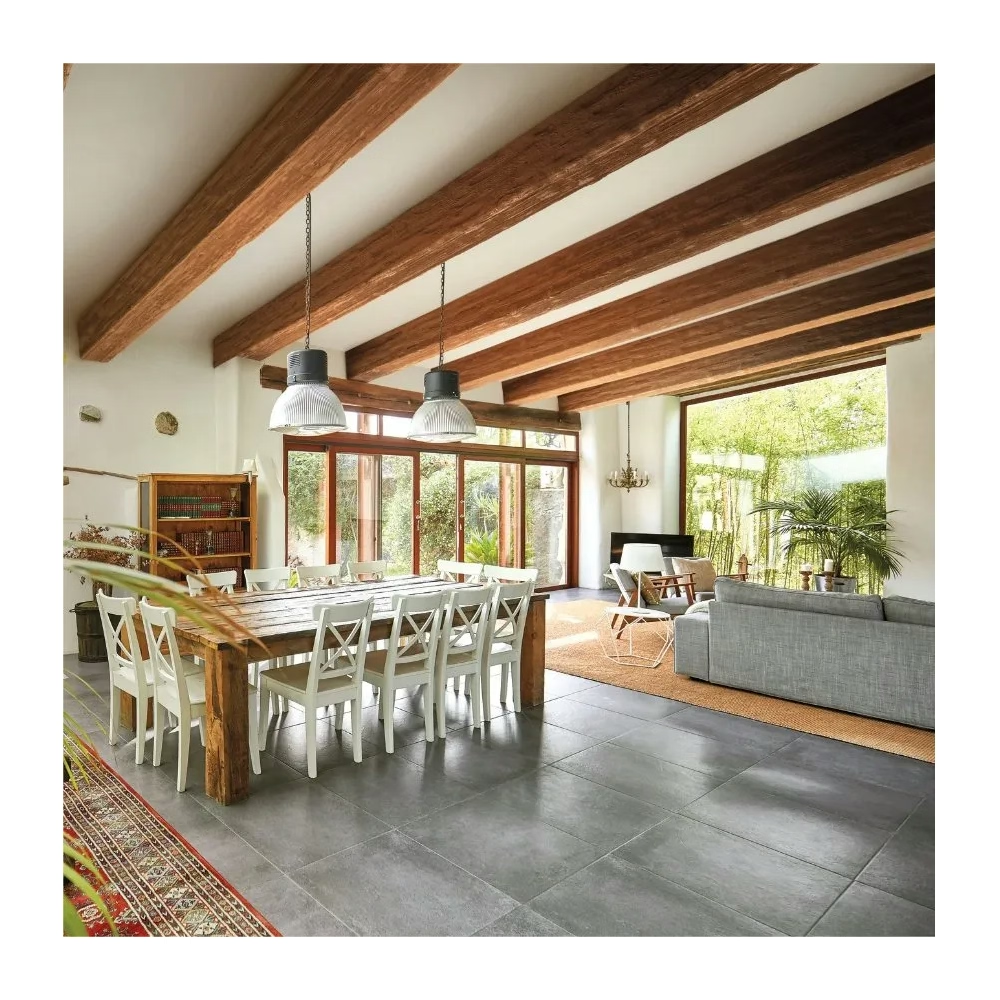
Installation Applications for Rectangular Beams
Single beam installations as focal points benefit from rectangular profiles that command attention without excessive drama. A single prominent beam crossing a ceiling or defining a space performs effectively with rectangular geometry. The simplicity of the profile focuses attention on material and finish rather than form.
Beam grids and coffered ceilings employ rectangular profiles to create architectural ceiling treatments. The orthogonal geometry of rectangular beams aligns naturally with grid patterns that organize ceiling surfaces into defined zones. These installations range from simple two-by-two grids to complex multi-directional arrangements.
Veneer applications, where thin faux wood panels cover existing structural elements, also suit rectangular profile selection. The straight edges of rectangular sections facilitate clean joints and precise alignment. Installation efficiency improves when profile geometry supports straightforward cutting and fitting.
Finish Selection for Rectangular Profiles
Solid color finishes transform rectangular beams into paint-grade architectural elements. White or off-white beams contribute to contemporary aesthetics where wood character is not desired. Custom colors coordinate with specific design palettes, creating integrated color schemes that extend through ceiling details.
Natural wood-tone finishes leverage the rectangular profile's clean geometry to present wood aesthetics with contemporary crispness. The straight edges and consistent surfaces highlight wood coloring and grain patterns without the visual complexity that irregular profiles introduce. Staining options range from light natural tones to deep rich browns.
Weathered and distressed finishes add character to rectangular beams for rustic and industrial applications. These finishes create the appearance of aged timber without requiring irregular profile geometry. The contrast between rectangular form and weathered surface creates distinctive aesthetic that appeals to contemporary rustic sensibilities.

Coordinating with Other Architectural Elements
Rectangular beams pair naturally with other rectangular architectural elements including windows, doors, and built-in fixtures. The shared geometry creates visual harmony that coordinated design establishes. This coordination proves particularly valuable in contemporary interiors where clean lines dominate.
Traditional millwork including crown moldings, baseboards, and door casings often feature rectangular profile elements that complement faux beam profiles. Matching beam profiles to trim profiles creates design continuity between ceiling and wall treatments. This coordination requires attention during specification but produces integrated results.
Open-plan spaces benefit from rectangular beam installations that maintain geometric consistency across varied ceiling conditions. Beams crossing different zones, accommodating structural elements, or defining functional areas all read as related through consistent rectangular profiling. This visual continuity helps large spaces feel designed rather than assembled.

Standard rectangular profile polyurethane faux wood beams provide timeless architectural utility through geometric simplicity and design neutrality. These versatile elements adapt to diverse applications while maintaining the authentic wood aesthetics that make beam installations valuable. For projects seeking proven profile solutions, rectangular beams deliver reliable results.
Technical References
ASTM standards cited in every specification
Test Data
Lab results from internal testing program
Updated 2026
Reviewed against current product specs


