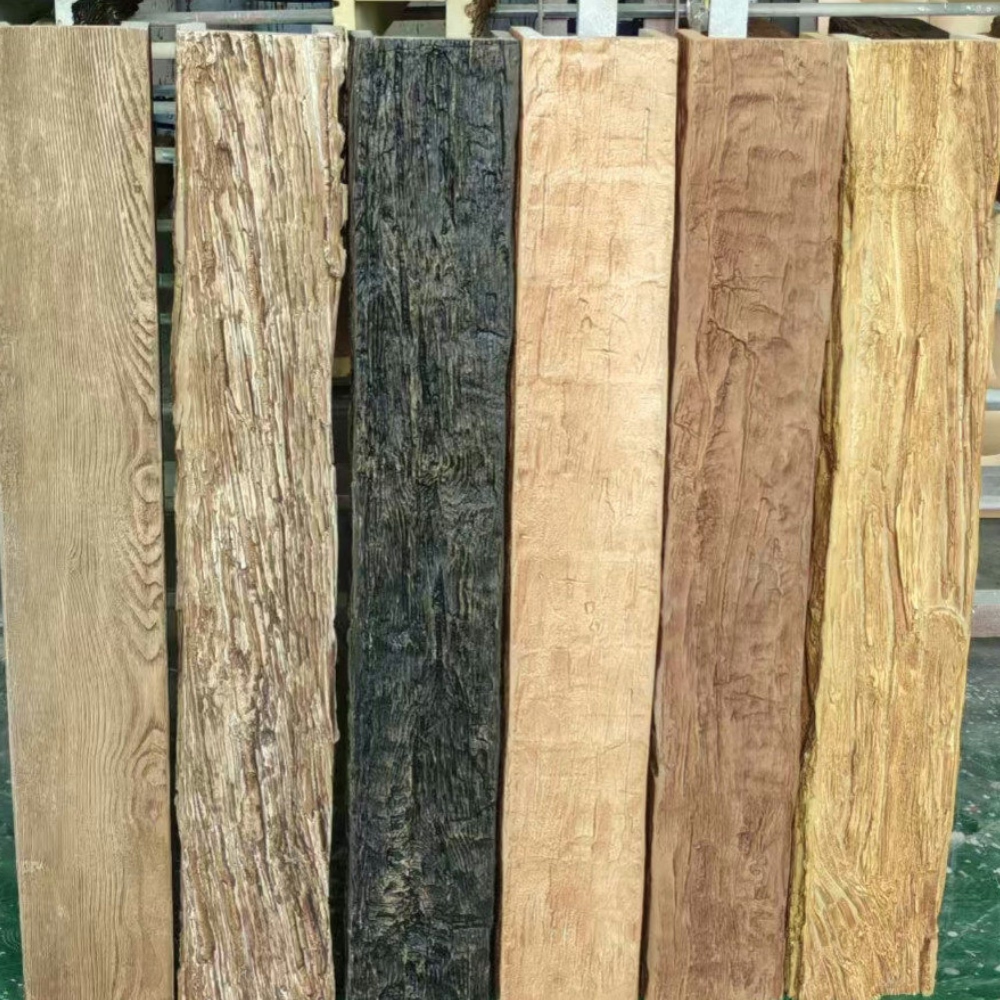
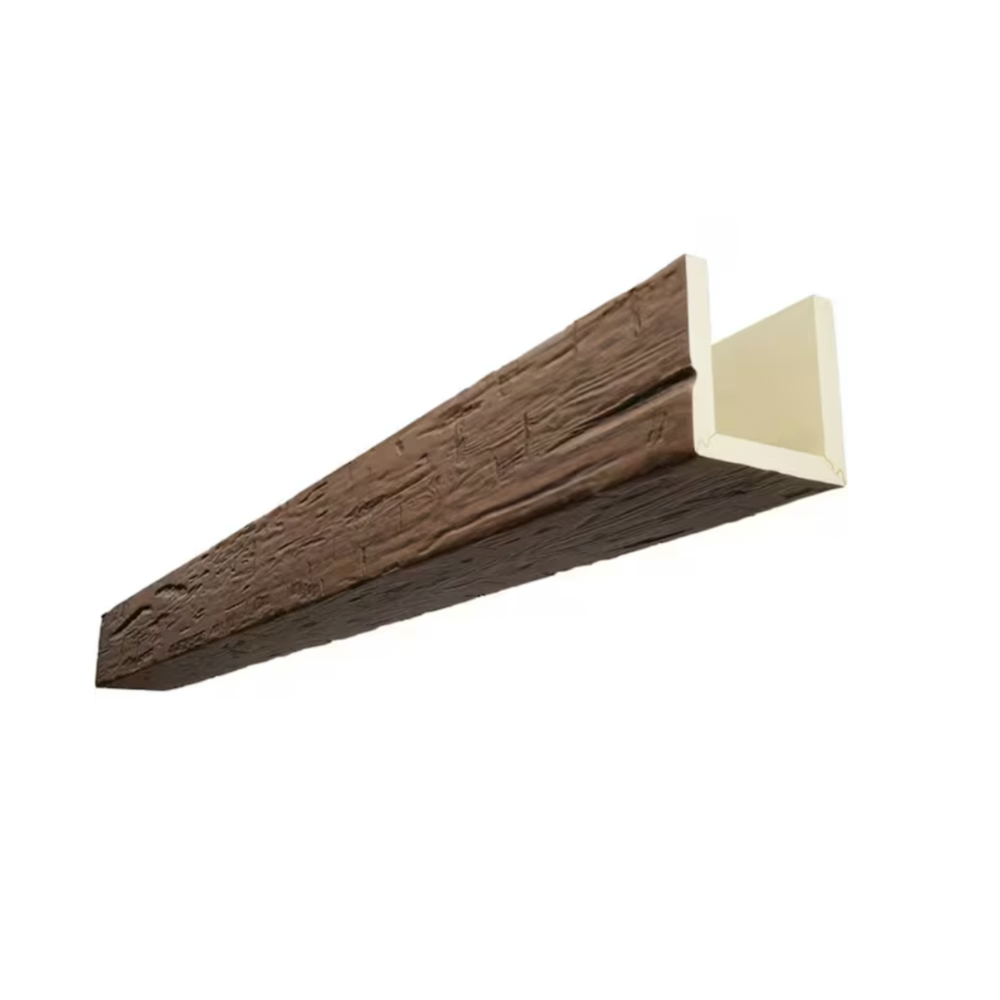
The straight lines that dominate most interior architecture sometimes need deliberate interruption. Flat ceilings with parallel beams create orderly, predictable spaces that serve practical purposes admirably but rarely inspire genuine excitement. Statement arched accent feature polyurethane faux wood beams break this monotony by introducing curved forms that capture attention and transform perceived space. These dramatic elements prove that ceiling design can achieve sculptural quality without requiring structural engineering feats or budget-busting custom fabrication.
The Visual Impact of Curved Forms
Human perception naturally gravitates toward curved forms in environments dominated by straight lines. The contrast between predictable horizontal planes and sweeping arcs creates visual tension that draws the eye and holds attention. This attraction has deep psychological roots—curved organic forms connect us to natural environments where water, wind, and living things create similar shapes. Introducing arches into ceiling design leverages this natural preference in ways that enhance the appeal of interior spaces.
Arched beams also affect spatial perception in ways that benefit room design. An arch visually lifts the ceiling at its crown while defining the space below as distinct and special. Rooms with arched beam features feel taller and more grand than their actual dimensions suggest. This perceptual enhancement proves valuable in spaces where ceiling height is limited or where designers want to create a sense of expansiveness without actual structural modification.
The shadow patterns cast by curved beams differ fundamentally from those produced by straight beams. Instead of parallel shadow lines, arched beams create dynamic gradients that shift across surfaces as light conditions change throughout the day. This movement adds life to static architectural elements, making spaces feel more dynamic and engaging. Evening and morning light produces particularly dramatic effects as low-angle illumination emphasizes the beam's curved profile.
Engineering Behind Curved Faux Beams
Creating curved beams from polyurethane involves manufacturing processes that accommodate the material's characteristics while achieving convincing wood-like appearance. The flexible nature of polyurethane during molding allows it to capture complex curves and detailed textures that would be impossible to achieve with wood. This manufacturing capability translates design possibilities into achievable reality.
The structural core of curved faux beams must accommodate bending stresses that don't affect straight beams. Manufacturers address this challenge through reinforced internal structures that maintain beam integrity regardless of curvature. These reinforcement systems allow curved beams to function reliably as architectural features without the risk of cracking, sagging, or structural failure that would compromise their visual impact.
Radius specifications for curved beams require careful consideration during project planning. Tight radii create more dramatic visual effects but present greater manufacturing and installation challenges. Standard radius options offered by manufacturers represent tested solutions that balance visual impact with practical feasibility. Custom radii are available for projects with specific requirements, though these typically involve longer lead times and higher costs.

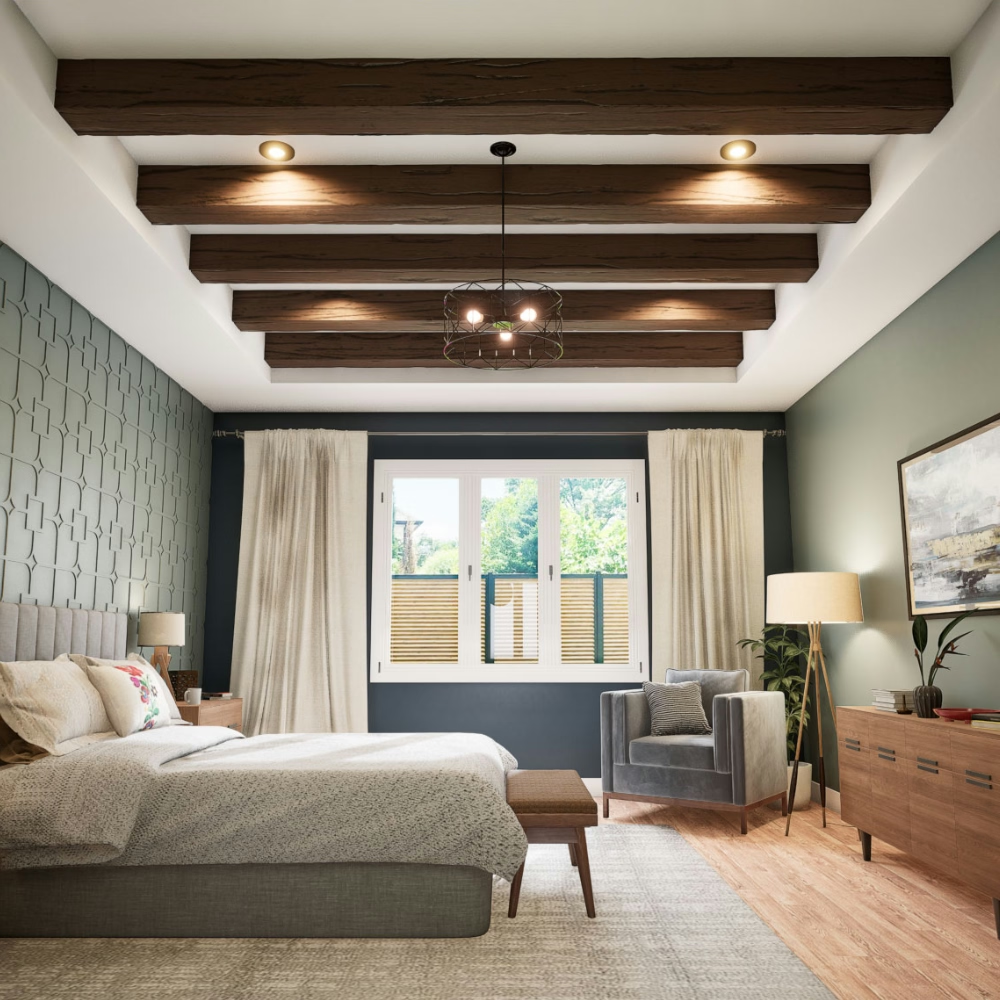
Design Applications for Arched Beams
Entryways and transitions spaces provide natural opportunities for arched beam installations. The threshold between outside and inside represents a symbolic moment that architectural details can amplify. An arched beam framing an entry creates an arrival experience that announces the importance of the space beyond. This treatment works equally well for grand entrances and modest residential doorways.
Vaulted ceilings benefit significantly from arched beam treatment, particularly at the transition points where ceiling angles change. The curve of an arched beam can follow the vault's geometry or create a contrasting form that emphasizes the vault's direction. Either approach adds visual interest to the ceiling transition that would otherwise receive minimal attention. The interaction between vault geometry and beam curve creates compound visual effects that reward extended viewing.
Great rooms and living areas accommodate large-scale arched beams that establish the space's dominant architectural character. A single dramatic arch spanning the room's width can serve as a room-defining feature that influences all other design decisions. Smaller arches in multiples create rhythmic interest that unifies the space while providing multiple focal points that guide movement through the room.
Integrating Arches with Straight Beams
The most sophisticated ceiling treatments often combine curved and straight elements in carefully considered compositions. Arches can punctuate runs of straight beams, creating moments of visual drama amid orderly patterns. This combination leverages the attention-grabbing quality of curves while maintaining the organizational benefits of straight beam patterns.
Transition installations use arches to move between different beam orientations or spacing patterns. A curved beam can smoothly redirect visual flow from one direction to another, eliminating the jarring intersection that would occur if straight beams simply crossed. These transitional elements require careful design but produce results that feel inevitable rather than arbitrary.
Accent arches stand alone as sculptural elements rather than integrating with other beam patterns. This approach suits spaces where a single dramatic gesture makes a stronger statement than distributed elements. The isolated arch becomes a landmark within the space, marking important locations like above a fireplace or at a spatial transition point. Standing alone, the arch must be proportioned generously to command appropriate attention.
Material Advantages for Curved Applications
Polyurethane's material properties make it exceptionally suitable for curved beam applications that would challenge alternative materials. Wood cannot be bent to tight radii without steam treatment or laminating thin layers, processes that add cost and complexity while limiting achievable curves. Metal beams can be curved but lack the warmth and texture that make wood-like beams appealing. Polyurethane combines manufacturing flexibility with convincing wood appearance.
The weight of curved polyurethane beams remains low regardless of curvature, simplifying installation in ways that solid wood or metal alternatives cannot match. A curved beam of the same span as a straight beam weighs essentially the same, allowing similar handling and mounting approaches. This consistency simplifies project planning and installation procedures by eliminating special equipment or techniques that curved solid beams would require.
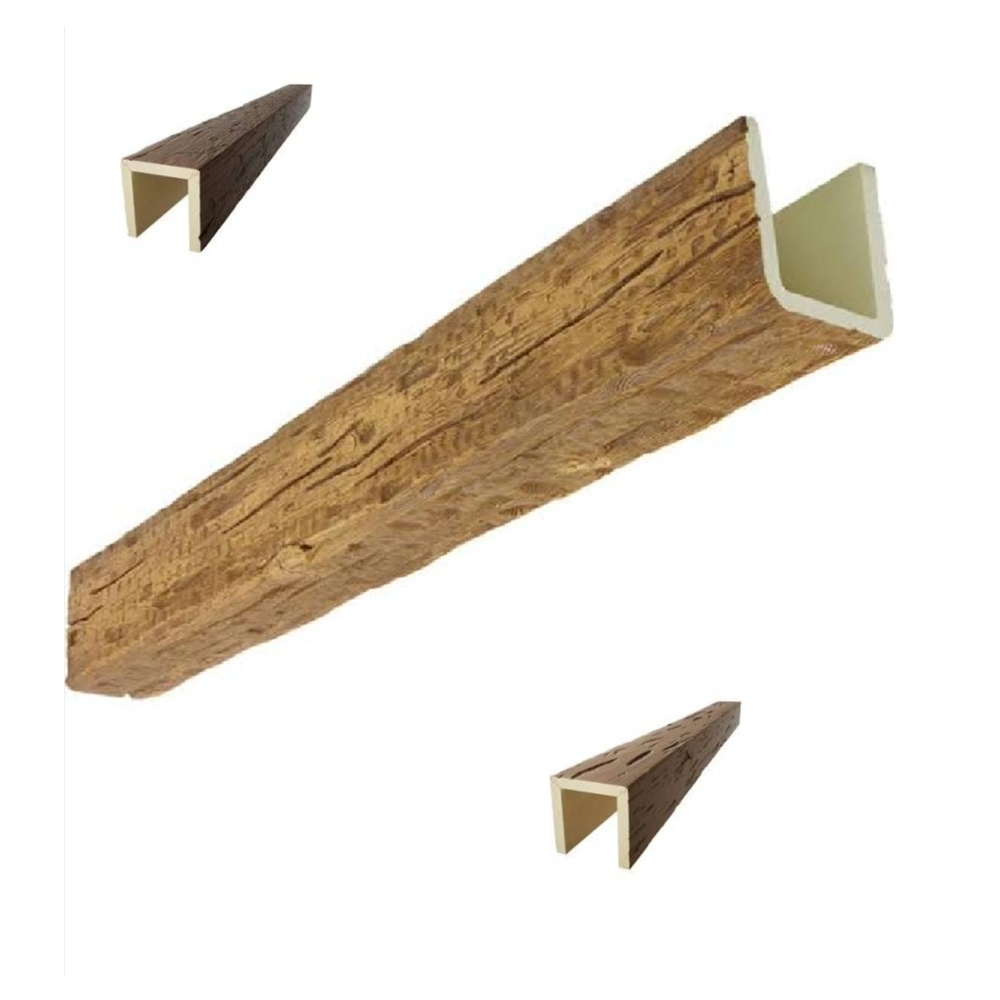
Surface detail on curved polyurethane beams maintains consistency regardless of the beam's geometry. Wood grain patterns and textures flow naturally around curves without the distortion or cracking that wood might experience when bent. This textural continuity creates convincing results that reward close inspection. The illusion of curved timber becomes complete when surface details match the expected appearance throughout the curve's arc.
Installation Considerations for Curved Beams
Installing curved faux beams requires techniques adapted to the beam's geometry. Unlike straight beams that can be positioned and secured from consistent angles, curved beams present different surfaces to mounting points around their arc. Experienced installers understand these variations and adjust their approach accordingly to ensure secure, invisible attachment.
Support structure for curved beams must accommodate the forces that curvature creates. Straight beams transfer load along their length to endpoints; curved beams generate additional outward forces that must be managed. The mounting system must resist these forces without visible deflection or movement. Manufacturer specifications typically identify appropriate support approaches for various beam sizes and curvatures.
Template-based installation improves accuracy and efficiency for curved beam projects. Creating templates that match the beam's exact curve before beginning installation allows for precise marking and preparation of mounting surfaces. This preparation proves particularly valuable for complex installations involving multiple curves or intersections between curved and straight elements.
Finishing and Detailing
The joints where curved beams meet walls, other beams, or structural elements require careful detailing to maintain the illusion of solid timber. Unlike straight beams where standard trim pieces often suffice, curved installations typically require custom-fabricated finishing elements. These pieces follow the beam's curve precisely, creating transitions that appear seamless from casual viewing distance.
Painting curved beams follows the same principles as straight beams but with additional attention to coverage in concave areas. The varying angles presented by curved surfaces can create uneven appearance if paint application isn't adjusted for these conditions. Professional finishers understand how to work with curved geometry to achieve consistent color and sheen throughout the beam's arc.
Lighting integration with curved beams offers opportunities for dramatic effect. Recessed fixtures positioned within the curve's opening create pools of light that follow the arch's geometry. Surface-mounted fixtures can follow the beam's curve, emphasizing the architectural line. These lighting approaches enhance the beam's visual impact while providing functional illumination for the space below.
Project Scale and Proportion
Large-scale arched beams make bold statements appropriate for grand spaces like hotel lobbies, restaurant dining rooms, and executive offices. The drama of sweeping curves scales with the space, becoming more impressive as dimensions increase. These substantial installations justify significant investment because they become defining features that distinguish the space from alternatives.
Smaller scaled arched accents serve different purposes in more modest spaces. A gentle arch above a kitchen island or along a hallway provides visual interest without overwhelming the room's proportions. These smaller curves work particularly well in residential contexts where the goal is enhancement rather than transformation. The restraint of subtle curves often proves more appropriate for homes than the dramatic gestures suited to commercial spaces.
Proportionate scaling extends beyond overall dimensions to include texture, color, and detailing. A large beam benefits from substantial texture and rich color that can support its visual weight. Smaller beams require correspondingly refined details that don't appear muddy or overwrought at reduced scale. Successful projects match all these elements to create coherent compositions that work at their intended scale.
Budget Considerations
The cost of arched faux beams includes manufacturing premiums that straight beams don't carry. The additional processing required to create curved forms, reinforced internal structure, and often custom finishing details all contribute to higher per-unit costs. However, when compared against the costs of achieving similar effects with alternative materials, polyurethane arches typically remain the most economical choice.
Installation costs for curved beams may exceed straight beam installation due to increased complexity. Additional labor time for positioning, supporting, and finishing curved elements should be factored into project budgets. The specialized expertise required for curved installations may also command premium rates from contractors experienced with this work.
Long-term value considerations favor curved polyurethane beams despite their higher initial costs. The durability and maintenance-free nature of polyurethane means that the visual impact achieved at installation endures indefinitely. This longevity provides ongoing value that compensates for premium pricing and justifies investment in the dramatic effects that curved beams provide.
Technical References
ASTM standards cited in every specification
Test Data
Lab results from internal testing program
Updated 2026
Reviewed against current product specs