Every memorable interior possesses at least one moment of visual arrest—a feature so compelling that it stops viewers in their tracks and holds their attention. In many successful spaces, this moment occurs at the ceiling. Statement faux timber beams have emerged as reliable generators of such moments, transforming plain overhead planes into stunning focal points that elevate entire room designs from ordinary to extraordinary.
The Psychology of Ceiling Focal Points
The human tendency to look up upon entering unfamiliar spaces has deep evolutionary roots.先祖们在开阔地带抬头观察天空寻找方向和安全。如今,这一本能转化为进入新空间时自然向上看的倾向。Ceiling features that capitalize on this tendency reach viewers at a primal level, creating impressions that bypass conscious analysis and register directly as emotional responses.
Focal points succeed by creating contrast against their backgrounds. A stunning ceiling beam against plain drywall achieves more visual impact than the same beam surrounded by equally complex detailing. This principle explains why minimalist approaches often produce more powerful beam features than elaborate ceiling treatments that compete for attention. Restraint in surrounding elements amplifies beam presence.
The scale of ceiling focal points affects emotional response significantly. Oversized elements create awe—the emotional reaction to things that exceed normal expectations. This response creates lasting impressions that guests remember long after details fade. Beams scaled generously enough to create awe justify their prominence through the emotional impact they generate.
Creating Visual Arrival Points
Strategic beam placement creates visual arrival points—locations where attention naturally settles when entering a space. These points anchor the room's composition, providing reference for understanding the space's organization and character. Without clear arrival points, spaces feel aimless; with them, rooms communicate intention and design thinking.
The center of a room's primary viewing area provides an obvious arrival point for beam placement. When entering a living room, attention naturally moves toward the seating arrangement, and a beam positioned there creates a clear focal point that enhances the social focus of the space. This centering principle applies across room types, though specific applications vary with spatial functions.
Multiple arrival points can be created when room functions warrant. A great room might feature distinct focal points above cooking, dining, and seating areas, each with appropriately scaled beams. This distributed approach maintains visual interest across larger spaces while providing moments of arrest as viewers move through the room. The challenge lies in scaling these multiple focal points appropriately to each area's importance.

Scale Strategies for Maximum Impact
Achieving stunning results requires beam sizing that exceeds ordinary expectations. Caution toward oversized elements leads many projects to undersized beams that fail to achieve intended impact. The most dramatic ceiling installations feature beams with dimensions that initially seem excessive—until the installed result demonstrates why experienced designers specify them.
The relationship between beam scale and ceiling height creates parameters for sizing decisions. Higher ceilings tolerate larger beams; lower ceilings require more restrained dimensions. However, even modest ceiling heights can accommodate impactful beams when spacing allows single large elements rather than multiple smaller ones. Crowding smaller beams together often produces less impressive results than one commanding piece.
Testing scale decisions through visualization helps avoid costly mistakes. Digital modeling, physical mockups, or even cardboard cutouts at beam scale can reveal how proposed dimensions will read in actual space. These tests prove particularly valuable for first-time beam installers or for installations in spaces with challenging proportions. What reads appropriately in photographs may feel wrong in person; direct testing eliminates guesswork.
The Role of Simplicity in Stunning Effects
Counterintuitively, simple beam installations often achieve more stunning effects than complex compositions. When beams compete with other ceiling elements for attention, visual energy fragments rather than concentrating. Simple installations allow all available attention to focus on the beam itself, amplifying its impact. This principle argues for restraint in surrounding treatments when beams are meant to serve as primary focal points.
The clean geometry of well-made faux beams contributes to stunning effects that ornate alternatives cannot match. Intricate detailing can overwhelm rather than enhance, creating visual noise that dilutes focal point strength. Conversely, beams with clearly articulated forms—crisp edges, consistent profiles, convincing textures—command attention through their clarity. The stunning quality comes from the bold statement rather than complexity.
Lighting design for stunning beam focal points should enhance without competing. Fixtures that wash the beams with even illumination reveal texture and form while maintaining the beam as the primary subject. Effects that might be interesting on their own—colored lighting, dramatic shadows, animated patterns—risk undermining beam status if they draw attention away from the intended focal point.
Integration with Room Functions
Stunning beams work best when their placement aligns with room functions rather than fighting against them. A breathtaking beam installation above a dining table enhances the ritual of shared meals; the same installation in a hallway wastes its impact in a space people pass through quickly. Functional alignment amplifies emotional impact by connecting aesthetic excellence with meaningful human activities.
Conversation areas benefit from overhead focal points that create intimate enclosure within larger spaces. The psychological effect of overhead coverage—even decorative coverage—makes people feel more connected and protected, enhancing the social atmosphere that these areas require. Beams positioned above seating arrangements create gathering places within open plans, addressing the challenge of defining social zones without walls.
Work areas present different requirements for ceiling focal points. Overly dramatic beams in home offices or studios might distract from focused work. However, appropriately scaled beams can enhance concentration by providing visual interest that prevents the sterile monotony of plain ceilings. The key lies in scaling beams to provide interest without overwhelming the focus that productive work requires.
Material Authenticity and Impact
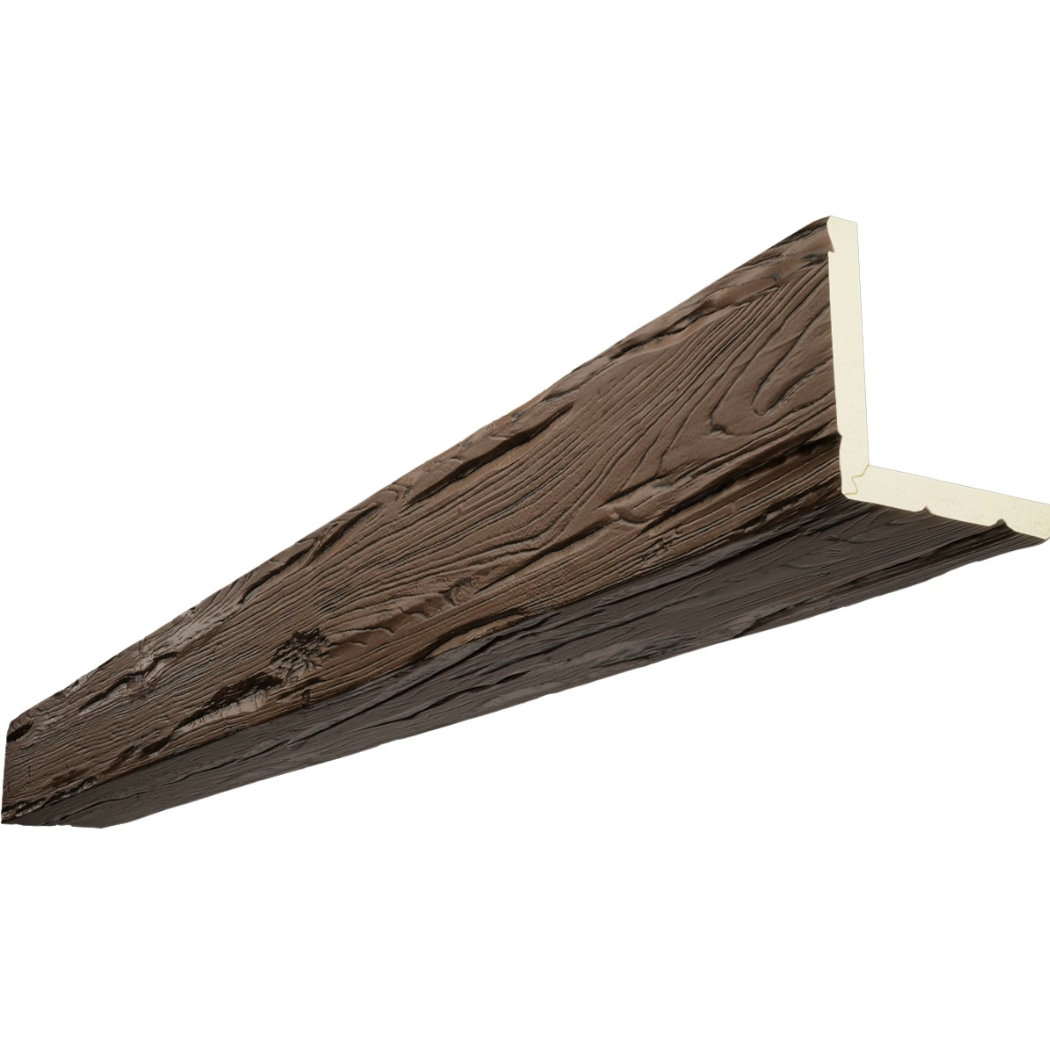
The stunning quality of faux timber beams depends significantly on how convincingly they simulate genuine wood. Superior faux beams achieve near-perfect wood imitation through careful attention to grain patterns, color variations, weathering effects, and surface textures. This authenticity creates emotional impact that less convincing alternatives cannot match—the brain recognizes genuine wood characteristics even when conscious identification doesn't occur.
Polyurethane's material properties enable authenticity that plastic or fiberglass alternatives struggle to achieve. The material accepts molding details that capture fine wood characteristics. Color can be formulated throughout the material rather than applied as surface coating. The result is faux beams that reward close inspection with details that continue to convince. This authenticity supports the stunning effect by ensuring that initial impressions survive extended viewing.
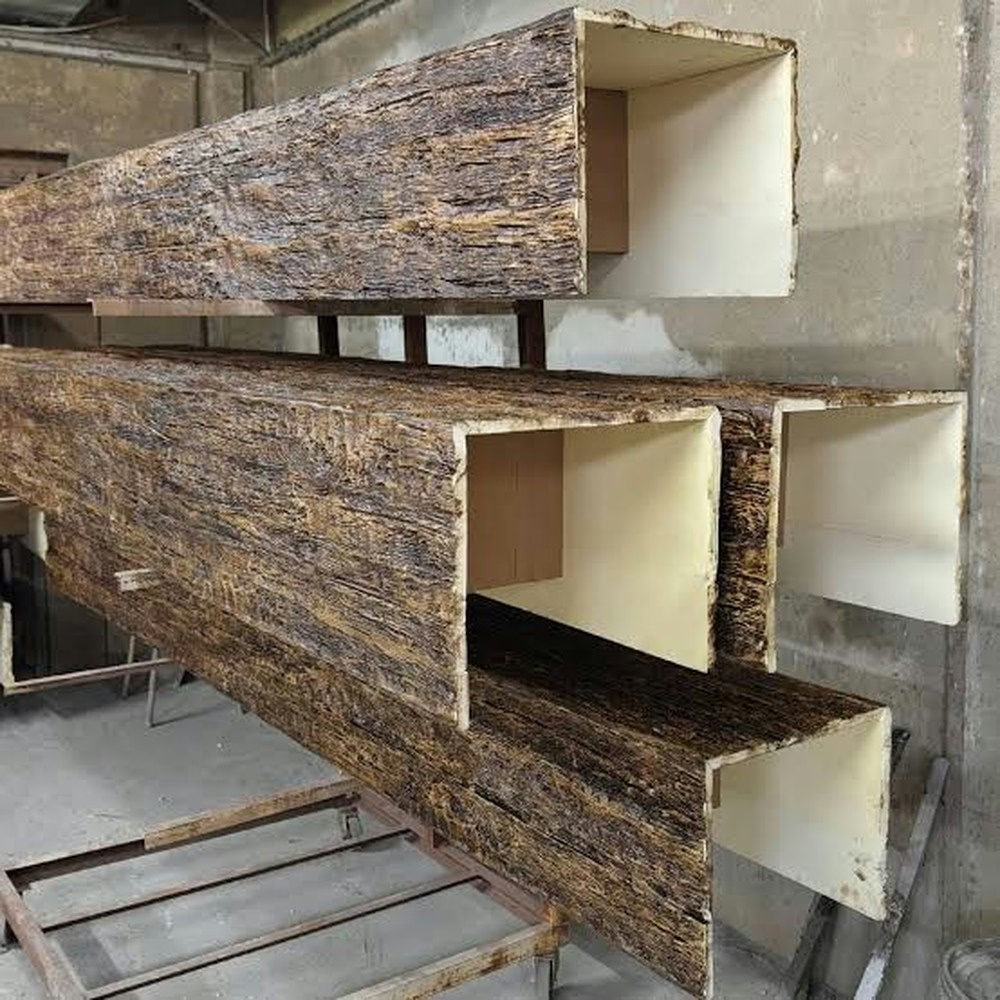
The weight of authentic-looking faux beams contributes to their impact in ways that lighter plastic alternatives cannot match. Genuine timber beams feel substantial; convincing simulation should feel similarly weighty without actually creating the installation challenges that real timber presents. Hollow construction provides this substantial feel while maintaining practical advantages in handling and installation.
Cost-Effective Path to Stunning Results
Achieving stunning ceiling effects doesn't require the budget that genuine timber demands. Polyurethane faux beams provide the visual impact of authentic timber at a fraction of the cost. This cost efficiency opens stunning ceiling treatments to projects that couldn't justify genuine timber budgets, democratizing access to high-impact design.
The total cost picture for faux beams includes advantages beyond initial purchase price. Installation costs decrease due to lighter weight and simpler mounting requirements. Finishing costs disappear because beams arrive ready for installation with factory-applied colors. Maintenance costs never materialize because faux beams don't require the periodic attention that genuine timber needs. These combined savings often exceed the material cost difference.
Budget allocation strategies can maximize stunning results within cost constraints. Concentrating investment in key focal beams while using more modest treatments in secondary areas creates hierarchy that stretches budgets effectively. Strategic placement ensures that stunning effects occur where they matter most, while cost-conscious approaches address less critical areas.
Professional Installation for Optimal Results
Stunning results require installation quality that matches beam quality. Even excellent beams poorly installed fail to achieve their potential, wasting the investment that went into specification and procurement. Professional installation ensures that beams perform as designed, with secure mounting, precise alignment, and clean detailing that supports stunning visual impact.
Critical installation details include accurate positioning, secure attachment, and invisible fastening systems. Positioning must align with design intent—slight variations that might seem trivial can undermine focal point effectiveness. Attachment must support the beam securely over time without deflection or movement. Fastening should be invisible from normal viewing distances, preserving the illusion of solid timber support.
Finish work completes installation by ensuring that beams integrate seamlessly with surrounding architecture. Joints at walls and intersections require attention that reveals no gaps, misalignments, or amateur techniques. Paint matching and application ensure consistent appearance throughout the installation. This finishing work distinguishes installations that genuinely stun from those that merely impress at first glance.
Technical References
ASTM standards cited in every specification
Test Data
Lab results from internal testing program
Updated 2026
Reviewed against current product specs


