Interior design succeeds when spaces create memorable moments—glimpses that catch attention, hold interest, and establish character. Without such moments, rooms feel forgettable regardless of their practical merits. Ceiling focal point decor provides one of the most effective means of creating these moments, drawing the eye upward and rewarding viewers with impressive detail. Statement-making faux wood beams have become the preferred choice for designers seeking to generate these focal points efficiently and reliably.
The Anatomy of Effective Focal Points
Focal points operate through principles that designers have refined over centuries of practice. They create visual hierarchy in spaces that might otherwise feel aimless, establishing primary subjects that secondary elements support. When focal points succeed, they organize entire compositions, making spaces feel intentional rather than accidental. Understanding these principles helps ensure that focal point selections achieve intended effects.
Contrast drives focal point effectiveness. Elements that stand out against their backgrounds capture attention through this difference. For ceiling focal points, beams that contrast clearly with surrounding ceiling surfaces achieve maximum impact. The contrast can come from color, texture, dimension, or style—but without meaningful difference, focal points fail to establish themselves against competing visual elements.
Position influences how effectively focal points function. Central placement creates obvious focal status; off-center placement requires more dramatic contrast to achieve similar effect. Understanding where viewers' eyes naturally travel helps position focal points for maximum impact. Entry views, seating arrangements, and sight lines all create opportunities for strategic focal point placement.
Why Faux Wood Beams Excel as Focal Points
Among ceiling treatment options, faux wood beams achieve focal point status more effectively than most alternatives. Their three-dimensional presence creates real shadow and dimension that flat ceiling treatments cannot match. The warmth of wood appearance provides emotional resonance that synthetic alternatives lack. The structural associations of beams—load-bearing, supportive, foundational—add symbolic meaning that purely decorative elements don't carry.
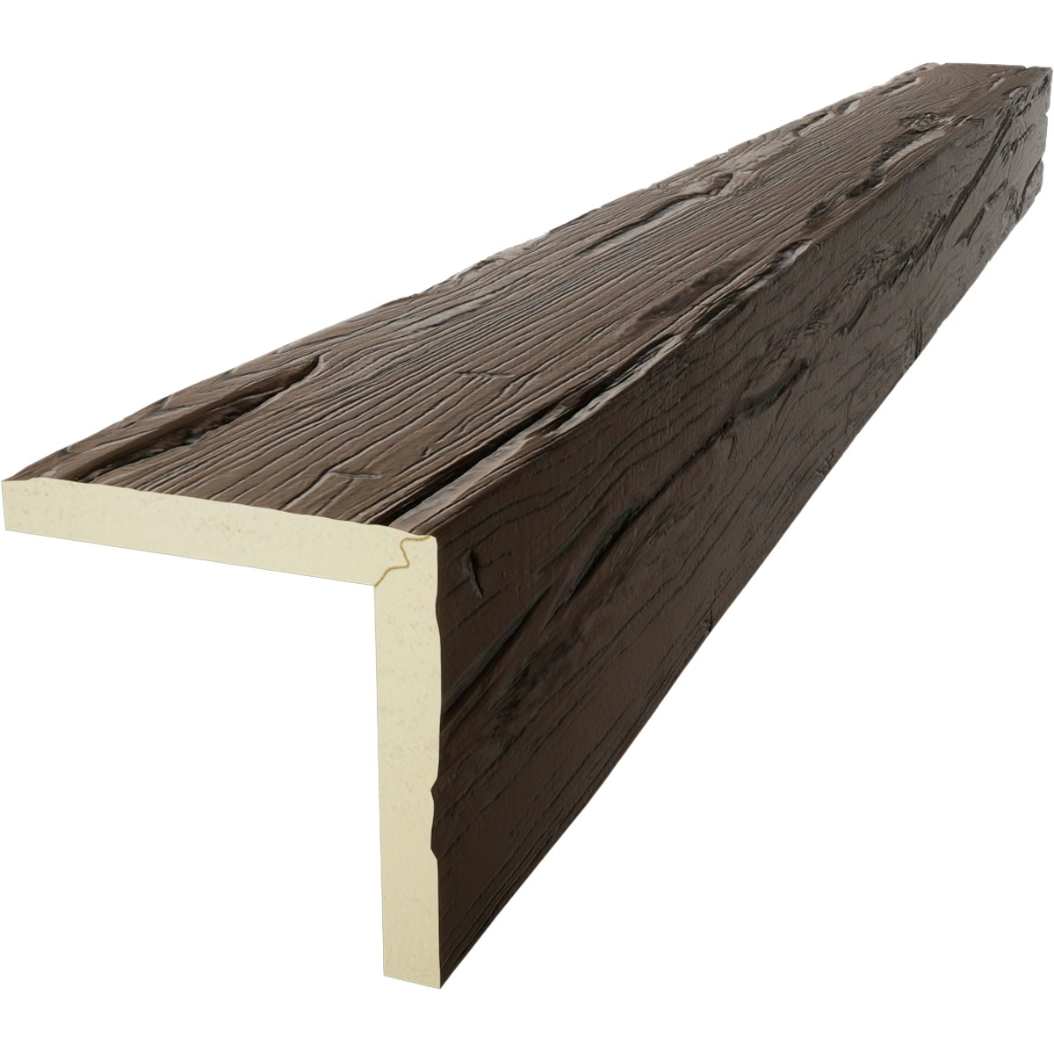
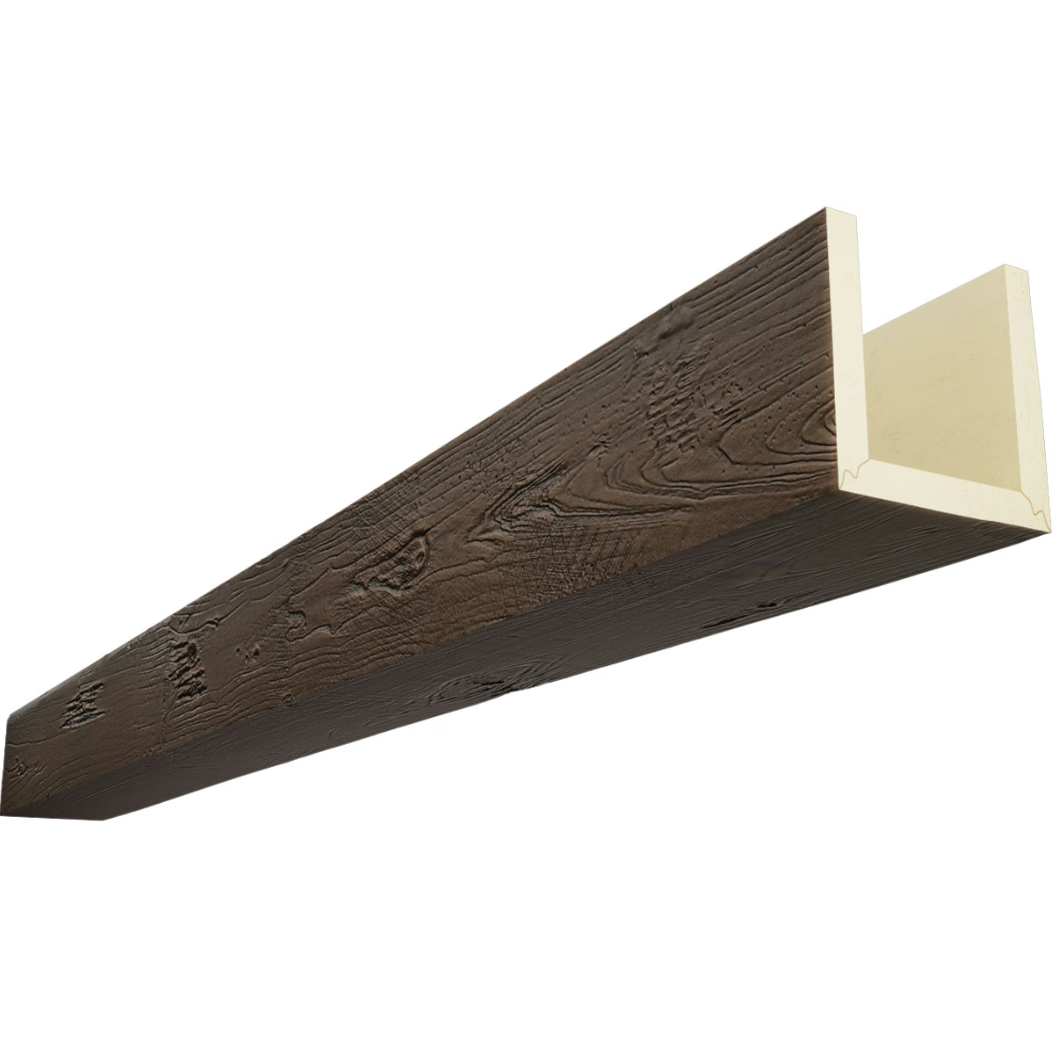
Polyurethane construction enables authenticity that supports convincing focal point performance. When beams look convincingly like timber, viewers engage with them as they would with genuine wood—examining grain, appreciating weathering, marveling at scale. This engagement is what focal points are meant to generate, and authentic appearance creates the conditions for genuine engagement rather than surface-level acknowledgment.
The variety available in faux beam options allows precise matching between beam characteristics and focal point intent. A rustic cabin might feature heavily weathered beams with dramatic scale. A sophisticated urban loft might showcase refined beams with smooth surfaces and contemporary proportions. This variety ensures that beam selections align with specific design visions rather than forcing compromises.

Scale Strategies for Focal Impact
Achieving focal point status requires sizing that commands attention without overwhelming the spaces they occupy. Focal beams must be large enough to dominate ceiling composition; too small and they disappear into surrounding surfaces. The principle of generous sizing applies with particular force to focal point applications where impact is the primary goal.
Ceiling height establishes the primary constraint for focal beam sizing. Higher ceilings accommodate larger beams; lower ceilings require more restrained dimensions. However, ceiling height alone doesn't determine appropriate sizing—the visual weight of surrounding elements, the beam's intended relationship with furniture and activities below, and the overall design scale all influence optimal dimensions.
Testing scale decisions through visualization tools or physical mockups provides valuable feedback before commitment. What seems appropriately sized in imagination or even in photographs can feel underwhelming in actual space. The investment in pre-installation testing pays dividends by preventing disappointment with final results.
Focal Point Placement Strategies
Strategic placement determines how effectively beams function as focal points. The goal is positioning that captures natural attention without forcing views or creating awkward relationships with other elements. Several placement approaches work effectively depending on room characteristics and design intentions.
Central placement above primary activity zones creates obvious focal points that establish hierarchy immediately. Entering a room, eyes naturally travel toward the center of the ceiling—placing dramatic beams there leverages this natural tendency. This approach works particularly well for single dominant beam installations or symmetrically positioned pairs.
Asymmetric placement creates more dynamic focal points that suggest movement and energy. A single beam offset from center, or an angled pair that creates visual tension, generates interest through unconventional positioning. This approach suits contemporary spaces where traditional symmetry might feel too formal or predictable.
Multiple focal points distribute visual interest across larger spaces while maintaining the arrival experience that single focal points provide. This approach requires careful balance—too many focal points fragment attention; too few leaves portions of the ceiling unaddressed. The ideal number depends on room size, ceiling height, and the importance of focal points relative to other design elements.
Integration with Overall Design Schemes
Focal point beams don't exist in isolation—they function within complete design schemes that include walls, floors, furniture, lighting, and accessories. Successful focal points enhance these schemes; unsuccessful focal points conflict with them. Achieving successful integration requires attention to relationships between beams and all other design elements.
Color relationships deserve particular attention during specification. Wood-tone beams establish warm or cool baselines that affect all other color choices in the room. Complementary colors harmonize; clashing colors create discord that undermines focal point effectiveness. Understanding these relationships during specification prevents conflicts that would require correction after installation.
Style relationships similarly affect integration success. Contemporary spaces with clean lines and modern materials need beam treatments that align with these aesthetics. Traditional spaces with period details benefit from beam styling that references historical precedents. Mismatching beam style to overall style creates visual confusion that prevents focal points from achieving intended impact.
Lighting Enhancement of Focal Points
Light reveals form and texture, making lighting essential to focal point effectiveness. The same beam installation can appear dramatically different under varying light conditions, from flat and uninteresting to dimensional and captivating. Thoughtful lighting design ensures that focal point beams look their best across the full range of conditions spaces experience.
Natural light creates ever-changing relationships with ceiling beams throughout the day. Morning light, midday light, and evening light each reveal different aspects of beam character. The best focal point designs acknowledge these variations, ensuring that beams look appealing across the full lighting cycle rather than optimizing for single conditions.
Artificial lighting provides controlled enhancement that natural light cannot guarantee. Adjustable fixtures allow beam appearance to change as desired, from subtle revelation during normal use to dramatic emphasis during entertaining. This lighting flexibility adds value to focal point investments by allowing activation or moderation as circumstances warrant.
Focal Points in Different Room Types
Residential focal point beams serve different purposes across room types. Living room focal points enhance the spaces where families gather and guests are entertained. Bedroom focal points create retreats that feel special and distinct from the rest of the home. Kitchen focal points add warmth to spaces that might otherwise feel purely functional. Understanding these differences helps specify appropriate focal point treatments.
Commercial applications present different requirements. Retail spaces need focal points that draw attention without competing with merchandise. Hospitality venues need focal points that create memorable atmospheres. Office spaces need focal points that establish identity without distracting workers. Each application demands focal point specifications aligned with specific functional requirements.
The public or private nature of spaces affects focal point intensity. Highly public spaces like hotel lobbies benefit from dramatic focal points that make strong impressions on many visitors. Private spaces like home offices can feature subtler focal points that satisfy the single occupant without demanding excessive attention. Matching focal point intensity to spatial context ensures appropriate rather than excessive impact.
Return on Investment for Focal Point Beams
Focal point installations represent investments that should return value exceeding their costs. The return comes through enhanced space enjoyment, improved aesthetics, and potentially increased property values. Understanding what value beams provide helps justify investment and allocate budget appropriately.
The entertainment value of impressive focal points often exceeds initial expectations. Spaces that guests admire repeatedly generate ongoing satisfaction for homeowners. The focal point becomes a talking point, a source of pride, and a reminder of design commitment. This ongoing value compounds over time, making initial investment increasingly worthwhile as years pass.
Property value enhancement represents another return that well-executed focal points can provide. Kitchens and living spaces with impressive beam installations appeal to prospective buyers who value architectural character. The authenticity and durability of quality faux beams means that this enhanced appeal persists indefinitely, protecting the investment against the depreciation that less durable materials might experience.
Technical References
ASTM standards cited in every specification
Test Data
Lab results from internal testing program
Updated 2026
Reviewed against current product specs


