Contemporary interior design often favors restraint over ornament, simplicity over complexity, and clean geometry over organic irregularity. These preferences have shaped how designers approach ceiling treatment, leading many to specify straight clean-line faux wood beams that embody contemporary values. Understanding how these beams support linear design helps specify installations that achieve intended effects authentically.
The Contemporary Aesthetic
Contemporary design emerged from decades of modernist influence, absorbing lessons from mid-century simplicity while incorporating current sensibilities about sustainability, authenticity, and livability. The aesthetic favors spaces that feel calm, ordered, and intentional—qualities that straight clean-line beams reinforce through their geometric precision and restrained character.
The linear emphasis in contemporary design reflects broader cultural interests in efficiency, clarity, and directness. Lines communicate intention; curves suggest organic complexity. Contemporary spaces often favor the former, using linear elements to create visual order that supports focused activity. Clean-line beams contribute this linear quality to ceiling treatment without the complexity that ornamental alternatives might introduce.
However, contemporary doesn't mean cold or sterile. The warmth that wood elements provide remains valued even in minimalist contexts. Clean-line faux wood beams satisfy both contemporary aesthetic preferences and the human need for natural warmth—a combination that explains their popularity in contemporary residential and commercial design.
Characteristics of Clean-Line Beams
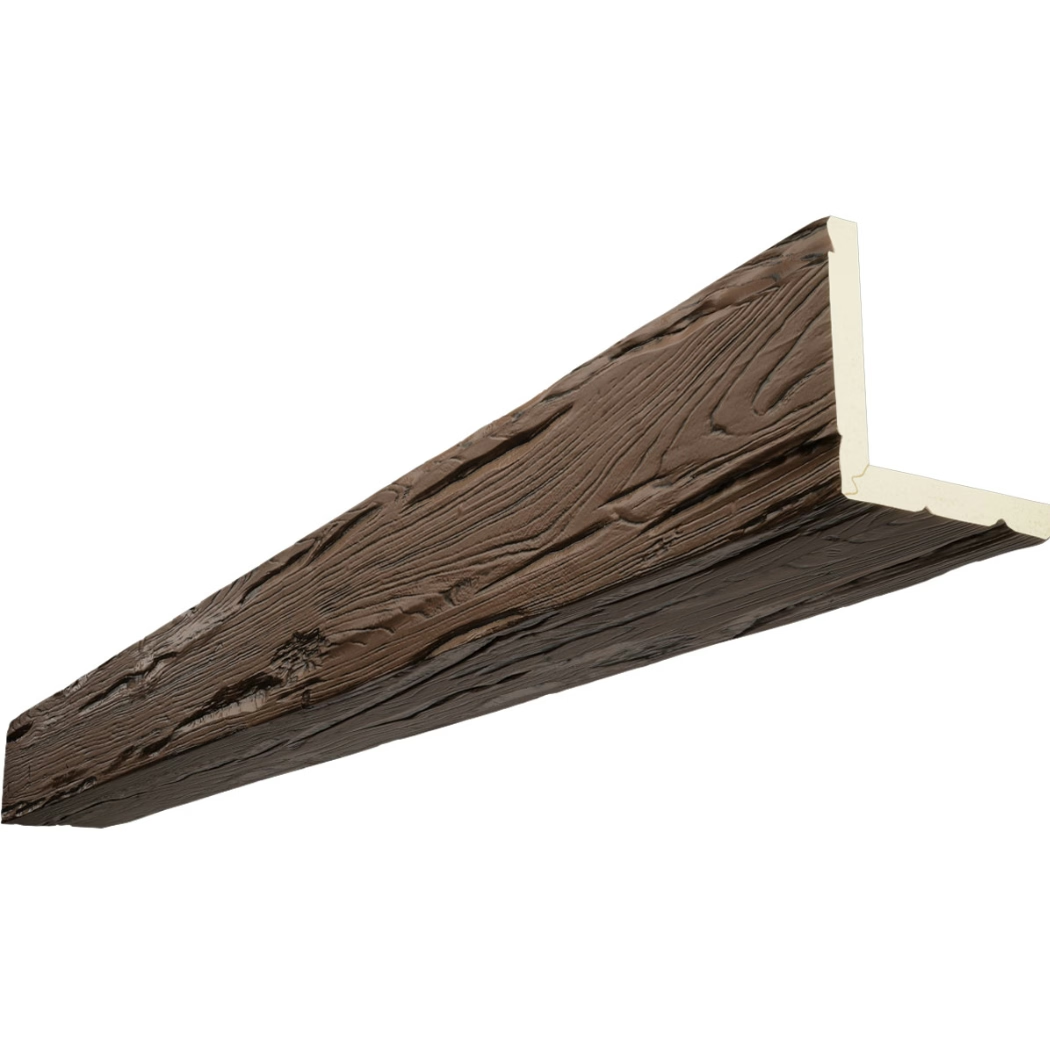
Clean-line beams distinguish themselves through geometric precision and minimal surface detail. Unlike rustic beams that feature deep textures, pronounced weathering, and obvious knots, clean-line beams present smooth surfaces with crisp edges. This restraint serves contemporary aesthetics while creating different challenges for authenticity.
Profile geometry defines clean-line beam character. Sharp corners, consistent dimensions, and parallel surfaces create the precision that linear design requires. Any irregularity in profile—whether unintentional voids, inconsistent dimensions, or imperfect edges—becomes immediately apparent against the clean backdrop these beams create.
Surface texture for clean-line beams typically remains subtle, providing just enough visual interest to prevent flatness without introducing the complexity that rustic styling would create. This texture level requires careful balance—too smooth reads as plastic; too rough introduces unwanted ornament. The best clean-line beams achieve texture that enhances without distracting.
Design Applications for Linear Spaces
Linear design often favors elongated spaces that emphasize directional movement. Corridors, galleries, and modern open plans all benefit from linear treatment that guides visual attention and physical movement. Clean-line beams contribute to this directionality through consistent orientation that reinforces spatial flow.
Long, narrow spaces present challenges that beams can address through careful scaling and orientation. Beams running perpendicular to the long axis visually broaden the space while maintaining directional emphasis. Beams running parallel elongate further—choose orientation based on whether expansion or extension serves the space better.
Open plan contemporary spaces use clean-line beams to create visual organization without physical division. The beams establish zones within open areas through their placement and the spatial definition their presence creates. This organization proves particularly valuable in spaces where flexible use makes fixed divisions impractical.
Color Considerations for Contemporary Contexts
Contemporary color palettes typically favor neutrality—grays, whites, blacks, and natural wood tones that work with diverse accent colors. Clean-line beams participate in this neutrality through finishes that complement rather than dominate surrounding colors.
Natural wood tones work particularly well in contemporary contexts because they provide warmth without introducing color complexity. Honey oak, light maple, and neutral walnut tones establish warmth that cooler surrounding colors might lack. These warm neutrals integrate seamlessly with contemporary palettes while preventing spaces from feeling cold.
Gray-toned finishes align with industrial or minimalist contemporary aesthetics. These cool neutrals create different atmospheres than warm wood tones, emphasizing the structural rather than organic qualities of wood appearance. Gray beams work particularly well with concrete, steel, and other industrial materials common in contemporary design.
Painted finishes allow clean-line beams to match or contrast with surrounding ceiling surfaces. White or off-white beams recede visually, creating subtle texture without strong presence. Darker painted beams create stronger visual statements, establishing themselves as genuine design elements within the composition.
Integration with Modern Lighting
Contemporary lighting design often favors clean fixtures that align with linear aesthetics. Recessed fixtures, linear pendants, and continuous strip lighting all complement clean-line beam installations. The relationship between beam and fixture affects overall composition significantly.
Fixtures mounted between beams rather than on them create interesting negative space compositions. The beams become framing elements that define areas for illumination, creating visual rhythm through the alternation of solid beam and open space. This approach requires careful coordination between beam placement and fixture positioning.
Fixtures mounted on or within beams integrate lighting directly into beam composition. This approach works well when fixtures align with beam direction, maintaining linear emphasis throughout the installation. Surface-mounted linear fixtures work particularly well with clean-line beams, creating continuous light elements that extend the beam aesthetic.
Material and Construction for Clean Lines
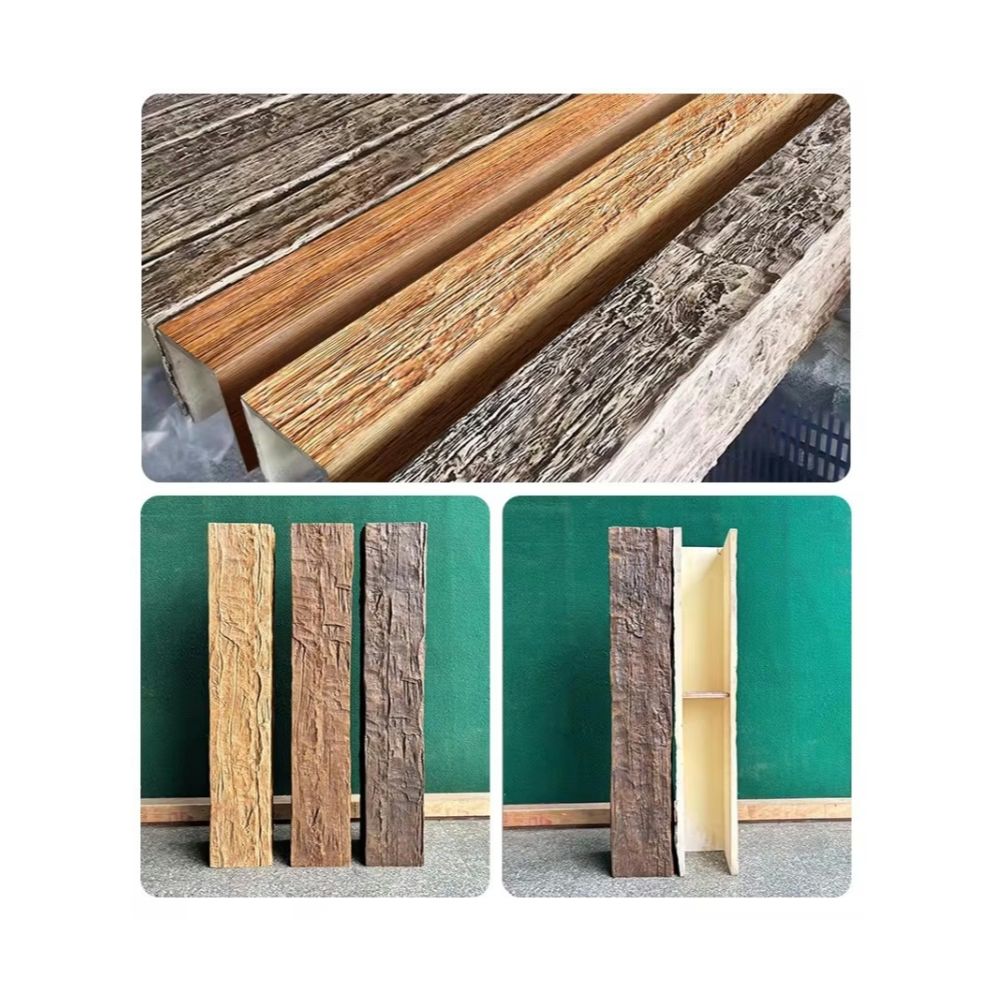
Achieving truly clean lines requires manufacturing precision that not all faux beam producers can deliver. The consistency of polyurethane allows superior dimensional accuracy compared to natural materials, making it well-suited for contemporary beam applications. However, quality varies between manufacturers.
Examine beam profiles carefully before purchasing. Clean-line beams should exhibit crisp edges without radius or rounding that would soften their geometric character. Surface flatness should be consistent throughout—the slightest waviness becomes apparent when light catches imperfect surfaces.
Hollow construction maintains clean appearance better than solid alternatives over time. Solid materials may develop hairline cracks or surface irregularities that undermine clean aesthetics. Polyurethane's dimensional stability preserves the pristine surfaces that clean-line designs require.
Proportion in Clean-Line Installations
Contemporary design often favors generous proportions that emphasize architectural scale. Clean-line beams work well at substantial sizes that would overwhelm traditional contexts but feel appropriately scaled in contemporary spaces with higher ceilings and larger room dimensions.
Width-to-depth ratios affect how substantial beams appear. Clean-line designs typically favor relatively consistent proportions—widths that don't dwarf depths, depths that don't overwhelm widths. This balance maintains the proportional clarity that contemporary aesthetics require.
Spacing affects how the ceiling reads as a composition. Wider spacing between clean-line beams emphasizes each beam individually, creating distinct linear elements. Tighter spacing creates texture through repetition, though this approach risks losing the individual character that clean-line beams provide.
Contrast and Visual Interest
Clean-line beams in minimal contexts might seem austere without thoughtful contrast or complementary detailing. Understanding how to create visual interest within restraint prevents spaces from feeling flat or underdeveloped. The goal is simplicity that engages rather than empties.
Texture variation between beams and surrounding surfaces creates subtle contrast that maintains visual interest. Clean-line beams against textured ceilings, or vice versa, create relationships that reward attention without demanding it. This interplay between smooth and textured elements adds depth to otherwise simple compositions.
Color temperature contrast between beams and surroundings affects perceived warmth or coolness. Warm-toned beams against cool gray walls create interest through temperature difference; cool-toned beams against warm surfaces create opposite effects. Consider how these relationships contribute to intended atmospheres.
Commercial Applications
Commercial contemporary spaces often embrace clean-line aesthetics more fully than residential contexts. Corporate offices, retail environments, and hospitality venues all benefit from the clarity and professionalism that linear design provides. Clean-line faux beams contribute these qualities without the maintenance requirements that genuine materials might demand in high-traffic commercial settings.
Brand alignment affects beam specification in commercial contexts. Clean lines support modern, forward-thinking brand positioning; rustic beams might communicate heritage or authenticity that contemporary brands might not want to claim. Understanding brand identity helps specify beams that reinforce rather than contradict intended positioning.
Durability requirements in commercial settings favor polyurethane over alternatives. High-traffic exposure, frequent cleaning, and continuous visibility all stress ceiling materials. Polyurethane's durability ensures that clean-line appearance remains pristine despite demanding conditions.
Long-Term Aesthetic Maintenance
Clean-line aesthetics require ongoing attention to maintain the pristine quality that defines them. Any wear, damage, or deterioration becomes immediately apparent against surfaces designed for visual clarity. Understanding maintenance requirements helps preserve installations over their intended service lives.
Surface cleaning for clean-line beams focuses on preventing accumulation that might dull pristine surfaces. Regular dusting and occasional cleaning with appropriate products maintains the reflective quality that clean-line designs rely on. Neglected beams gradually lose the visual crispness that justifies their specification.
Damage repair requires careful attention to match original appearance. Polyurethane repair materials must achieve seamless integration with surrounding surfaces. Any repair that creates visible difference undermines the clean aesthetics that clean-line beams provide.
Specification and Sourcing
Quality clean-line beams require sourcing from manufacturers who understand contemporary aesthetic requirements. Not all producers can deliver the precision and consistency that clean-line applications demand. Evaluating samples carefully before purchasing helps ensure that delivered products meet expectations.
Request samples that represent actual production quality rather than specially selected specimens. True production quality reveals itself in variation between pieces—high-quality producers maintain tight tolerances throughout their output. Samples that look perfect but don't represent typical production may disappoint upon delivery.
Working with manufacturers who specialize in contemporary products often produces better results than general producers. The design knowledge that specialists develop translates into products that better serve specific applications. These specialists also better understand the mounting and finishing requirements that contemporary installations present.
Technical References
ASTM standards cited in every specification
Test Data
Lab results from internal testing program
Updated 2026
Reviewed against current product specs


