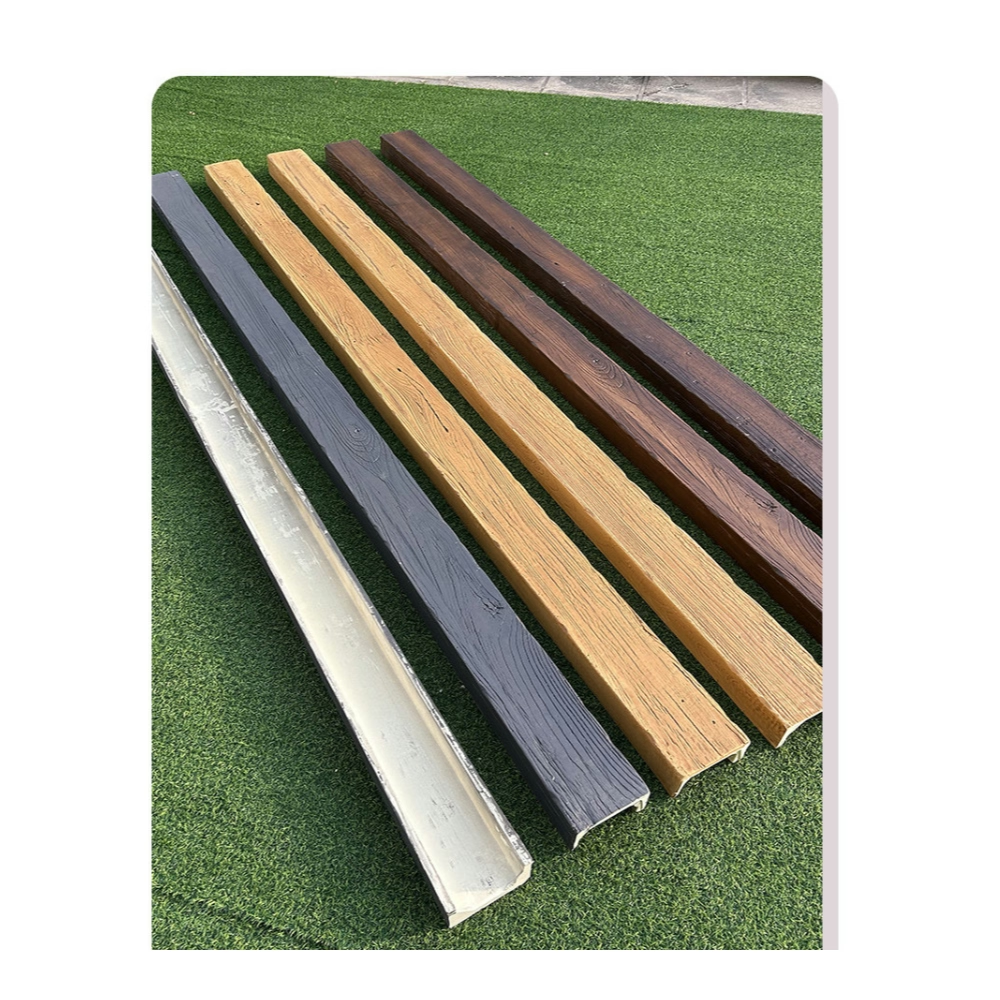
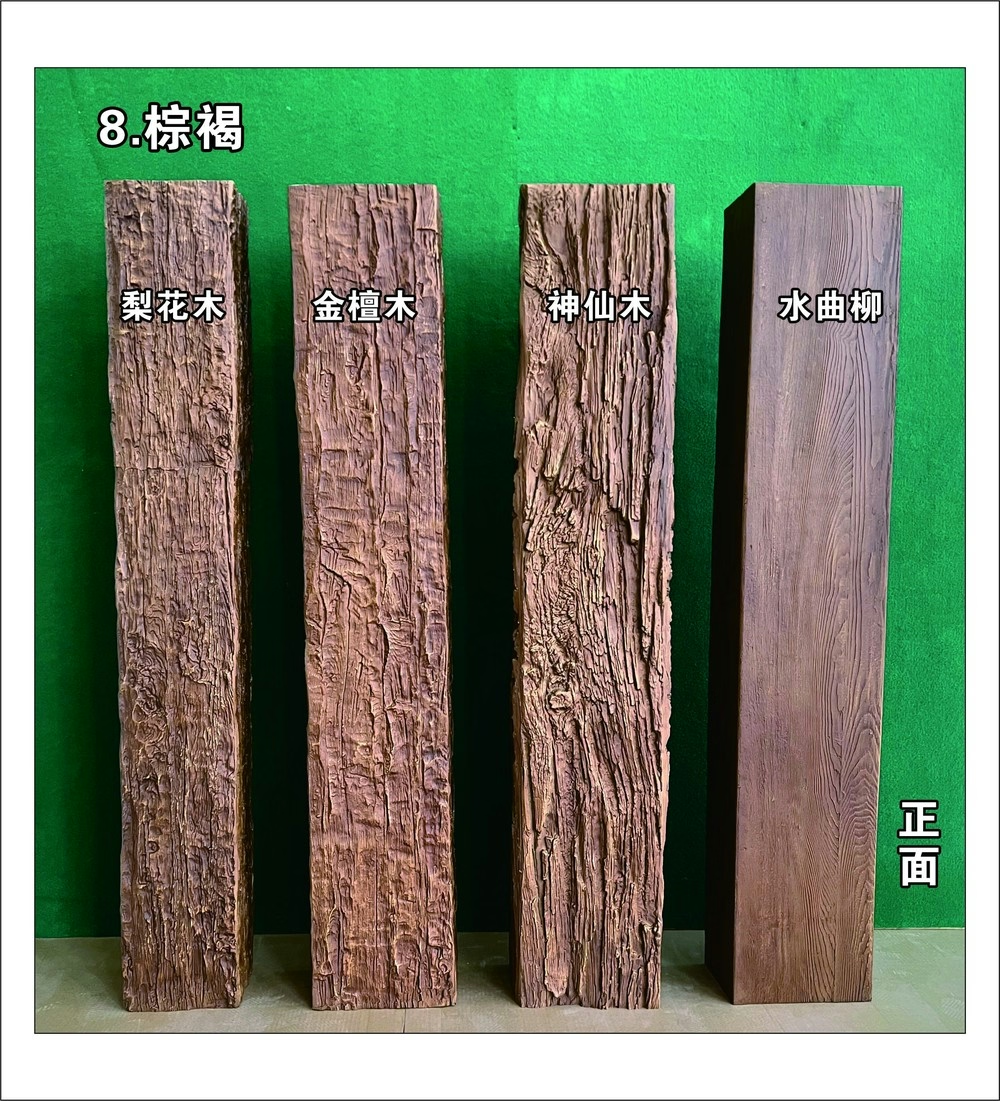
The question I hear most often from clients considering faux beam installation is simple: will it stay up? They've seen other home improvement products fail—tiles that crack, trim that peels, fixtures that fall—and they rightfully want assurance that their investment won't end up on the floor during a dinner party. My answer always addresses the same fundamental principle: permanent bond installation isn't about any single technique or product, it's about understanding and controlling all the factors that affect long-term attachment.
I've removed beams installed by previous owners that had failed for various reasons—wrong adhesive, inadequate surface prep, insufficient cure time, physical damage from impacts. Examining these failures taught me exactly what can go wrong and how to prevent it. More importantly, I've inspected installations I completed five, ten, and fifteen years ago that remain perfectly secure despite everything the intervening years could throw at them. The difference always traced back to technique choices made during installation.
The Permanence Principle: Understanding Bond Failure
Bond failure doesn't happen spontaneously. Every attachment that eventually lets go follows a predictable progression: initial weakening, continued stress, and finally separation. Understanding this progression helps installers recognize and address vulnerability before it leads to visible problems. Most failures trace back to one or more of a handful of root causes that careful technique can prevent.
Moisture intrusion represents the most common cause of adhesive bond degradation over time. Water migrating through building assemblies, condensation forming on cold surfaces, or water damage from above can attack adhesive bonds even in relatively dry-appearing installations. Selecting adhesives formulated for moisture resistance and ensuring building envelope integrity protects against this failure mode.
Thermal cycling creates stress that compounds over thousands of cycles. Each temperature change causes microscopic expansion and contraction in both the adhesive layer and the materials it joins. Adhesives that remain flexible accommodate these movements; rigid adhesives accumulate stress until cracking or debonding occurs. Polyurethane adhesives handle thermal cycling better than many alternatives, making them well-suited for beam applications.
Building a Bond System
Professional installers rarely rely on a single attachment method, even when that method could theoretically support the load. Instead, they layer multiple attachment approaches so that if any single element fails, others continue providing support. This redundancy philosophy transforms attachment from a single point of failure into a robust system that handles unexpected stresses.
Adhesive provides continuous surface contact that distributes loads evenly across the entire bonding area. This load distribution prevents the localized stress concentrations that cause fastener failure. Mechanical fasteners, where used, provide immediate holding strength during adhesive cure and backup support if adhesive bonds weaken. The combination of these approaches exceeds what either could achieve independently.
Structural support elements like corbels, knee braces, or decorative brackets do more than provide visual authenticity—they often contact the wall or ceiling surface, providing secondary support points that reduce cantilever stress on main beam spans. These elements make beams look more authentic while also contributing to structural performance. Installing these elements with the same care as main beams ensures they fulfill both aesthetic and structural functions.
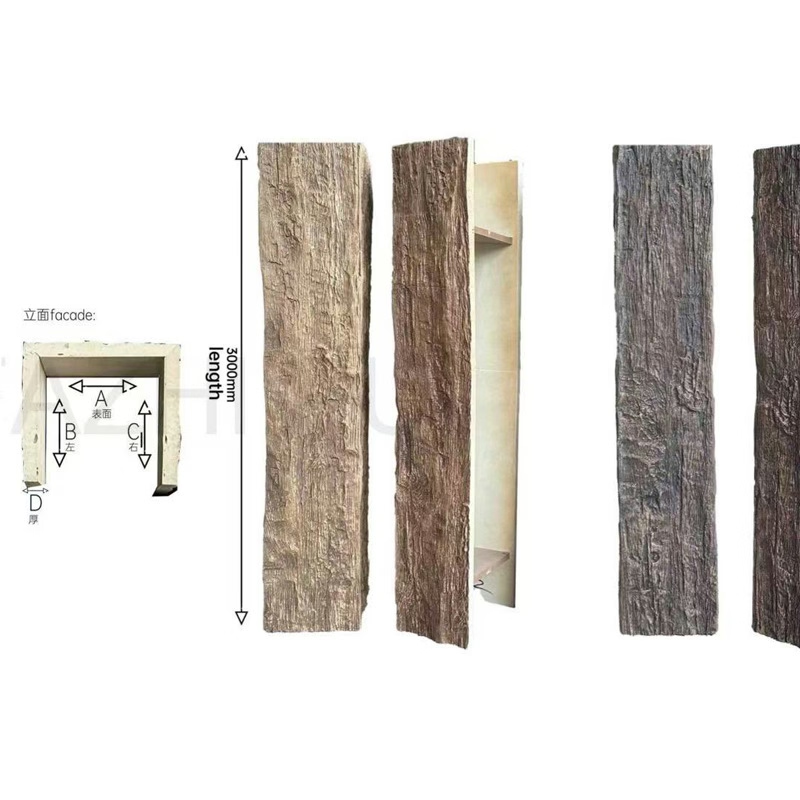
Environmental Considerations for Different Spaces
Different room conditions demand different installation approaches for permanent results. Spaces with higher humidity—bathrooms, kitchens, laundry rooms—subject beams to moisture exposure that standard installations cannot tolerate. Understanding the specific challenges of each environment ensures appropriate preparation and product selection.
Bathroom installations face steam exposure, splashing water, and cleaning product contact. Sealing all visible surfaces and edges with water-resistant sealant protects against moisture intrusion. Selecting adhesives and sealants rated for continuous moisture exposure prevents degradation that casual products would suffer. Even with these protections, bathroom beam installations may require more frequent inspection and maintenance than dry-location equivalents.
Kitchen environments combine humidity challenges with temperature variations from cooking appliances. Grease accumulation on beam surfaces requires cleaning approaches that won't damage finishes. Position beams away from direct cooking heat sources to prevent thermal stress and finish degradation. The effort invested in appropriate kitchen installation prevents the failures that grease infiltration or heat exposure cause in inadequately prepared installations.
Basement and below-grade spaces present moisture challenges even when no visible water exists. Water vapor migrating through concrete foundations can condense on surfaces and attack adhesive bonds. Vapor barriers, dehumidification, and adequate ventilation all contribute to conditions where beam installations can perform permanently. Ignoring these factors invites the gradual bond degradation that eventually causes failure.
Quality Maintenance Practices
Even perfectly installed beams benefit from periodic maintenance that preserves appearance and detects potential problems early. Visual inspection during regular cleaning reveals any developing issues before they become serious. Paying attention to beam edges, seams, and mounting points identifies areas requiring attention.
Cleaning methods should match beam finishes and exposure conditions. Dusting with soft, dry materials prevents scratching that aggressive cleaning causes. Occasional damp cleaning with appropriate cleaners removes accumulated grime without damaging finishes. Avoid harsh chemicals or abrasive tools that could compromise surface integrity or bond edge conditions.
Addressing minor damage promptly prevents escalation. Small cracks, chips, or edge damage should be repaired before water intrusion or further damage develops. Most repairs involve simple patching compounds and touch-up finish applications that restore appearance without removing beams. Establishing a maintenance routine that includes beam inspection and cleaning extends installation life significantly beyond what neglect would allow.

Technical References
ASTM standards cited in every specification
Test Data
Lab results from internal testing program
Updated 2026
Reviewed against current product specs