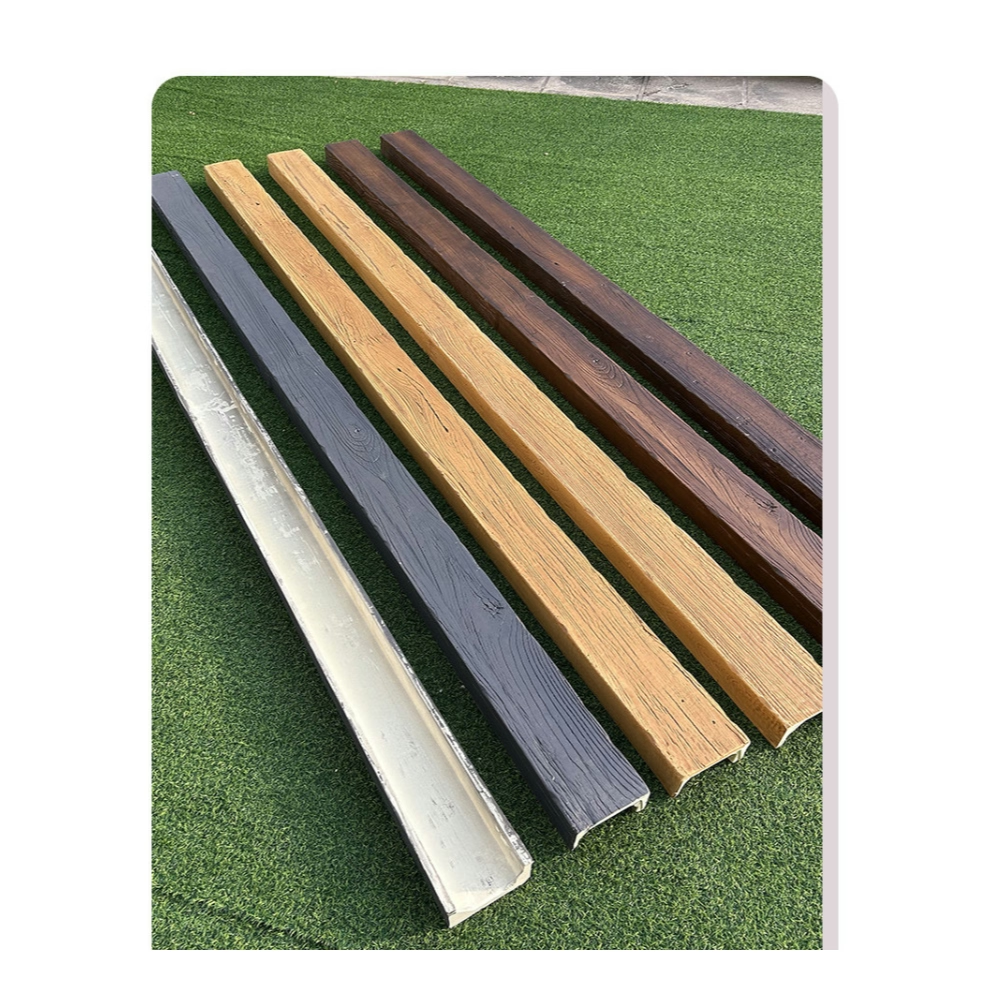
Ceiling beam installations in existing buildings often face constraints that solid timber cannot accommodate. Structural limitations, renovation requirements, and safety considerations can rule out traditional wood beams despite their aesthetic appeal. Hollow core PU ceiling beams resolve these challenges by providing substantial visual presence with dramatically reduced weight, enabling installations that would otherwise prove impractical or impossible.
The hollow construction technique represents a significant engineering advancement in faux beam manufacturing. By eliminating non-essential material from beam interiors while maintaining external dimensions and structural rigidity, manufacturers create products that appear identical to solid beams while weighing a fraction of their natural wood counterparts. This efficiency benefits both installation teams and the structures that receive their work.
Engineering Behind Hollow Core Design
Hollow core construction relies on geometric principles that maximize stiffness while minimizing material usage. The exterior shell maintains full dimensional appearance, including wood-grain textures and architectural details that define the beam's visual character. Interior structural elements connect the shell walls, providing load distribution and connection point locations without filling the interior cavity.
Wall thickness in hollow core beams varies by manufacturer and product line, typically ranging from half an inch to one inch depending on overall beam dimensions. Thicker walls provide more substantial feel and better impact resistance, while thinner walls reduce weight further. Premium products optimize wall thickness for specific applications, balancing weight, durability, and cost considerations against each other.
Internal ribbing systems enhance structural performance beyond what thin walls could provide independently. These rib elements run lengthwise through the beam interior, connecting top and bottom surfaces to resist bending and deflection. The rib pattern distributes loads from attachment points across broader areas, preventing localized stress concentrations that could compromise structural integrity.
Material selection for hollow core beams emphasizes strength-to-weight ratios. High-density polyurethane formulations provide excellent rigidity while remaining lightweight enough for the hollow construction approach. Additives enhance various performance characteristics including UV resistance, impact strength, and fire performance. The resulting composite material outperforms natural wood in many categories while maintaining the workability that facilitates installation.

Safe Installation Benefits
Weight reduction translates directly to installation safety improvements. Workers handling hollow core beams experience less fatigue, reduced injury risk, and improved control during positioning. The ease of single-person installation eliminates coordination challenges that multi-person lifts introduce, reducing communication errors and timing-related accidents. These safety benefits benefit both professional contractors and DIY homeowners undertaking beam installations.
Structural safety in existing buildings improves when lighter loads transfer to ceiling systems. Original construction rarely anticipated the substantial loads that solid timber beams would impose. Hollow core beams allow beam installations without compromising structural margins or requiring expensive reinforcement. Engineering assessments frequently approve hollow core installations that would reject solid timber alternatives due to load concerns.
Ceiling damage risks diminish with lighter beam weights. Solid timber beams can stress ceiling drywall, crack plaster, or deform structural elements over time as sustained loads work against connection points. Hollow core beams impose lower sustained loads, reducing these concerns and preserving ceiling finishes in good condition. This characteristic proves particularly valuable in older buildings with historical finishes that would be difficult or impossible to match after damage.
Seismic safety considerations increasingly influence construction material selection. Buildings in earthquake-prone regions benefit from reduced mass throughout their construction, as lower building weight experiences lower seismic forces during ground movement. Hollow core beams contribute to this goal while providing the architectural character that solid timber would offer. This dual benefit influences specification decisions in regions with significant seismic activity.

Applications in Sensitive Construction
Historic preservation projects frequently involve structures that cannot safely accept additional loads without extensive remediation. Hollow core beams allow these buildings to receive modern amenities and design improvements without compromising their historical integrity. The lightweight approach often satisfies preservation authority requirements that would reject solid timber alternatives as inconsistent with original construction practices.
Apartment and condominium renovations face unique challenges when individual units share structural elements with neighbors. Adding substantial loads to ceiling assemblies may require approval from building associations or structural engineers. Hollow core beams provide aesthetic improvements without these complications, allowing unit owners to enhance their spaces within existing structural parameters. This accommodation enables design freedom that heavier alternatives would foreclose.
Modular construction and prefabricated building components often have limited structural capacity. Hollow core beams accommodate these constraints, allowing designers to incorporate beam elements without exceeding module weight limits or requiring additional structural reinforcement. This flexibility expands design options in projects where conventional timber would create challenging load scenarios.
Temporary installations benefit from hollow core construction's lightweight handling. Trade shows, event venues, and exhibition spaces frequently install decorative elements that will move or change seasonally. Hollow core beams facilitate these temporary applications, allowing setup crews to position and secure beams efficiently without specialized equipment or extensive labor. The reduced weight simplifies both installation and removal processes.
Quality Verification and Selection
Quality hollow core beams demonstrate consistent construction throughout their length. Visual inspection at cut ends reveals wall thickness, internal ribbing, and overall construction quality. Beams with inconsistent wall thickness, incomplete ribbing, or visible voids may not perform adequately under load. Premium manufacturers provide consistent quality that can be verified through sample examination before large orders.
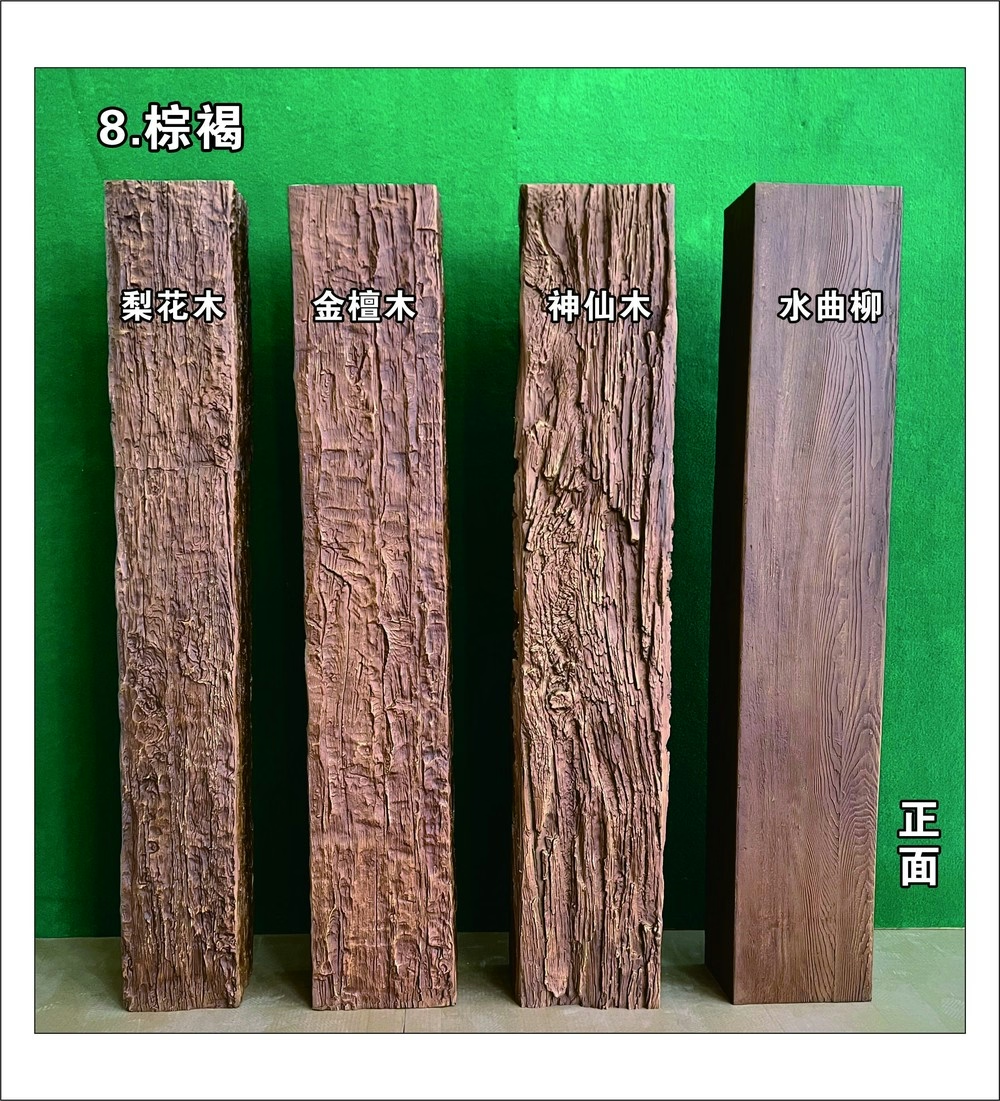
Surface quality should match the beam's visible appearance throughout the installation. Seams where mold sections join should be minimal and smooth after finishing. Surface textures should be consistent without patches, repairs, or variations that would show under paint or stain finishes. Sample pieces allow assessment of finishing behavior and help establish realistic expectations for completed installations.
Connection hardware compatibility requires verification before purchasing beams. Hollow core construction may require specialized mounting approaches that accommodate the reduced material at attachment points. Quality manufacturers provide recommended hardware and installation specifications that account for hollow construction. These guidelines should align with actual site conditions and structural requirements.
Warranty coverage reflects manufacturer confidence in product quality and performance. Extended warranties indicate products designed for long-term service, while limited coverage suggests potential concerns about durability or consistency. Professional installers often specify warranted products to protect both their work quality and client satisfaction over time.
Technical References
ASTM standards cited in every specification
Test Data
Lab results from internal testing program
Updated 2026
Reviewed against current product specs