Every room possesses untapped potential in its vertical space. While furniture placement and wall treatments receive constant attention, the ceiling remains an afterthought in countless homes and commercial spaces. This represents a missed opportunity of considerable magnitude. The ceiling area offers perhaps the largest unbroken surface in any room, and decorating this vast canvas can fundamentally transform how spaces feel, function, and impress visitors.
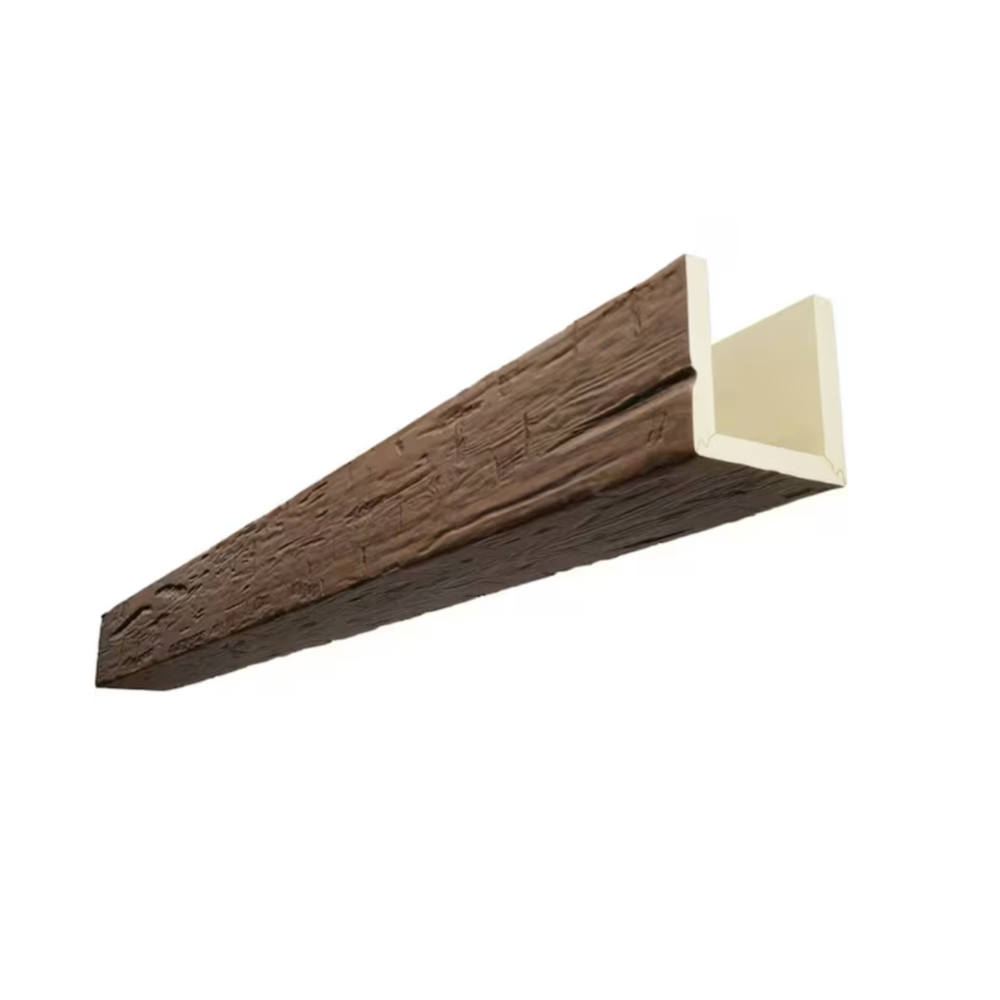
Overhead PU beams provide an elegant solution for homeowners and designers seeking to maximize vertical impact without compromising structural feasibility. These manufactured architectural elements deliver the rich visual texture of traditional timber beams while avoiding the weight, moisture sensitivity, and installation complexity that genuine timber entails. The result is accessible elegance that transforms ordinary rooms into extraordinary environments.
Understanding Vertical Space in Interior Design
Interior designers consistently speak of vertical space as an underutilized design element, yet few homeowners fully appreciate what this means in practical terms. When you decorate walls and floors, you're working with surfaces that the eye naturally scans. The ceiling, however, represents territory that visitors rarely examine closely yet subconsciously register as part of overall spatial impression.
Vertical space contributes to room perception in several important ways. Tall ceilings create feelings of openness and grandeur, qualities associated with luxury and spaciousness. Conversely, intimate spaces with lower ceilings feel cozy and enclosed, qualities that work beautifully in bedrooms and reading nooks. Overhead beams allow you to manipulate these perceptions, either enhancing natural ceiling height or creating visual warmth in expansive open-plan areas.
The direction of beam installation significantly affects perceived room proportions. Beams running parallel to a room's longer dimension visually elongate that direction, making narrow rooms feel more proportional. Beams perpendicular to long walls can make those walls feel shorter while adding visual width to the space. Understanding these optical principles enables strategic beam placement that enhances specific architectural features or corrects spatial imbalances.
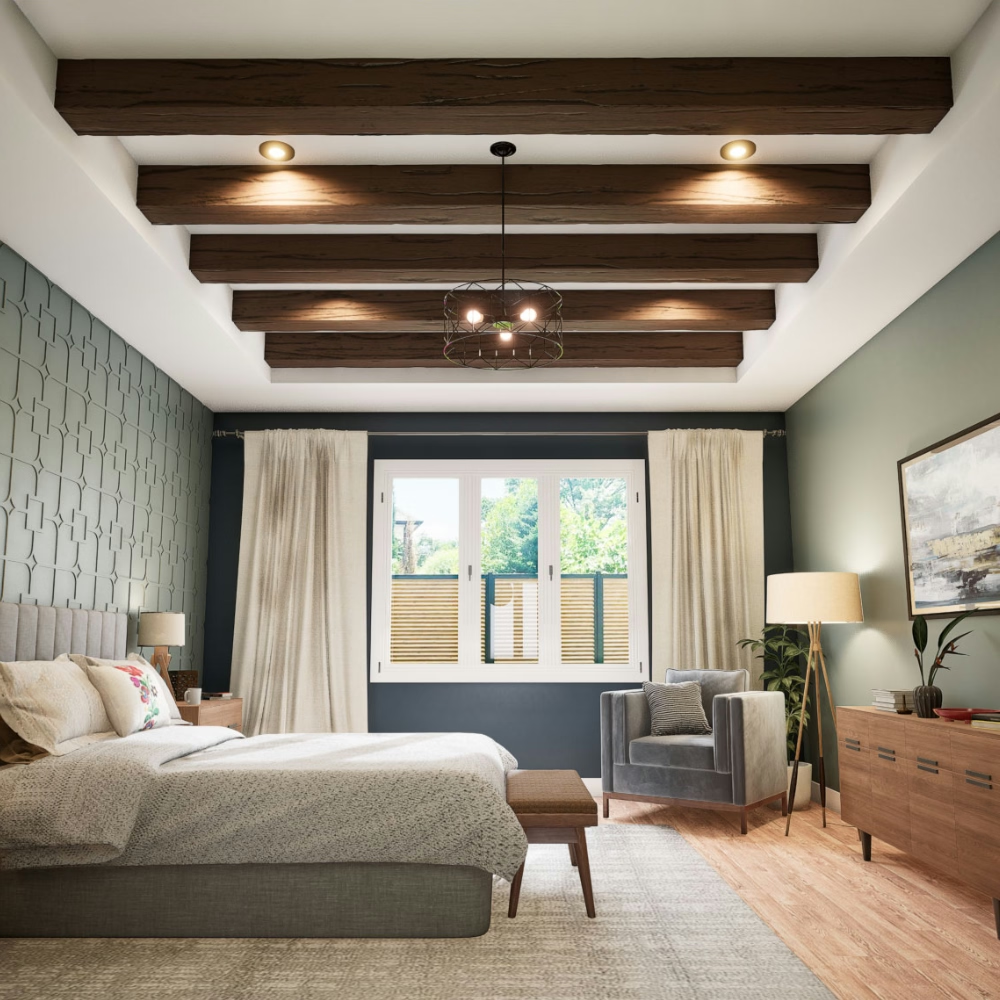
Lighting interaction with overhead beams creates additional opportunities for atmosphere creation. Shadows cast by beams add dimensionality to what would otherwise be a flat ceiling surface. Pendant lights suspended from beams create intimate pools of illumination that define functional zones within larger spaces. The interplay of light, shadow, and timber-look texture produces visual complexity that engages observers without overwhelming them.
Design Applications Across Room Types
Different rooms benefit from different beam approaches based on their function, existing architecture, and desired atmosphere. Thoughtful selection of beam style, finish, and placement ensures that your vertical decoration supports rather than conflicts with room purpose.
Great rooms and living areas typically accommodate bold beam treatments that make strong visual statements. Large-scale beams in natural wood finishes create a focal point that draws the eye upward and establishes the room's design personality. Consider beams that span from wall to wall across the shorter dimension of an open-plan space, creating visual separation between living and dining areas without physical barriers that interrupt flow.
Bedrooms generally favor more subtle beam integration. Smaller-scale beams in lighter finishes add texture and visual interest without dominating the intimate scale appropriate for restful spaces. Some homeowners choose to install beams only over the bed, creating a canopy effect that defines the sleeping area while leaving the remainder of the ceiling more open. This approach works particularly well in master bedrooms with vaulted or cathedral ceilings that might otherwise feel cavernous.
Home offices and studios benefit from beam treatments that add professional sophistication without sacrificing the focused atmosphere these spaces require. Beams installed parallel to the room's primary work axis provide subtle visual structure that helps organize the space. Combined with appropriate lighting, these beams create an environment conducive to concentration while maintaining the visual interest that prevents sterility.

Material Selection and Finish Considerations
The variety of available PU beam finishes enables coordination with virtually any interior design scheme. Understanding finish characteristics helps you select options that enhance your existing décor while achieving your vertical decoration goals.
Natural wood tones remain popular for their timeless warmth and versatility. Oak finishes in various stages of weathering, from light honey tones to deep amber, complement both traditional and contemporary settings. Walnut and mahogany finishes add sophistication and richness that works particularly well in formal spaces. Pine and barn wood finishes bring rustic character that suits farmhouse aesthetics and casual living environments.
For spaces requiring a more contemporary feel, painted finishes offer clean-lined elegance. Pure white beams create coastal or Scandinavian vibes while maintaining the dimensional interest that distinguishes beam-covered ceilings from flat painted surfaces. Gray tones bridge traditional and modern aesthetics, adding texture without strong color commitment. Black or charcoal beams make dramatic statements in ultra-modern spaces where strong contrast defines the design language.
Textured surfaces significantly impact beam appearance and perceived authenticity. Some PU beams feature smooth, machine-produced surfaces that work well in minimalist contemporary settings. Others incorporate hand-distressed textures that replicate the character of aged, weathered timber. The latter approach adds authenticity that enhances traditional design schemes while providing visual warmth in any context.
Installation Planning and Execution
Successful beam installation requires thoughtful planning that addresses structural considerations, aesthetic goals, and practical constraints. Taking time to plan prevents costly mistakes and ensures results that meet expectations.
Layout planning should begin with careful measurement of the space and documentation of existing architectural features. Note the locations of ceiling joists, light fixtures, HVAC registers, and any other elements that will interact with beam placement. Create a scaled drawing that shows proposed beam positions and allows you to visualize the final result before committing to installation.
Beam sizing should relate proportionally to room dimensions and ceiling height. A common mistake involves installing beams that are too small for the space, resulting in an underwhelming effect that fails to achieve intended visual impact. As a general guideline, visible beam depth should equal approximately one-twelfth to one-sixth of the ceiling height, with larger proportions creating bolder statements and smaller proportions providing subtler enhancement.
The mounting surface must be structurally capable of supporting beam weight and any additional loads from suspended fixtures. Most residential ceilings with standard joist construction can support PU beam installation without structural modification, but verification provides peace of mind and prevents potential issues. If you're uncertain about ceiling structure, consulting a contractor or structural engineer before installation ensures safe and appropriate support.

Maximizing Visual Impact
The most impressive beam installations often involve thoughtful integration with other design elements. Thinking beyond simple beam placement unlocks creative possibilities that distinguish exceptional interiors from ordinary ones.
Corbels and decorative brackets add authentic architectural detail that enhances beam installations. These elements, available in matching PU materials, attach to walls where beams terminate and provide the appearance of genuine structural support. The visual weight these details add makes beams feel more substantial and architecturally grounded, even though they're purely decorative in function.
Beam cages and tray ceiling combinations create sophisticated architectural features that become the centerpiece of room design. By combining beams with recessed tray elements, designers create layered dimensionality that rewards close examination. This approach works beautifully in formal living rooms, dining spaces, and master bedrooms where impressive visual features enhance the perceived value of the home.
Integrated lighting amplifies beam impact significantly. Recessed fixtures positioned to wash beam surfaces with light create dramatic shadow lines that emphasize texture and three-dimensional form. Pendant lights suspended from beams provide task illumination while reinforcing the visual connection between beams and functional lighting. The combination of ambient and accent lighting transforms ceiling beams from static decoration into dynamic design elements.
Long-Term Value and Maintenance
Investing in overhead beam installation represents a commitment to enhanced living environments, and understanding long-term implications ensures satisfaction with this commitment over time.
PU beams require minimal maintenance compared to genuine timber alternatives. They never require refinishing, staining, or sealing, eliminating the periodic maintenance that genuine wood demands. Occasional dusting or light cleaning maintains appearance indefinitely, a significant advantage for homeowners seeking beautiful environments without burdensome upkeep.
The durability of quality PU beams ensures lasting performance regardless of environmental conditions. Unlike natural wood, PU resists moisture damage, insect attack, and gradual deterioration that eventually affects even well-maintained timber. This resilience proves particularly valuable in challenging environments like kitchens, bathrooms, and enclosed porches where humidity fluctuations would stress genuine timber.
The aesthetic consistency of PU beams also contributes to long-term satisfaction. Natural wood ages unevenly, with some areas darkening while others lighten and some developing checks or splits over time. PU beams maintain their appearance consistently across all surfaces and throughout the entire product lifespan, ensuring that your vertical decoration continues looking as impressive years later as it did on installation day.
Overhead PU beams offer remarkable opportunities for transforming vertical space from overlooked territory into dramatic design feature. By understanding the principles that guide successful vertical decoration and approaching installation with thoughtful planning, homeowners can achieve results that fundamentally enhance how their spaces look, feel, and impress all who enter. The ceiling, finally, receives the attention it deserves.
Technical References
ASTM standards cited in every specification
Test Data
Lab results from internal testing program
Updated 2026
Reviewed against current product specs