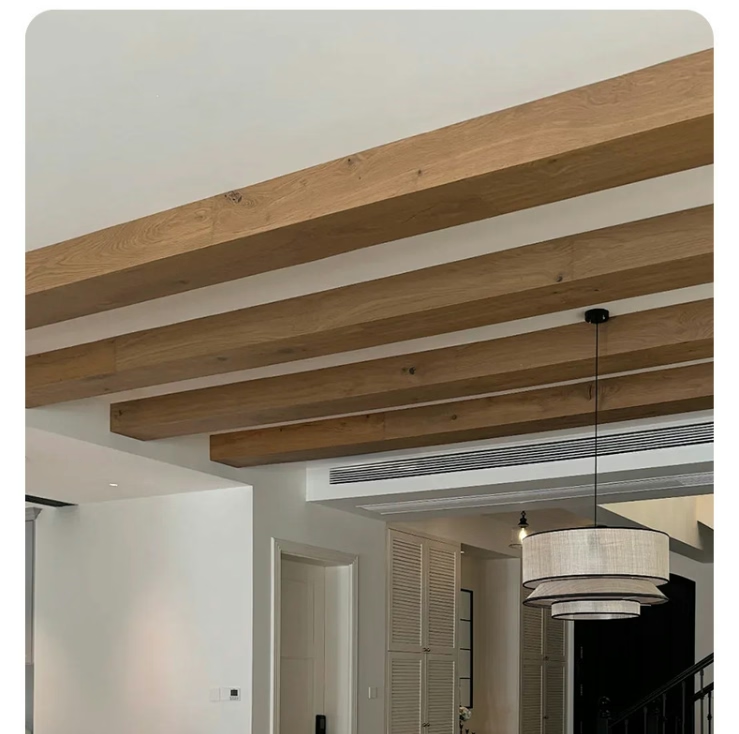
The fitness industry has evolved dramatically, with modern gyms positioning themselves as lifestyle destinations rather than utilitarian workout spaces. Members choose facilities based on environment quality as much as equipment selection or class offerings. They want spaces that feel inspiring rather than institutional, supporting their fitness journeys through environmental psychology that motivates consistent attendance. Ceiling beams contribute to this environment quality in ways that affect member satisfaction and retention.
Contemporary fitness facilities compete intensely for membership dollars in markets saturated with alternatives. Differentiation through design creates competitive advantages that equipment alone cannot provide. Spaces featuring architectural interest—particularly ceiling treatments that create visual warmth and texture—distinguish premium facilities from commodity options.
Environmental Psychology in Fitness Spaces
Research on exercise behavior demonstrates clear connections between environmental factors and workout motivation. Spaces that feel comfortable and appealing support longer workouts, higher intensity effort, and more consistent attendance. Design elements that create negative associations—sterile clinical feeling, cramped conditions, institutional aesthetics—undermine fitness goals before members even begin exercising.
Ceiling beams contribute to positive environmental psychology through their inherent warmth and organic character. Wood textures trigger comfort associations that reduce the anxiety some people feel in gym environments. This psychological comfort makes the space more approachable for members who might otherwise avoid fitness facilities.
The visual interest beams provide also combats the monotony that can undermine extended workouts. Members who find their environment engaging maintain focus on exercise rather than becoming distracted by surrounding emptiness or bored by uninteresting surroundings.

Handling Workout Environment Demands
Gym interiors present material challenges rarely encountered in other commercial applications. High moisture from perspiration and cleaning, temperature variations from equipment heat and HVAC demand, and chemical exposure from cleaning agents all affect ceiling materials differently.
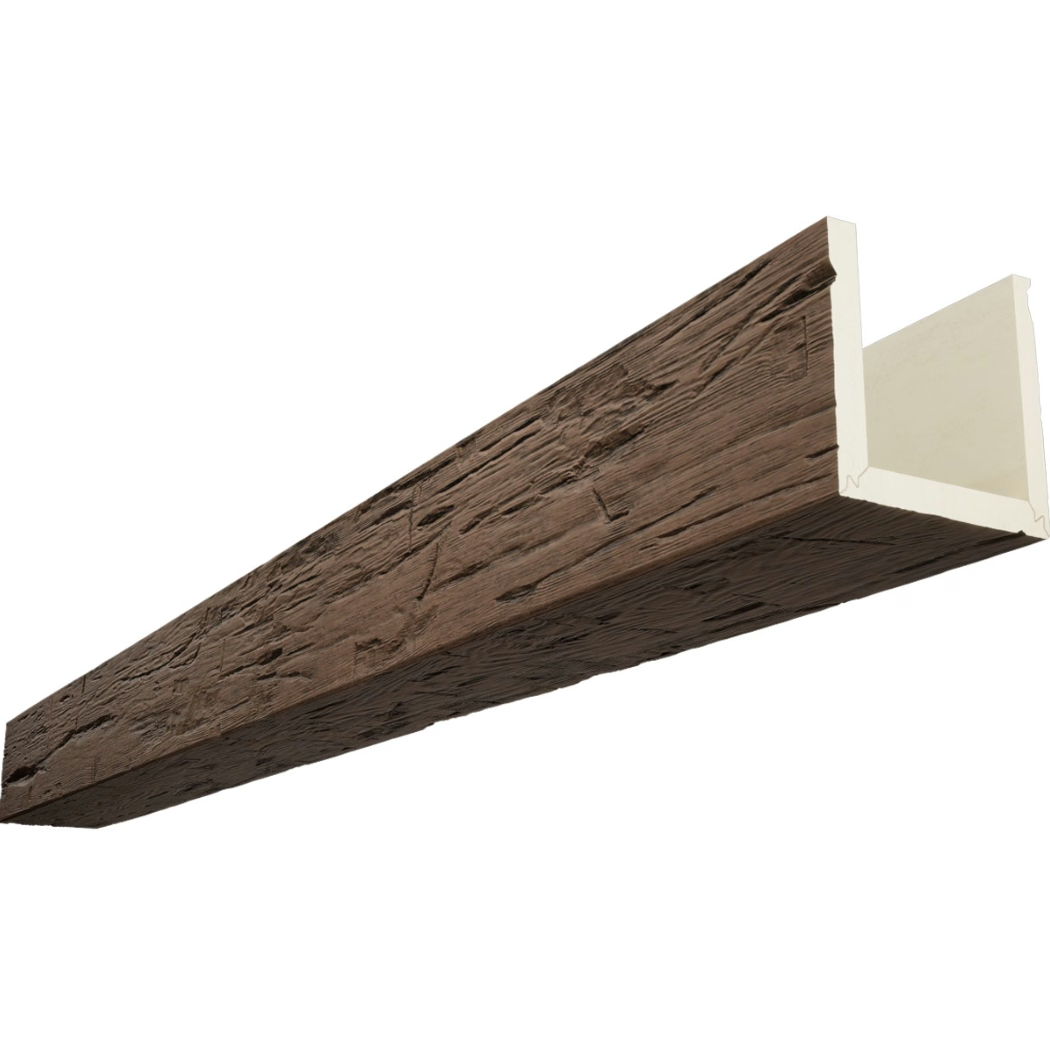
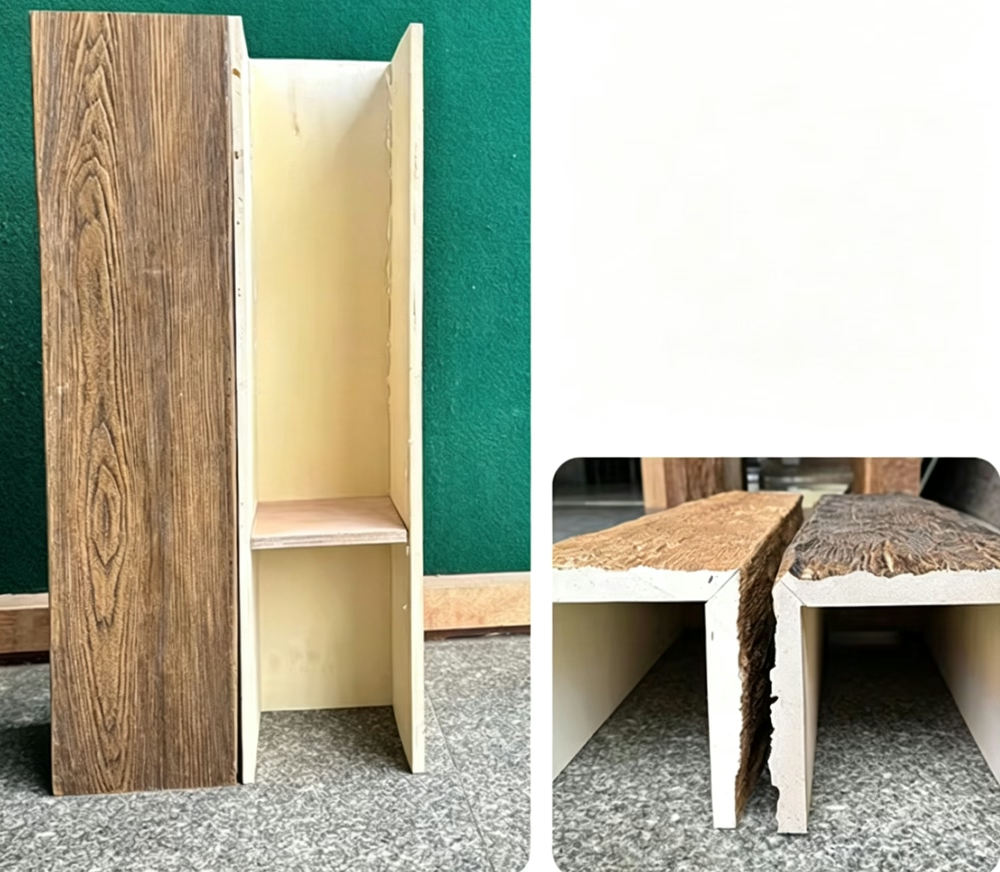
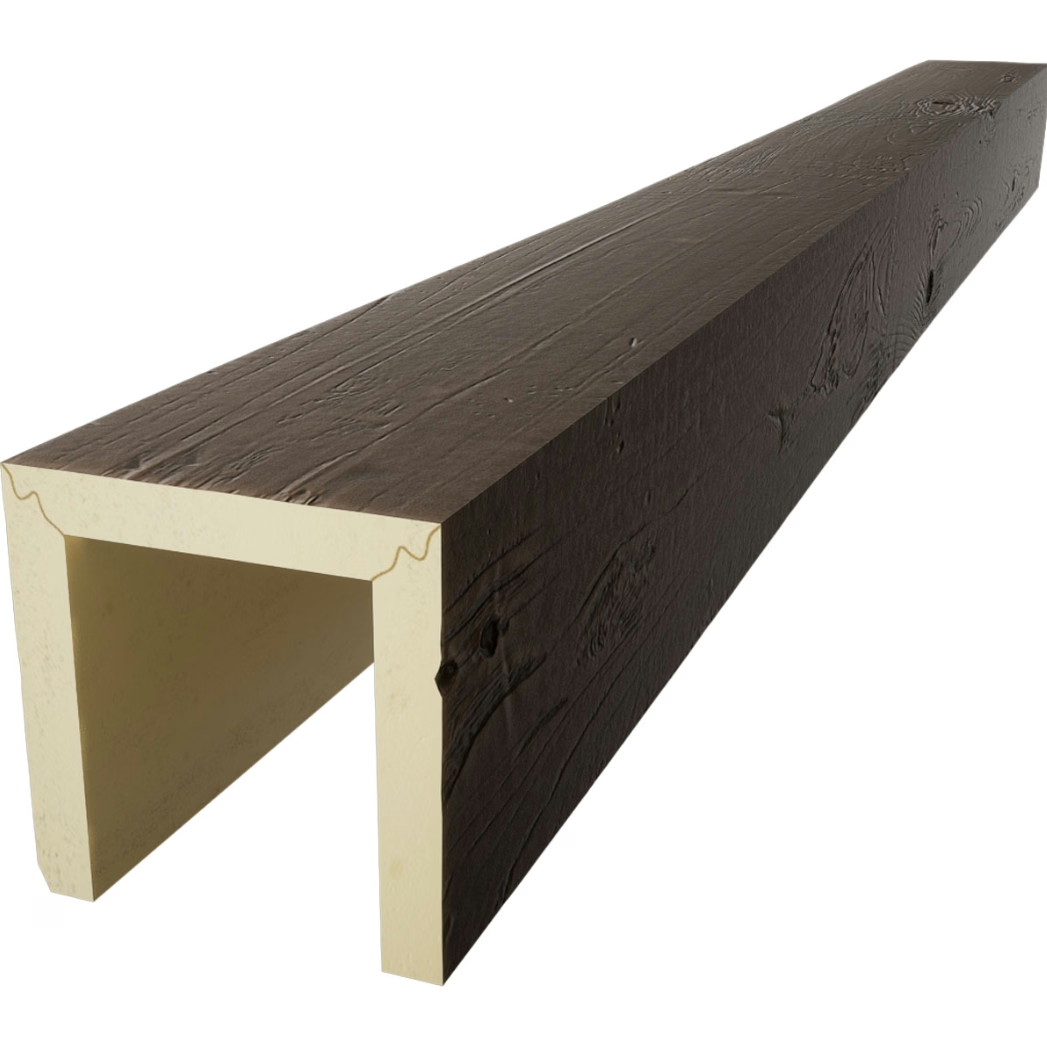
Polyurethane faux wood beams withstand these conditions without degradation that would affect appearance or structural integrity. The closed-cell material does not absorb moisture, preventing the warping and mold growth that would affect organic materials. Surface finishes resist chemical attack from the cleaning products commercial fitness facilities use regularly.
Physical durability also matters in fitness environments. The three-dimensional profile of beams tolerates accidental contact from members moving equipment or raising arms during exercise. Unlike fragile decorative elements, beams maintain appearance despite the minor impacts that active use inevitably creates.
Zone Definition in Large Fitness Spaces
Large fitness facilities require thoughtful organization into distinct zones serving different workout modalities—cardio areas, free weight zones, group fitness studios, recovery spaces. Ceiling beam configuration can support this zonation through strategic placement and variation.
Cardio zones featuring rows of machines benefit from parallel beam installations that create visual order across the space. This organization helps members understand the spatial layout while providing the aesthetic interest that makes extended cardio sessions more tolerable.
Free weight areas with their more dynamic, dispersed activity patterns might feature different beam orientations that create subtle boundaries without physical barriers. The ceiling treatment marks zone transitions while maintaining sightlines and spatial flow that support safety monitoring.
Group fitness studios—where specialized programming creates distinct usage patterns—might feature ceiling treatments that differentiate them from the general workout floor. Different beam configurations or orientations signal the transition into specialized space while maintaining overall design coherence.
Acoustic Management for Multiple Activities
Fitness environments present challenging acoustic requirements. High-energy group fitness classes generate significant sound levels, cardio equipment creates continuous mechanical noise, and members having conversations throughout the space add conversational volume. Ceiling treatment contributes to acoustic management across these varied demands.
Beam installations break up large ceiling planes that would otherwise reflect sound chaotically. The dimensional profile scatters reflections, reducing echo and reverberation that would make spaces feel overwhelming noisy. This scattering effect contributes to more comfortable ambient sound levels without the full acoustic treatment dedicated sound-absorbing panels would require.
For group fitness studios with particularly demanding acoustic requirements, beams can be combined with additional acoustic treatment. The beams themselves contribute to acoustic performance while providing the visual warmth members expect from premium facilities.
Lighting Integration for Workout Function
Gym lighting must satisfy competing requirements across different zones—bright, even illumination for detailed form work in free weight zones, softer lighting for recovery areas, dramatic presentation lighting for social zones and lounges. Ceiling beams should integrate with lighting systems that address these varied needs.
Track lighting positioned between beams allows directional adjustment for specific equipment placement or workout types. The beams provide visual organization for these lighting systems while creating architectural interest that transcends purely functional ceiling treatment.
Pendant fixtures suspended from beams in lounge areas and reception zones create focal points that draw members into social spaces. These gathering areas support the community building that successful fitness facilities cultivate, and beam-integrated lighting reinforces the designed quality members associate with premium facilities.
Uplighting aimed at beam undersides creates ambient glow that defines the ceiling plane while providing low-level illumination suitable for transitions between workout zones. This technique works particularly well in larger facilities where the ceiling becomes a significant visual element.
Design That Motivates Consistent Attendance
Fitness facilities depend on member retention as much as new member acquisition. Members who feel connected to their gym environment develop habits that keep them returning consistently. Design elements that create positive associations support this behavioral consistency.
Ceiling beams contribute to spaces that members enjoy visiting, not merely tolerate for workout access. When the environment itself provides satisfaction—through visual interest, comfortable atmosphere, and designed quality—members reinforce their membership investment through continued attendance.
The social dimension of fitness facility design also benefits from welcoming environments. Members who linger in social spaces before or after workouts develop relationships that strengthen community ties. Ceiling beams help create the atmosphere that encourages this lingering rather than transactional facility use.
Maintenance for Commercial Fitness Operations
Commercial fitness facilities operate under tight margins that demand efficient maintenance protocols. Materials requiring specialized care consume resources disproportionate to their visual contribution. Faux wood beams simplify maintenance while maintaining appearance quality.
Routine cleaning with standard commercial products maintains beam appearance without specialized treatment. The sealed surface does not harbor bacteria or absorb stains, supporting the sanitation protocols fitness facilities require. This cleanability translates to lower maintenance costs and more predictable maintenance scheduling.
The durability of polyurethane beams means inspection and maintenance focus on mounting integrity rather than surface condition. Occasional checks for secure attachment ensure continued safety while eliminating concerns about finish degradation or surface damage that would require cosmetic attention.
Technical References
ASTM standards cited in every specification
Test Data
Lab results from internal testing program
Updated 2026
Reviewed against current product specs