
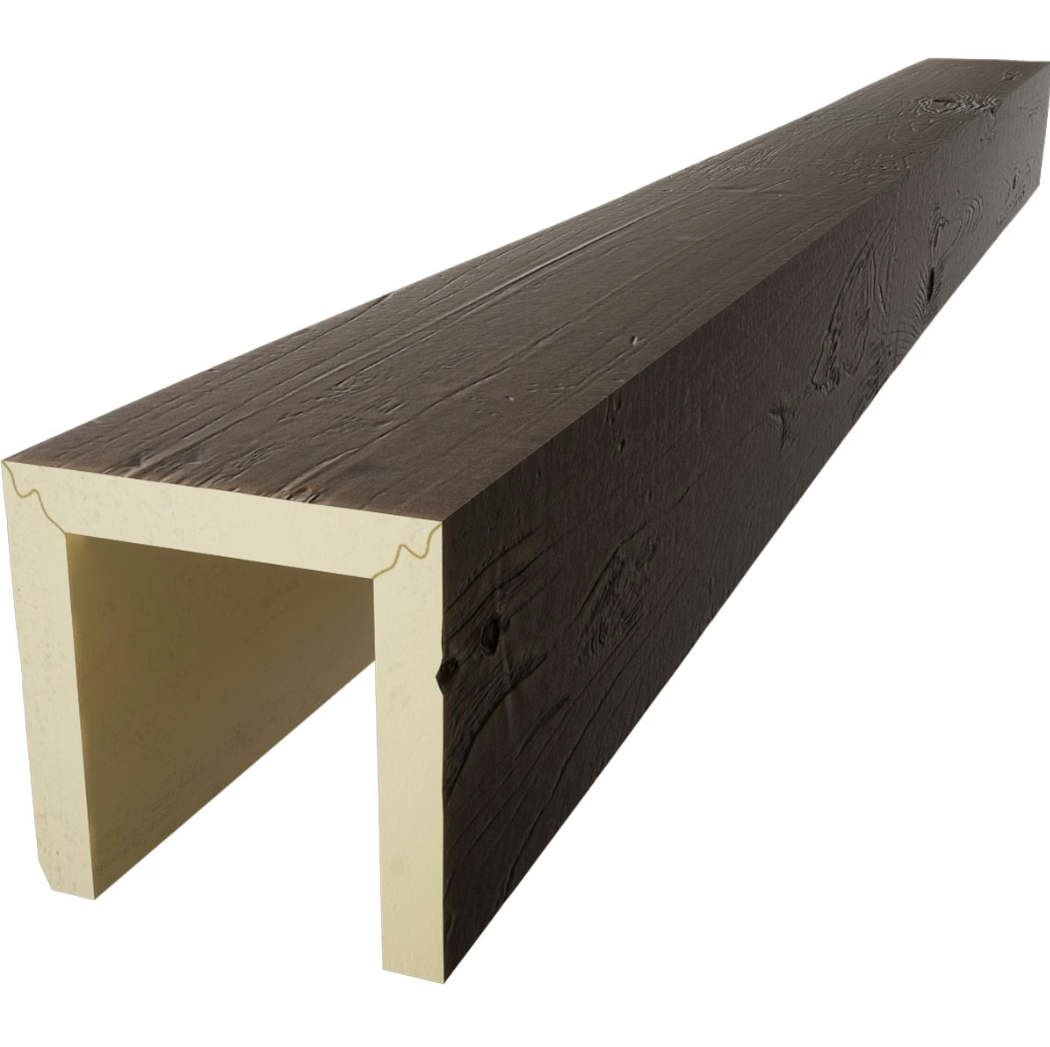
Contemporary architecture rejects ornamentation for its own sake, favoring instead purposeful design where every element serves clear function—visual or practical. Ceiling beams in modern interiors embody this philosophy, serving as architectural accents that organize space, direct circulation, and create visual interest through precise placement rather than accumulated detail. Polyurethane faux beams provide the material foundation for these contemporary applications, offering the clean aesthetics and practical performance that modern design requires.
The modern approach to ceiling beams differs fundamentally from traditional applications. Rather than replicating rustic timber or classic coffered ceilings, contemporary beam design emphasizes geometric precision, strategic positioning, and intentional relationship with other architectural elements. The beams themselves become design statements that reflect contemporary values of clarity, purpose, and refined execution.
Geometric Precision in Modern Applications
Modern design values precision that traditional aesthetics might consider too rigid. Contemporary beam installations feature exact spacing, consistent depth, and mathematically precise alignment that creates visual order the design actively celebrates.
Grid patterns in modern ceilings follow specific proportional systems—perhaps relating beam spacing to room dimensions through golden ratio relationships, or aligning beam orientation with structural grid below. This precision reads as intentional rather than arbitrary, communicating design intelligence that thoughtful viewers appreciate.
The clean edges and consistent surfaces of polyurethane beams support this precision. Unlike natural wood that might vary in profile or surface, factory-produced beams offer the consistency contemporary applications require. Each piece matches specifications exactly, enabling the precise installation modern design demands.

Minimalism and Reduced Element Design
Minimalist interiors feature ceiling beams as rare elements rather than dominant features. The modern approach might include single accent beams or minimal parallel arrangements that provide architectural interest through restraint rather than abundance.
Single beam applications work well when the beam serves as clear focal point—a singular architectural statement that anchors the ceiling's visual center. These beams should be positioned with precision, aligned with room axes or significant features, to justify their prominent presence.
Minimal parallel installations feature two or three beams with generous spacing that maintains ceiling openness. The beams read as trim rather than structure, providing definition without enclosure. This approach suits contemporary interiors where visual lightness takes priority over substantial presence.
Contrasting Material Combinations
Modern architecture often juxtaposes different materials to create visual tension and interest. Ceiling beams in contemporary interiors might contrast deliberately with surrounding surfaces, creating relationships that neither material would achieve alone.
Industrial-modern interiors might feature beams that combine wood appearance with metal accent elements, referencing the industrial heritage while maintaining warmth that pure metal would lack. These combination beams create visual complexity that单一 materials cannot achieve.
Minimal spaces might use high-gloss beam finishes that reflect light dramatically, creating luminosity that matte surfaces would not provide. The reflective quality becomes part of the design intent, with beams functioning as light fixtures as well as architectural elements.
Light Integration Strategies
Modern lighting design treats illumination as architectural element rather than mere utility. Ceiling beams interact with this lighting in ways that become integral to both element's contribution to spatial design.
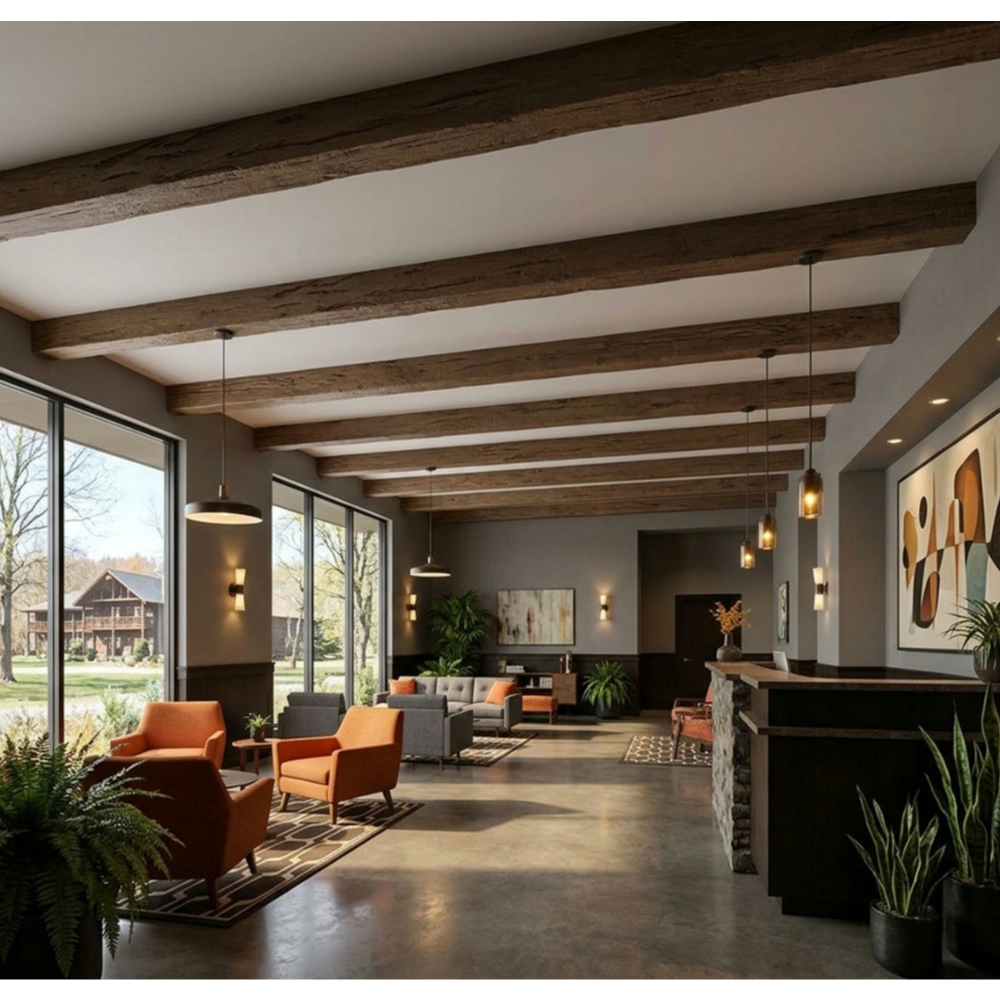
Linear LED fixtures installed along beam edges create light lines that emphasize beam geometry. These continuous light sources trace beam contours, making the architecture literally luminous. The effect works particularly well in evening settings when artificial lighting dominates.
Hidden cove lighting aimed at beam undersides creates soft uplighting that washes the ceiling plane with gentle illumination. The beams become luminous elements themselves, contributing to ambient lighting while maintaining their architectural character.
Floating Beam Effects
Contemporary design often features elements that appear to hover without obvious support—floating planes, suspended shelves, cantilevered forms that challenge expectations about gravity and structure. Ceiling beams can achieve similar effects through careful mounting that conceals attachment points.
Floating beam installations position beams below the actual ceiling plane, creating visual separation between beam and structure above. The gap might be minimal—just enough to create shadow that suggests hovering rather than bearing. This effect adds visual lightness that flush-mounted beams cannot achieve.
Cantilevered beam arrangements extend beyond support points, creating horizontal drama that symmetrically supported beams lack. These installations require engineering attention to ensure structural adequacy, but the visual result rewards the additional effort.
Color Considerations in Modern Contexts
Modern interiors typically feature restrained color palettes where neutrals dominate and color appears sparingly as accent. Ceiling beams in these contexts require thoughtful color selection that supports rather than disrupts the established palette.
White and near-white beam finishes maintain maximum neutrality, reading as architectural trim rather than colored elements. These beams recede visually, providing subtle definition without introducing color relationships that might complicate the palette.
Monochromatic gray treatments create sophisticated depth without the warmth that wood tones provide. These finishes suit contemporary interiors with industrial influences or cool, minimal aesthetics.
Color-on-color approaches match beam finishes to wall or ceiling colors, creating subtle differentiation that reads as dimensional change rather than color variation. This technique works when the goal is adding architectural interest while maintaining color restraint.
Space Organization Through Beam Placement
Contemporary open plans require spatial tools that organize without enclosing. Ceiling beams serve this organizational function through strategic placement that creates visual zones within undivided space.
Beams positioned at transitions between functional areas—living zone to dining zone, kitchen to adjacent space—create visual boundaries that operate beneath conscious awareness. Visitors perceive these boundaries as natural spatial organization rather than arbitrary decoration.
Circulation paths through open spaces can be suggested through beam orientation that leads the eye toward destinations. Beams running parallel to desired movement patterns reinforce flow without directing it explicitly.
Integration With Structural Elements
Modern architecture often exposes structural elements, celebrating rather than concealing the building's bones. Ceiling beams in these contexts might reference structural members, complementing actual structure with decorative elements that reinforce rather than contradict the architectural language.
Beams aligned with structural joists create visual rhythm that makes the building's construction legible. These installations feel native rather than appended, as if the beams were always part of the structural design.
Where actual structure would be inadequate or unavailable, faux beams provide the visual weight that exposed structure would create. The architectural statement remains achievable without requiring the structural engineering that genuine timber beams would demand.
Technical References
ASTM standards cited in every specification
Test Data
Lab results from internal testing program
Updated 2026
Reviewed against current product specs


