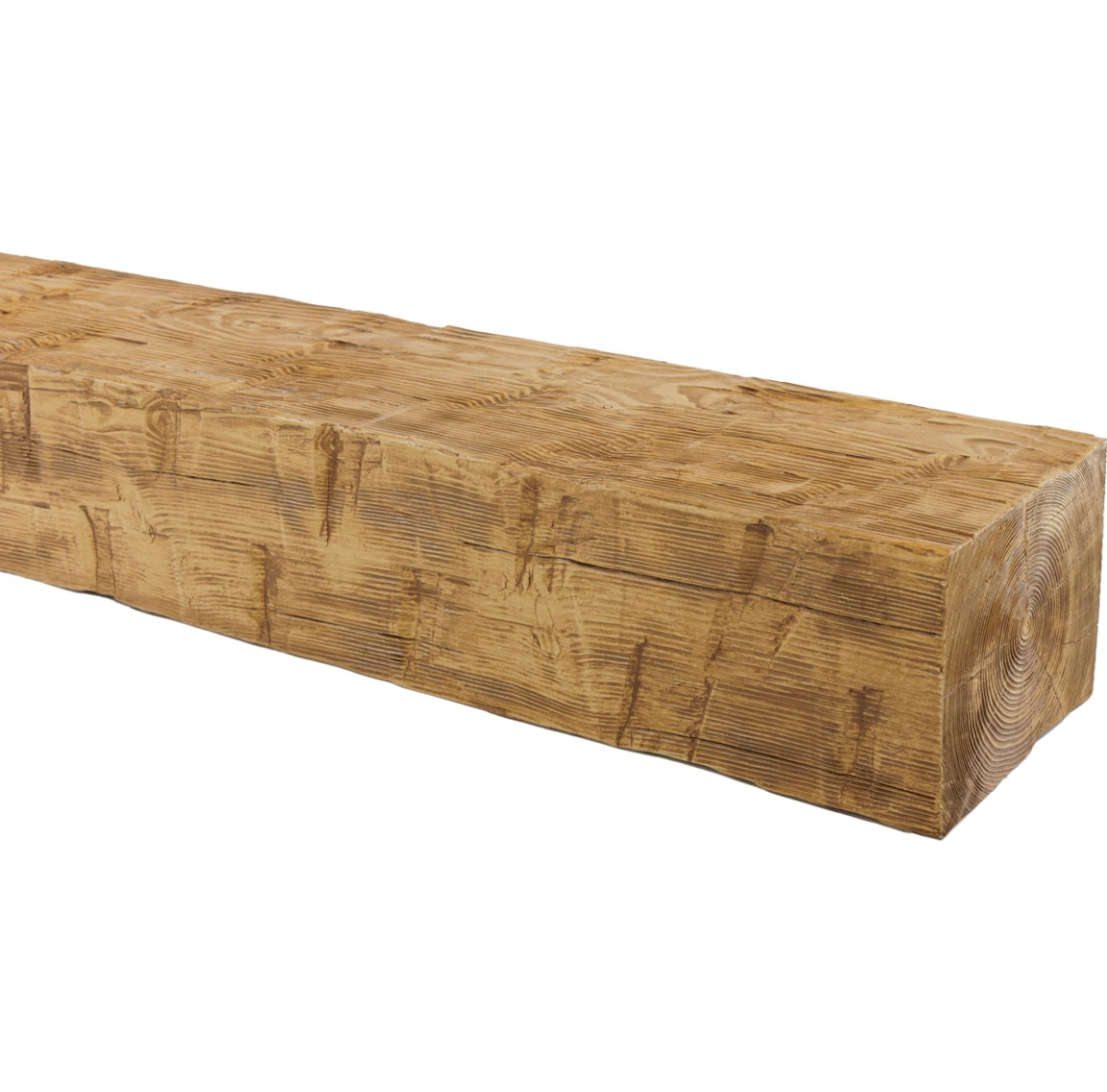
The intersection of minimalist design principles and rustic warmth creates a tension that many interior designers navigate carefully. Too much texture overwhelms the clean lines that define minimalism, while too little leaves spaces feeling cold and disconnected from nature. Subtle light grain texture PU faux ceiling beams offer a solution that honors both impulses, bringing organic warmth without disrupting the carefully curated simplicity that minimalist rustic interiors require.
When selecting ceiling beams for this design philosophy, the grain pattern becomes paramount. Heavy, dramatic wood grain pulls attention downward and competes with the intentional emptiness that makes minimalist spaces breathe. Light grain, by contrast, whispers rather than shouts—it registers as texture at a subconscious level without demanding conscious recognition. The result is a ceiling that feels complete and grounded without becoming a focal point. Guests notice the warmth before they notice the beams themselves, which is precisely the effect this style追求.

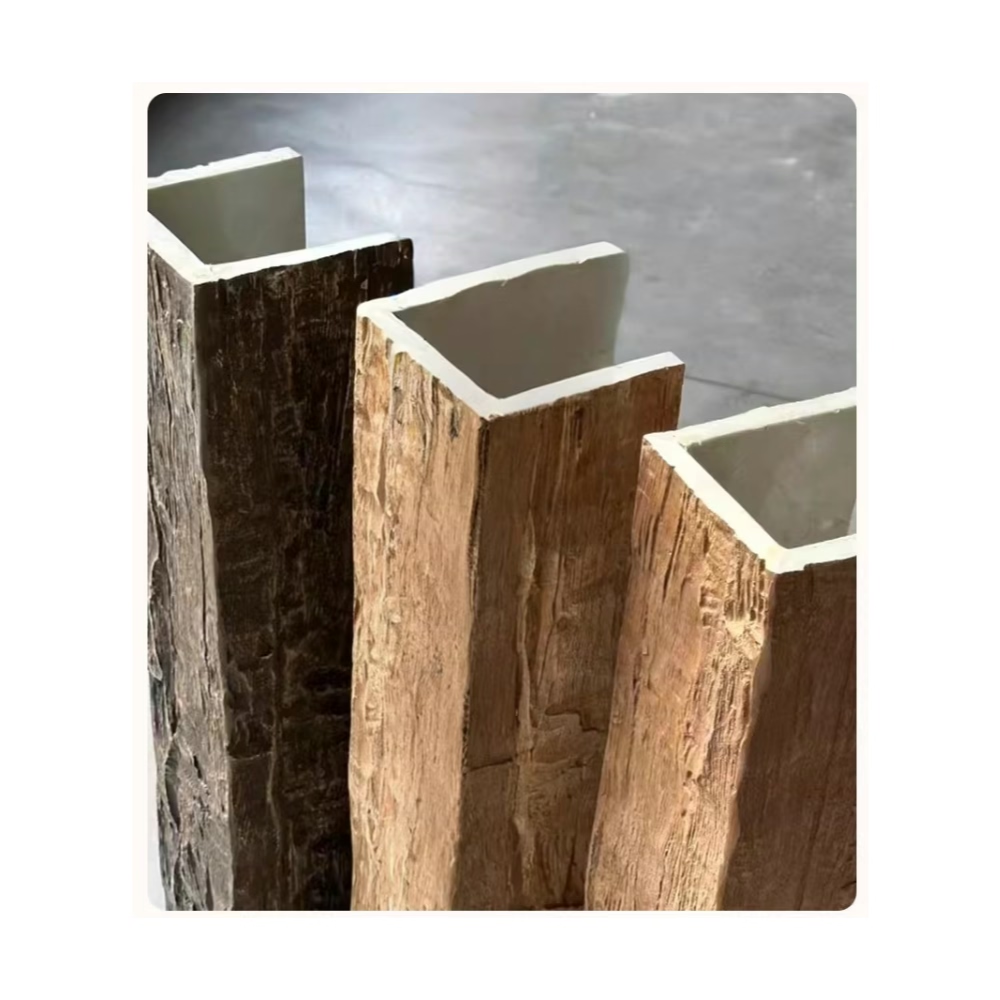
The material composition of polyurethane faux beams allows manufacturers to achieve remarkably subtle grain patterns that would be difficult to source in natural wood. Real timber with truly light grain patterns is rare and expensive, often requiring extensive searching through specialty lumber yards. PU production can replicate these elusive patterns consistently, giving designers reliable access to aesthetics that would otherwise remain beyond reach. This democratization of design possibilities explains why polyurethane beams have become increasingly prevalent in projects where understated elegance takes priority over material authenticity.
Achieving Balance in Minimalist Rustic Spaces
The challenge of minimalist rustic design lies in selecting elements that contribute without dominating. Each piece in the room must earn its presence through function or essential aesthetic contribution. Ceiling beams serve multiple purposes in this context—they define architectural interest, establish visual hierarchy, and anchor the space below. When these beams carry subtle light grain, they accomplish these objectives while remaining subordinate to furniture, lighting fixtures, and the overall spatial composition.
Color coordination becomes particularly important when working with understated textures. Light grain beams pair beautifully with soft whites, warm grays, and natural linen tones. The key is maintaining sufficient contrast for the texture to register while avoiding the stark differentiation that would make beams appear as foreign additions rather than integrated architectural features. Many designers achieve this through paint matching—selecting beam colors within one or two shades of the ceiling plane so that distinction comes from texture rather than hue.
Scale presents another consideration that affects how grain subtlety translates in practice. In rooms with twelve-foot ceilings, light grain patterns can appear almost invisible from floor level, registering only as a gentle variation in surface quality. The same beams in an eight-foot room create more pronounced visual presence, where the grain pattern contributes meaningfully to the ceiling's character without overwhelming. Understanding this relationship helps designers specify appropriate texture intensity based on ceiling height and viewing distance.
Installation Approaches for Seamless Integration
The visual impact of light grain texture depends heavily on installation methodology. Beams that appear to float without structural justification disrupt the authenticity that minimalist rustic spaces seek. This does not mean every beam requires genuine load-bearing capacity—structural faux beams can achieve convincing appearances through thoughtful mounting techniques and contextual support elements.
One effective approach involves combining decorative beams with genuine structural elements. A single real wood beam, perhaps salvaged from an old barn or warehouse, can provide authentic grounding whilePU beams extend from it to create the desired ceiling coverage. The hybrid approach acknowledges that not every inch of a ceiling requires genuine timber; strategic authenticity combined with manufactured efficiency produces results that satisfy both practical and aesthetic requirements.
Surface preparation before beam installation affects how convincingly grain textures integrate with surrounding surfaces. Priming and painting the beam backing—any visible ceiling plane between or around beams—ensures color consistency. When raw plywood or joists remain visible, the material contrast can undermine the unified appearance that light grain textures aim to create. Taking time with preparation work pays dividends in the final visual result, transforming what might appear as an addition into something that feels native to the architecture.
Long-Term Performance in Residential Contexts
Homeowners investing in ceiling beams expect durable solutions that maintain their appearance over years of use. Polyurethane's resistance to the environmental fluctuations that plague natural wood makes it particularly suitable for ceiling applications, where temperature variations and humidity changes occur more gradually but consistently. The material does not warp, crack, or split as timber ages, ensuring that that subtle light grain pattern remains as fresh and unobtrusive decades after installation as it appeared on day one.
Maintenance requirements for PU beams are minimal compared to genuine wood alternatives. Natural beams may require periodic sealing, refinishing, or treatment against insects and moisture. Polyurethane's closed-cell structure resists moisture absorption and does not provide food sources for wood-boring insects. Occasional dusting or light cleaning maintains the surface appearance without specialized care products or professional attention. For busy households, this practical advantage complements the aesthetic benefits that make these beams attractive in the first place.
The environmental conditions typical of residential settings—central heating, air conditioning, seasonal humidity variations—affect different materials differently. Natural wood beams expand and contract with moisture changes, sometimes developing gaps, squeaks, or visible settling over time. PU beams maintain dimensional stability regardless of atmospheric conditions, preserving the precise alignment and spacing that contribute to their refined appearance. This reliability proves especially valuable in regions with extreme seasonal changes, where natural wood might struggle to maintain its initial presentation.
Design Applications Across Room Types
Living rooms benefit from light grain beams particularly in open-plan configurations where the ceiling becomes a unifying element across different functional zones. The texture provides visual continuity without creating hard boundaries, allowing the space to feel connected while maintaining distinct areas for seating, dining, and circulation. Paired with appropriate lighting design—recessed fixtures in beam valleys, perhaps, or pendant lights at varying heights—the ceiling becomes a sophisticated backdrop rather than neglected overhead space.
Bedrooms present different opportunities for subtle grain beams. Here, the goal often involves creating intimacy and visual warmth without heaviness. Light grain beams across a bedroom ceiling can suggest shelter and protection while maintaining the lightness that promotes restful sleep. The texture registers as natural and organic at a subliminal level, satisfying the human preference for wood surfaces that evolutionary psychology suggests we developed over millennia of living in timber structures.
Kitchens and dining areas require beams to contend with more challenging environmental conditions—cooking steam, temperature fluctuations near heat sources, potential grease accumulation. Light grain PU beams handle these conditions well, with their smooth surfaces resisting grease penetration and cleaning easily when needed. The aesthetic contribution remains consistent even when practical cleaning becomes necessary, making these beams appropriate for spaces where natural wood might suffer long-term damage from kitchen environment exposure.
Technical References
ASTM standards cited in every specification
Test Data
Lab results from internal testing program
Updated 2026
Reviewed against current product specs


