The most successful interior designs rarely draw attention to individual elements. Instead, they create environments where colors, textures, and forms work together so seamlessly that the eye moves smoothly across spaces without encountering jarring transitions or unresolved contrasts. Ceiling beams, when specified without attention to tonal relationships, can become these jarring elements—interesting individually but disconnected from the rooms they inhabit. Subtle tonal matching addresses this challenge by ensuring faux wood beams exist in harmony with surrounding surfaces, creating ceiling styling that feels architecturally inevitable rather than decoratively added.
Understanding tonal matching requires distinguishing hue from value. Two surfaces might share a warm brown tone—one honey oak, one espresso—yet appear completely different due to their lightness or darkness. Tonal matching focuses on value relationships, ensuring that beams and their surroundings relate appropriately in the light-to-dark spectrum. This nuanced approach to color coordination elevates ceiling treatments from decorative afterthoughts to integrated architectural elements.
The Psychology of Tonal Harmony
Human perception responds to tonal relationships instinctively, often before conscious awareness engages. Spaces with well-matched values feel comfortable and resolved; those with tonal discord create subtle unease that occupants struggle to articulate. This response likely reflects evolutionary adaptation—natural environments typically feature gradual tonal transitions rather than abrupt jumps. Interiors that echo this pattern satisfy deep-seated preferences without requiring explanation.
Ceiling surfaces typically occupy the lightest values in a room's palette. Walls descend in value slightly, floors are generally darkest, and furniture occupies middle ranges. Beams must find their place within this vertical hierarchy. Matching beams closely to ceiling values creates integration; matching them to walls creates continuity across plane transitions; deliberately offsetting them creates contrast and definition. Each approach serves different purposes; understanding the available options expands design possibilities.
Warm and cool undertones affect how tonal matching succeeds in practice. A warm-toned beam next to cool-toned walls reads as more contrasting than a cool-toned beam in the same position, despite similar value relationships. The human eye perceives warm-cool relationships distinctly from light-dark relationships, meaning successful tonal matching requires attention to both dimensions simultaneously.

Practical Approaches to Tonal Coordination
Sample comparison remains the most reliable method for verifying tonal matches before committing to a full installation. Holding beam samples against ceiling surfaces, wall surfaces, and other relevant planes reveals relationships that abstract color specifications cannot capture. Natural light and artificial light affect these relationships differently, so samples should be evaluated under multiple lighting conditions before final decisions.
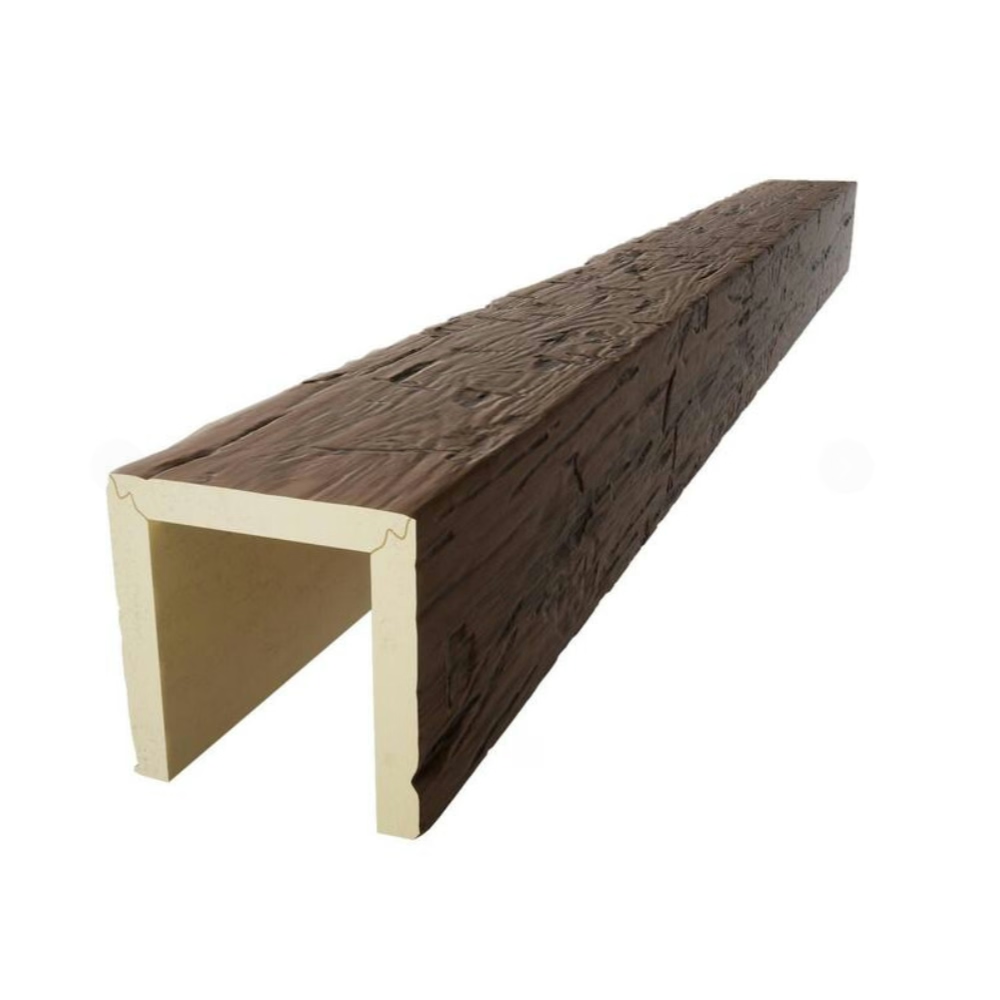
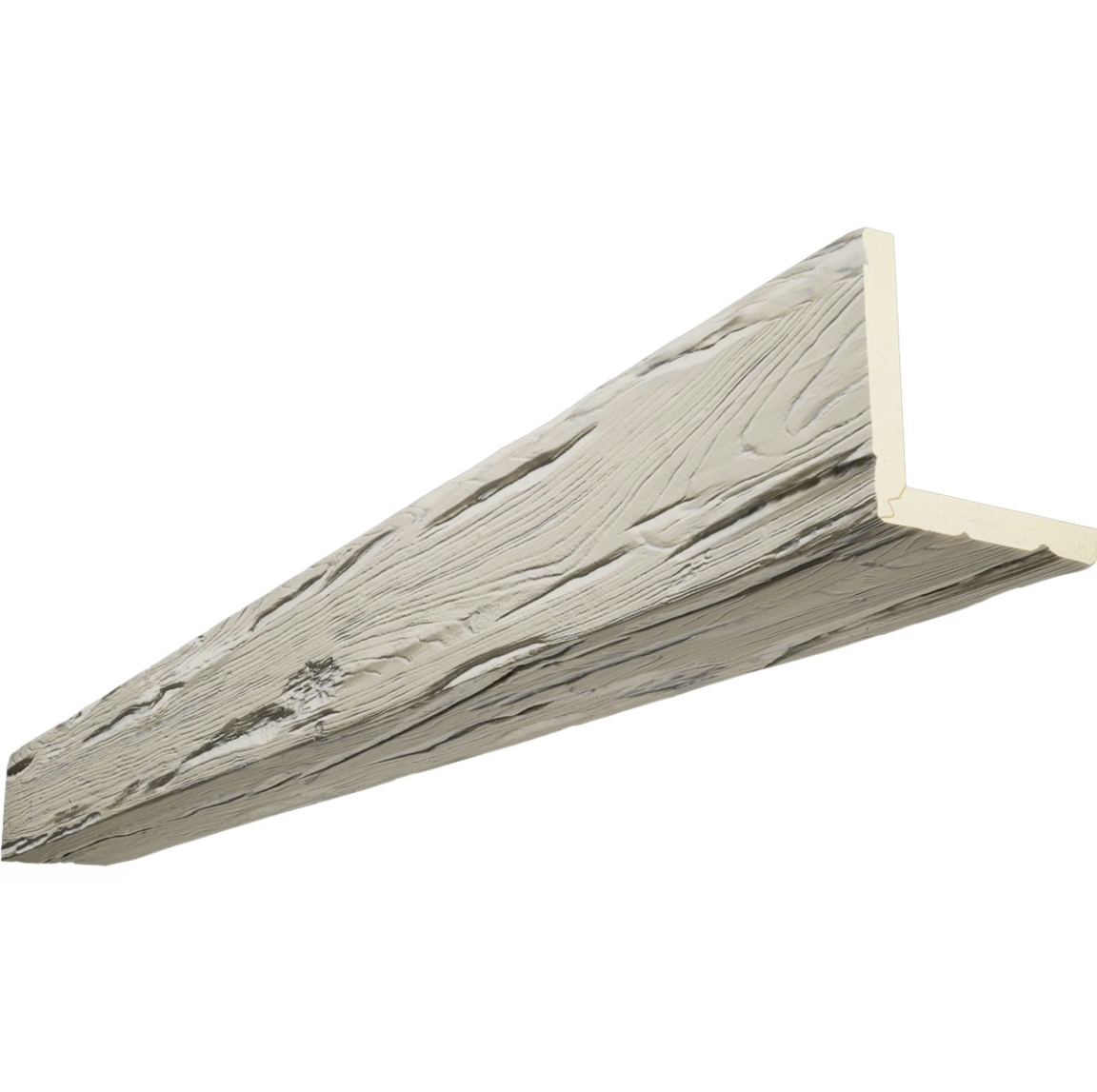
Paint matching extends tonal possibilities significantly beyond factory finishes. Most PU beam manufacturers offer paintable products that accept standard interior finishes. This flexibility allows exact matching to existing trim, walls, or ceiling surfaces. Professional painters can sample existing colors and create custom matches that become virtually invisible against their surroundings. The result is beam presence achieved through texture rather than color—architectural interest without chromatic contrast.
Sampling during different times of day accounts for natural light variation. Morning light, midday sun, afternoon shade, and evening artificial illumination all affect how colors read. A tonal match that appears perfect at noon might seem off by evening. Professionals often observe samples across full day cycles before committing, understanding that beams remain visible throughout all these conditions.
Common Tonal Strategies and Their Effects
Ceiling-matching strategy makes beams recede into the ceiling plane, creating the appearance of structure that rises to meet the surface. This approach works beautifully in rooms where the ceiling should dominate as a continuous surface—lofts, studios, contemporary open plans. The texture registers without color distraction, contributing warmth and character while allowing other elements to command attention.
Wall-matching strategy connects beams visually to vertical surfaces, suggesting that they extend from or connect to walls. This relationship feels more traditional and often appears in Craftsman, farmhouse, or transitional interiors. Beams read as part of the room's perimeter rather than its overhead plane, creating a sense of enclosure that some spaces benefit from and others resist.
Deliberate contrast creates the most dramatic effect, positioning beams at tonal extremes relative to their surroundings. This approach suits spaces that need strong vertical definition or that feature other bold elements competing for attention. The beam contrast anchors the ceiling as a distinct zone, providing visual grounding that unifies the space below.
Room-Type Considerations
Open-plan living areas present tonal matching challenges because different functional zones within the same ceiling require different relationships. Kitchen areas might benefit from wall-matched beams that connect the cooking zone to overhead structure. Living areas might prefer ceiling-matched beams that maintain spaciousness. Navigating these differences requires a holistic approach that considers how tonal choices affect sightlines and transitions across the entire open plan.
Bedrooms typically work best with ceiling-matched or slightly warmer beams. The intimate scale and restful purpose of bedrooms benefit from tonal approaches that promote calm and cohesion rather than contrast and drama. Warmer undertones support sleep and relaxation; cooler undertones can feel clinical or institutional without careful handling.
Entryways and transitional spaces often tolerate—or even benefit from—more dramatic tonal contrast. These spaces establish first impressions and can support stronger visual statements than private rooms. Beams with darker values or warmer undertones in entryways create welcoming gravity that sets appropriate expectations for the spaces beyond.
Maintaining Tonal Relationships Over Time
Interior palettes evolve as homeowners replace furniture, update textiles, and refresh decorative elements. Tonal matching strategies should account for this evolution, either by choosing sufficiently neutral beam colors that remain appropriate across changes, or by planning for eventual repainting as part of regular interior updates.
Polyurethane beams respond well to repainting when color updates become necessary. Unlike natural wood, which may require stripping or extensive preparation for color changes, PU surfaces accept new paint with minimal preparation. This flexibility makes tonal-matched beams practical investments that can evolve alongside changing interiors rather than becoming permanent constraints.
Dust and environmental factors affect tonal perception over time. Surfaces that were precisely matched at installation may diverge slightly as accumulated dust affects different materials differently. Periodic cleaning restores intended relationships, maintaining the tonal harmony that initial specification achieved. For PU beams, this maintenance is straightforward—simple cleaning procedures that avoid harsh chemicals preserve both appearance and material integrity.
Technical References
ASTM standards cited in every specification
Test Data
Lab results from internal testing program
Updated 2026
Reviewed against current product specs


