Architecture has always employed scale to communicate meaning. Cathedral ceilings lift eyes toward heaven; throne room ceilings overwhelm subjects with royal authority; great hall ceilings establish hierarchy between hosts and guests. These deliberate scale relationships shape emotional responses through spatial experience. Tall high-profile faux beams extend this architectural tradition into contemporary contexts, providing focal points that anchor design compositions and establish visual authority.
The decision to specify high-profile beams involves more than aesthetic preference—it reflects spatial ambitions and compositional intent. These substantial elements announce themselves in ways that subtle treatments cannot match. They create ceiling presence that fills vertical space, prevents ceilings from floating away into undifferentiated height, and provides the visual weight that large rooms require to feel resolved rather than cavernous.
Understanding High-Profile Dimensions
High-profile designation describes beams with significant depth relative to their width—a proportion that creates substantial visual presence. Specific dimensions vary by room scale and design intention, but these beams project noticeably from ceiling planes, demanding attention through their physical presence as much as their appearance.
Dimension selection must respond to room characteristics. Ceiling height establishes the maximum space available; beam depth must fit proportionally within that height while maintaining sufficient projection to read as substantial. A beam that seems bold in an eight-foot room might disappear entirely in a fourteen-foot room. Professional specification calibrates beam dimensions to specific spatial conditions.
Width affects how beams read in conjunction with depth. Very deep but narrow beams appear unstable, potentially seeming like mistakes rather than design choices. Broader profiles distribute visual weight appropriately, creating presence that feels architectural rather than accidental. The relationship between depth and width should suggest structural logic even in decorative applications.
Focal Point Creation and Composition
Focal points organize visual experience by providing destinations for attention. Without focal points, spaces feel aimless—the eye wanders without finding resolution. High-profile beams provide these organizational anchors, establishing hierarchy that guides navigation and creates coherence within complex compositions.
Positioning determines how effectively beams serve as focal points. Beams crossing at room center create obvious anchors that dominate visual experience. Beams flanking functional elements—fireplaces, windows, art installations—reinforce those elements' importance while distributing visual interest. Beams aligned with entry sightlines establish immediate impressions upon room entry.
The number of focal point beams affects spatial experience. Single dominant beams create clear hierarchy but might seem like mistakes in complex spaces. Multiple coordinated beams can create systematic order, but excessive numbers dilute focal effect. Professional judgment determines appropriate beam counts based on room size, complexity, and design intention.
Scale Relationships and Visual Weight
Large rooms require visual elements of corresponding scale. Furniture sized for intimate conversation feels lost in vast spaces; ceiling treatments similarly must match spatial ambitions. High-profile beams provide this necessary scaling, creating ceiling elements proportional to the volumes they occupy.
Visual weight describes how heavily elements register in composition. Heavy visual weight draws attention; light visual weight recedes. High-profile beams carry substantial visual weight that competes with or complements other heavy elements—stone fireplaces, substantial furniture pieces, prominent millwork. Coordinating visual weights across room elements creates balanced compositions where nothing overwhelms inappropriately.
Ceiling plane relationships affect how high-profile beams integrate with their surroundings. Beams that project from flat ceilings create maximum contrast and presence. Beams integrated into coffers or trays maintain more subtle contribution while providing textural interest. Understanding these relationships helps select approaches appropriate to specific ceiling configurations.
Architectural Styles Suited to High-Profile Treatment
Rustic and lodge-style interiors naturally accommodate high-profile beams. These design directions celebrate substantial timber construction, drawing on heritage building practices where beams served genuine structural functions. High-profile faux beams in these contexts feel authentic rather than pretentious, honoring the aesthetic traditions they reference.
Contemporary and industrial styles often feature high-profile beams as design statements. Exposed structure, honest materials, and bold geometric forms align with the presence these beams provide. Clean contemporary profiles maintain relevance in these contexts while avoiding the decorative complexity that would conflict with minimalist sensibilities.
Transitional interiors that bridge traditional and contemporary approaches benefit from high-profile beams calibrated to both vocabularies. The substantial presence references traditional timber construction while refined profiles and precise installation honor contemporary expectations. This calibration requires attention to detail but produces results with broad appeal.
Installation Challenges and Solutions
High-profile beams present installation challenges that increase with projection depth. Weight affects mounting requirements; leverage stresses fasteners differently than low-profile alternatives; visibility of all surfaces demands quality across entire beam faces. Professional installation experience with high-profile products proves essential for satisfactory results.
Structural mounting must address the increased loads these beams impose. ceiling joist or rafter attachment requires appropriate hardware and potentially structural reinforcement. The weight of beams themselves, combined with any additional loads they might support, determines hardware requirements that affect installation specifications.
Alignment precision becomes more critical with high-profile installation. Errors that might be invisible with low-profile beams become obvious with substantial projections. Professional installers use sophisticated leveling and alignment systems that ensure beams hang precisely as designed, creating the visual perfection that high-profile applications demand.
Lighting Integration with High-Profile Beams
The shadows cast by high-profile beams contribute significantly to their visual impact. Directional lighting that grazes beam surfaces emphasizes texture and depth, creating dramatic shadow patterns that enhance presence. Flat lighting flattens these shadows, reducing beams to mere silhouettes that fail to demonstrate their three-dimensional quality.

Integration with recessed lighting, track systems, or pendant fixtures requires planning that addresses both functional and aesthetic requirements. Beams that block intended fixture positions create problems discoverable only during installation. Coordination between beam specification and lighting design ensures that intended illumination works with rather than against beam placement.
Uplighting—fixtures concealed within beam valleys or directed upward onto beam undersides—creates dramatic effects particularly suitable for evening spaces. The illuminated underside creates visual weight that draws attention even in peripheral vision. These effects require careful fixture selection and positioning but produce results that justify the additional design investment.
Long-Term Performance Considerations
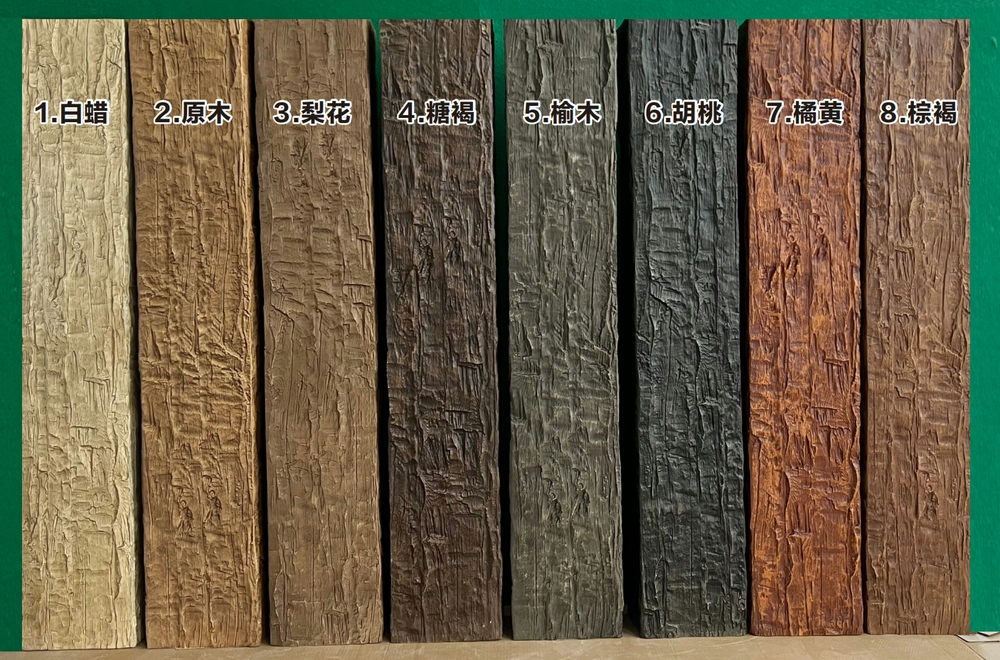
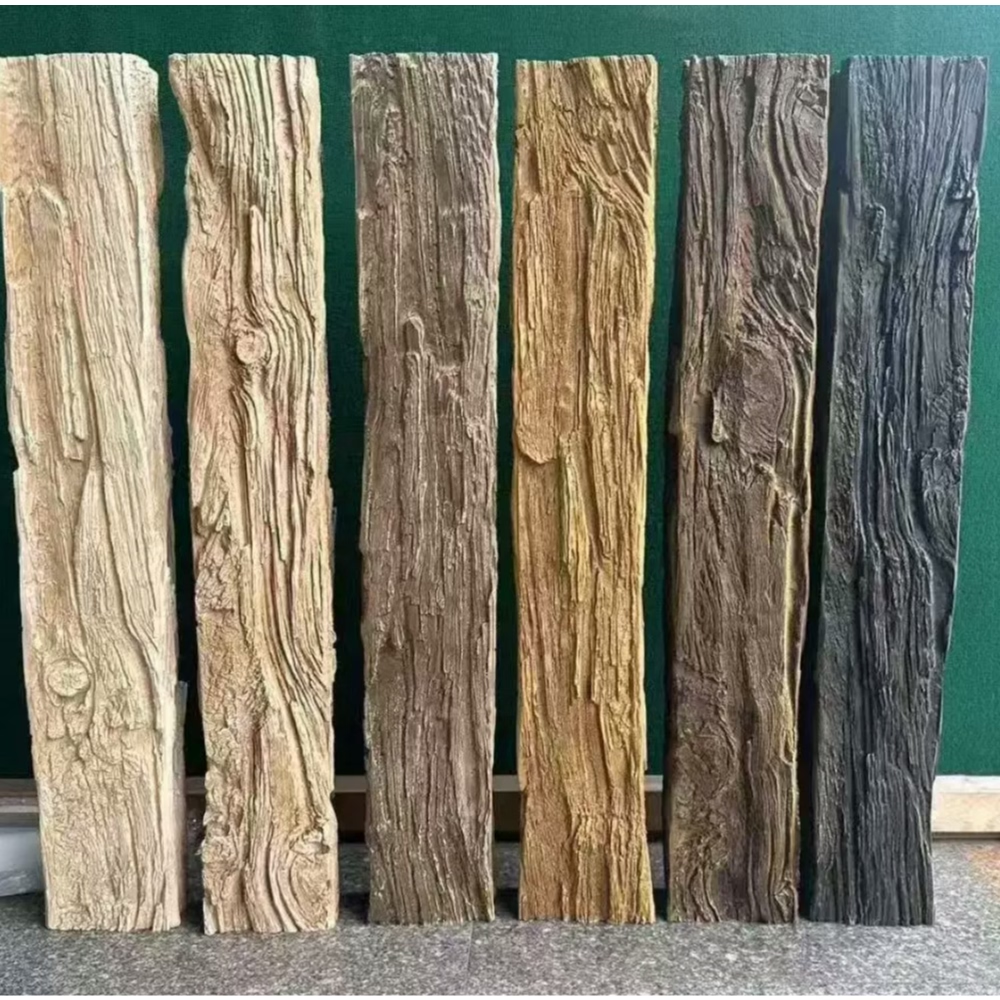
The substantial presence of high-profile beams means that any appearance changes affect spatial experience significantly. Natural wood beams might develop patina, check, or warp that alters their character over time. PU beams maintain consistent appearance, providing reliable long-term focal point presence that doesn't evolve in unexpected directions.
Physical durability protects investment in high-profile installations. The projection that creates visual presence also creates exposure to accidental contact. Door hardware, furniture moving, or construction activities might contact beams. Impact-resistant polyurethane tolerates contact that would dent or damage natural wood alternatives.
Maintenance access for high-profile beams may require ladders or scaffolding depending on ceiling height. While PU surfaces clean easily, the practical challenge of reaching elevated installations affects maintenance planning. Professional cleaning services or built-in maintenance access considerations help preserve appearance throughout service life.
Technical References
ASTM standards cited in every specification
Test Data
Lab results from internal testing program
Updated 2026
Reviewed against current product specs


