Material descriptions in tender documents serve dual purposes: communicating requirements to potential vendors while establishing evaluation criteria for bid comparison. For polyurethane molded imitation wood beams, accurate descriptions prevent both under-specification that permits inferior products and over-specification that unnecessarily increases costs or limits competition.
Descriptive Element Hierarchy
Effective material descriptions begin with generic identification followed by progressively specific requirements. Opening statements like "Polyurethane molded imitation wood beams for ceiling installation" establish product category, while subsequent details refine requirements. This hierarchical structure enables rapid document scanning while ensuring complete requirement communication.
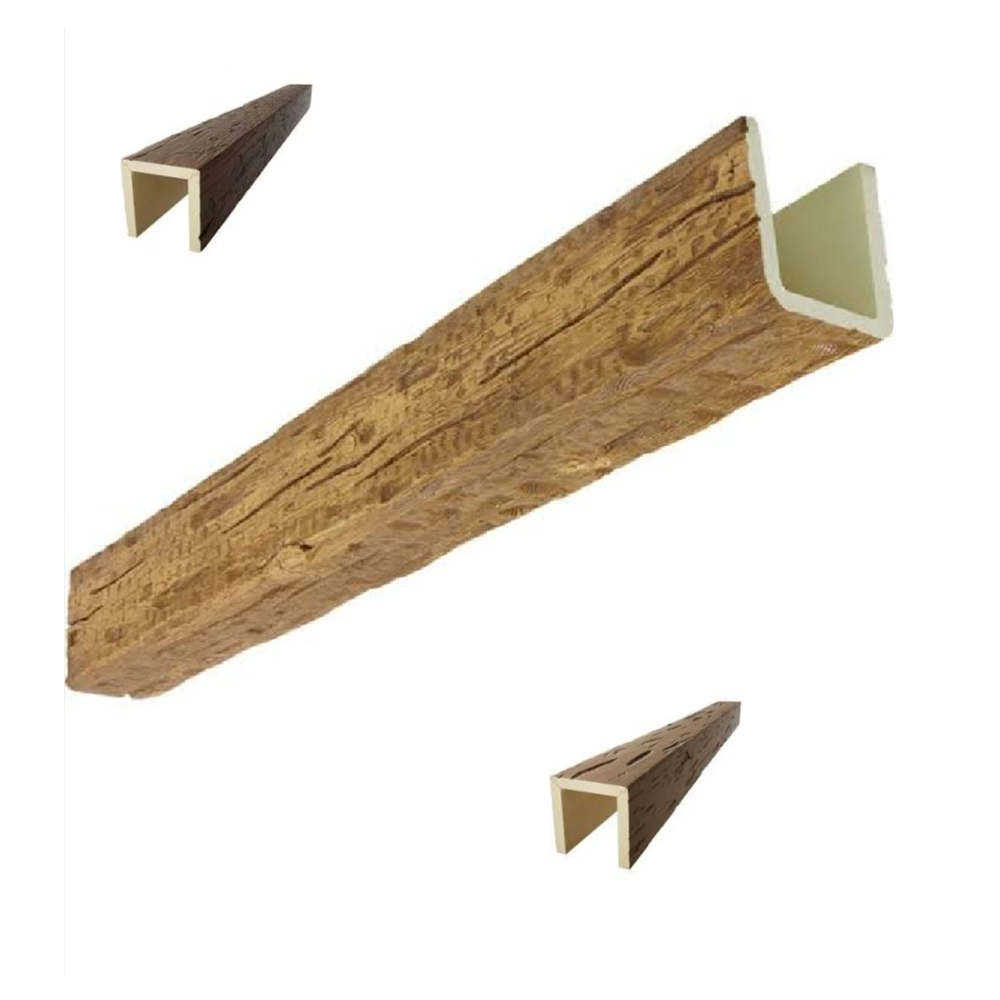
Physical characteristics follow identification statements, describing cross-sectional dimensions, length ranges, and profile shapes. Descriptions should reference industry-standard terminology—"rectangular nominal 6x8 profile" rather than ambiguous measurements that permit interpretation. Dimensional requirements should reflect realistic manufacturing capabilities while meeting design intent.
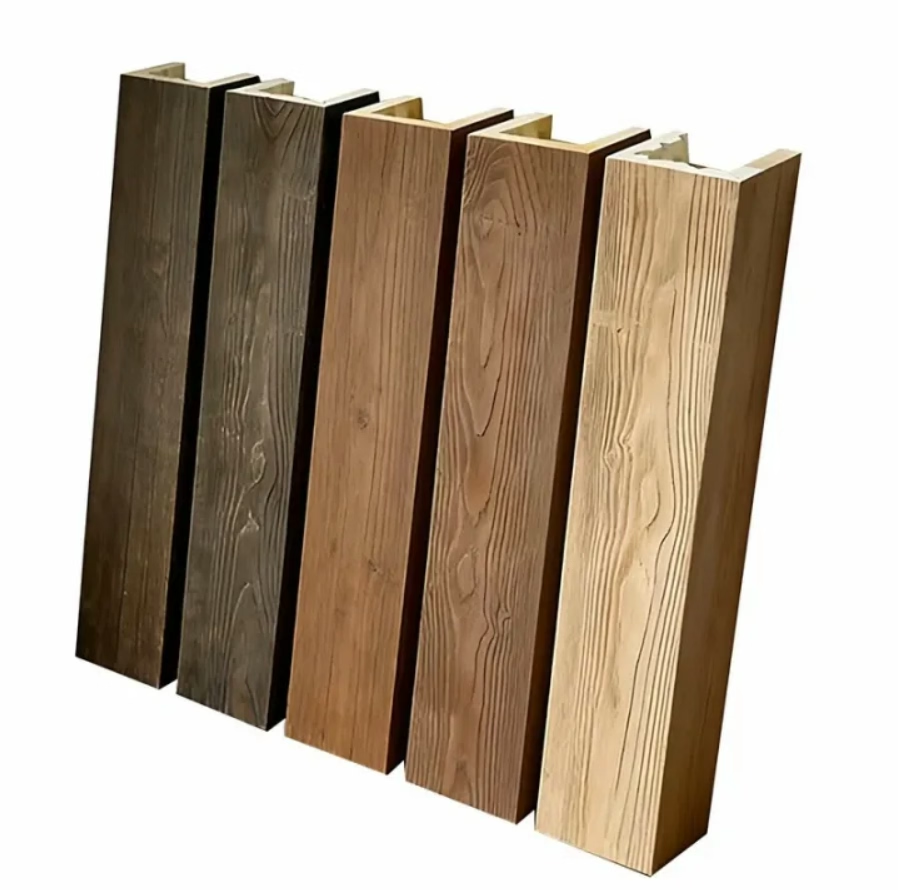
Surface characteristics describe texture, color, and finish requirements. Textured surfaces require texture type specification—"hand-hewn simulation" or "rough-sawn finish"—along with depth ranges or reference samples that define acceptable variation. Color descriptions benefit from objective color notation systems that provide verifiable targets.
Material Composition Requirements
Base material specification identifies the fundamental product type. Polyurethane, high-density polyurethane, or expanded polyurethane each suggest different performance characteristics. Descriptions should specify minimum performance standards rather than exclusive brand names unless proprietary requirements genuinely exist.
Density requirements establish quality thresholds that affect appearance and durability. Stating minimum density as "18 pounds per cubic foot minimum" creates enforceable requirements while permitting multiple compliant products. Avoid density ranges so narrow they exclude all but single sources unless such restriction serves legitimate project interests.
Additive packages address fire retardancy, UV resistance, and other performance characteristics. Rather than requiring specific additive types, describe performance outcomes—"fire retardant to achieve Class A rating per ASTM E84"—that multiple formulation approaches can satisfy. This performance-based approach encourages competition while maintaining requirements.

Performance Standard References
Fire performance ratings require reference to specific test standards. "Class A fire rating per ASTM E84" clearly communicates requirements, while "fire resistant" alone lacks measurable criteria. Include both flame spread and smoke development ratings if project conditions warrant specific attention to both characteristics.
Environmental performance standards address indoor air quality concerns in occupied buildings. Referencing "CDPH/EHLB Standard Method V1.1 for VOC emissions" ensures products meet health and safety requirements. LEED projects may require additional documentation that descriptions should anticipate.
Durability standards provide long-term performance assurance. Impact resistance, color retention, and dimensional stability specifications address characteristics that affect service life. Including minimum performance thresholds prevents acceptance of products that meet initial appearance but fail prematurely.
Appearance Standards and Acceptance Criteria
Reference samples establish appearance benchmarks that written descriptions cannot fully capture. Describing sample requirements—"submit minimum three representative samples, each 24 inches long, for architect approval before production"—ensures appearance expectations get communicated through tangible references.
Texture depth specifications address manufacturing quality that affects authenticity. Describing acceptable depth ranges—"texture depth minimum 0.020 inches, maximum 0.060 inches"—prevents both overly shallow textures that lack character and excessively deep textures that appear artificial under close observation.
Color consistency requirements address variation within production batches and across multiple pieces. Describing acceptable variation—"color variation not to exceed manufacturer standard range, with samples representing middle of range submitted for approval"—prevents both excessive uniformity and random variation that appears defective.
Workmanship and Quality Requirements
Manufacturing standards address production quality that affects appearance and performance. Describing acceptable defect levels—"surface defects not visible from 6 feet under normal lighting conditions"—provides clear evaluation criteria without specifying manufacturing methods that might unnecessarily limit approaches.
Dimensional tolerances prevent acceptance of poorly fitting products. Describing tolerance bands—"length tolerance ±1/8 inch, cross-section tolerance ±1/32 inch"—establishes precision expectations that affect both manufacturing quality and installation success. Tolerances should reflect realistic capabilities while preventing clearly defective products.
Jointing requirements address how multiple pieces connect for extended runs. Describing acceptable joint types and appearance—"scarf joints with maximum 1/16 inch offset, matching texture and color"—ensures seamless appearance that maintains authentic illusion across lengths.
Documentation and Verification Requirements
Test report requirements verify that products meet specified requirements. Describing required documentation—"provide current test reports from accredited laboratory for all specified performance characteristics"—creates accountability that written specifications alone cannot enforce.
Certification requirements address third-party verification of manufacturer claims. Describing acceptable certification sources—"ISO 9001 quality management certification or equivalent"—provides confidence in manufacturing consistency without excluding legitimate alternatives.
Warranty requirements protect project interests beyond installation completion. Describing minimum warranty terms—"minimum 5-year warranty against manufacturing defects"—ensures manufacturer commitment to product quality while providing recourse if premature failures occur.
Accurate material descriptions for polyurethane molded imitation wood beams enable successful tendering through clear communication, fair competition, and enforceable requirements. Well-written descriptions serve vendors attempting compliance while protecting projects from inadequate submissions.

Technical References
ASTM standards cited in every specification
Test Data
Lab results from internal testing program
Updated 2026
Reviewed against current product specs


