Formal construction bids require documentation and verification that casual purchasing doesn't demand. Understanding what makes faux wood beams tender-compliant helps suppliers position products for commercial success while helping project teams select vendors capable of meeting formal requirements.
Documentation Hierarchy for Tenders
Tender requirements typically establish documentation expectations in several tiers. Pre-qualification documentation demonstrates vendor capability before detailed bidding, while bid submission documentation verifies product compliance with specifications. Understanding these tiers enables efficient response preparation that meets tender requirements without unnecessary effort.
Financial documentation establishes vendor stability that ensures project completion support. Bank references, audited financial statements, and insurance certificates demonstrate commercial viability that protects project interests. Suppliers lacking these credentials face exclusion from formal tender processes regardless of product quality.
Technical documentation demonstrates product compliance with specified performance requirements. Test reports, certifications, and manufacturer's statements verify that products meet requirements described in technical specifications. Organizing documentation to match specification sections enables efficient review by technical evaluators.
Testing and Certification Standards
Accredited laboratory testing provides independent verification that marketing claims meet reality. Third-party test reports for fire performance, density, and durability characteristics carry weight that self-certified claims cannot match. Identifying laboratories accredited for specific testing categories ensures documentation validity.
ASTM standards provide commonly referenced testing protocols for construction materials. E84 for fire testing, D635 for burning extent, and D785 for hardness testing each address specific characteristics. Specifying test standards ensures consistent evaluation methodology across different product submissions.
ISO certification indicates manufacturing quality systems that ensure consistent production. ISO 9001 certification demonstrates commitment to quality processes that reduce defect rates and improve traceability. While not required for all projects, ISO certification provides competitive advantage in formal tender situations.

Reference Project Documentation
Completed project references demonstrate real-world performance that testing alone cannot prove. Reference descriptions should include project type, scope, completion date, and owner satisfaction indicators. Commercial projects particularly value references from similar applications where products have performed successfully.
Performance letters from previous clients provide third-party endorsement that self-descriptions cannot match. Requesting permission to use satisfied clients as references enables this valuable documentation. Letters describing specific positive experiences carry more weight than generic positive statements.
Project team references demonstrate installation expertise that affects final quality. For projects requiring installation services, installer qualifications provide documentation that complements product documentation. Reference projects demonstrating successful installation support vendor selection when installation is part of scope.
Warranty and Support Structure
Extended warranties demonstrate manufacturer confidence that benefits project owners. Standard warranties typically cover manufacturing defects, while extended warranties may address broader performance issues. Understanding warranty scope and limitations helps evaluate overall value beyond initial purchase price.
Technical support availability affects installation success and long-term performance. Documentation of support resources—technical representatives, installation guides, troubleshooting resources—demonstrates vendor commitment to successful project outcomes. Projects value support availability that prevents problems rather than simply addressing failures.
Spare parts availability ensures long-term maintenance capability for commercial applications. Documenting part availability and lead times helps project teams plan for eventual maintenance needs. Even decorative products benefit from availability of touch-up materials and replacement components.
Compliance Verification Procedures
Submittal procedures ensure documentation reaches appropriate reviewers in usable format. Electronic submission requirements, physical sample quantities, and review timelines all affect compliance. Understanding procedures prevents disqualification for administrative reasons that technical merit cannot overcome.
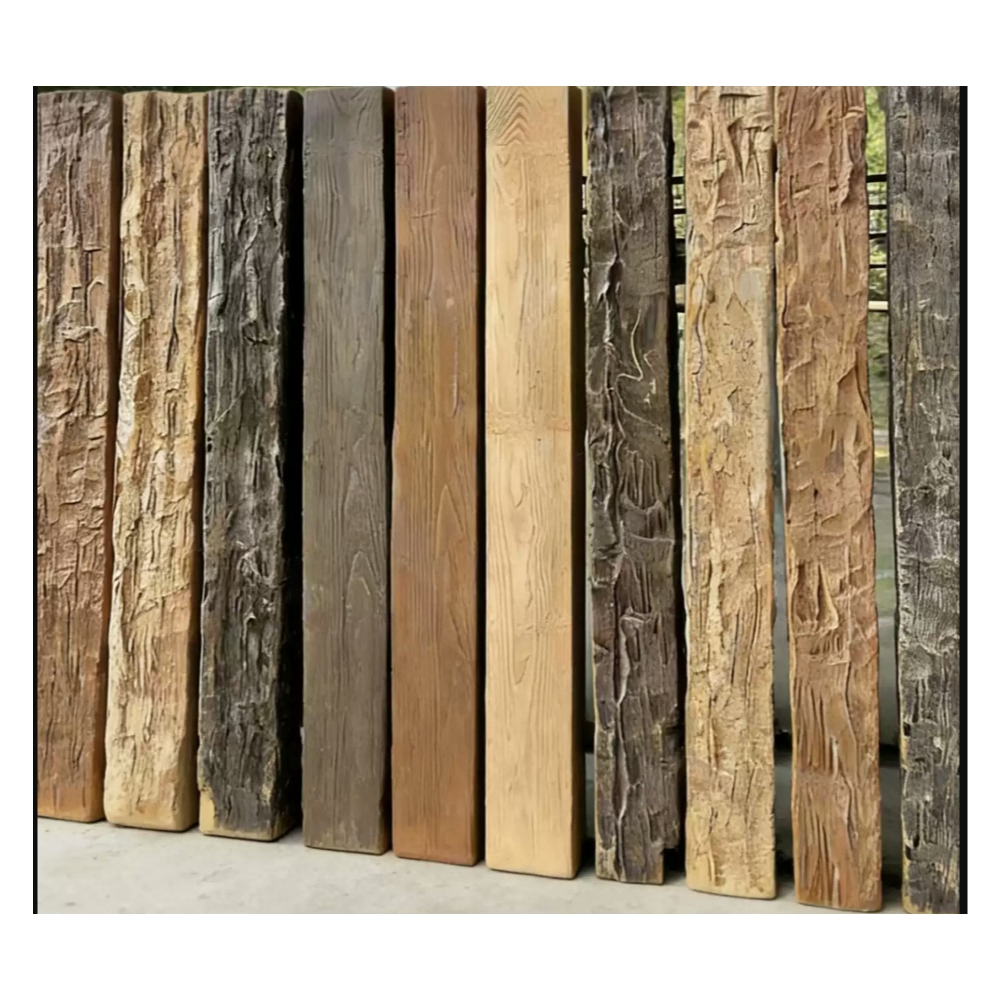
Mock-up requirements provide opportunity to verify appearance compliance before production commitment. Successful mock-up completion demonstrates both product capability and installation competence. Mock-up procedures typically involve installation of sample sections for evaluation before full production proceeds.
Inspection and testing provisions address quality verification during and after installation. Describing inspection access, testing requirements, and acceptance criteria provides framework for quality verification that protects both project and supplier interests.
Tender-compliant faux wood beams result from partnership between capable suppliers and well-structured requirements. Understanding compliance requirements enables suppliers to develop capabilities that commercial projects demand while helping project teams create requirements that attract qualified vendors.

Technical References
ASTM standards cited in every specification
Test Data
Lab results from internal testing program
Updated 2026
Reviewed against current product specs


