
Cedar has long occupied a special position among building materials. Its natural resistance to decay, distinctive aromatic quality, and handsome coloring made it the preferred choice for outdoor applications ranging from garden structures to coastal homes. Yet even this resilient wood eventually surrenders to ultraviolet exposure, moisture cycling, and insect activity. Modern polyurethane technology now offers alternatives that capture cedar's aesthetic appeal while eliminating its maintenance demands—for both the covered porch and the climate-controlled living room.
The Enduring Appeal of Cedar Aesthetics
Color and Patina Development
Fresh-cut western red cedar displays warm reddish-brown tones that lighten to silver-gray as UV exposure oxidizes surface layers. This weathering process, which troubles property owners seeking maintained appearances, actually creates the silver patina that designers specify for rustic aesthetics. Textured faux cedar beams reproduce either stage of this development: fresh-finished warm tones or weathered silver surfaces.
Yellow cedar (also called Alaskan cedar) presents different coloring: pale yellow tones that weather to warm gray. Port Orford cedar displays the tightest grain of commercial cedar species, with subtle figure that rewards close observation. Each species requires specific reproduction approaches to achieve convincing appearance.
Characteristic Grain Patterns
Cedar grain patterns distinguish them from other softwoods through their dramatic variation. Annual growth rings create pronounced color contrast between earlywood and latewood zones. Knots appear frequently, particularly in outer lumber sections, adding organic character that mass-produced alternatives cannot match.
The distinctive cedar fragrance—concentrated in natural oils that provide biological resistance—cannot be reproduced in synthetic materials. However, cedar's visual characteristics transfer convincingly to polyurethane casting, capturing grain patterns and knot formations with accuracy that satisfies all but the closest inspection.
Outdoor Application Considerations
Weather Exposure Requirements
Fully exposed outdoor installations face environmental challenges that covered applications avoid. Direct rainfall, sustained UV exposure, temperature extremes, and freeze-thaw cycling stress materials in ways that genuine wood tolerates through natural adaptation but many synthetics cannot. Outdoor-rated polyurethane formulations address these challenges through UV-stable resins, flexible polymer networks that accommodate thermal movement, and closed-cell structures that resist moisture absorption.
The distinction between "covered outdoor" and "fully exposed" applications matters substantially for material selection. Covered porches, carports, and breezeways provide shade and reduce direct precipitation exposure. Fully exposed installations—pergolas, gazebos, and free-standing structures—require materials designed specifically for continuous outdoor service.
Freeze-Thaw Performance
Temperature cycling between freezing and thawing challenges materials through differential expansion rates between components. Water absorbed into porous materials expands approximately nine percent when freezing, creating internal stresses that crack and delaminate susceptible products. Quality outdoor polyurethane resists water absorption sufficiently to prevent this damage mode.
Proper installation practices complement material selection for outdoor durability. Slope requirements for horizontal surfaces prevent water accumulation. Adequate clearance between beam ends and adjacent materials allows movement without binding. Drainage provisions redirect water away from beam surfaces and supporting structure.
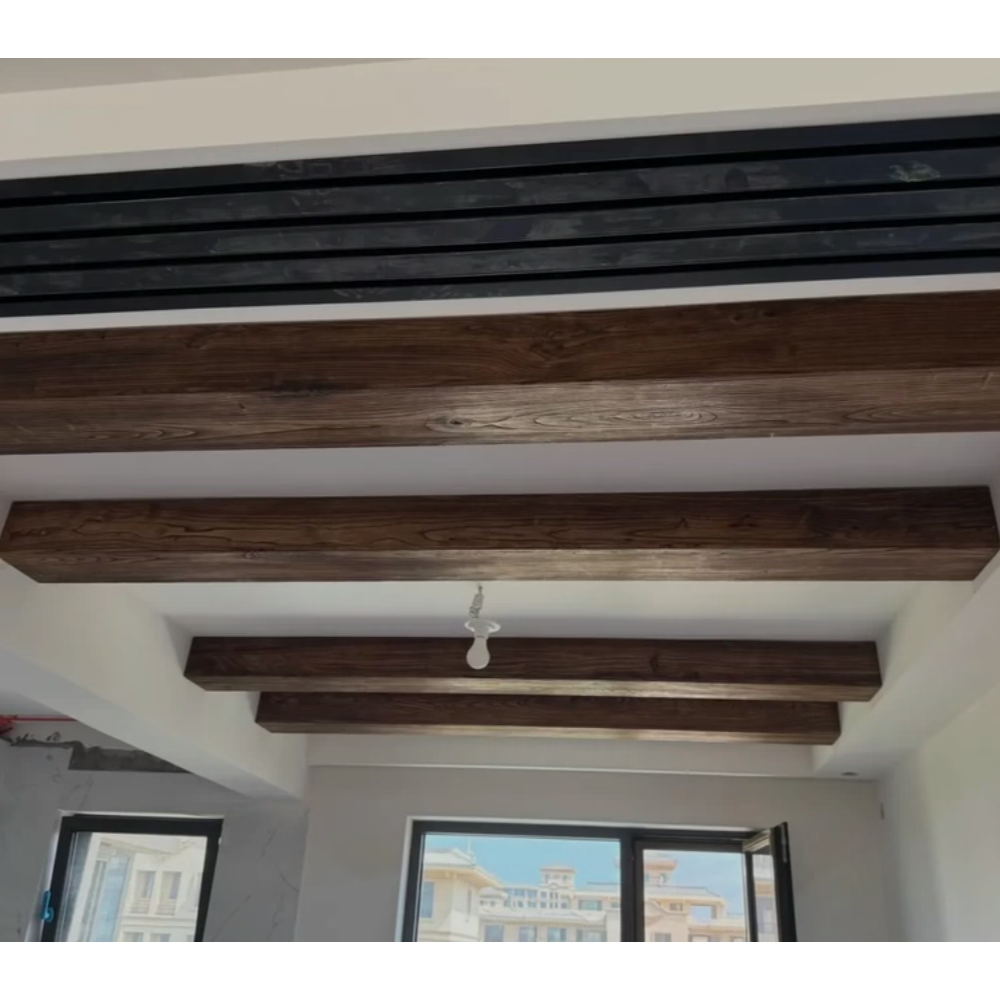
Indoor Application Advantages
Climate Control Compatibility
Interior cedar applications benefit from climate-controlled environments that eliminate outdoor exposure concerns entirely. Polyurethane beams installed in living spaces, dining rooms, and bedrooms require no special formulation beyond standard products. This expanded range of acceptable materials allows focus on aesthetics without weather-resistance tradeoffs.
Interior applications also permit installation techniques unsuitable for outdoor use. Adhesive bonding to prepared surfaces works reliably in climate-controlled conditions where moisture cannot compromise bond lines. Hidden mounting systems that depend on dry installation conditions perform predictably indoors.
Design Coordination Opportunities
Indoor cedar beams coordinate naturally with other cedar elements throughout homes: cedar closet linings, cedar shingle siding, or landscape elements visible through windows. This material continuity creates holistic design approaches that outdoor-only materials cannot achieve.
Reclaimed cedar appearance reproductions extend design possibilities further. Weathered reclaimed cedar—salvaged from barns, factories, or waterfront structures—displays characteristics that fresh lumber cannot match: nail holes, saw blade variations, and oxidation patterns accumulated over decades of service. These authentic patinas transfer convincingly to polyurethane casting.
Manufacturing Quality Factors
Texture Depth and Authenticity
Quality cedar reproduction requires surface textures that capture the species' characteristic irregularities. Authentic cedar surfaces display saw marks from various blade configurations, with tool direction affecting visible patterns. Deep embossing reproduces these marks convincingly, while shallow texturing appears unconvincing under directional lighting.
Knot reproduction deserves particular attention. Cedar knots present as dark, often resinous formations surrounded by distorted grain patterns. Mold manufacturers must balance knot prominence against structural concerns—deep knots create weak zones in solid wood, but corresponding deep recesses in faux products may compromise surface durability.
Finish Durability Standards
Factory-applied finishes for cedar reproductions should withstand typical service conditions without requiring immediate maintenance. UV-stable pigments prevent fading under indirect light exposure. Scratch-resistant topcoats resist the superficial damage that affects less-protected surfaces. These finish characteristics matter particularly for ceiling installations where maintenance access may be difficult.
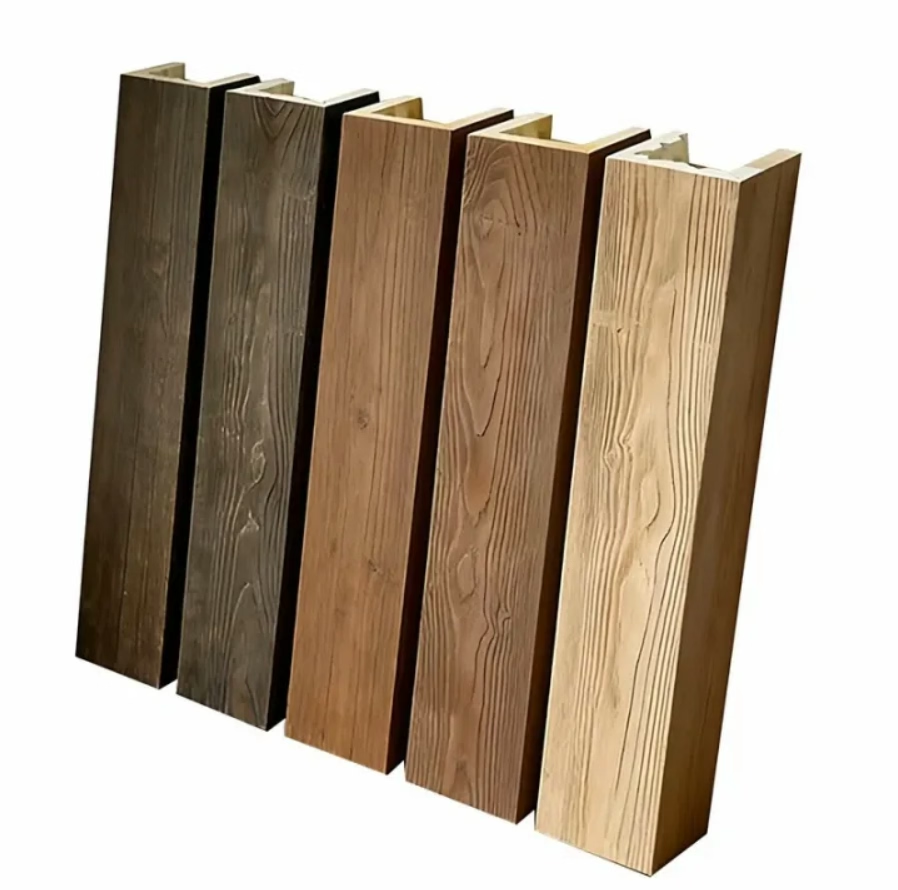
Installation Techniques for Indoor and Outdoor Applications
Structural Preparation Differences
Indoor installations typically attach to ceiling joists, roof trusses, or furring strips mounted to structural elements. These substrates provide adequate bearing for beam weight plus any additional loads from light fixtures or ceiling fans. Pre-installation verification of structural capacity ensures safe support throughout service life.
Outdoor installations require consideration of post or beam interaction, ledger attachment to building structures, and foundation support where applicable. Engineering consultation may be appropriate for large spans or complex configurations. Local building codes often specify requirements for outdoor structures that interior installations avoid.
Fastening System Selection
Outdoor fastening systems must resist corrosion from moisture exposure and, in coastal environments, salt air. Stainless steel hardware provides maximum corrosion resistance but adds cost. Hot-dipped galvanized hardware offers adequate protection for most exposures at moderate cost. Coating compatibility between fasteners and beam materials prevents galvanic corrosion at metal-contact points.
Indoor hardware faces less demanding conditions. Standard zinc-plated fasteners perform adequately in dry interior environments. Decorative hardware—wrought iron brackets, forged metal straps—may be specified for rustic aesthetic contributions that functional hardware cannot provide.
Maintenance Requirements Comparison
Natural Cedar Maintenance Schedules
Genuine cedar requires ongoing maintenance to preserve appearance and extend service life. Initial staining or sealing within the first year of exposure establishes protective barriers. Subsequent reapplication every two to three years maintains protection in demanding exposures. Cleaning to remove biological growth—mold, mildew, algae—prevents surface degradation that compromises protective finishes.
Despite maintenance investment, natural cedar eventually develops the weathering that homeowners either cherish or resent. Budget projections for genuine cedar should include lifetime maintenance costs that polyurethane alternatives eliminate.
Faux Beam Maintenance Simplicity
Polyurethane faux beams require only occasional cleaning to maintain appearance. Dust accumulation in textured surfaces benefits from periodic brushing or gentle vacuuming. Surface washing with mild detergents removes accumulated residues without affecting factory finishes.
Long-term appearance retention depends on original finish quality and exposure conditions. Indoor installations typically maintain appearance for decades without intervention. Covered outdoor installations may require occasional cleaning and touch-up finishing after extended service. Fully exposed outdoor applications benefit from periodic inspection and maintenance intervention as conditions warrant.
Cost Analysis and Value Assessment
Initial cost comparison between genuine cedar and polyurethane alternatives depends on specific product selection and installation requirements. Cedar timbers of appropriate dimensions require careful selection to avoid checking and splitting. Kiln-dried stock costs more but provides dimensional stability that reduces installation problems.
Polyurethane beam costs include manufacturing, finishing, and hardware but eliminate material waste from culling and the ongoing maintenance costs affecting genuine cedar. For projects where appearance authenticity satisfies design requirements, the total lifecycle cost comparison often favors manufactured alternatives.
The aesthetic fidelity of modern textured rustic cedar PU beams enables design approaches that would be impractical or impossible with genuine timber. Weather-resistant formulations extend these possibilities to outdoor applications where natural wood demands constant attention. Property owners seeking cedar's characteristic beauty without cedar's maintenance burden find compelling solutions in contemporary manufacturing.
Technical References
ASTM standards cited in every specification
Test Data
Lab results from internal testing program
Updated 2026
Reviewed against current product specs


