The pursuit of authentic timber aesthetics in modern interiors often collides with practical constraints: structural limitations, budget restrictions, or the impossibility of adding significant weight to ceiling assemblies. Three-sided hollow faux timber beams resolve these tensions elegantly, providing the visual warmth of weathered wood without demanding structural reinforcement or specialized installation expertise. These hollow architectural elements have become essential tools in the repertoire of designers working across residential and commercial projects alike.
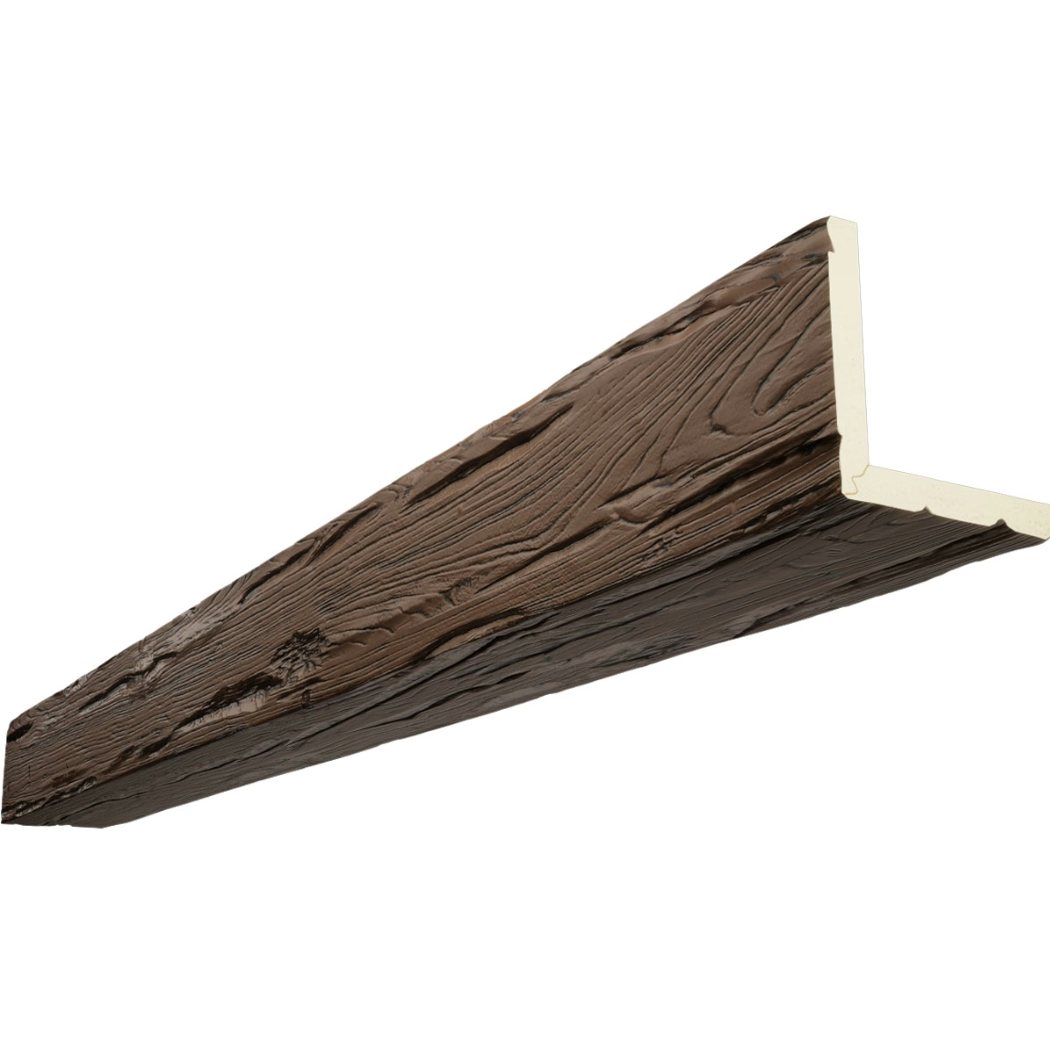
What distinguishes hollow faux timber from solid alternatives lies not merely in construction but in intent. The three-sided profile acknowledges that most installations involve covering existing beams, joists, or dropped ceiling sections. By eliminating the unnecessary bottom panel, manufacturers reduce material costs and weight while creating a practical channel for installation over existing conditions. The result serves both economic and functional objectives without compromising visual impact.
The Engineering of Hollow Three-Sided Construction
Hollow three-sided beams achieve remarkable structural integrity despite their lightweight construction. The key lies in the engineering of the cross-section: thick walls relative to overall dimensions, internal ribs in premium products, and consistent wall thickness that distributes loads evenly. When properly manufactured using high-density polyurethane, these beams resist impact damage, maintain straight alignment over long spans, and support their own weight without intermediate support requirements up to sixteen feet in standard configurations.
The manufacturing process contributes significantly to quality and consistency. Precision molds capture fine wood grain details, knothole placements, and surface textures with photographic accuracy. Computer-controlled cutting ensures dimensional accuracy within fractions of a millimeter, meaning installers receive beams that fit together precisely at corners and joints. This manufacturing precision eliminates the fitment frustrations common with genuine timber, where natural variations require extensive shimming, scribing, or on-site planing.
Temperature resistance represents another engineering advantage often overlooked. Polyurethane tolerates temperature extremes without the dimensional changes that plague natural wood. In spaces beneath unheated attics or above poorly insulated ceilings, genuine timber might cup, twist, or develop visible gaps as humidity and temperature fluctuate. Three-sided hollow beams maintain their appearance regardless of such conditions, making them suitable for installation in vacation homes, seasonal properties, or commercial spaces with variable occupancy patterns.
Design Integration in Contemporary Spaces
Modern interior design prizes authenticity without fussiness, and three-sided hollow beams deliver precisely this combination. In minimalist spaces, a single oversized beam spanning an open-plan living area creates a dramatic focal point without cluttering clean sight lines. The beam's presence establishes visual weight and architectural interest while its hollow construction keeps the ceiling reading as open rather than heavy. This balance between presence and lightness defines successful contemporary ceiling treatment.
Color selection for modern applications often gravitates toward extremes: very light weathered oak mimicking Scandinavian sensibilities, or very dark charcoal stains approaching near-black for industrial-influenced interiors. Both directions work beautifully with three-sided hollow beams because the manufacturing process allows consistent color application across textured surfaces without the blotching and absorption variations that complicate staining natural wood. The result appears deliberate and designed rather than accidental.
Texture choice requires careful consideration in contemporary contexts. While rustic farmhouse aesthetics embrace deep distressing and pronounced grain patterns, modern spaces typically favor subtler approaches. Light hand-scraping adds authenticity without overwhelming simple design schemes. Some manufacturers offer beams with intentionally visible manufacturing seams, treating the faux nature as design feature rather than flaw—this approach appeals to clients who appreciate honest materials and contemporary aesthetics that acknowledge their construction honestly.

Installation Best Practices for Optimal Results
Successful hollow beam installation depends on careful planning and systematic execution. Before ordering materials, measure the installation space thoroughly—record beam run lengths, existing beam dimensions, ceiling height variations, and any obstacles that might complicate installation. Photographs from multiple angles help identify potential issues before they become expensive mistakes. Most suppliers offer consultation services for complex projects, and taking advantage of this support often prevents ordering errors.
The substrate preparation stage deserves more attention than it typically receives. Existing ceiling beams or joists should be clean, dry, and structurally sound. Remove any loose paint, caulk old gaps, and verify that mounting surfaces provide adequate holding power for adhesive and fasteners. In some renovation scenarios, adding a backing board between existing joists creates a more uniform mounting surface and helps conceal irregularities in older construction. This preparatory step adds minimal cost but significantly improves final appearance.
Attachment sequencing matters for alignment and appearance. Begin with the longest run, establishing reference lines that subsequent pieces follow. Use temporary supports—adjustable support arms available from beam suppliers or improvised using wooden props—to hold beams in position during adhesive curing. This temporary support prevents sagging at joints and ensures consistent alignment across the entire installation. Rushing this stage typically results in visible problems that prove difficult and expensive to remediate after adhesive sets.
Environmental and Sustainability Considerations
Environmental consciousness influences material selection decisions across residential and commercial construction. Three-sided hollow beams offer several sustainability advantages compared to solid timber alternatives. Polyurethane production requires less energy than kiln-drying hardwoods to dimensional stability, and the lightweight construction reduces transportation fuel consumption significantly. For projects tracking environmental certifications, these factors contribute to overall sustainability calculations.
The durability dimension of sustainability often receives insufficient attention. A material that requires replacement every decade contributes more to environmental burden than one lasting fifty years with minimal maintenance. Three-sided hollow beams resist the moisture damage, insect attack, and UV degradation that eventually compromise natural wood, meaning fewer replacements over building lifetime. When replacement eventually becomes necessary, polyurethane beams can often be recycled into composite lumber or other industrial applications, diverting material from landfills.
Manufacturing practices vary significantly across suppliers, with some facilities employing recycled polyurethane content and zero-VOC finishing systems. These environmental measures increase product cost but appeal to clients prioritizing sustainable construction. When evaluating suppliers, requesting information about manufacturing processes, material sourcing, and environmental certifications helps identify partners aligned with project sustainability goals. The additional research typically requires minimal time investment while ensuring procurement decisions reflect stated environmental values.
Selecting the Right Beam Size and Style
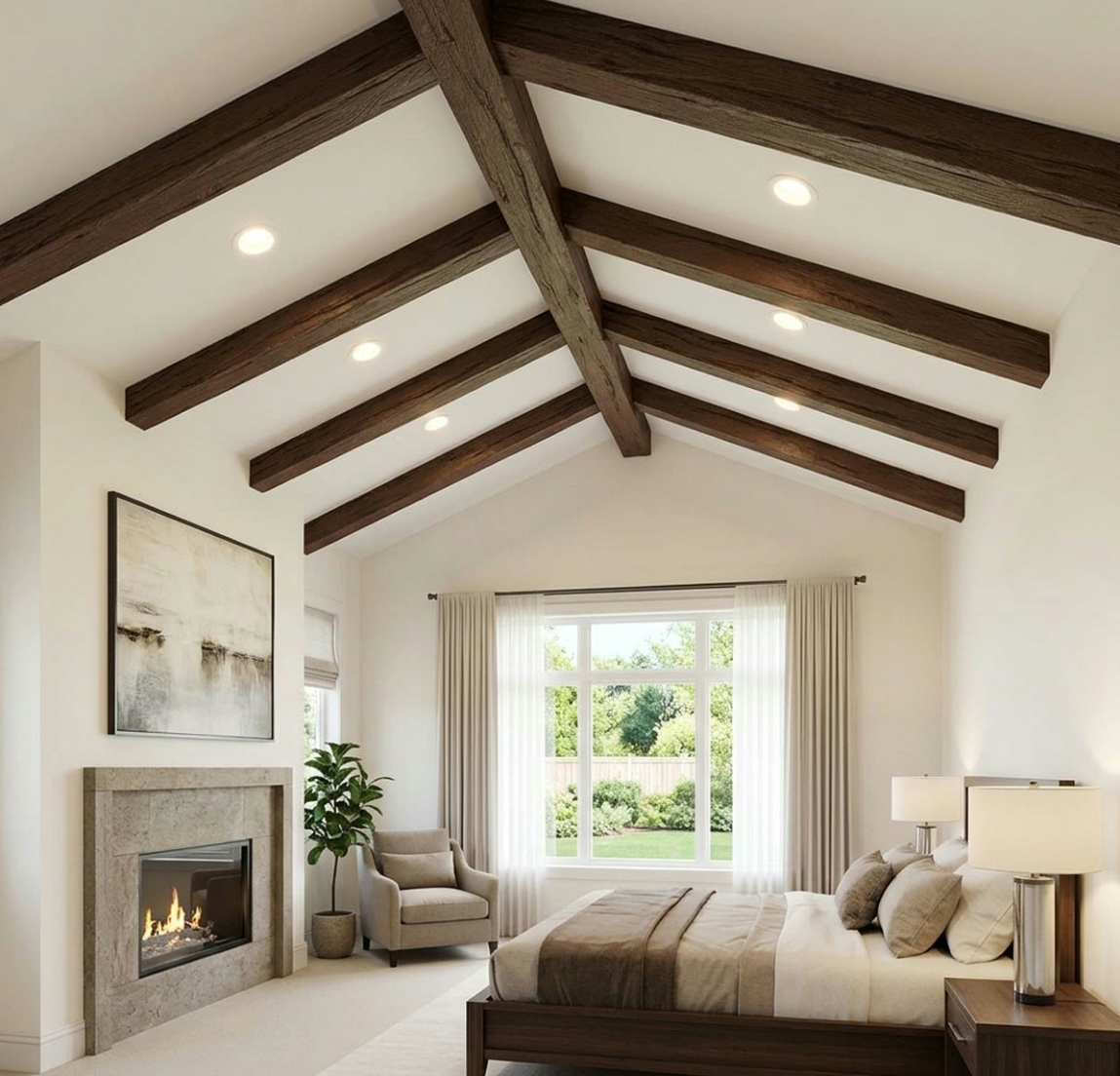
The relationship between beam dimensions and room proportions determines whether installations succeed or overwhelm their contexts. As a general principle, beam width should relate to the scale of the space—narrow six-inch beams in intimate rooms, broader twelve-inch or fourteen-inch beams in grander spaces with higher ceilings and longer sight lines. Choosing beams too narrow for a large room creates an underwhelming effect; beams too wide for modest spaces appear oppressive and visually exhausting.
The visual weight of beams depends on more than simple width measurements. Deep beams with substantial visible height create stronger shadows and more dramatic presence than shallow beams of equivalent width. In spaces with twelve-foot ceilings, beams six inches wide by eight inches deep provide substantial presence without dominating. The same beams in an eight-foot ceiling would overwhelm, suggesting eight-inch width by six-inch depth instead—or reconsidering the installation entirely in favor of shallower treatments.
Texture and finish interact with dimension to influence overall effect. Highly textured, deeply distressed beams appear heavier than their actual measurements suggest because complex surfaces catch more light and cast more shadows. Smooth-finished beams read as lighter and more contemporary. Matching texture intensity to space character ensures cohesive results; deeply rustic beams in a minimalist contemporary interior create cognitive dissonance that observant viewers may struggle to articulate but will nonetheless sense.
Technical References
ASTM standards cited in every specification
Test Data
Lab results from internal testing program
Updated 2026
Reviewed against current product specs


