
Classical architecture has captivated human imagination for millennia, its proportions and ornamentation encoding cultural values about beauty, permanence, and civilized aspiration. Replicating these effects in contemporary buildings once demanded master craftsmen whose skills took decades to develop—hand-carved plasterwork, painstakingly fitted stone trim, and timber joinery executed with mathematical precision. Polyurethane decorative moulding beams democratize this heritage, enabling contractors and designers to achieve classical effects without the extraordinary expense these traditions historically required.
The translation of classical ornamentation into injection-molded and cast polyurethane has progressed remarkably since early synthetic millwork products. Modern manufacturing captures the subtlest details—egg-and-dart patterns, acanthus leaf carvings, guilloche borders—rendered faithfully in materials that install with basic tools and perform reliably for decades. This technical achievement opens classical design possibilities to projects that could never justify traditional craftsmanship costs.
Classical Architectural Styles and Their Beam Elements
Greek Revival architecture established many beam and cornice conventions that persist in contemporary classical interpretations. Entablatures—horizontal beam-like structures spanning between columns—feature distinctive profile layering: architrave, frieze, and cornice sections, each with characteristic moldings. Polyurethane manufacturers produce components that replicate this layering, enabling authentic Greek Revival ceiling treatments without structural columns necessarily present.
Roman architecture extended Greek conventions while introducing new possibilities. Coffered ceilings, barrel vaults, and dome constructions incorporate beam-like ribs and coffers that create elaborate overhead geometry. These configurations challenged traditional timber but work effectively with lightweight polyurethane that mounting systems can support readily.
Renaissance architecture emphasized mathematical proportion and humanist ornamentation. Beam and cornice treatments became opportunities for sculptural decoration—cherubs, scrollwork, garlands, and classical figures rendered in relief. Polyurethane production captures this sculptural quality convincingly, making Renaissance ornamentation accessible beyond the grand palaces and churches where it originally appeared.
Georgian and Colonial American architecture simplified classical ornamentation into restrained patterns suitable for domestic scale. Proportion remained paramount, with beam and cornice profiles scaled carefully relative to room dimensions. These more modest classical treatments suit contemporary homes particularly well, providing architectural dignity without overwhelming smaller spaces.
Understanding Moulding Beam Construction
Polyurethane moulding beams for classical applications typically combine structural cores with decorative surfaces. The core provides mounting capability, fastener holding, and dimensional stability. The decorative surface—either molded-in or applied—creates the ornamentation that defines classical appearance.
Multi-part systems assemble on-site to create complex profiles impossible in single-piece production. Base mouldings mount to beam surfaces, crown mouldings address ceiling intersections, and ornamental appliqués add sculptural elements at intersections and spans. Understanding how these components interact helps designers specify appropriate systems and contractors plan installation sequences.
Density and durometer characteristics affect how moulding beams perform during installation and use. Higher density formulations accept fine detail better and hold fasteners more securely but increase weight and may require special handling. Lower density options install more easily but may require careful fastener placement to avoid pull-through or crushing.
Manufacturers offer various mounting systems ranging from concealed clips to exposed corbels, depending on aesthetic requirements and access considerations. Direct adhesive attachment suits finished surfaces where fastener concealment is possible. Mechanical fastening provides additional security for critical connections or extended spans.
Design Applications Across Building Types
Residential entryways and foyers gain immediate gravitas when classical moulding beams define the ceiling transition from public to private space. A transverse beam at the threshold, flanked by smaller beams continuing into the hall, establishes architectural hierarchy that greets visitors with intended formality. These applications work well in traditional, transitional, and even contemporary homes that borrow classical vocabulary for sophistication.
Dining rooms and formal living spaces suit classical beam ornamentation where the architecture reinforces appropriate behavior and atmosphere. Long tables benefit from ceiling beams that anchor furniture groupings and define seating arrangements. Polyurethane beams work particularly well here since moisture and temperature fluctuations typical in dining settings don't affect dimensional stability.
Master suites increasingly incorporate classical details that create retreat atmospheres. Crown moulding at ceiling planes, decorative beams defining sleeping areas, and ornamental trim framing architectural features all contribute to a sense of sanctuary. Polyurethane's easy cleaning and repair benefits residential applications where spaces experience daily use.
Commercial hospitality spaces leverage classical ornamentation to communicate quality and permanence. Hotel lobbies, fine dining restaurants, and boutique retail environments use ceiling beams and moulding to establish brand positioning differentiated from simpler competitors. Consistent classical detailing across multiple locations becomes feasible when using manufactured polyurethane components rather than custom craftsmen.
Churches and other institutional buildings face unique requirements for classical ornamentation that respects tradition while meeting contemporary building codes and budget constraints. Polyurethane moulding beams enable historically accurate restoration and appropriate new construction without the expense of traditional materials and methods.
Profile Selection and Proportioning
Classical proportioning follows rules that, while not mathematically rigid, establish relationships between architectural elements that read as harmonious. A cornice profile appropriate for a grand ballroom overwhelms a modest bedroom ceiling; a delicate domestic scale looks trivial in a cathedral narthex. Understanding these relationships guides profile selection toward appropriate results.
Ceiling height substantially affects profile choice. Higher ceilings accommodate larger-scale ornamentation without appearing excessive; lower ceilings demand restraint that prevents top-heavy appearance. Standard production mouldings typically scale appropriately for ceilings between 9 and 12 feet; taller or shorter spaces may require custom specifications or alternative approaches.
Beam span affects both profile selection and mounting requirements. Longer spans stress structural elements more heavily, potentially requiring reinforced mounting or intermediate support. Decorative ornamentation should not compromise structural performance—ensure that mounting systems handle loads adequately regardless of profile complexity.
Ornament density involves judgment calls about visual complexity. Classical architecture includes examples ranging from severe austerity to overwhelming elaboration. Contemporary tastes often favor restrained ornamentation that reads as classical reference without excessive detail. Match ornament density to overall interior design, adjacent architectural elements, and intended atmosphere.
Installation Considerations and Techniques
Classical moulding beam installation requires planning that begins before components arrive on-site. Measurement and layout must account for corner returns, beam intersections, and mounting hardware placement. Detailed shop drawings showing component relationships help ensure proper preparation and reduce installation errors.
Dry fit verification before adhesive application prevents irreversible mistakes. Moulding components often require trimming, shimming, or adjustment to achieve proper alignment. A dry run identifies these issues before commitment, allowing corrections without wasted materials.
Adhesive selection affects both installation convenience and long-term performance. Construction adhesives formulated for polyurethane substrates provide reliable bonding while allowing some adjustment time before full cure. Avoid adhesives containing solvents that might damage polyurethane surfaces.
Mechanical fastening supplements adhesive attachment for critical connections. Pre-drilling prevents splitting or cracking in moulded profiles. Countersink fasteners and fill holes with appropriate filler before finishing. Visible fastener locations should receive decorative cover plugs matching the finish.
Finishing Classical Moulding Beams
Factory-finished moulding beams arrive with surfaces ready for installation, typically in white or prime-coat condition suitable for paint application. These options work well when walls and ceilings receive paint finishes that integrate mouldings into overall color schemes.
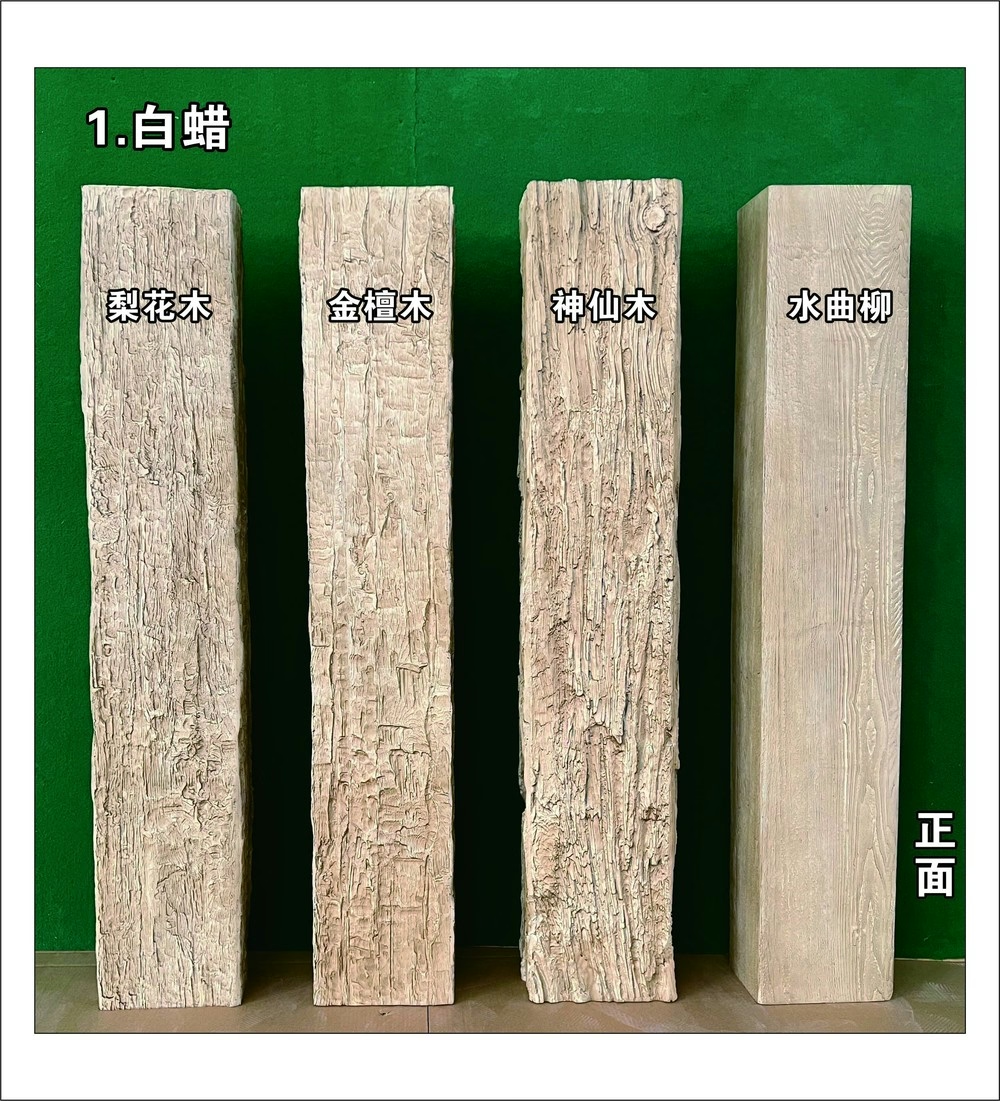
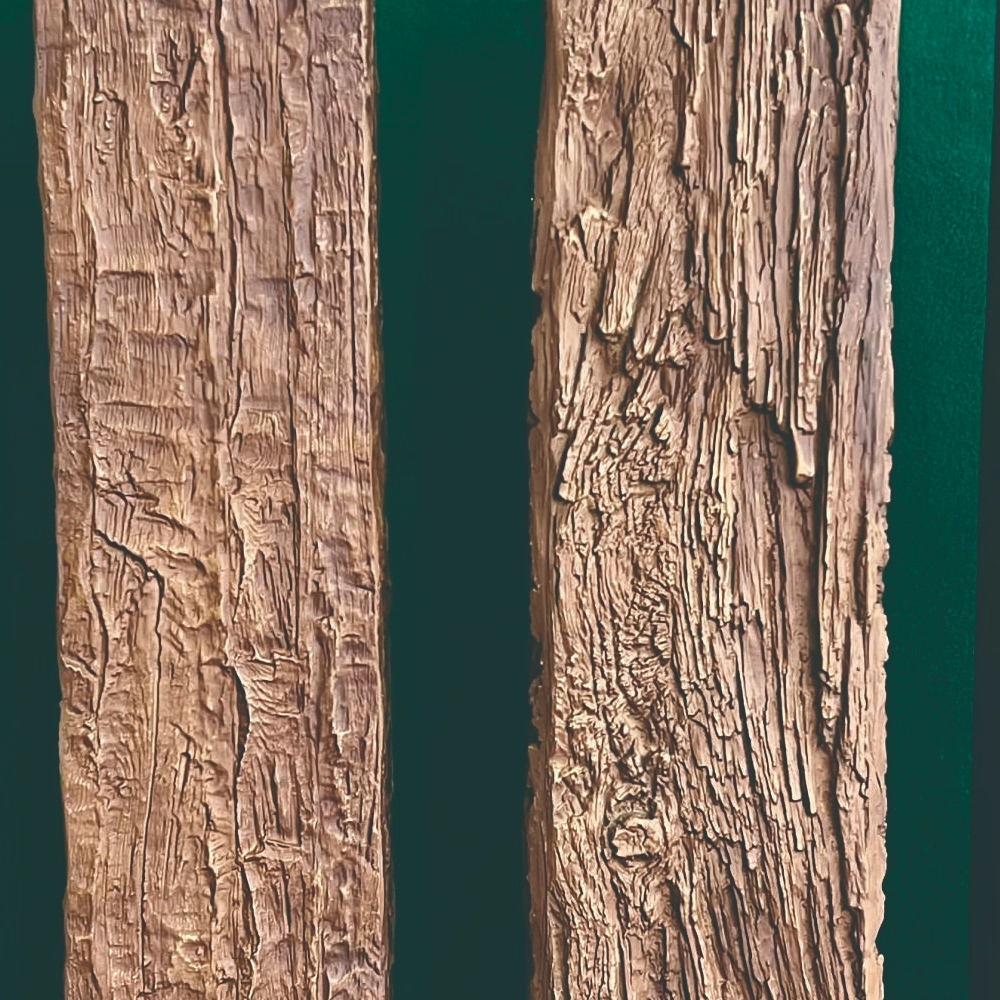
Custom finishing extends aesthetic possibilities significantly. Gold leaf application, historically associated with classical architecture, works effectively on properly primed polyurethane. Aged and distressed finishes create period authenticity that appeals to restoration projects. Faux bois techniques—finishes simulating rare wood species—provide luxury appearance without wood maintenance requirements.
Priming requirements for field finishing depend on the specific finish selected. Paint systems require primer formulated for urethane substrates; without proper priming, paint adhesion fails prematurely. Gel stains work on polyurethane with appropriate base preparation. Specialty finishes may have specific substrate preparation requirements—verify before committing to finished surfaces.
Finishing sequence matters when matching beams to other architectural elements. When baseboards, door casings, and ceiling mouldings receive finish treatment, work from top to bottom, allowing drip and splatter from upper elements to be addressed during subsequent finishing stages. Coordinate finish timing across all millwork to ensure color consistency.
Coordinating with Other Architectural Elements
Classical interiors coordinate multiple millwork elements into cohesive systems. Baseboards, door casings, window surrounds, crown mouldings, and ceiling beams all participate in the overall composition. When specifying polyurethane moulding beams, consider how beam profiles relate to these other elements—matching classical orders or at minimum maintaining proportional harmony.
Column and pilaster integration affects beam and cornice installation at intersections. Classical columns typically support entablatures that extend beyond column faces. Polyurethane beam systems can replicate this detail, with corbels or brackets supporting beam ends at column locations.
Fireplace mantels present specific coordination challenges when classical beams appear in the same room. The mantel cornice often matches or complements ceiling beam profiles, creating visual connection between these architectural elements. Consider how mantel specifications relate to overall beam design early in the design process.
Lighting integration requires advance coordination between beam placement and electrical planning. Recessed fixtures, decorative medallions for chandelier canopies, and concealed cove lighting all interact with beam design. Document lighting locations relative to beam layout before installation begins.

Quality Evaluation and Procurement
Surface quality distinguishes premium classical moulding products from economy alternatives. Fine details—crisp edges, consistent depth in carved patterns, smooth transitions between profile sections—indicate quality manufacturing and appropriate material formulation. Examine samples closely for defects that would show under finished conditions.
Dimensional consistency matters for multi-part installations where components must align precisely. Production tolerances affect how cleanly joints close and how accurately pieces mate with adjacent elements. Request samples from actual production runs rather than hand-finished prototypes when evaluating suppliers.
Profile library breadth indicates manufacturing capability for different classical styles and proportional scales. Suppliers offering comprehensive classical profiles can serve diverse project requirements without forcing compromises between design intent and available options.
Lead time and minimum order requirements affect procurement planning. Standard catalog products ship quickly; custom profile production requires extended timelines. Evaluate whether available profiles meet design requirements rather than assuming custom production is necessary.
Maintenance and Long-Term Care
Polyurethane moulding beams require minimal maintenance compared to traditional materials. Wood trim demands periodic refinishing as finishes age; polyurethane maintains appearance through standard cleaning without refinishing under normal conditions.
Cleaning approaches depend on finish type and exposure conditions. Painted mouldings respond to standard cleaning with mild detergent and soft cloths. Gold leaf and specialty finishes may require specific care products—verify maintenance requirements with finish manufacturers.
Damage repair on polyurethane differs from wood repair techniques. While wood accepts filler and refinishing readily, polyurethane repair requires compatible compounds and careful blending. Minor damage may receive acceptable repair; significant damage often requires piece replacement. Factor repair considerations into project specifications for high-risk applications.
Historical Context and Contemporary Revival
Classical architecture's periodic revivals reflect cultural attitudes about tradition, permanence, and appropriate beauty standards. The Greek Revival period of early American architecture, the Renaissance revival of Victorian era, and the Colonial Revival of twentieth-century suburban development all drew on classical precedents adapted to contemporary contexts.
Today's classical design applications similarly adapt historical precedents for contemporary use. Authentic recreation of specific historical styles exists alongside contemporary interpretations that borrow classical vocabulary without strict historical fidelity. Polyurethane manufacturing enables both approaches—historically accurate replication and freely interpreted classical allusion.
Institutional architecture, religious buildings, and civic spaces continue classical traditions most directly. Government buildings, universities, and churches maintain classical conventions that communicate appropriate institutional values. Polyurethane moulding beams serve these applications effectively while accommodating budget constraints that traditional craftsmanship would not permit.
Project Planning and Specification
Large-scale classical installations benefit from comprehensive specification development before procurement. Include profile selections, finish specifications, mounting details, and coordination requirements in project documentation. This documentation guides purchasing, guides installation, and provides quality reference for finished work evaluation.
Phased installation may suit projects where other construction activities could damage finished moulding work. Install backer boards and mounting infrastructure during earlier phases; add decorative components after painting and before final floor installation. Coordinate timing with other trades to prevent conflicts.
Testing and approval processes for institutional or commercial projects may require mockup development before full installation. Create sample sections demonstrating profile relationships, corner treatments, and finish application. Obtain approval before committing to full production quantities.
Classical decorative moulding beams bring architectural heritage into contemporary buildings without requiring extraordinary budgets or specialized craft skills. The combination of authentic classical profiles, modern material performance, and practical installation requirements serves contractors seeking achievable projects, designers pursuing refined aesthetics, and property developers managing costs across multiple units. Understanding classical proportions, selecting appropriate profiles, and executing installation with attention to detail produces results that honor architectural traditions while serving contemporary purposes.
Regional Variations and Cultural Adaptations
Classical architecture developed differently across European regions and the cultures that adopted its principles. Italian Renaissance differed from French Baroque; Georgian English differed from Colonial American. These variations offer source material for regionally appropriate design adaptations.
Regional preference affects which classical styles appear in contemporary applications. Mediterranean-influenced regions may favor Italian classical details with their emphasis on proportionality and restraint. More formal Anglo-American traditions often reference Palladian precedents with heavier cornice profiles and more substantial ornamentation.
International projects require understanding local classical traditions and how they may differ from North American interpretations. European classical traditions particularly influenced by French and Italian precedents may include details unfamiliar to practitioners trained exclusively in American applications.
Future Directions in Classical Millwork
Digital manufacturing technologies continue transforming classical millwork production. CNC machining enables complex profiles that traditional moulding techniques could not achieve. 3D scanning of historical originals preserves authentic details for reproduction while allowing modification for contemporary applications.
Sustainable materials development addresses environmental concerns associated with traditional and synthetic materials. Bio-based polyurethane formulations, recycled content options, and improved manufacturing efficiency all contribute to reduced environmental impact. Products with documented sustainability characteristics may find increasing specification in green building programs.
Design software integration enables designers to specify classical components from digital libraries with confidence about finished appearance. BIM-compatible product libraries allow clash detection, quantity takeoffs, and construction coordination using the same digital models that guide design development.
The accessibility of classical design through polyurethane moulding beams represents democratization of architectural heritage that would have seemed impossible generations ago. What once required aristocratic patronage and master craftsmanship now serves broader purposes across commercial and residential applications. This democratization does not diminish classical architecture's significance; rather, it extends its reach and reaffirms principles of proportion, ornament, and spatial composition that continue informing contemporary design practice.
Technical References
ASTM standards cited in every specification
Test Data
Lab results from internal testing program
Updated 2026
Reviewed against current product specs


