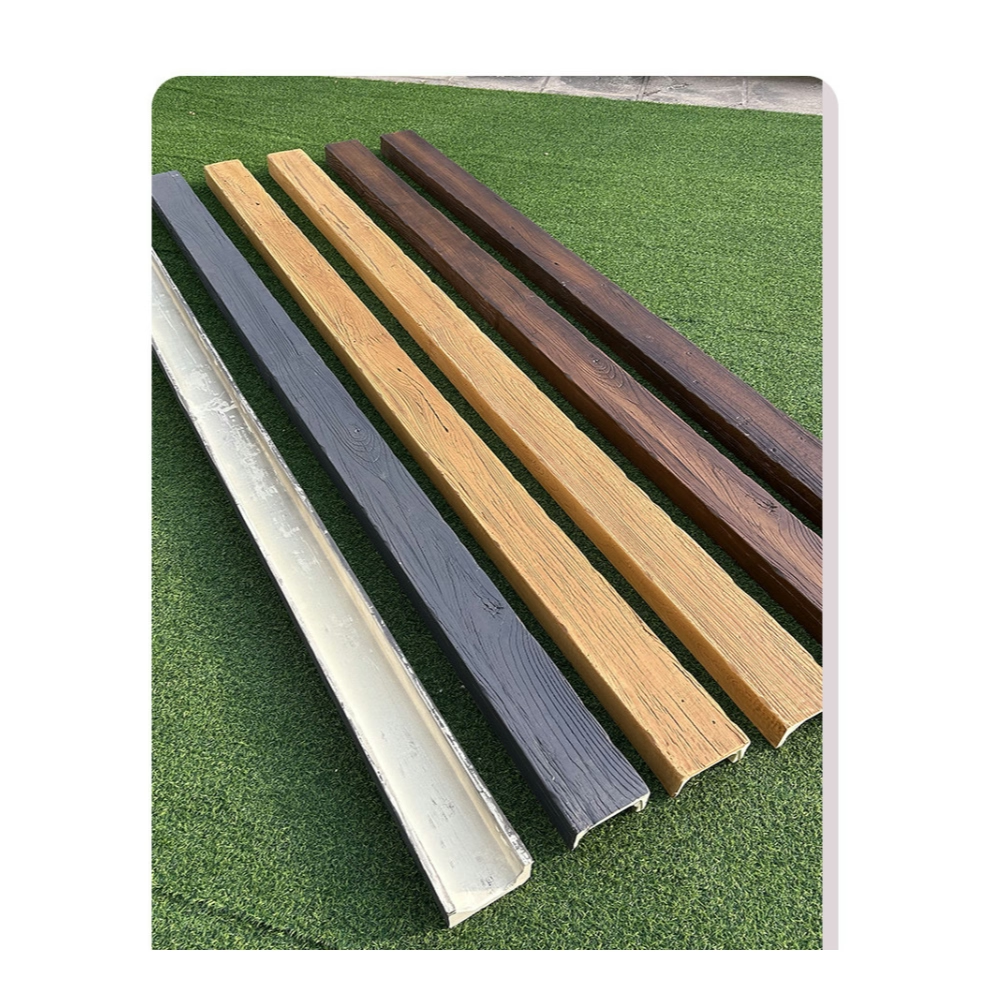
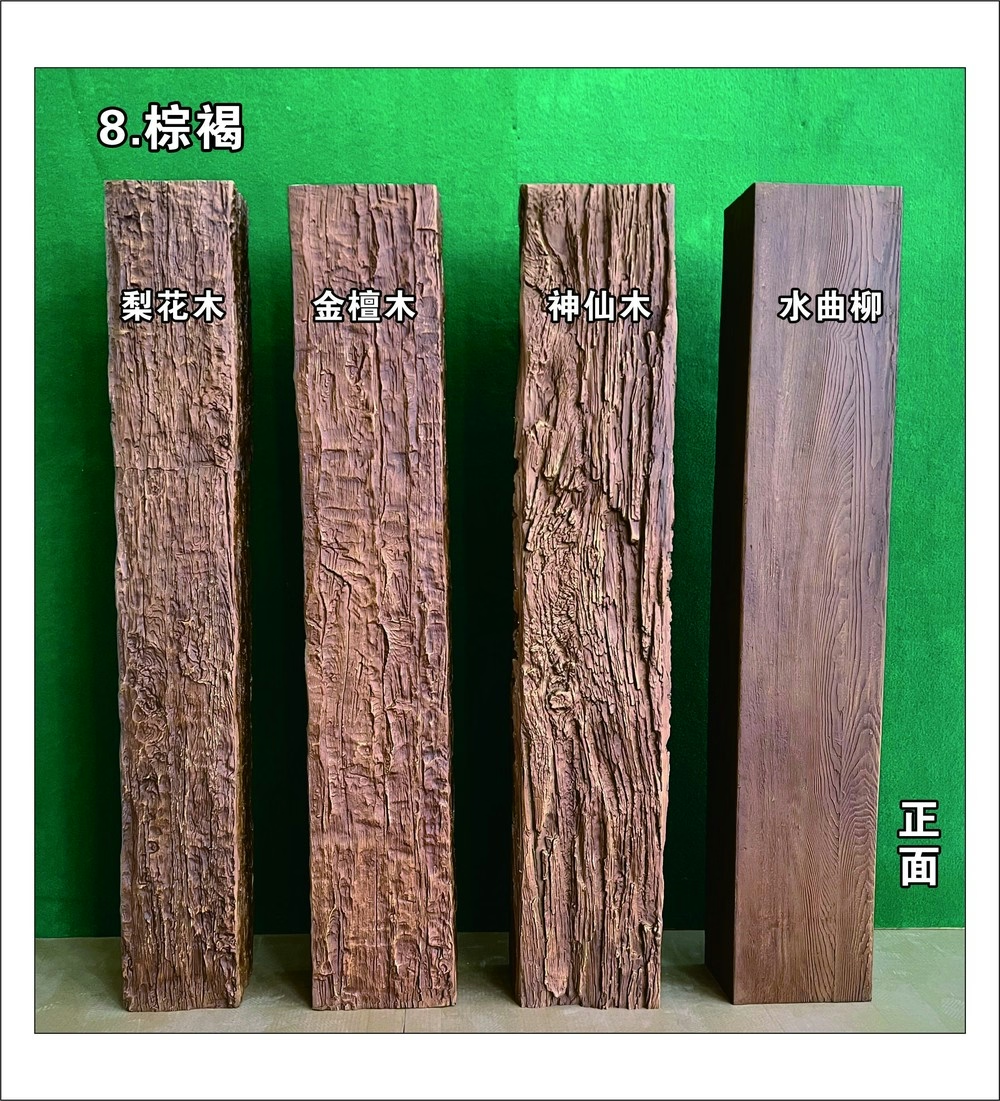
The shift from job-site fabrication to factory production represents one of construction's most significant modern advances. Controlled manufacturing environments produce consistent quality impossible to achieve in variable job-site conditions. Pre-fabricated architectural faux beam elements embody this manufacturing advantage, bringing the precision and efficiency of factory production to ceiling beam installation. The results combine the aesthetic achievements of skilled fabrication with the reliability that manufacturing processes ensure.
Job-site beam construction—whether involving genuine timber or other materials requiring assembly—exposes work to conditions that compromise quality: temperature and humidity variation, dust contamination, limited tooling, and work interruptions. These conditions affect finish quality, dimensional accuracy, and structural integrity in ways that factory production eliminates. Pre-fabrication transfers production to controlled environments where these variables cannot affect outcomes.
Manufacturing Precision and Quality Control
Factory beam production employs precision tooling that achieves tolerances impossible in job-site fabrication. CNC cutting, molding, and finishing equipment produce components with dimensional accuracy measured in fractions of millimeters. This precision enables installation approaches that assume consistent dimensions, eliminating the fitting work that job-site fabrication requires and the quality variation that results from imprecise initial work.
Quality control processes in manufacturing facilities catch defects before products reach job sites. Visual inspection, dimensional verification, and finish testing identify problems that job-site quality control might miss or accept. The systematic approach ensures that products meeting specification leave facilities ready for installation; the alternative—discovering defects after installation begins—creates delays that quality control prevents.
Surface finish quality benefits particularly from factory production. Controlled spray equipment, consistent environmental conditions, and proper cure times produce finishes that job-site application rarely matches. The appearance difference between factory and field finishing may not be apparent initially, but aging characteristics diverge significantly over time. Factory finishes maintain appearance while field finishes may begin degrading within a few years.
Pre-Fabrication for Complex Geometries
Architectural designs increasingly employ complex beam geometries that job-site fabrication struggles to achieve consistently. Curved beams, compound angles, and elaborate profiles require skills and equipment beyond typical contractor capability. Pre-fabrication enables these complex forms through specialized tooling and skilled technicians who produce intricate shapes routinely rather than attempting unfamiliar work in challenging conditions.
Ornamental elements—carved details, applied moldings, decorative hardware—integrate more successfully in factory production than job-site installation. The controlled environment enables precise positioning and secure attachment that field work cannot guarantee. Components designed for factory integration arrive ready to assemble, with alignment mechanisms that ensure proper relationship between elements. The complexity that job-site work would struggle to achieve becomes routine with pre-fabrication.
Custom profile development during pre-fabrication enables architectural visions that standard products cannot achieve. Working from designer drawings, factory technicians create tooling that produces exactly specified forms, enabling unique designs without the custom fabrication costs that traditional methods would impose. This capability extends architectural possibilities while maintaining the quality that custom fabrication cannot guarantee.
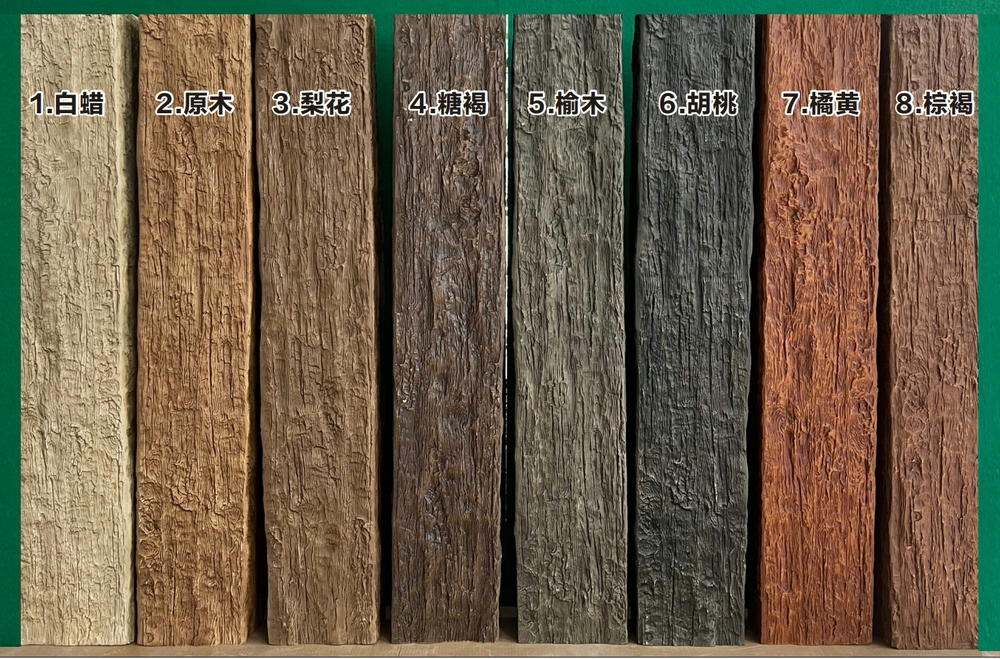
Logistics and Delivery Considerations
Pre-fabricated beam elements require transportation planning that job-site construction avoids. Long beams, complex assemblies, and fragile finished surfaces require careful loading, securing, and handling during transit. Professional suppliers understand these requirements and package products appropriately, but project managers should verify that receiving conditions can accommodate delivery before ordering.
Storage requirements at job sites affect logistics planning. Pre-fabricated beams need clean, dry, protected storage until installation. This requirement may seem obvious, but job-site conditions rarely provide ideal storage environments. Planning for appropriate storage—and verifying availability before products arrive—prevents damage that would create delays and additional costs.
Just-in-time delivery approaches minimize job-site storage requirements while ensuring that products arrive when needed. Working with suppliers to coordinate delivery schedules reduces on-site handling and storage while maintaining installation continuity. This coordination requires advance planning but produces logistics efficiency that uncoordinated delivery cannot match.
Installation Efficiency from Pre-Fabrication
Pre-fabrication contributes to installation efficiency through multiple mechanisms. Dimensional precision eliminates fitting work that consumes time on job sites; pre-finishing eliminates post-installation finishing; component design includes features that facilitate attachment. These contributions combine to produce installation times a fraction of job-site construction equivalents.
Field assembly of pre-fabricated components requires less skill than fabricating equivalent elements from scratch. Workers can install pre-fabricated beams following straightforward procedures without the judgment calls and problem-solving that job-site fabrication demands. This skill reduction enables broader contractor participation while maintaining quality outcomes.
Inspection and correction during pre-fabricated installation differs from job-site fabrication. Problems that would require dismantling work to address become apparent during installation of pre-fabricated elements, enabling immediate correction before proceeding. This progressive verification prevents the extensive rework that discovering defects after completion would require.
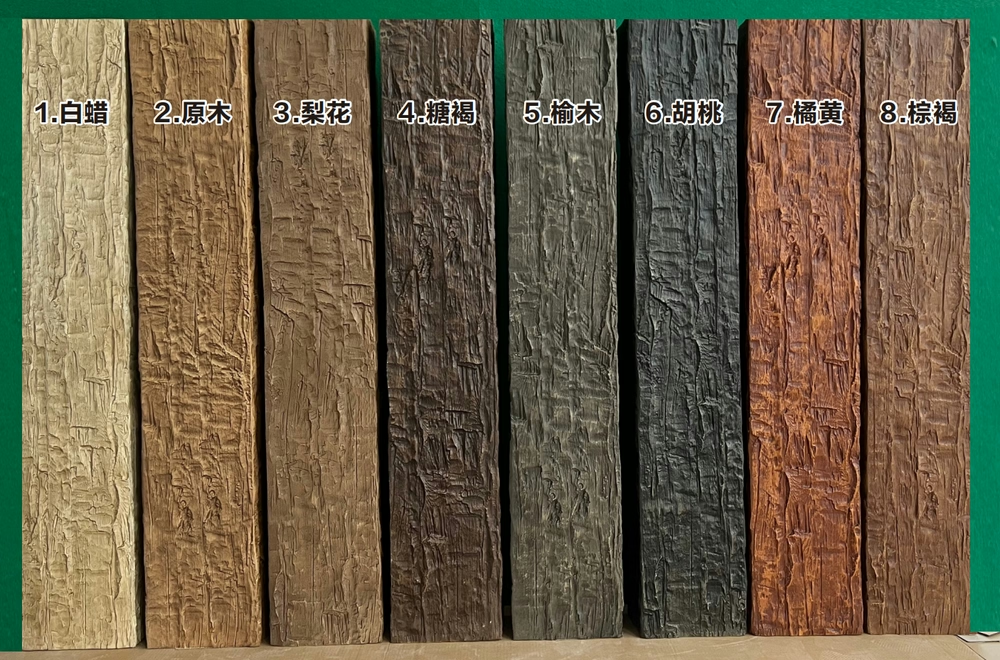
Design Flexibility Through Pre-Fabrication
Standard pre-fabricated products serve many applications adequately, but architectural ambition sometimes requires custom approaches. Pre-fabrication accommodates custom requirements through tooling development that produces unique profiles, complex shapes, or special finishes. The investment in custom tooling amortizes across production volumes, making custom pre-fabrication economically viable for projects that require it.
Design iteration becomes possible with pre-fabrication that job-site construction forecloses. Designers can request samples, evaluate appearance, and refine specifications before committing to production. This iterative capability produces better results than single-chance decisions that job-site work imposes, particularly for significant architectural installations where quality matters most.
Standardization across multiple installations enables efficiency that custom work cannot match. Projects with repetitive beam requirements—hotel chains, retail chains, office building series—benefit from tooling investments that serve all installations, with each benefiting from lessons learned during earlier production. This standardization produces quality improvements over time that job-site construction cannot achieve.
Technical References
ASTM standards cited in every specification
Test Data
Lab results from internal testing program
Updated 2026
Reviewed against current product specs