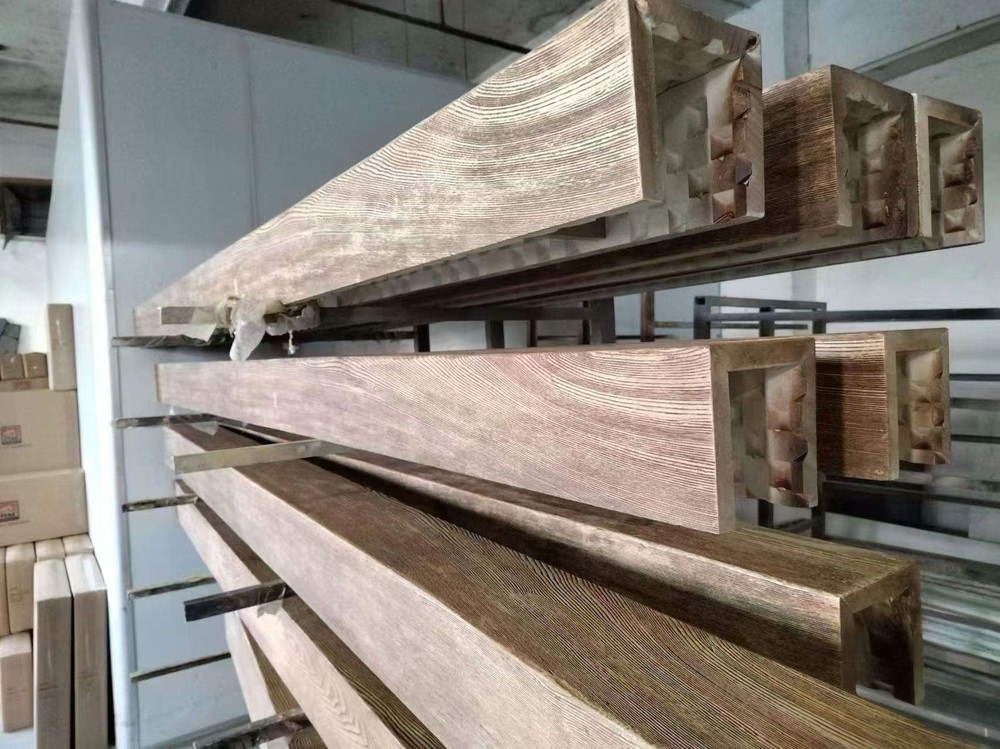
Reclaimed timber carries stories that new wood cannot tell: the patina of barns weathered across generations, the character of industrial buildings repurposed for modern use, the evidence of decades of service that transforms ordinary lumber into architectural treasure. Homeowners and designers seeking these qualities face practical obstacles: reclaimed beams are expensive, often inconsistent in availability, heavy enough to require structural consideration, and sometimes harbor insects or decay that complicate installation. Timeless reclaimed wood look PU faux beams offer a compelling alternative that captures authentic character while eliminating these complications.
The challenge in creating convincing reclaimed wood appearance lies in understanding what makes the real thing compelling. It's not simply surface discoloration or random weathering patterns—it's the accumulated evidence of specific conditions over specific time: where rain collected and accelerated weathering, where sun bleached surfaces, where insects left their traces, where mechanical wear created smooth spots. Capturing this specificity requires texture development that goes beyond generic distressing into genuinely evocative character.
Texture Development and Authentic Character
Quality reclaimed wood look beams begin with careful study of actual reclaimed timber. Designers examine examples across different source types—barns, factories, warehouses, old-growth forests harvested and stored—identifying the characteristics that distinguish each source. This research informs texture development that creates beams specific enough to feel authentic rather than merely distressed.
The weathering process affects wood surfaces in predictable but varied ways. End grain weathers faster than longitudinal surfaces, creating characteristic profiles at beam ends and notches. Checking and cracking follows grain patterns that manufacturing can reproduce convincingly. Color variations reflect differential exposure to sun, rain, and oxidation that create the complex tonality of genuinely aged timber. Attention to these details separates quality faux beams from cheap imitations that display obvious artificial regularity.
Knot patterns in reclaimed wood carry particular character, with larger knots from old growth timber being particularly prized. The grain surrounding these knots swirls in patterns that cannot be replicated mechanically but can be captured in well-made molds. Knot placement in quality faux beams follows natural distributions rather than mathematical regularity, avoiding the obvious repetition that betrays manufactured origin.
Color Development for Vintage Appeal
Reclaimed wood colors result from multiple overlapping processes: original staining or painting, subsequent weathering, oxidation, and sometimes intentional treatment. Authentic color development requires understanding these processes and recreating them convincingly. The result should feel inevitable rather than arbitrary, like the logical outcome of specific conditions rather than an aesthetic choice.
Natural variation within individual beams and across installations distinguishes authentic reclaimed appearance from uniform artificial treatment. A beam that is exactly the same color throughout reads as obviously manufactured; real reclaimed timber exhibits subtle variations that result from differential exposure over time. Quality faux beam manufacturers achieve this variation through controlled finishing techniques that create natural-looking inconsistency without randomness that appears accidental.
Finish matte levels affect perceived authenticity significantly. High-gloss reclaimed wood looks fake regardless of how convincing the texture might be; genuine reclaimed timber typically displays flat to low-sheen surfaces resulting from weathering and wear. Quality faux beams feature matte finishes that complement textured surfaces, creating the complete impression that genuine reclaimed timber provides.
Weight and Handling Advantages
The practical advantages of polyurethane over genuine reclaimed timber begin with weight. Reclaimed beams of significant size may weigh hundreds of pounds, requiring equipment for handling and potentially structural reinforcement for support. PU faux beams of equivalent visual impact may weigh twenty to thirty pounds, manageable by a single person without equipment. This weight difference transforms what would be a major construction project into a manageable improvement.
Shipping and logistics benefit correspondingly. Genuine reclaimed beams may exceed shipping container dimensions, requiring specialized transport arrangements that add significantly to cost. PU faux beams ship via standard freight carriers, arriving at job sites without the scheduling complications that oversized loads impose. The practical accessibility of faux beams expands the market for reclaimed aesthetics to applications where genuine reclaimed material would simply be impossible.
Storage requirements differ similarly. Reclaimed timber needs protection from moisture and insects during storage; PU faux beams store like any manufactured product without special environmental requirements. This practical advantage simplifies project logistics, particularly in renovation scenarios where material may sit on-site for extended periods before installation occurs.
Installation Considerations for Reclaimed-Style Beams
Installation of reclaimed-look beams can follow standard faux beam methodology without special accommodations for weight or handling. The lighter weight enables positioning by single workers, while the consistent dimensions that manufacturing provides simplify alignment and joint treatment. The installation process focuses on aesthetic goals rather than engineering challenges that genuine reclaimed material might impose.
Joint treatment between beam sections requires particular attention with reclaimed-look products. Butt joints that would be appropriate for smooth contemporary beams may appear obviously artificial with heavily textured reclaimed profiles. Alternative approaches include scarf joints that maintain texture continuity, corner treatments that conceal joints within architectural elements, or deliberate design incorporation of joints as authentic features. Understanding available options helps select approaches appropriate for specific installations.
Integration with reclaimed-style wall treatments enhances overall authenticity. The ceiling beams should feel related to any reclaimed wood wall paneling, flooring, or accent elements through shared vocabulary of weathering and aging. This coordination requires planning that considers all reclaimed elements simultaneously rather than treating each independently.
Cost Analysis and Value Comparison
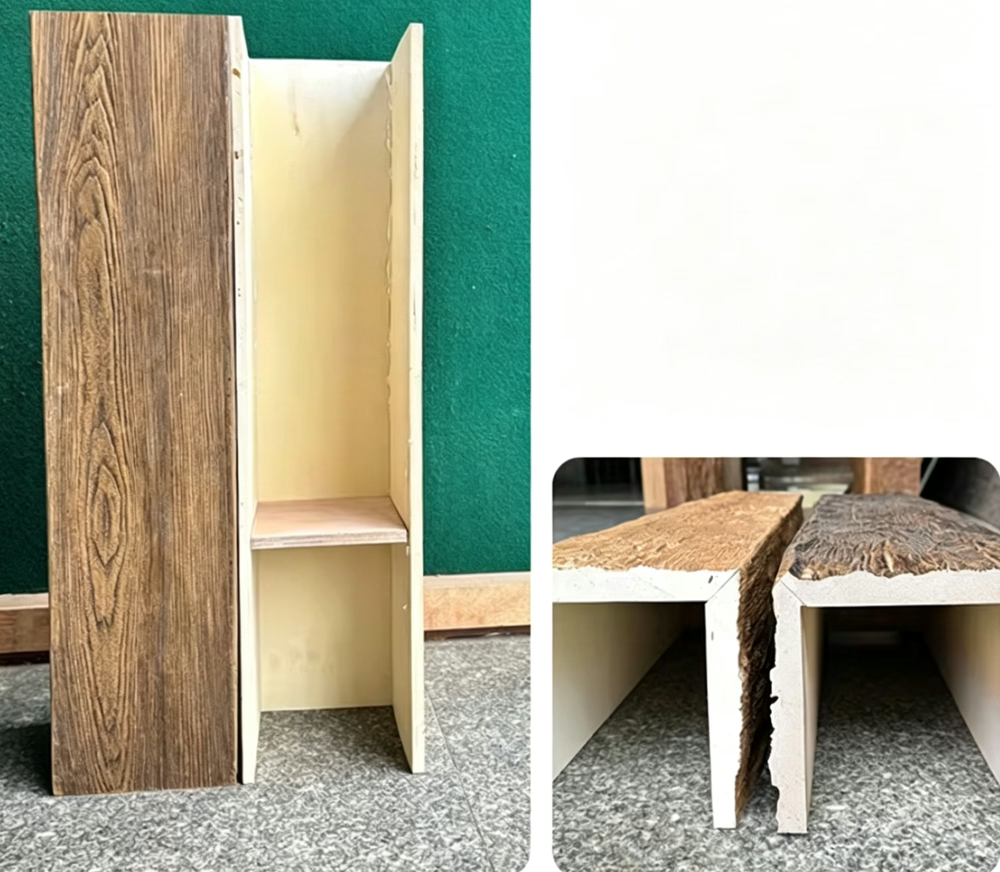
Comparing costs between reclaimed timber and reclaimed-look faux beams requires comprehensive analysis beyond initial material prices. Genuine reclaimed beams may cost two to four times as much as faux alternatives, but this comparison omits handling equipment, specialized installation labor, structural assessment, and the possibility of discovering hidden damage during installation. When all factors are included, faux beams often deliver equivalent aesthetics at substantially lower total cost.
The availability dimension deserves particular attention. Genuine reclaimed beams of specific sizes and character may simply not exist in the marketplace, requiring compromise on project requirements or extended waiting while appropriate material is located. Reclaimed-look faux beams can be produced to specification, ensuring that projects receive exactly the elements required without compromise or delay.
Environmental considerations increasingly factor into material decisions. While reclaimed timber represents recycling of existing material, the logistics of collecting, sorting, and transporting reclaimed beams involve significant environmental impact. PU faux beams manufactured with recycled content and shipped efficiently offer environmental advantages that may offset the appeal of genuine reclaimed material.
Technical References
ASTM standards cited in every specification
Test Data
Lab results from internal testing program
Updated 2026
Reviewed against current product specs


