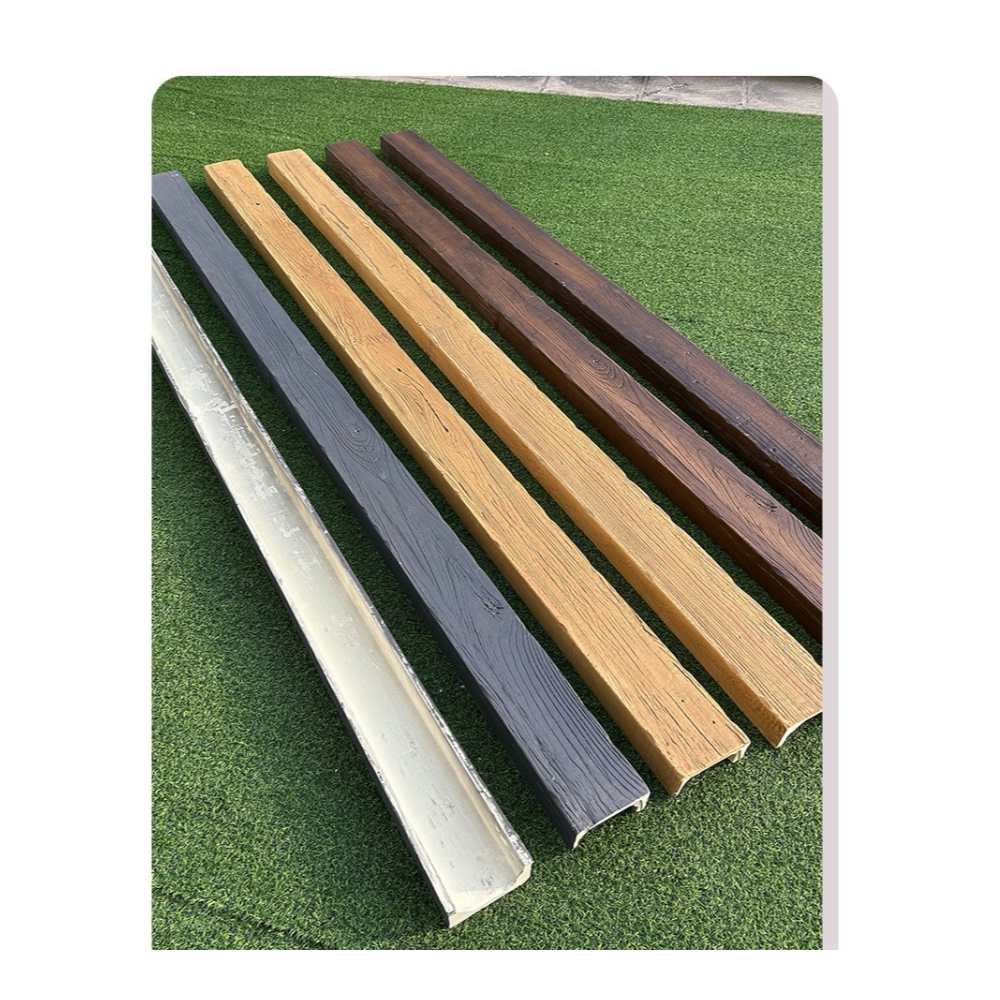
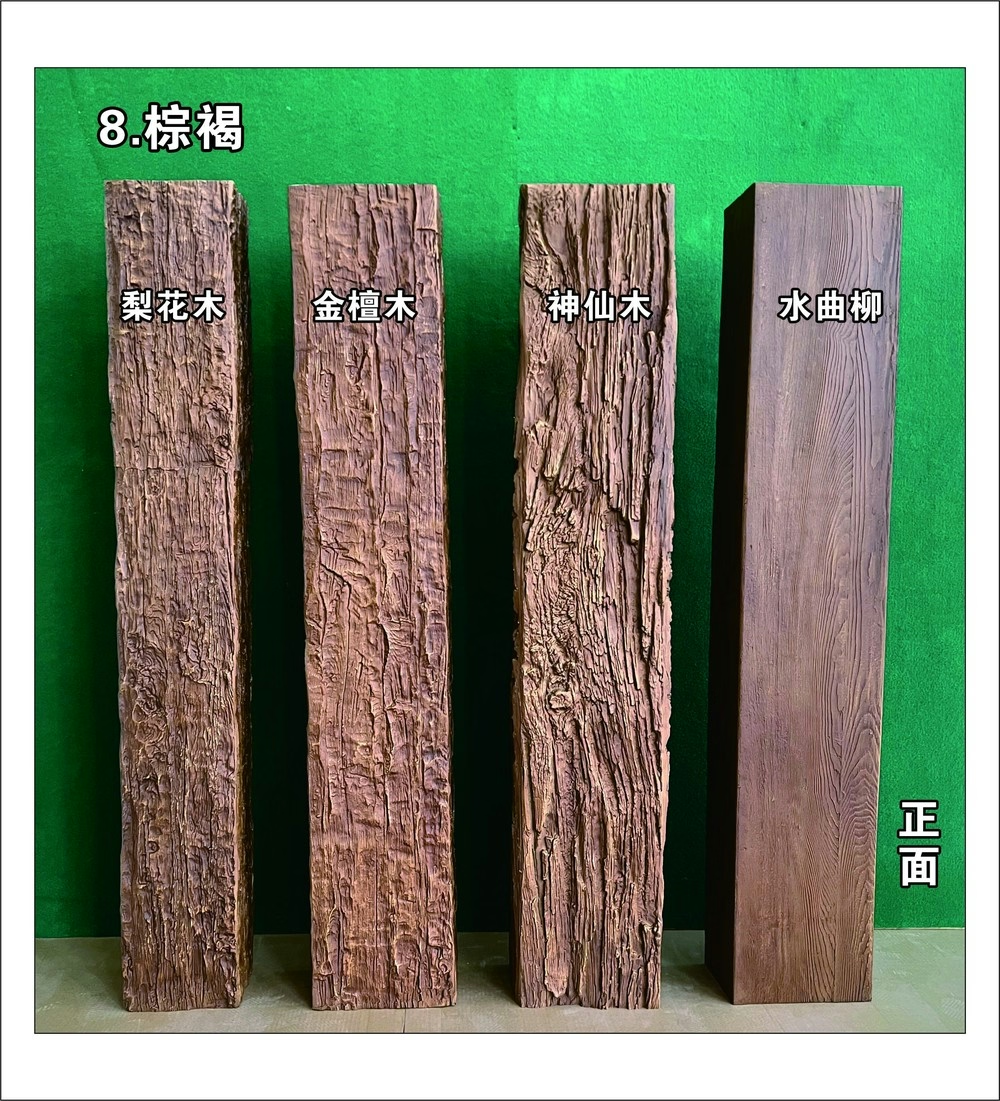
Adhesive mounting provides the primary support for most polyurethane faux beam installations, transferring beam weight to structural substrates while accommodating minor surface irregularities and maintaining flexible bonds that resist stress from building movement or temperature changes. The adhesive selection and application process directly determines installation longevity, making this one of the most critical aspects of professional faux beam work.
Understanding Construction Adhesive Chemistry
Construction adhesives fall into several chemical categories, each with distinct performance characteristics. Polyurethane-based adhesives like original Liquid Nails offer excellent adhesion to a wide range of substrates including wood, metal, concrete, and plastics. They cure through moisture exposure, which makes application conditions important—very dry environments may slow cure time significantly.
Titebond products encompass several adhesive lines including their professional construction adhesive series. These polymer-based formulas typically cure through water evaporation rather than chemical reaction, making them less sensitive to environmental moisture. Open time and cure rate balance differently than polyurethane options, with some formulations offering very fast initial grab that reduces support requirements during cure.
Hybrid polymer adhesives represent newer technology combining attributes of multiple chemistries. These products often achieve excellent adhesion across substrates while maintaining flexibility after cure. They typically resist moisture better than polyurethane options while offering environmental tolerance superior to pure polymer dispersions. Premium faux beam installations increasingly specify hybrid polymer adhesives for their broad performance capabilities.
Product Selection Criteria
Substrate compatibility heads the selection criteria for any faux beam adhesive application. Polyurethane beams bond readily to most adhesive types, but the substrate receiving the bond may impose restrictions. Concrete substrates with residual moisture require adhesives tolerant of damp conditions. Treated lumber with moisture-retaining preservatives may inhibit cure of certain adhesive types.
Load requirements determine adhesive performance needs. Ceiling installations where adhesive supports beam weight indefinitely demand higher bond strength than wall applications where beams hang downward. Shear loading tests indicating pounds per square inch strength guide selection for specific applications. Professional installers select adhesives with safety margins well above calculated loads.
Environmental exposure affects adhesive longevity. Wet area installations in bathrooms or pool enclosures require moisture-resistant formulations that resist biological degradation. Exterior installations need UV resistance and temperature tolerance exceeding interior requirements. Adhesive selection must match expected service conditions throughout the installation's intended life.
Surface Preparation Requirements
Clean, dry, structurally sound surfaces provide the foundation for strong adhesive bonds. Dust, debris, and loose material prevent intimate contact between adhesive and substrate, creating weak bond lines. Pressure washing for exterior substrates or vacuum cleaning with HEPA filtration for interior applications removes loose material effectively.
Moisture testing for concrete and masonry substrates identifies conditions affecting adhesive performance. Relative humidity measurements at substrate surfaces indicate whether moisture will interfere with cure or adhesive performance. Most adhesives require surface moisture below specific thresholds—polyurethane formulations generally tolerate more moisture than polymer-based alternatives.
Priming improves bond on problematic surfaces. Concrete and masonry benefit from primer coats that seal porous surfaces and provide consistent substrate characteristics for bonding. Metal surfaces may require specific primers that prevent oxidation under adhesive or create chemically active surfaces for improved adhesion. Manufacturer recommendations guide primer selection and application procedures.

Application Techniques
Bead configuration affects bond performance significantly. Continuous beads along beam edges provide maximum bond area, while spot bonding reduces material consumption but may not provide adequate support for ceiling installations. Professional installers typically apply continuous beads for structural applications and reserve spot bonding for temporary positioning where mechanical fasteners provide primary support.
Bead size should match substrate irregularities and gap-filling requirements. Standard 1/4-inch beads applied with caulking guns provide adequate contact without excessive squeeze-out. Larger irregularities may require stepping up to 3/8-inch beads or applying adhesive in multiple passes that accommodate varying depths. Consistent bead size requires practiced technique and appropriate caulking gun equipment.
Adhesive coverage spreads most effectively with notched trowels for large flat surfaces. The notches ensure consistent film thickness while the flat back levels coverage across the entire area. Coverage rate specifications vary by adhesive type and substrate porosity, with most products specifying square footage coverage per container.
Working Time and Cure Considerations
Open time—the period after application before positioning becomes difficult—varies significantly among adhesive types. Polyurethane adhesives typically offer 10-15 minutes open time before surfaces become too dry for effective bonding. Some formulations extend this window for larger applications where extended positioning time is needed.
Initial grab develops quickly after beam positioning, often within minutes providing sufficient support for gravity-loaded wall applications. Ceiling applications requiring longer cure times before adhesive achieves full strength may need temporary support systems during the cure period. Understanding cure curves for specific products prevents premature loading that might cause slippage or adhesive failure.
Full cure develops over hours to days depending on adhesive type and environmental conditions. Humidity levels significantly affect polyurethane cure rates, with low humidity extending cure times substantially. Professional installers account for these delays in project scheduling, allowing adequate cure time before subjecting installations to full loads or removing temporary supports.
Temperature and Environment Considerations
Temperature affects both application characteristics and final bond strength. Most construction adhesives apply best between 50-90 degrees Fahrenheit, with colder temperatures increasing viscosity and potentially reducing flow characteristics. Some products include winter formulations that maintain workability at temperatures down to 20 degrees Fahrenheit.
Substrate temperature matters as much as air temperature. Applying adhesive to cold substrates causes rapid cooling that slows cure significantly. Ideally, substrates should be at least at minimum application temperature when work begins, with warming strategies for cold environments such as temporary heating or working during warmer parts of the day.
Humidity interacts with cure mechanisms for moisture-curing adhesives. Very low humidity below 30% relative humidity may extend polyurethane cure dramatically, while very high humidity above 90% can cause surface bubbling from rapid skin formation. Most interior applications fall within acceptable ranges, but climate-controlled environments may require humidification or dehumidification for optimal results.
Common Application Mistakes
Insufficient adhesive quantity ranks among the most frequent installation errors. Beads too small or spaced too far apart create bond lines that cannot handle loads, leading to beam failure. Professional technique involves applying generous beads that ensure complete coverage even with imperfect placement. Material cost for additional adhesive is trivial compared to remediation costs for failed installations.
Improper surface preparation causes the majority of bond failures that are incorrectly attributed to adhesive quality. Contaminated surfaces, inadequate priming, or residual moisture prevent proper adhesion regardless of adhesive selection. Professional installers verify surface conditions before adhesive application, addressing any deficiencies before proceeding.
Moving beams before adequate initial grab develops causes most slippage failures. The temptation to speed progress leads installers to release support prematurely, allowing beams to slide before adhesive achieves handling strength. Patience during cure, supported by adequate temporary bracing, prevents this common and frustrating failure mode.

Testing and Verification
Bond strength testing validates adhesive performance for critical applications. Small test bonds created during installation and pulled after full cure provide confidence in material and application method performance. Destructive testing provides quantitative strength data that can confirm adequate safety margins.
Pull-off testing using specialized equipment measures adhesive strength directly. This method applies perpendicular force until bond failure, recording the force at failure. Testing protocols exist for construction adhesive evaluation, with minimum strength requirements established for various applications.
Documentation of adhesive products, batch numbers, and application conditions provides traceability for quality assurance and potential warranty claims. Recording environmental conditions at time of installation helps diagnose any future bond failures by recreating original conditions.
Adhesive selection and application represent craft skills that distinguish professional faux beam installers. Understanding chemistry, respecting application requirements, and exercising patient technique during cure delivers installations that perform reliably throughout their service lives. These adhesive fundamentals enable the secure mounting that makes faux beam installations practical for demanding architectural applications.
Technical References
ASTM standards cited in every specification
Test Data
Lab results from internal testing program
Updated 2026
Reviewed against current product specs