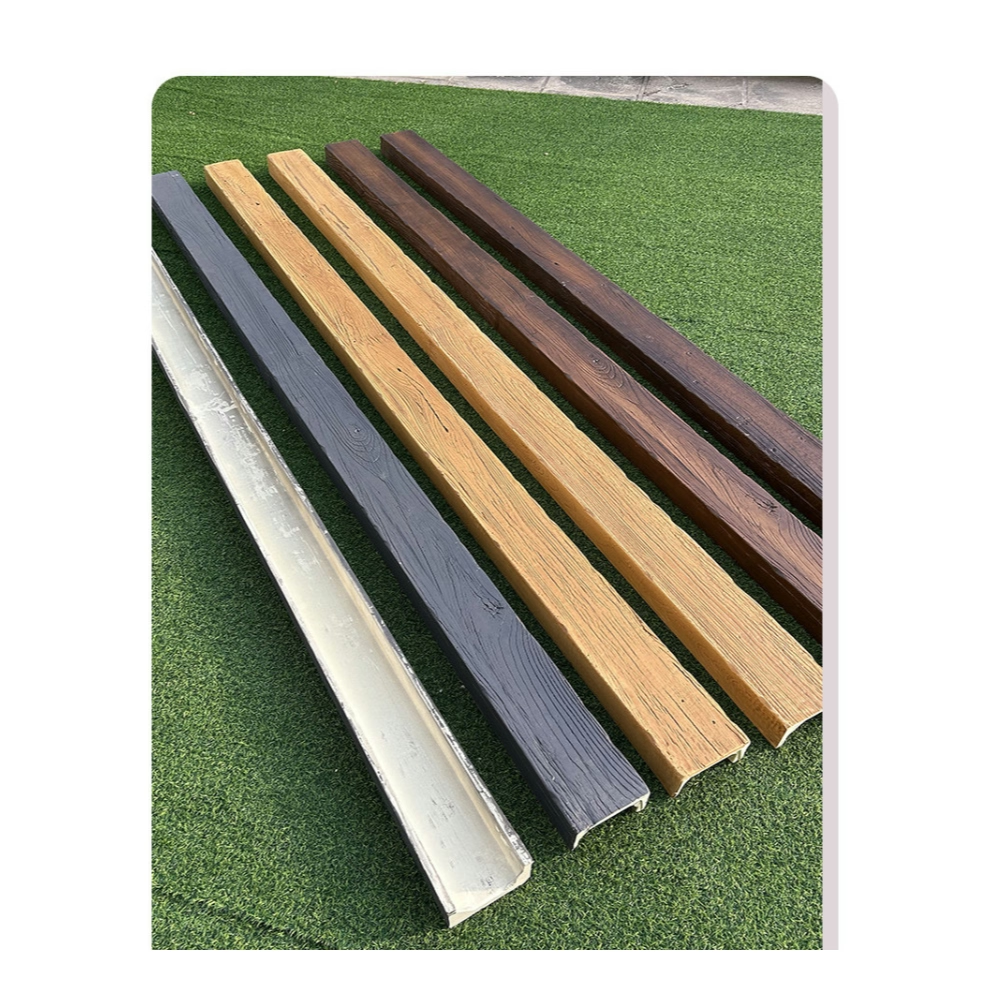
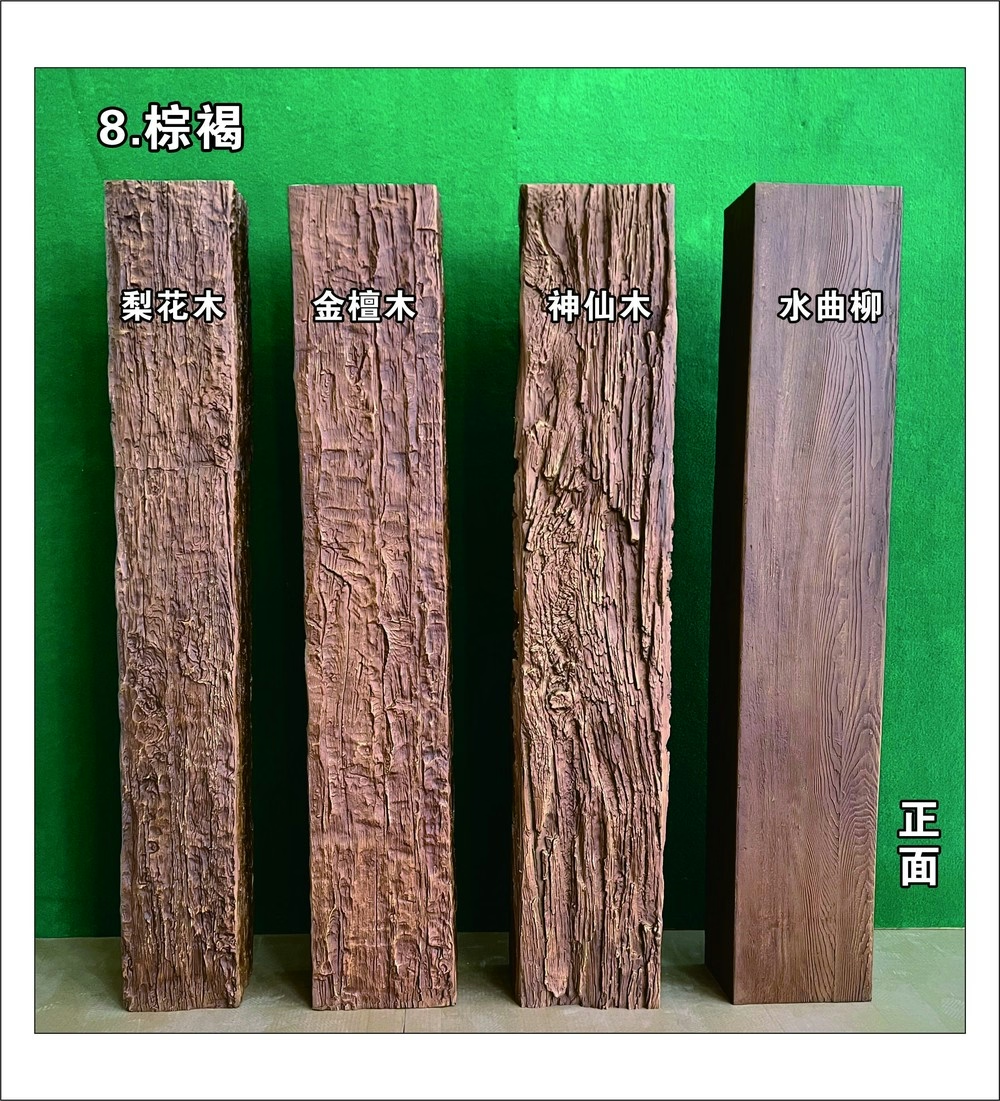
Mechanical fasteners serve as essential insurance against adhesive failure in faux beam installations, providing backup support that prevents catastrophic collapse if primary adhesive bonds should ever degrade. However, these fasteners introduce their own risks—over-tightening can crush or crack polyurethane beams, while under-tightening allows movement that stresses adhesive bonds. Professional installers understand fastener torque requirements and apply appropriate technique to balance these concerns.
Understanding Fastener Fundamentals
Fasteners create clamp loads that secure beams against substrates through friction between mating surfaces. The clamping force depends on how much torque the installer applies during tightening, with more torque creating higher clamp loads up to material limits. Different fastener types develop clamping through different mechanisms, and each requires specific handling for reliable results.
Wood screws achieve their grip by cutting threads into the substrate material. The thread geometry determines how much torque translates into clamping force, with finer threads requiring more rotation to develop equivalent loads. Polyurethane substrates present unique challenges because they lack the fibrous structure that provides natural thread reinforcement in wood. This means screws can strip out if overtightened, losing all holding power.
Expansion anchors work differently, applying force against the sides of holes drilled into substrates. These fasteners develop grip through friction against substrate material, requiring specific hole dimensions and anchor specifications for reliable performance. Over-tightening expansion anchors can cause substrate fracture or anchor failure, while under-tightening allows movement.
Establishing Proper Torque Values
Torque specifications derive from the clamping force required for secure attachment, reduced by safety margins that account for torque loss from vibration, temperature changes, and material settling. Recommended torque values appear in fastener manufacturer documentation for specific fastener-substrate combinations. Starting with manufacturer recommendations provides reasonable performance for typical applications.
Polyurethane beam materials require lower torque values than wood or metal alternatives. The compressive strength of polyurethane, while adequate for structural purposes, falls below that of natural wood. Excessive clamping pressure can deform beam surfaces visibly or create stress concentrations that lead to cracking under load or temperature cycling.
For faux beam applications, general torque ranges guide fastener selection. Wood screws in polyurethane typically perform well at 15-25 inch-pounds for small screws (#6-#8) and 30-50 inch-pounds for larger screws (#10-#12). These values assume pilot holes sized appropriately for the screw diameter and substrate density. Testing in scrap material confirms acceptable values before proceeding with actual installation.
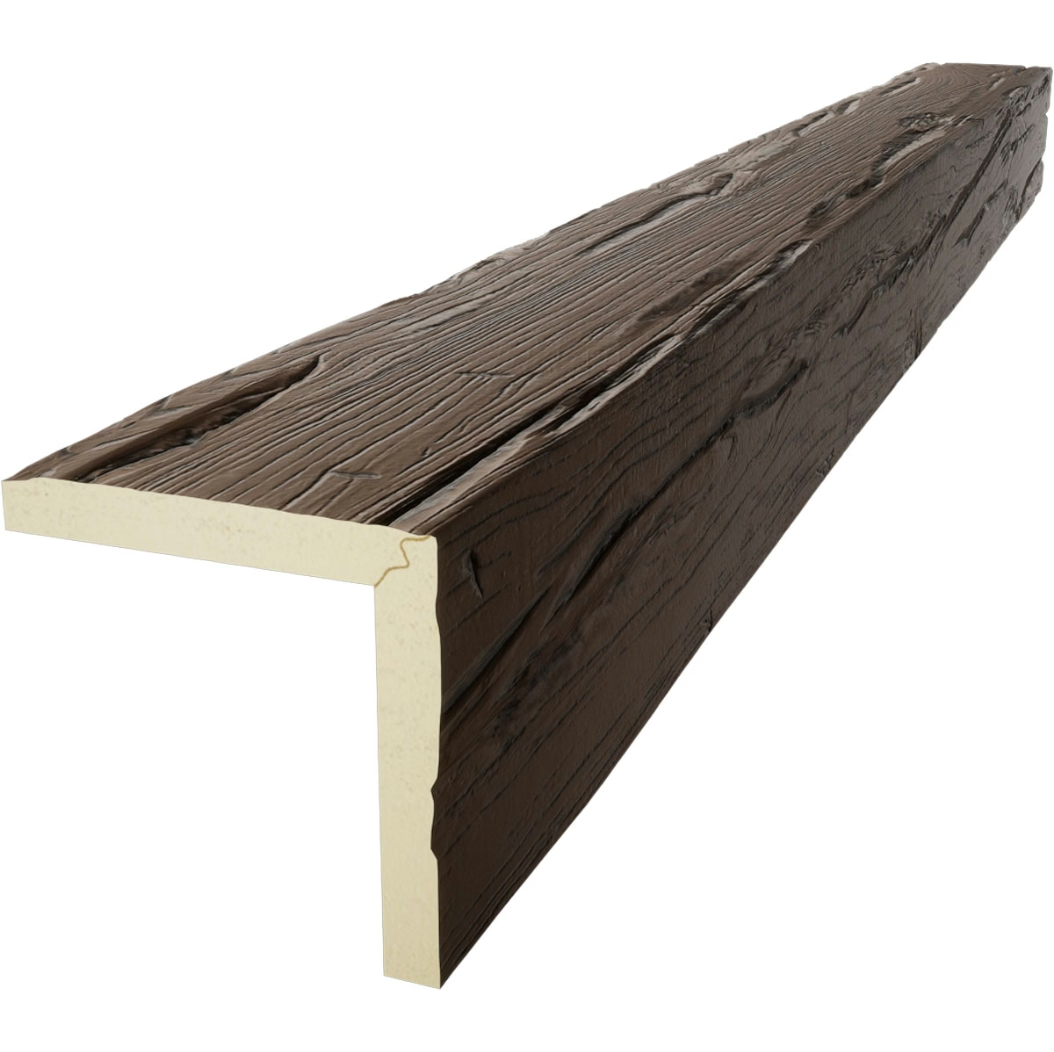
Fastener Selection for Polyurethane
Screw selection significantly affects performance in polyurethane substrates. Fine thread screws with aggressive thread angles provide better grip than coarse thread alternatives designed for wood framing. The increased thread count distributes load across more engagement points, reducing stress at any individual thread.
Particle board screws with reduced shank diameters minimize splitting risk in engineered materials and perform well in polyurethane. These fasteners feature special thread geometries that prevent material displacement during installation. Combining appropriate thread design with correct pilot hole sizing achieves reliable fastening without material damage.
Thread-forming screws that displace material during installation work well in polyurethane when sized correctly. The displaced material flows into thread valleys, creating solid engagement without the removal of material that tapping creates. This characteristic proves particularly valuable in materials that might chip or crack with traditional cutting threads.

Pilot Hole Requirements
Pilot holes serve two functions: they guide fastener entry and they relieve stress that would otherwise crack the material during fastening. Hole diameter relative to fastener shank diameter determines how much material remains to support threads. Too small a hole creates excessive stress; too large eliminates thread engagement entirely.
For polyurethane, pilot hole diameters typically range from 60-75% of fastener shank diameter depending on screw type and expected load. Fine thread screws require proportionally smaller pilots than coarse thread alternatives. Blind holes—where fasteners do not pass entirely through the material—can use slightly smaller pilots since material compression has somewhere to go.
Depth considerations affect pilot hole sizing for applications where fasteners approach beam ends. Material at beam ends may be under less constraint than material in beam centers, changing how it responds to fastener insertion. Reducing fastener insertion depth near beam ends prevents end cracking that might propagate along the beam length.
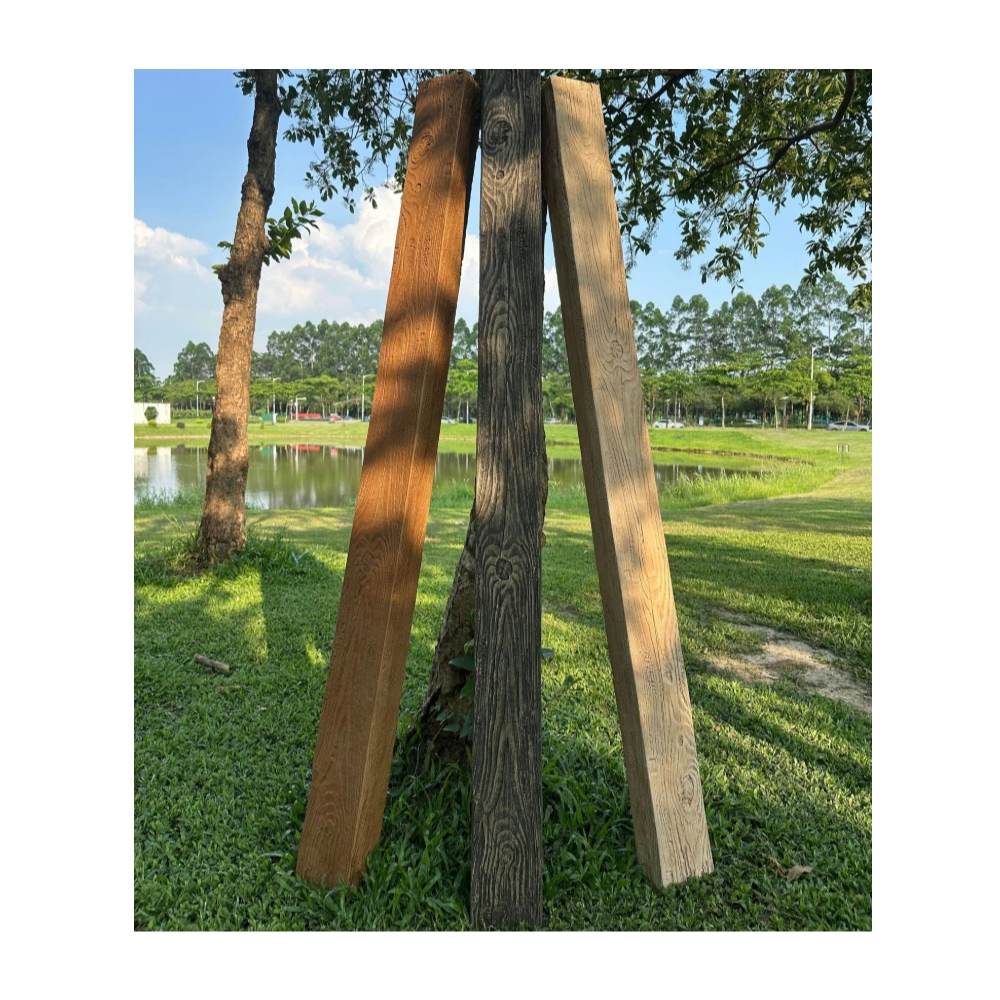
Torque Application Technique
Consistent torque application requires appropriate tools calibrated to the torque range being used. Click-type torque wrenches provide reliable indication when preset torque is reached, making them suitable for production fastening where repeated similar values occur. Beam-style torque wrenches offer better precision for lower torque values.
Hand drivers with torque-limiting clutches provide efficient production fastening when calibrated correctly. The clutch mechanism slips when torque exceeds the preset value, preventing over-tightening without requiring constant attention to the wrench. Regular calibration verification ensures clutch accuracy remains within acceptable tolerances.
Impact drivers should be used with caution for polyurethane applications. The sudden impacts can cause cracking even when final torque values appear acceptable. When impact drivers are necessary for driving rate, start with standard drivers for initial insertion, switching to impact only for final seating. Better yet, use dedicated driving tools without impact capability.
Anti-Spin Features
Anti-spin features prevent fasteners from loosening over time due to vibration or thermal cycling. These features take various forms including nylon patch inserts that create friction against thread flanks, flange heads that bear against material surfaces, and serrated washers that embed into softer substrates.
For polyurethane beams, anti-spin features provide particular value because the material's flexibility allows more movement than wood or metal alternatives. Without anti-spin provisions, fasteners may gradually loosen, creating gaps that stress adhesive bonds and potentially allowing water infiltration at exterior installations.
Integrated washer heads combine anti-spin features with large bearing surfaces that distribute load across broader areas. These heads reduce point stress that might otherwise deform beam surfaces, extending fastener service life and maintaining appearance. The additional bearing area also helps align fasteners perpendicular to surfaces during installation.
Specialized Fastening Systems
Z-clips and track systems provide alternative approaches to mechanical fastening that reduce point loading. These systems distribute weight across continuous contact rather than isolated fastener points, reducing stress concentration and providing more consistent appearance. Track systems mount to substrates with standard fasteners, then beams simply slide into place.
French cleat systems use interlocking metal profiles that provide both mechanical strength and ease of removal. This approach proves valuable for commercial applications where periodic access behind beams may be required. The visible portion of the cleat hides within standard trim details, maintaining appearance while providing robust mechanical connection.
Toggle bolts and hollow-wall anchors address mounting challenges where solid substrates are unavailable. These fasteners develop grip against the backside of wall materials, distributing loads across larger areas than traditional wall anchors. Selection depends on wall construction and load requirements, with manufacturer specifications guiding appropriate applications.

Inspection and Verification
Visual inspection verifies fastener seating and identifies problems before they cause failures. Countersunk screws should sit flush with or slightly below beam surfaces without surrounding cracks. Hex head screws should show full bearing surfaces without visible deformation from over-tightening.
Torque verification testing confirms proper installation without destructively removing fasteners. Impact-type torque verification tools apply rotational force to fasteners and indicate resistance level. This non-destructive testing identifies fasteners that may have loosened or were never properly tightened in the first place.
Documentation of fastener locations, types, and torque values provides records for future maintenance reference. Commercial installations particularly benefit from documentation that enables quality verification and supports maintenance activities.
Professional fastener installation requires understanding material limits, selecting appropriate hardware, and applying controlled torque throughout the installation. These mechanical fastening fundamentals complement adhesive mounting to create installations that perform reliably through the full service life expected of architectural faux beam applications.
Technical References
ASTM standards cited in every specification
Test Data
Lab results from internal testing program
Updated 2026
Reviewed against current product specs