
Interior edge framing and trim work represent the detail work that distinguishes refined spaces from basic construction. The corners, transitions, and boundaries where walls meet ceilings, floors, or other walls provide opportunities for architectural enrichment that elevate entire rooms. PU faux wood trim beams offer versatile solutions for these applications, providing the warmth and character of timber in configurations specifically designed for edge treatment rather than spanning or structural functions.
Traditional trim work in quality construction has long utilized timber for baseboards, crown moldings, chair rails, and other millwork elements. The organic warmth of wood contributes to interior atmospheres that synthetic materials often struggle to replicate. Modern faux wood trim products bridge this gap, providing timber aesthetics with practical advantages that genuine timber cannot match.
Edge framing serves multiple purposes beyond mere decoration. Trim elements protect vulnerable surfaces from impact damage, cover gaps and imperfections in construction joints, and provide visual continuity that ties disparate surfaces into cohesive compositions. Faux wood trim addresses all these functions while adding the decorative interest that distinguishes designed spaces from builder-basic construction.
Corner Treatment Applications
Interior corners present challenging transition points where two wall surfaces meet at angles that expose substrate materials without appropriate treatment. Professional trim installation addresses these challenges through mitered joints, coped joints, and specialized corner pieces that create clean transitions. Faux wood trim beams designed for corner applications simplify this process while providing premium appearances.
Outside corners require protection from the impact damage that occurs when walls are bumped by furniture, vacuum cleaners, or foot traffic. Genuine timber corner protection may dent, scratch, or chip despite its hardness. Faux wood alternatives provide equivalent protection while tolerating impacts better through flexible, resilient compositions that absorb rather than transfer force.
Inside corners present different challenges related to light exposure and shadow patterns that emphasize any imperfection in joint construction. The tight angles make painting and finishing difficult, often resulting in visible gaps or uneven coverage. Faux wood trim components designed for inside corners address these issues through pre-finished surfaces and precision-molded profiles that eliminate finishing challenges.
Three-way and four-way corner intersections in more complex wall geometries require specialized trim solutions that standard components cannot provide. Faux wood trim products can be fabricated or customized to address these challenging configurations, ensuring clean transitions regardless of corner complexity.
Ceiling-Wall Transition Details
The joint between walls and ceilings represents one of the most visually prominent transitions in interior spaces. Crown molding has traditionally addressed this junction in formal interiors, while more casual designs might leave the joint unfinished. Faux wood trim beams offer intermediate options that provide visual interest without the formal precision that crown molding requires.
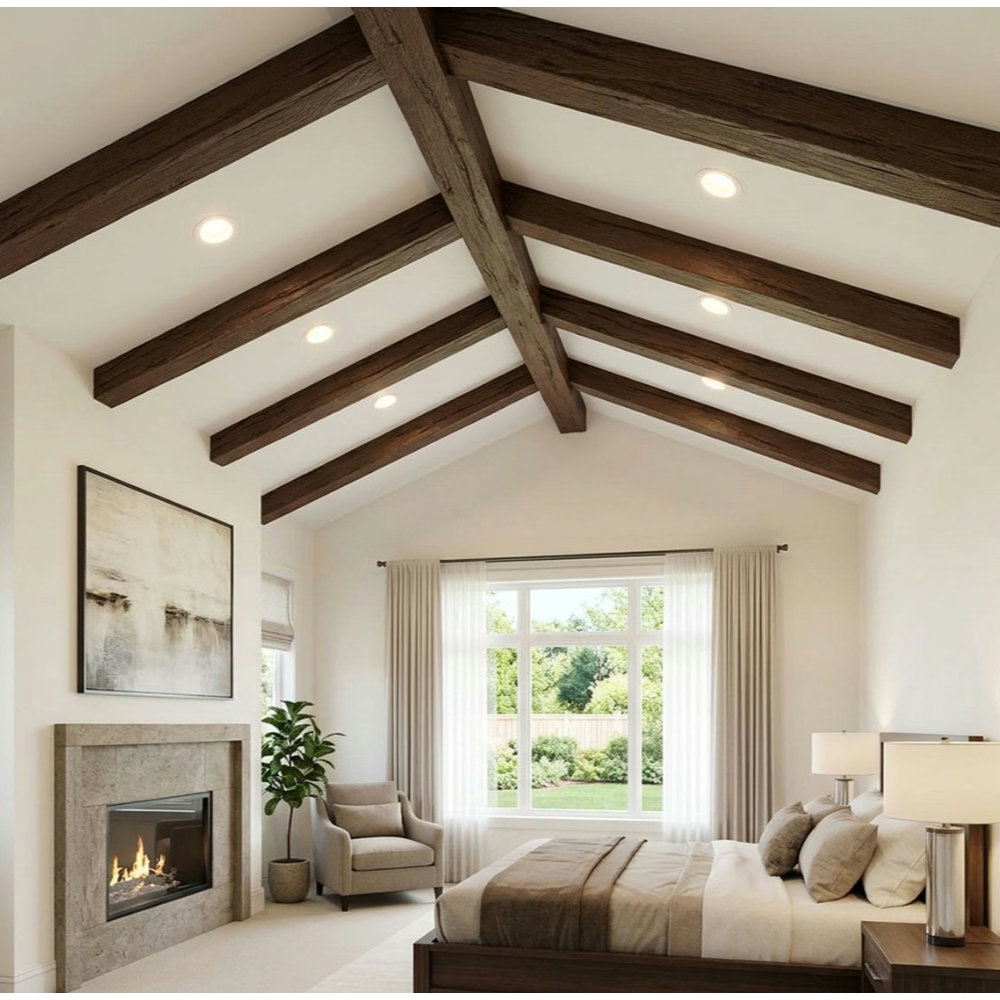
Beam profiles at ceiling-wall junctions can establish strong horizontal lines that visually lower high ceilings while adding architectural weight to room perimeters. This treatment works particularly well in contemporary interiors where clean geometric forms dominate design vocabularies. The faux wood texture adds warmth that pure geometric forms might lack.
Coffered ceiling details incorporate trim elements that create recessed panel effects within ceiling planes. These classical architectural features add significant visual interest but require substantial material and labor investment with genuine timber. Faux wood trim simplifies coffer construction while providing equivalent visual impact at reduced cost.
Picture rail trim installed at ceiling-wall junctions serves both decorative and functional purposes. The horizontal trim line provides visual separation between wall and ceiling surfaces while also providing mounting points for hanging artwork without wall damage. Faux wood picture rails combine these practical benefits with the aesthetic warmth that timber provides.

Window and Door Framing
Windows and doors represent significant interruptions in wall surfaces that require appropriate framing treatment. The openings themselves provide light access and circulation, while their framing establishes visual boundaries that influence how these elements relate to surrounding wall areas. Faux wood trim beams create substantial frames that emphasize openings as intentional design features rather than mere penetrations.
Window surrounds featuring faux wood trim establish consistent framing that coordinates with other trim elements throughout rooms. The timber texture adds warmth to what might otherwise be cold, geometric window elements. Matching window trim with ceiling beams or other architectural elements creates cohesive design language that unifies room appearances.
Door casings define entry thresholds while protecting wall surfaces from impact damage during door operation. Heavy, substantial trim creates appropriate weight at these important transitions, signaling significance through visual mass. Faux wood products provide this substantial appearance without the weight and installation challenges of genuine timber casings.
Arched openings present trim challenges that straight pieces cannot address. Faux wood products can be fabricated or bent to follow curved paths, creating continuous trim that frames archways elegantly. This capability enables architectural enrichment of curved openings that would be impractical with rigid timber pieces.
Protective and Accent Applications
High-traffic areas subject wall surfaces to wear that destroys finishes and damages substrates over time. Wainscot height trim provides both protection and decoration, creating zones of increased durability while adding visual interest through material contrast. Faux wood trim panels can be specified in heights appropriate for specific protection requirements and design intentions.
Stair walls receive concentrated wear from hand contact, luggage, and furniture movement. Trim elements at handrail height provide protection exactly where impacts concentrate, preserving wall finishes in the most vulnerable locations. The warmth of wood trim also provides visual softening that metal or plastic handrail brackets might lack.
Column wraps and pilaster treatments add architectural presence to plain structural supports. Faux wood trim elements can sheath existing columns, creating the appearance of timber construction that might not exist structurally. This transformation adds warmth and character to spaces that might otherwise feel institutional.
Accent strips create horizontal or vertical visual elements that organize wall surfaces and establish design rhythm. Faux wood trim strips can establish consistent heights for artwork display, define zones within larger wall areas, or simply add texture that prevents surfaces from feeling flat and uninteresting.
Installation and Maintenance Benefits
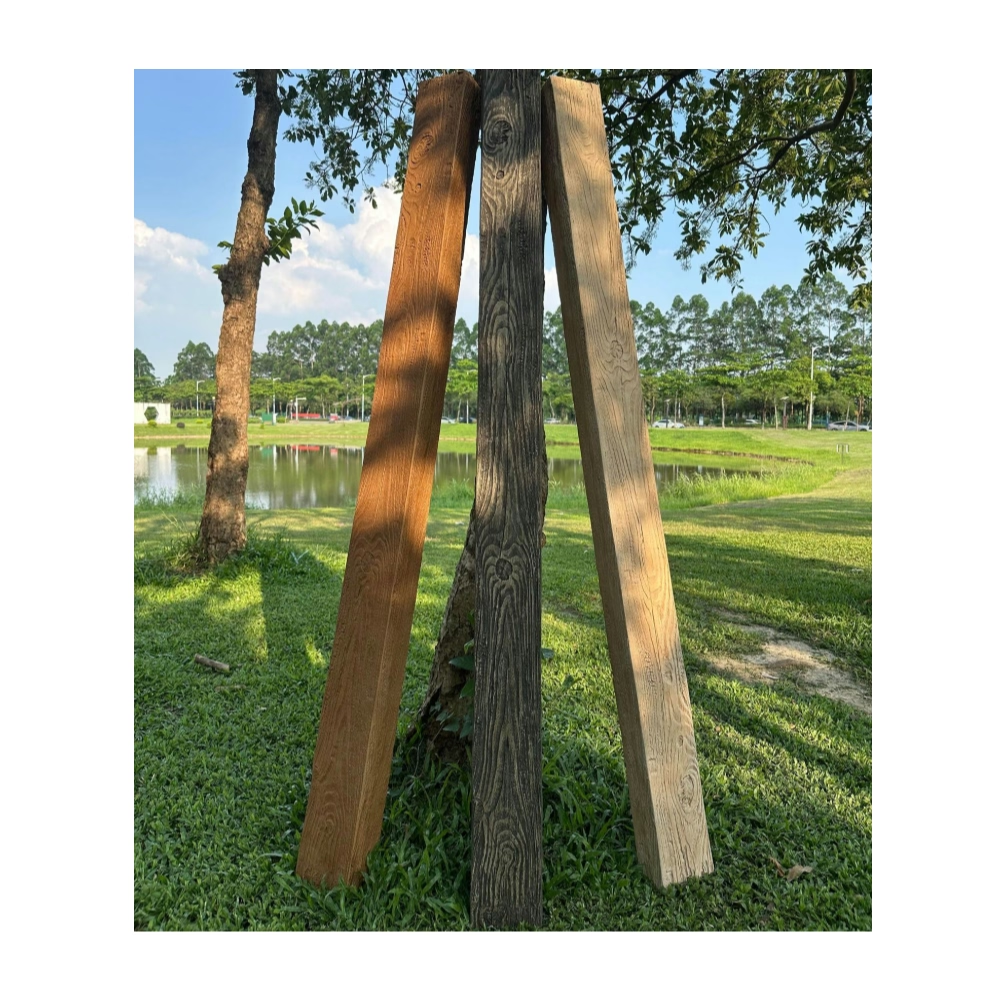
Faux wood trim installation differs from genuine timber through reduced weight, consistent dimensions, and pre-finished surfaces. These characteristics simplify handling, cutting, and fitting while eliminating finishing operations that complicate genuine timber installation. The practical advantages often prove more significant than aesthetic considerations for trim applications.
Dimensional consistency ensures that joints fit together precisely regardless of environmental conditions. Genuine timber expands and contracts with humidity changes, potentially creating gaps in trim joints that require repair. Faux wood maintains consistent dimensions, ensuring that installations remain tight and finished-looking indefinitely.
The pre-finished surfaces of faux wood trim eliminate on-site finishing operations including sanding, staining, sealing, and topcoating. These operations require skill, time, and appropriate environmental conditions that may not be available during construction or renovation. Factory-finishing ensures consistent quality that on-site finishing often struggles to achieve.
Maintenance requirements for faux wood trim are minimal compared to genuine timber alternatives. The durable finishes resist scratching and scuffing while accepting standard cleaning products without damage. This low-maintenance characteristic proves valuable in commercial applications where regular maintenance schedules may not accommodate specialized wood care.
Technical References
ASTM standards cited in every specification
Test Data
Lab results from internal testing program
Updated 2026
Reviewed against current product specs


