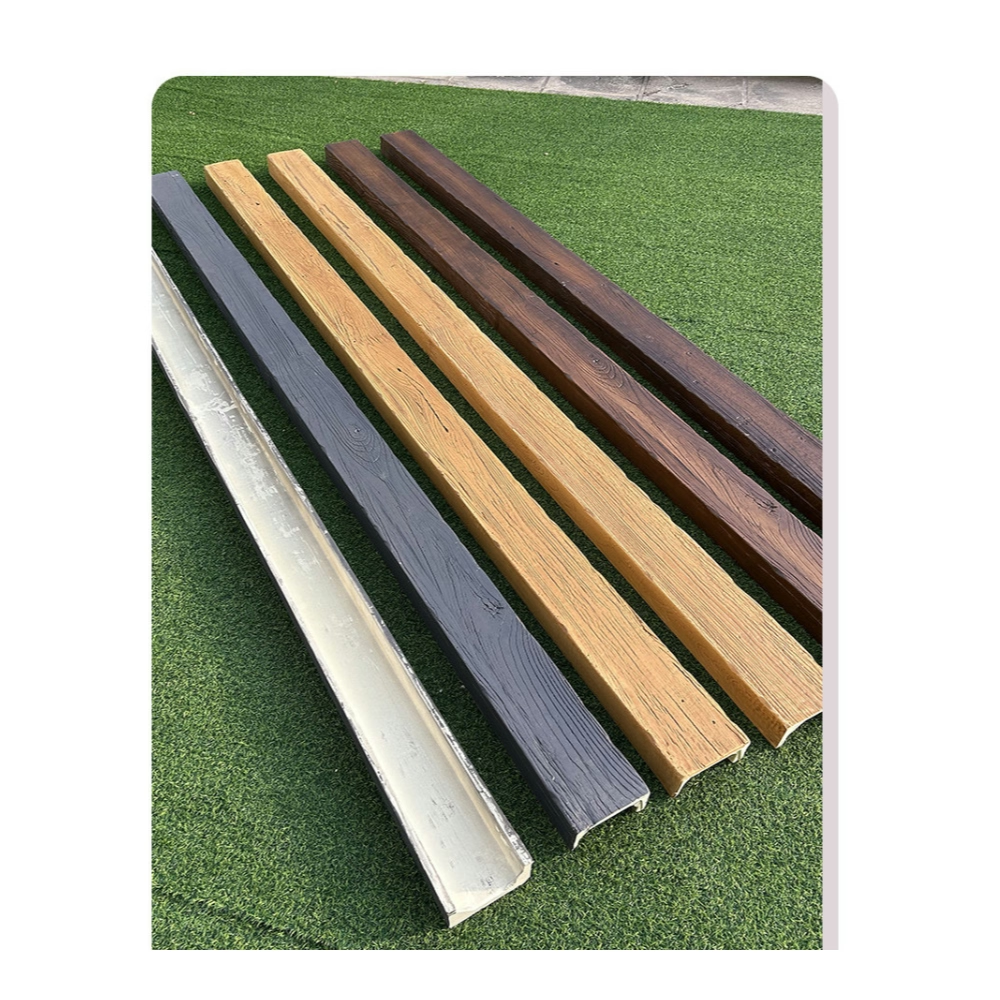
Polyurethane faux beams offer significant weight advantages over natural wood or stone alternatives, but long-span beams still exceed what any individual should attempt to lift and position alone. Ceiling installations at elevated heights compound the challenge, transforming what seems manageable on the ground into an awkward, potentially dangerous situation. Professional installers develop systematic lifting techniques that keep workers safe while protecting beams from damage during positioning.
Understanding the Lifting Challenge
Long-span beams present physics challenges that short pieces avoid entirely. Beam weight increases with length, but the challenge grows faster than simple proportionality. Longer beams flex more under their own weight, making them harder to control and creating bending moments that concentrate stress at lifting points. The leverage that extended length provides amplifies any imbalance, causing beams to tip and swing unpredictably.
Ceiling height transforms manageable weights into significant safety concerns. Lifting a 20-pound beam to shoulder height taxes most people comfortably. Lifting the same beam overhead while positioning it against a ceiling challenges coordination and endurance even for physically fit workers. Two-person teams distribute the load and enable the positioning control that single-person attempts cannot provide.
Building conditions often complicate lifting beyond the beam's inherent challenges. Obstacles including light fixtures, HVAC grilles, and ceiling fans must be navigated during installation. Narrow doorways and tight corners restrict beam transport to work areas. Professional installers survey conditions before delivery and plan lifting approaches that account for site-specific constraints.
Pre-Lift Planning and Preparation
Successful lifts begin before anyone touches the beam. Work area preparation clears paths between storage location and installation point, removing obstacles that might cause trips or collisions. Floor surfaces should provide secure footing, with wet areas mopped dry and temporary floor protection removed if it creates slippery conditions.
Beam staging places pieces exactly where they can be reached efficiently. Rather than carrying beams across rooms to reach installation points, pieces should be positioned so lifting crew members can approach from comfortable directions. Hand trucks or beam carts facilitate transport while keeping pieces off the floor and away from damage risks.
Equipment gathering happens before lift initiation. Helper assignment ensures both team members understand their responsibilities. Support equipment including ladders, lifts, or scaffolding gets positioned and verified stable before the beam enters the work area. Adhesive application, if not completed during staging, occurs before lifting so neither person must manage adhesive tubes while handling the beam.

Grip Techniques and Hand Placement
Proper grip technique prevents beam drops while protecting beam surfaces from damage. Palm gripping distributes pressure across larger hand areas than finger gripping, reducing point loading that might dent or scratch surfaces. Leather-palmed gloves improve grip security while adding hand protection against beam edges and hardware.
Hand placement along the beam length affects control throughout the lift. Balanced placement near beam ends and center creates a natural carrying position that resists rotation. Asymmetric placement shifts balance point and requires constant correction. Before lifting, both team members should agree on grip positions and verify they create stable, controllable configurations.
Surface-aware grip protects finished beam faces from hand contamination and pressure marks. Oils from skin can affect some finishes, particularly unstained polyurethane. Lifting with clean hands or clean gloves prevents appearance damage. Gripping along edges rather than across faces prevents visible pressure marks where finishes might be less durable.

Communication Protocols
Clear communication prevents the confusion that causes accidents during lifting operations. Both team members must understand what commands mean and when they apply. Standardized commands eliminate ambiguity that might cause one person to react differently than expected.
Lift commands initiate coordinated movement. "Ready" confirms both parties have secure grip and are prepared. "Lift" begins upward movement simultaneously. "Hold" stops movement immediately if obstacles or problems appear. "Lower" reverses the lift command for controlled descent. These basic commands should be instinctive before any beam enters the work area.
Positioning commands guide beam movement during installation. "Left" and "right" indicate direction of desired adjustment. "Up" and "down" indicate vertical movement. "Stop" halts all motion for assessment or problem resolution. Consistent terminology and immediate response to commands keeps both parties synchronized throughout positioning.
Problem communication requires vocabulary for unexpected situations. "Clear" indicates that the speaking person is moving away from the beam. "Shift" indicates one person is adjusting grip. "Wait" indicates the speaker needs a moment to complete some action. These commands prevent collision between team members and protect against unexpected beam movement.
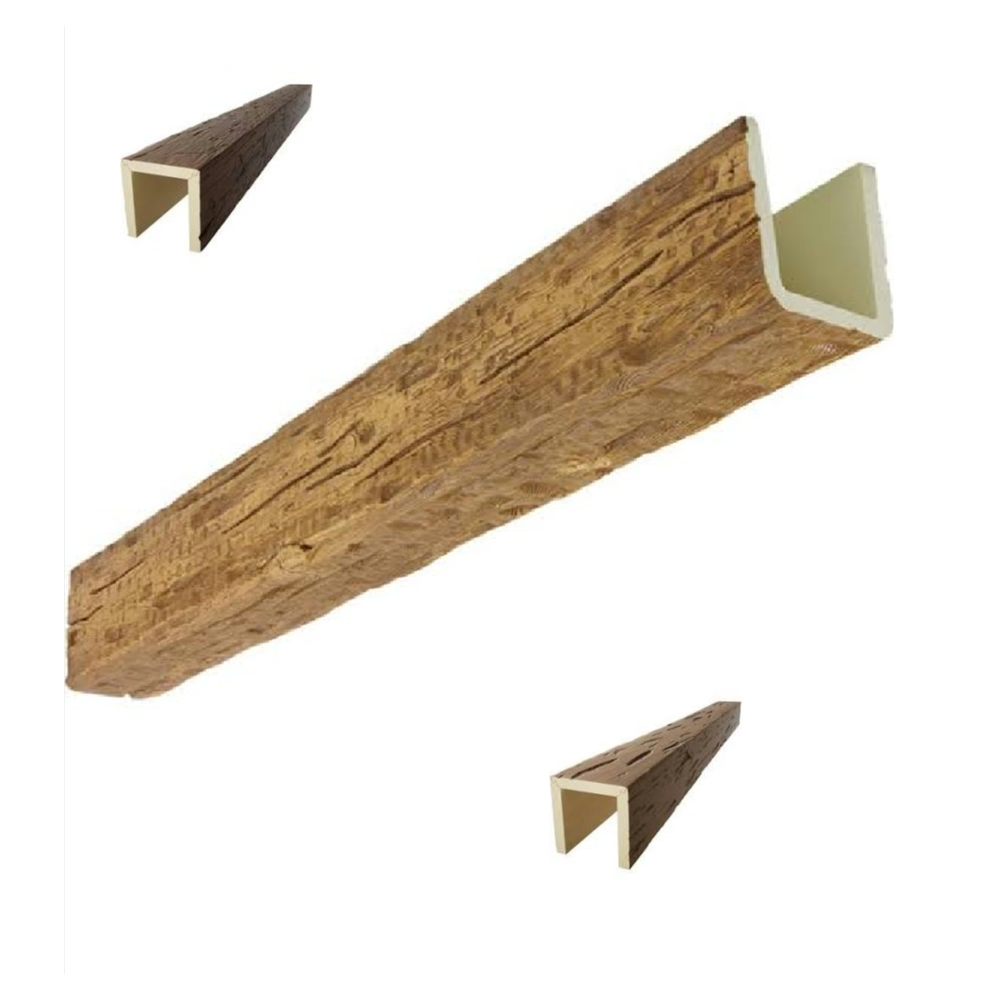
Lift Execution and Control
Lift initiation requires simultaneous upward force from both team members. Uneven initiation causes the beam to swing toward the lower person, creating a correction that may be difficult once momentum develops. Counting "three, two, one, lift" synchronizes effort for smooth initiation.
Walking with long beams requires careful coordination. Short shuffling steps maintain control better than normal walking stride. Both team members should match pace, with the lead person setting direction and the trailing person following without creating push or pull. Reversing direction requires complete stop before new direction initiation.
Obstacle navigation demands particular attention. Doorways require slight beam rotation that both people must execute together. Narrow passages may require beam tilt that one person initiates while the other follows. Communication throughout navigation prevents the collisions that damage beams and surrounding construction.
Ceiling Positioning Technique
Reaching ceiling height transforms the lifting challenge significantly. Ladders provide reach but limit stability during beam handling. Platform lifts or scaffolding provide more stable working surfaces but restrict access to some ceiling areas. Professional installers match access method to ceiling height and beam length.
Initial ceiling contact should be light, with both team members merely resting the beam against the mounting surface. This allows verification of position before committing to adhesive application. Checking alignment from viewing positions across the room identifies positioning errors that close-up inspection might miss. Fine adjustment at this stage costs only seconds; adjustment after adhesive application costs minutes or requires remediation.
Holding during adhesive cure requires support that may extend for several minutes. Temporary supports including props, clamps to adjacent construction, or helper assistance maintain position while adhesives develop strength. The beam should never be released until temporary supports are in place and adhesive has achieved initial grab sufficient to prevent slippage.
Safety Considerations
Personal protective equipment requirements extend beyond normal construction gear for beam lifting. Hard hats protect against accidental contact with overhead structures. Safety glasses prevent debris from above from entering eyes during ceiling work. Non-marking footwear with good grip prevents slips on smooth flooring.
Lifting limits protect workers from overexertion. Maximum recommended lifting weight for one person is around 50 pounds, with teams handling anything above this threshold. For two-person lifts, weights up to 100-150 pounds become manageable depending on beam length and geometry. When beams exceed comfortable team lifting limits, mechanical assistance through cranes, hoists, or lift equipment becomes necessary.
Fatigue-related incidents occur when workers tire before completing lifts. Scheduling breaks during extended installation projects prevents the exhaustion that leads to mistakes. Recognizing personal limits and calling for assistance rather than struggling with heavy pieces protects both workers and property.

Equipment Alternatives for Heavy Beams
Engineered lifting equipment eliminates manual lifting for the heaviest beams. Beam lifts attach to structural ceiling elements and support beams during positioning with hand-cranked or motorized adjustment. Rental options make this equipment accessible for occasional heavy installations without purchase investment.
Forklifts and scissor lifts enable single-person beam positioning when equipped with beam-handling attachments. These powered platforms lift workers along with beams, eliminating the coordination challenges of multi-person manual lifting. Training on equipment operation ensures safe use, as does adherence to manufacturer capacity limits.
Gantry systems spanning work areas provide overhead support for beam transport and positioning. Rails mounted to floor and ceiling allow workers to slide beams along the gantry while maintaining overhead support throughout movement. These systems work well for repetitive installations in the same locations.
Professional two-person lift techniques transform challenging long-span installations into manageable operations. The combination of proper planning, coordinated communication, and mutual support enables safe installation of beams that might otherwise require mechanical equipment. Installers who master these techniques expand their service capabilities to handle projects that less skilled workers must decline.
Technical References
ASTM standards cited in every specification
Test Data
Lab results from internal testing program
Updated 2026
Reviewed against current product specs