The interior design industry has witnessed a fundamental shift in how professionals regard faux decorative beams. What once carried an automatic presumption of compromise now represents a legitimate design option that often outperforms natural materials across multiple evaluation criteria. This re-evaluation stems from manufacturing advances that have closed the authenticity gap between faux and natural to the point where distinction requires expert examination.
The Chen residence in San Francisco demonstrates how natural wood appearance beams can elevate residential interiors to gallery-quality environments. Their remodeled Victorian featured a third-floor space that previous owners had converted to a poorly-lit office. The design team specified white oak appearance beams with hand-finished surfaces that complemented the home's original Victorian millwork. The completed installation receives consistent admiration from visitors who assume the beams are original to the house.
The Evolution of Faux Wood Authenticity
Early faux wood products suffered from limitations that betrayed their artificial origins almost immediately. Plastic surfaces with painted grain patterns, foam products with hand-rolled textures, and molded composites with obvious mold marks all failed to achieve authentic appearance. The underlying technologies simply could not capture the complexity that natural wood presents.
The introduction of high-resolution surface scanning changed what manufacturing could achieve by preserving detail that earlier methods destroyed. Wood surfaces scanned at appropriate resolution revealed characteristics invisible to casual observation but critical to perceived authenticity. These scanning capabilities, combined with improved mold-making techniques, enabled reproduction quality that casual inspection could not question.
Color application technology evolved alongside texture replication to address visual authenticity challenges that surface detail alone could not solve. Natural wood color varies continuously across surfaces, with subtle transitions between zones that uniform coatings cannot replicate. Multi-stage coloring processes that build depth through layered application achieve the visual complexity that authentic wood presents.
Surface finish development completed the authenticity equation by providing protective coatings that enhanced rather than flattened reproduced texture. The interplay between finish and surface texture determines how convincingly beams respond to lighting, and this interaction proved critical to achieving authentic appearance under the varied lighting conditions that real installations present.
Components of Natural Wood Appearance
Grain pattern authenticity requires understanding how growth rings, rays, and earlywood-latewood transitions create the visible patterns that define wood character. Each species presents distinctive grain characteristics that observers learn to recognize, and replica products must match these characteristics to achieve species-appropriate appearance. The variation within species also affects authenticity perception, as identical grain repetition betrays artificial production.
Color depth in natural wood results from multiple factors that interact to create visual complexity. Surface coloration, subsurface tone, and light interaction all contribute to the impression of depth that authentic wood creates. Faux products achieve similar depth through color gradients, tonal variation, and finish effects that replicate natural wood's three-dimensional quality.
Character marks including knots, bird pecks, and mineral streaks add the visual interest that distinguishes character-grade timber from clear, unblemished material. The placement, size, and appearance of these marks affect authenticity significantly, with random distribution seeming natural while patterned repetition reveals artificial origin. Quality manufacturers control character mark placement to achieve natural variation.
End grain appearance differs fundamentally from face grain in natural wood, and authentic appearance requires matching these different surfaces appropriately. The cellular structure visible in end grain creates different texture and color characteristics than longitudinal surfaces. Quality faux beams address this challenge through appropriate surface differentiation that maintains realism throughout.

Species and Style Selection
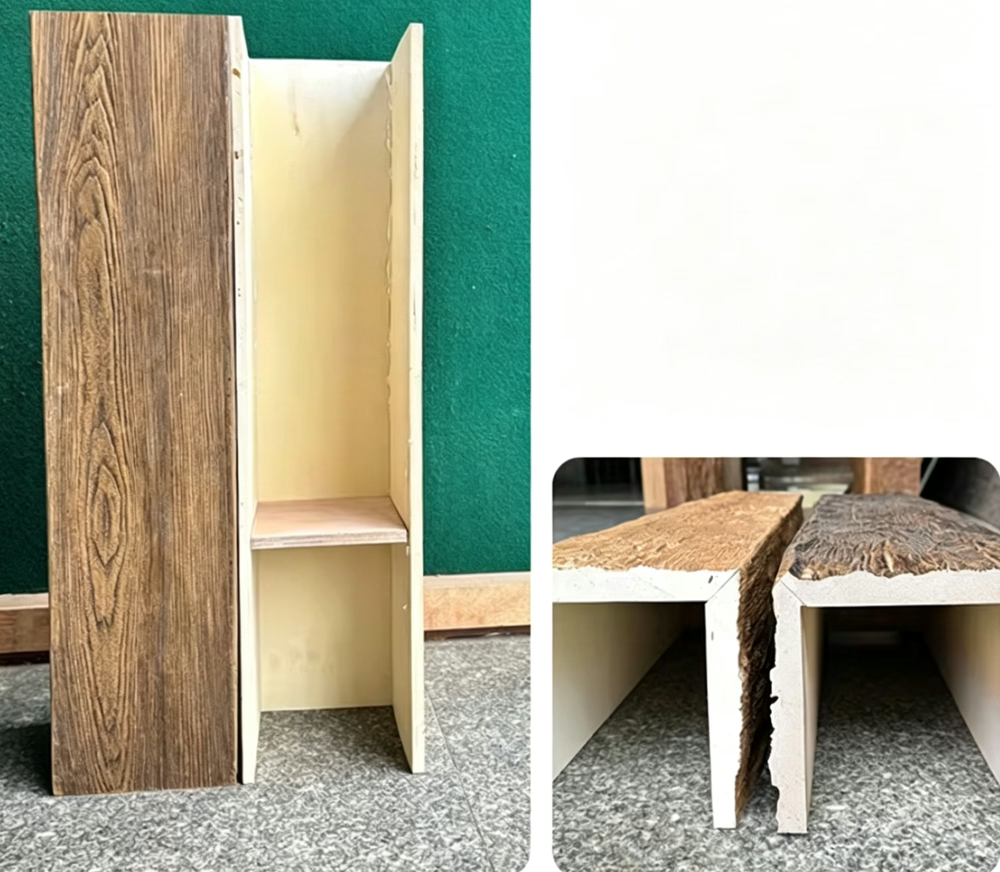
Oak remains the most popular species for premium faux beam specification, reflecting its prevalence in traditional American construction and its distinctive visual character. The prominent grain, distinctive rays, and color range that oak presents provide visual interest that other species cannot match. Replica accuracy for oak has advanced to the point where expert identification is required to distinguish faux from authentic.
Walnut has gained significant market share in contemporary applications, where its rich brown tones and dramatic figure patterns complement modern design sensibilities. The warmth that walnut contributes contrasts effectively with contemporary materials like glass, steel, and concrete. Replica walnut products have improved substantially as demand has increased, with quality now approaching the oak replication that longer production has refined.
Reclaimed wood character has become highly sought after, particularly in applications seeking rustic or farmhouse aesthetics. The combination of weathering effects, mechanical damage history, and age-related color modification creates appearance that new wood cannot match. Manufacturers have developed techniques for replicating these weathered characteristics with accuracy that approaches the authentic material.
Contemporary finishes including whitewash, gray stain, and even painted treatments have emerged as legitimate aesthetic choices that expand design possibilities beyond natural wood appearance. These finishes often begin with authentic wood-grain texture underneath, creating depth that flat painted surfaces cannot achieve. The combination of realistic texture with contemporary color creates hybrid aesthetics that neither natural nor faux wood alone could achieve.
Installation Considerations for Authentic Appearance
Professional installation ensures that even the most authentic beams present appropriately when installed. Joint preparation, alignment accuracy, and transition detailing all affect the perception of authenticity that observers experience. Amateur installation can undermine authentic appearance that quality products would otherwise achieve.
Lighting design interacts with beam specification to create the visual effects that authentic appearance requires. Beams specified without lighting consideration may look adequate but fail to achieve their potential impact. Professional lighting consultation identifies opportunities to enhance beam appearance through strategic fixture placement and output specification.
Context affects how observers perceive beam authenticity, with surrounding materials and overall design character influencing interpretation. Spaces featuring multiple wood elements, whether authentic or faux, create wood-rich environments where individual elements appear more authentic. Sparse, minimalist spaces may make beam authenticity more apparent given reduced wood context.
Maintenance consistency helps preserve authentic appearance throughout service life. The care products receive affects how their appearance changes over time, with appropriate maintenance maintaining authentic character while neglect might accelerate artificial appearance development. Manufacturer guidance on appropriate care supports long-term authenticity preservation.
Commercial Applications and Specifications
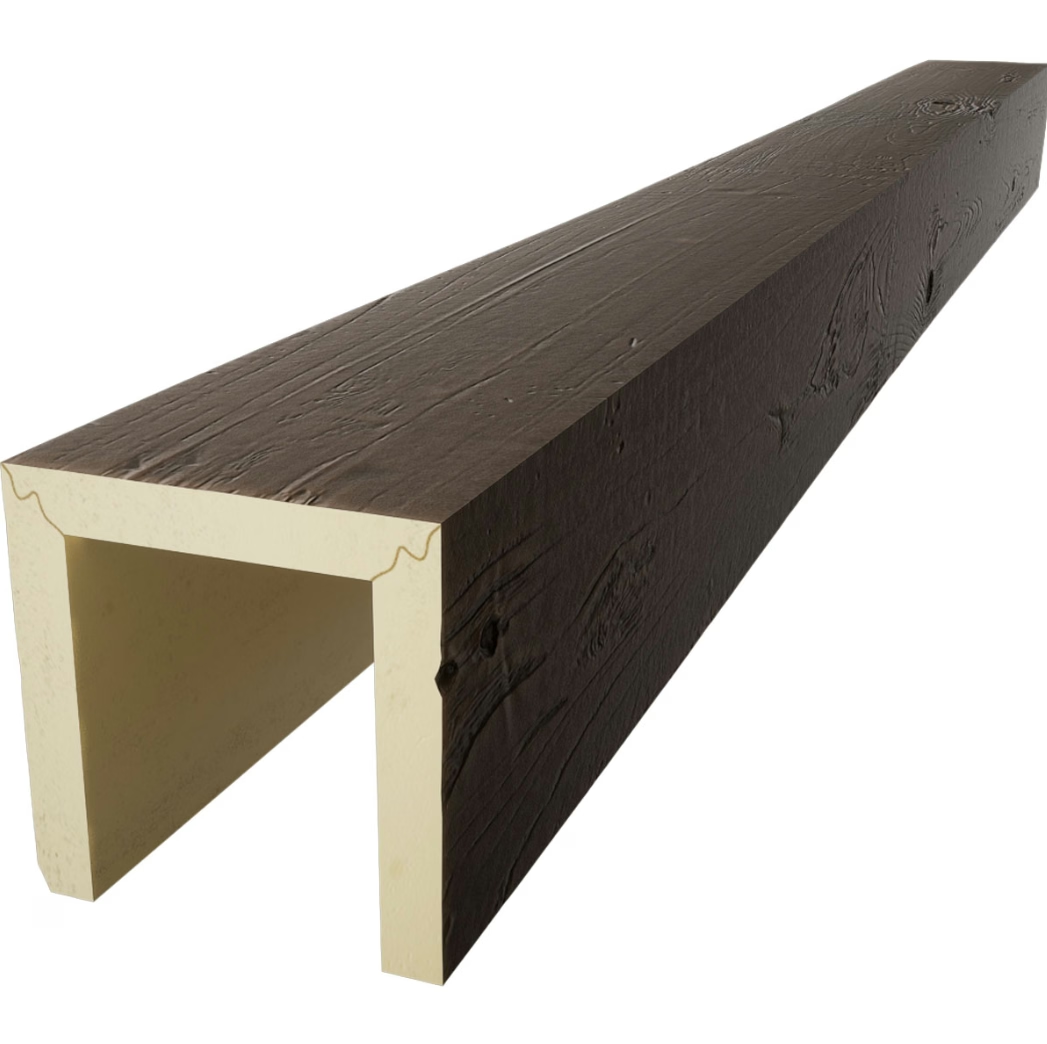
Hospitality design has embraced authentic-appearing faux beams as practical alternatives to natural timber in demanding commercial environments. Hotel lobbies, restaurant dining rooms, and bar areas all benefit from the durability and appearance consistency that quality faux products provide. The reduced maintenance requirements compared to natural wood translate directly to operating cost savings.
Retail environments utilize authentic-appearing beams to create memorable shopping experiences that differentiate branded spaces from competitors. The investment in aesthetic environment often exceeds the investment in merchandise presentation, reflecting the importance of atmosphere in retail success. Faux beams provide the character that memorable retail spaces require without the maintenance demands that natural alternatives would impose.
Corporate office applications increasingly feature authentic-appearing beams in spaces designed to project warmth and human scale. The contrast between wood aesthetics and typical corporate materials creates distinctive environments that support employer branding and workplace satisfaction goals. Faux beams enable this material diversity without introducing the maintenance concerns that natural wood might raise in commercial contexts.
Healthcare and educational facilities benefit from authentic appearance combined with the cleaning compatibility that healthcare protocols require. The smooth, non-porous surfaces of quality faux beams support the cleaning and disinfection that these environments demand while maintaining the warm aesthetics that healing and learning spaces benefit from.
Quality Indicators and Selection Guidance
Surface texture resolution provides immediate evidence of manufacturing investment, with premium products presenting detail visible under close inspection while budget alternatives reveal their limitations. Running fingers across surfaces detects texture characteristics that visual inspection might miss, with quality products presenting appropriate tactile authenticity.
Finish adhesion testing determines whether factory-applied coatings will remain stable through service life. Adhesion failure, typically evaluated through tape testing or cross-cut testing, indicates formulation or application problems that will affect long-term appearance. Quality manufacturers test adhesion as part of standard quality control.
Density consistency throughout beam cross-sections ensures predictable performance across installation surfaces. Variations in density, which may be visible or only detectable through testing, affect fastener holding, impact resistance, and dimensional stability. Premium manufacturers maintain quality control that ensures consistent density throughout production.
Warranty coverage reflects manufacturer confidence in product performance, with extended periods suggesting greater confidence than limited coverage. Quality products typically carry warranties of ten years or more, with premium products sometimes featuring lifetime coverage. Warranty terms should factor into specification decisions for projects where long-term performance matters.
Environmental and Sustainability Considerations
Manufacturing efficiency for faux beams continues improving as production technologies mature, reducing energy consumption and waste generation per unit produced. The closed-loop potential for some production processes also reduces environmental impact compared to harvesting, processing, and transporting natural timber.
Transportation efficiency favors faux products for international distribution, with lighter weight reducing fuel consumption and emissions per unit shipped. This efficiency advantage compounds over long shipping distances that characterize international trade in building materials.
Service life extension through enhanced durability reduces the replacement frequency that affects lifetime environmental impact. Quality faux beams designed for decades of service generate less cumulative environmental burden than materials requiring periodic replacement.
End-of-life considerations remain challenging for polyurethane products, with recycling infrastructure limited in most regions. However, the extended service life and reduced maintenance requirements mean that lifetime environmental impact may still favor faux products despite end-of-life challenges.
Investment Protection Through Quality Selection
Initial specification decisions significantly affect long-term satisfaction and investment protection. Premium products that cost more initially typically provide better lifecycle value through extended service and reduced maintenance. The specification investment protects the larger capital investment that complete interior installations represent.
Vendor selection affects not just initial purchase but ongoing support and future replacement availability. Established manufacturers with track records of product line continuity better support long-term maintenance needs than newer entrants whose continued operation may be uncertain.
Documentation retention ensures that specification information remains available for future reference. Product specifications, finish formulas, and installation documentation should all be preserved for the building's life. This documentation enables consistent future work whether performed by original installers or new contractors.
The authentic appearance of quality faux beams adds perceivable value to properties where they are installed. This value retention reflects the ongoing contribution that beautiful, well-maintained beam installations provide to interior environments throughout the building's occupation.

Technical References
ASTM standards cited in every specification
Test Data
Lab results from internal testing program
Updated 2026
Reviewed against current product specs


