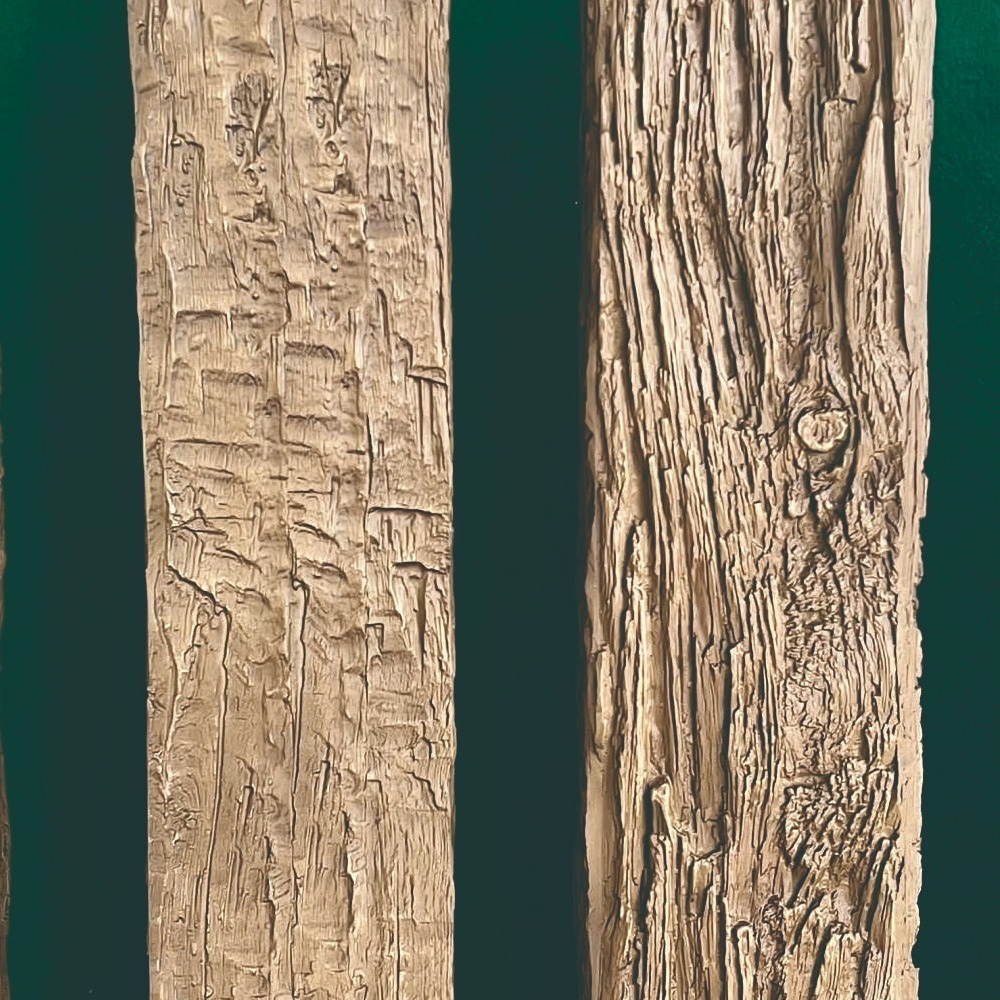
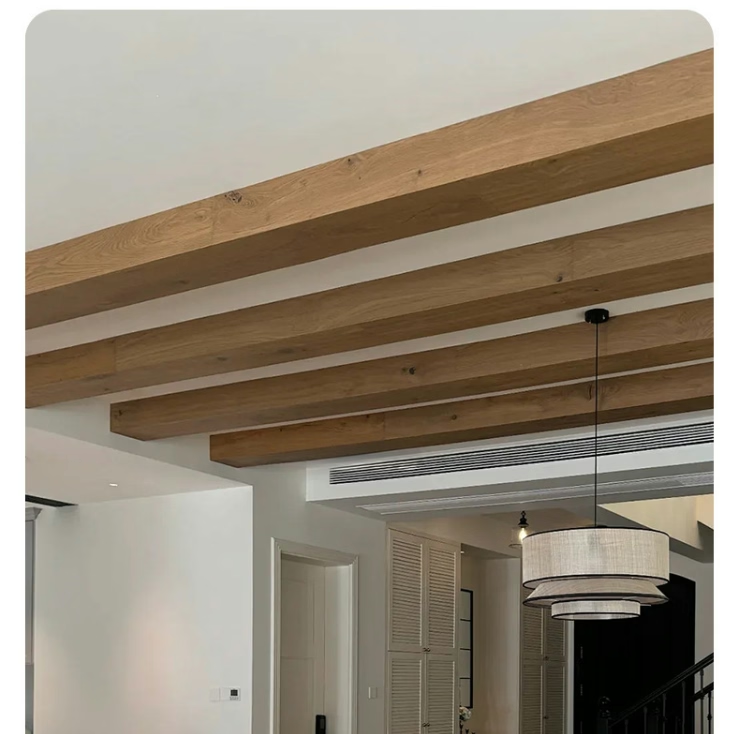
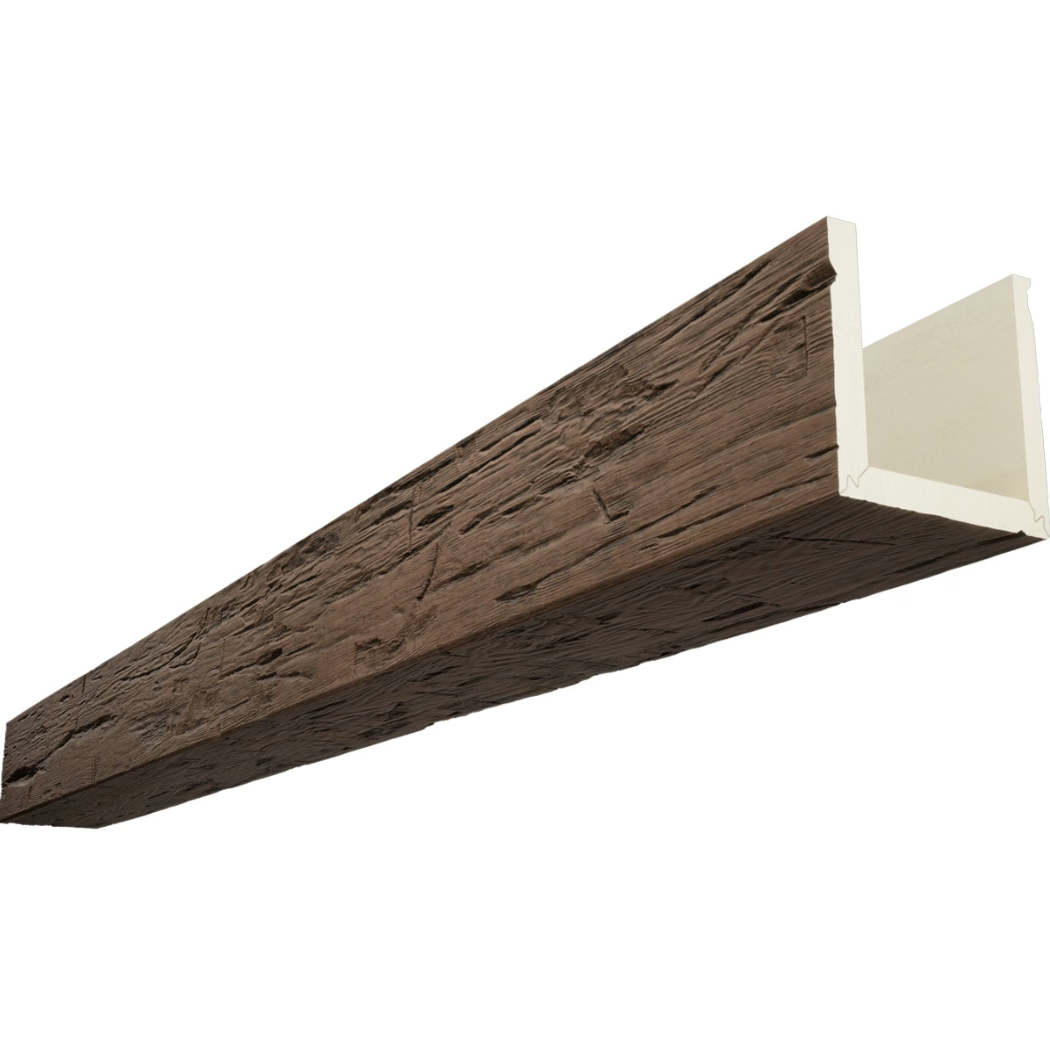
The classification of environments as demanding emerges from the recognition that not all applications present equivalent challenges to installed materials. Where a residential living room ceiling might never experience anything more challenging than occasional dusting, an athletic facility, school gymnasium, or busy restaurant dining room faces abuse that would quickly degrade less capable materials. Ultra-durable high-density beams have been developed specifically to address these challenging applications.
The Riverside Athletic Club renovation illustrates how demanding environment specifications affect beam selection. Their fitness center mezzanine features exposed beam ceilings directly above high-traffic areas where dropping weights, swinging equipment, and reaching exercise movements create constant contact potential. The specification selecting high-density beams over standard alternatives has proven prescient through three years of service that has not produced a single damage claim.
Characterizing Demanding Environments
Traffic intensity provides the most fundamental measure of environmental demand, with higher traffic correlating to elevated impact potential and maintenance requirements. Public facilities, commercial venues, and family homes with active lifestyles all present traffic levels exceeding the minimal exposure that standard specifications assume. Understanding traffic intensity helps guide appropriate specification.
Activity type influences the nature of potential abuse beyond simple frequency. Athletic facilities present different challenges than retail environments, which differ from educational spaces. Each activity type creates characteristic abuse patterns that specification should anticipate. Matching product characteristics to expected abuse patterns ensures adequate protection.
Vulnerability factors including ceiling height, adjacent activity zones, and sight lines affect how beam installations will be treated by occupants. Low ceilings in active spaces invite contact that tall ceilings avoid. The relationship between activity zones and beam locations should inform specification decisions.
Maintenance capacity affects how specification should address ongoing care requirements. Facilities with limited maintenance resources may need more durable specifications that reduce maintenance frequency. Conversely, well-staffed facilities might accept less durable materials with confidence that maintenance will address developing issues.
Density and Durability Relationships
Density directly determines numerous durability characteristics including impact resistance, scratch resistance, and structural integrity. Higher density products provide better performance across all these characteristics, though other formulation factors also influence final properties. Specification should target density levels appropriate for expected environmental demands.
Compressive strength improvements enable high-density products to withstand loads and pressures that would deform or damage lower-density alternatives. This load-bearing capability proves essential in applications where equipment, furniture, or activity creates point loads or distributed pressures on installed beams.
Impact energy absorption in high-density products prevents the visible damage that lower-energy absorption materials would experience. The cellular structure that density creates enables energy dissipation without catastrophic failure, maintaining appearance despite impacts that other materials would not survive.
Dimensional stability under load and environmental variation distinguishes high-density products from alternatives. The reduced tendency toward compression, deformation, or dimensional change ensures that installations maintain appearance and structural integrity throughout service life.

Application-Specific Durability Requirements
Athletic facilities represent perhaps the most demanding common application, with high-impact activities, equipment handling, and aggressive user behavior creating constant abuse potential. Ceiling beams above basketball courts, fitness areas, and pool decks all face challenges that other applications never encounter. Specification should target maximum durability for these applications.
School environments including gymnasiums, auditoriums, and common areas must accommodate the unpredictable behavior of children and young adults whose activities may include intentional or accidental ceiling contact. Physical education activities, theatrical productions, and social events all create conditions more demanding than standard classrooms or offices. High-density specification ensures that educational aesthetics do not require constant repair.
Hospitality venues including hotels, restaurants, and entertainment facilities face abuse from guests whose behavior may not reflect the care that residential occupants would exercise. Room service carts, furniture moving, and occasional over-exuberant celebration all create contact potential that residential environments rarely present. High-density specification ensures appearance maintenance despite this elevated abuse.
Retail environments present variable conditions depending on merchandise types and customer behavior patterns. High-end boutiques with controlled access may present minimal risk, while warehouse retail, thrift stores, and outdoor equipment retailers may face aggressive use. Specification should match expected conditions rather than worst-case scenarios.
Formulation Excellence for Durability
Cross-link density optimization creates polymer networks that resist deformation and damage while maintaining necessary flexibility. The molecular architecture that cross-linking creates affects impact resistance, scratch resistance, and long-term stability. Premium manufacturers optimize cross-link density for specific application requirements.
Impact modifier incorporation improves toughness that standard formulations might lack, enabling high-density products to absorb energy without cracking or breaking. These modifiers work at the molecular level to dissipate impact energy before it creates visible damage. The modifier type and loading affect the degree of improvement achieved.
Surface hardcoat technology provides enhanced scratch and abrasion resistance through layered construction that protects underlying material. These hardcoats bond to the substrate while providing surface characteristics that standard formulations cannot achieve. The hardcoat approach enables surface optimization independent of bulk properties.
UV stabilization ensures that durability does not degrade under light exposure, maintaining performance throughout extended service life. The UV inhibitors that enable this protection must be compatible with other formulation components while providing adequate stabilization. Premium manufacturers optimize UV stabilization for specific exposure conditions.
Installation Systems for Demanding Applications
Heavy-duty mounting hardware provides the attachment strength that demanding applications require. Standard brackets and fasteners may be adequate for residential applications but prove insufficient for commercial conditions. Premium hardware ensures attachment integrity that matches beam durability.
Mechanical-adhesive hybrid attachment distributes loads across multiple connection types, providing redundancy that single-attachment systems cannot match. The combination addresses concerns that either attachment method alone might leave unresolved. This hybrid approach suits demanding applications where failure would be particularly problematic.
Structural reinforcement at high-stress locations including joints, terminations, and span centers addresses vulnerability points that standard installation might not address adequately. Adding reinforcement at these locations ensures that challenging conditions do not create problems at the weakest points. Quality installers identify and reinforce these locations proactively.
Inspection and testing protocols verify that demanding applications receive installation quality matching the products specified. The consequences of installation failure in demanding applications justify the additional verification that quality assurance provides. Professional installers implement these protocols as standard practice.
Maintenance Planning for Durability Maintenance
Inspection frequency should increase with environmental demand, identifying developing issues before they become serious problems. Demanding applications warrant more frequent inspection than benign environments, with protocols scaled to expected abuse levels. This proactive approach enables simple remediation before complex repair becomes necessary.
Cleaning protocol intensity should match environmental conditions, with demanding applications often requiring more frequent or intensive cleaning. The cleaning methods should address contamination types expected in specific applications while remaining compatible with installed materials. Manufacturer guidance on approved cleaning methods prevents damage from incompatible treatments.
Damage response procedures should be documented and available for immediate implementation when damage occurs. The availability of matching repair materials enables prompt response that prevents damage progression. Professional restoration services provide capability for damage exceeding routine repair.
Refinishing protocols address surface degradation that demanding conditions might cause despite durability investments. The ability to restore appearance through refinishing extends service life significantly compared to products lacking this capability. Professional refinishing services ensure appearance restoration matching original quality.
Lifecycle Cost Analysis for Demanding Applications
Initial specification cost for demanding applications should target adequate performance rather than minimum cost, as specification failures prove expensive to remediate. The incremental cost of upgrading to higher durability specifications is typically modest compared to the remediation costs that specification failures would cause. This risk-adjusted specification approach prevents costly problems.
Maintenance cost projection for demanding applications should account for the elevated care that these environments require. The cleaning frequency, repair incidence, and eventual replacement timing all affect lifecycle cost projections. Realistic projections enable budget planning that prevents surprises during service life.
Replacement cost timing affects lifecycle analysis significantly, with longer replacement intervals reducing annualized replacement expense. High-density products typically provide extended service life that improves lifecycle cost comparisons. The durability investment often proves economical despite higher initial cost.
Insurance and liability considerations affect specification decisions for commercial applications, where damage claims might follow installation failures. The documentation that quality products and professional installation provide supports defense against unwarranted claims while enabling efficient resolution of legitimate issues.
Specification Guidance for Demanding Projects
Application assessment should identify specific demands that installed materials will face, enabling appropriate specification targeting. The traffic intensity, activity type, and vulnerability factors all inform specification decisions. This assessment should occur before product selection to ensure appropriate matching.
Reference project evaluation provides evidence of how products perform in comparable demanding applications. Professional manufacturers can identify installations matching the application type, enabling first-hand evaluation of actual performance. This reference information supports specification confidence that catalog information alone cannot provide.
Technical consultation with manufacturers helps identify products best suited for specific demanding applications. The technical expertise that quality manufacturers maintain supports specification decisions through application-specific guidance. This consultation should occur before specification commitment.
Warranty review ensures that coverage terms match demanding application requirements and user expectations. The warranty duration, coverage scope, and claim procedures all affect the protection that warranty provides. Quality products typically carry warranties reflecting manufacturer confidence in demanding application performance.
Future Durability Developments
Advanced polymer technology continues improving the performance capabilities that high-density products can achieve. Molecular engineering enables property optimization that formulation improvements alone could not accomplish. These developments will further extend the range of demanding applications that polyurethane beams can address.
Nanocomposite incorporation promises significant durability improvements through nanoscale reinforcement. Graphene, nanoclays, and other nanoscale additives may enable products with dramatically enhanced properties. These technologies remain developmental but suggest significant future advancement.
Self-healing polymer research may eventually enable materials that repair damage automatically, extending durability beyond current capabilities. These technologies, while largely developmental, suggest a future where durability concerns become less significant. The timeline for practical implementation remains uncertain.
Sustainability integration will combine enhanced durability with improved environmental performance, addressing both practical and environmental requirements simultaneously. Bio-based materials, recycled content, and improved recyclability will enhance sustainability while maintaining durability leadership. This combination of environmental and practical excellence will define future premium products.

Technical References
ASTM standards cited in every specification
Test Data
Lab results from internal testing program
Updated 2026
Reviewed against current product specs