The construction industry has developed increasingly sophisticated vocabulary for describing the performance requirements that different applications present. Where residential specifications once dominated material selection discussions, commercial and institutional applications have driven the development of products with capabilities far exceeding what residential use would ever demand. Heavy-duty classification represents the upper tier of these requirements, encompassing applications where material abuse is routine rather than exceptional.
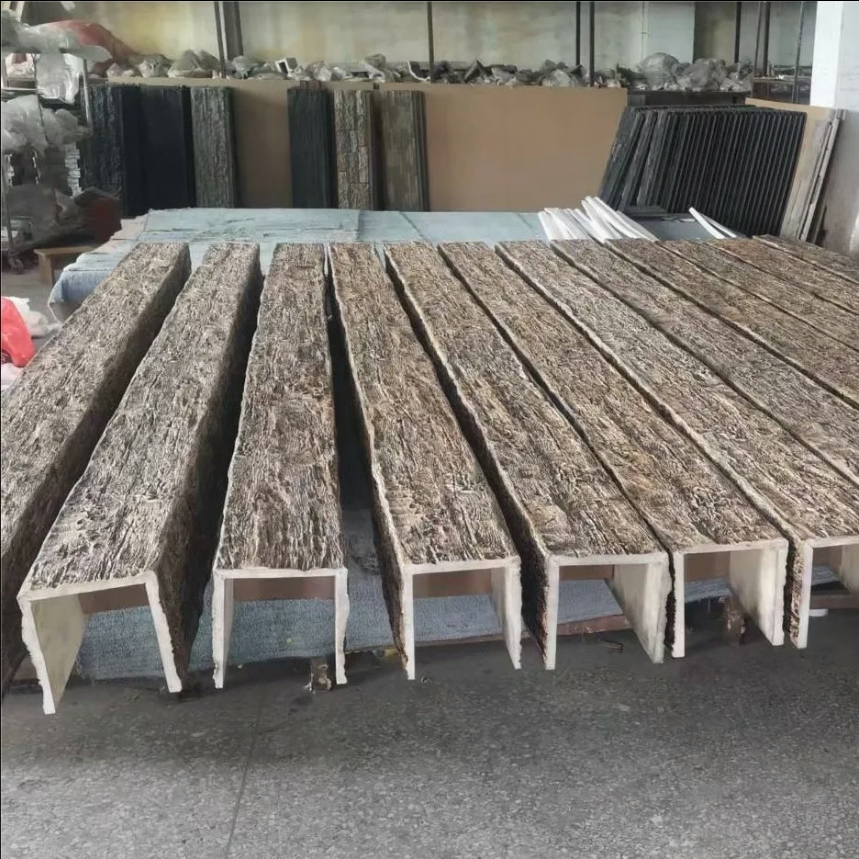
The Metro Convention Center expansion project demonstrates what heavy-duty specification enables in large-scale public facilities. Their exhibition hall features exposed beam ceilings above spaces that host trade shows, conventions, and public events with thousands of daily attendees. Forklifts move displays, crowds press against barriers, and equipment gets hoisted into position, all creating contact potential that residential ceiling materials could never survive. The selected heavy-duty high-density polyurethane beams have maintained their appearance through five years of demanding service.
Heavy-Duty Application Characteristics
Frequency of potential abuse distinguishes heavy-duty applications from standard commercial use. Where typical commercial spaces might experience occasional impact, heavy-duty applications face regular contact that challenges material integrity constantly. This elevated abuse frequency justifies enhanced specification that might seem excessive for less demanding applications.
Intensity of abuse in heavy-duty applications often exceeds what standard materials are designed to withstand. The concentrated loads from equipment, the forceful contact from crowds, and the accidental impacts from large object handling all create forces that less capable materials would not survive. Heavy-duty specification accounts for this elevated intensity.
Consequence of failure affects specification decisions significantly in heavy-duty applications. Where residential failure might create cosmetic concern, commercial or institutional failure might create safety hazards, business interruption, or liability exposure. Heavy-duty specification provides protection against these serious consequences.
Maintenance constraints in demanding applications often prevent the frequent attention that less durable materials might require. Heavy-duty products must maintain appearance despite infrequent care, reducing the maintenance burden that busy facilities would struggle to provide. This maintenance efficiency supports specification decisions that prioritize durability.
High-Density Engineering for Heavy-Duty Performance
Density optimization targets the highest practical levels that manufacturing can achieve consistently, balancing performance improvements against processing constraints. The relationship between density and performance is generally positive but subject to diminishing returns at extreme levels. Premium manufacturers identify optimal density ranges that maximize performance without creating production problems.
Cellular architecture in high-density products affects numerous performance characteristics beyond simple density measurement. The closed-cell structure that premium products feature provides moisture resistance, compressive strength, and dimensional stability that open-cell alternatives cannot match. This architectural optimization distinguishes premium from economy products.
Formulation additives including impact modifiers, UV stabilizers, and surface enhancers contribute to heavy-duty performance that base formulation alone would not achieve. The expertise required to optimize additive selection and loading represents significant manufacturing barrier. Premium manufacturers maintain formulation expertise that enables targeted performance optimization.
Quality control ensures that production achieves the density and property targets that specification assumes. The variation that insufficient control would create introduces risk that specification cannot address. Premium manufacturers implement rigorous quality programs that verify every batch meets performance targets.

Application Sectors and Heavy-Duty Requirements
Convention and exhibition facilities present perhaps the most demanding common heavy-duty application, with massive equipment, crowded crowds, and aggressive schedules creating constant abuse potential. The visual impact of exposed beam ceilings in these spaces also means that appearance degradation would be immediately visible and professionally embarrassing. Heavy-duty specification ensures appearance maintenance despite demanding conditions.
Sports and entertainment venues face abuse from athletes, performers, and enthusiastic spectators whose activities create elevated contact potential. Gymnasiums, arenas, and stadiums all present challenging conditions that require heavy-duty material specification. The prestige associated with these facilities makes appearance maintenance particularly important.
Transportation facilities including airports, train stations, and transit hubs accommodate thousands of daily users whose behavior may not reflect care for architectural elements. Luggage, equipment, and crowd pressure all create contact potential that residential materials could not survive. Heavy-duty specification ensures these high-visibility facilities maintain professional appearance.
Warehouse retail and industrial showrooms present conditions more demanding than typical commercial retail, with heavy merchandise, active customers, and aggressive handling creating constant abuse. The exposed beam ceilings that create desired aesthetics must also survive conditions that most commercial applications never encounter.
Structural Performance for Heavy-Duty Use
Load-bearing capability in heavy-duty applications must account for both static and dynamic loads that installations might experience. The concentrated loads from equipment mounting, the distributed loads from accumulated impacts, and the dynamic loads from vibration all stress beam installations differently. Heavy-duty specification addresses this load diversity.
Attachment system capacity determines how effectively beam weight and applied loads transfer to supporting structure. The elevated loads that heavy-duty applications present require attachment systems with capacity exceeding standard specifications. Premium hardware and enhanced fastening patterns ensure attachment integrity.
Joint integrity at beam connections requires particular attention in heavy-duty applications, where stress concentrations might cause failure. The transitions between beam sections, the intersections in multi-beam systems, and the terminations at walls all represent vulnerability points. Reinforcement and enhanced fastening at these locations prevents failure.
Vibration resistance affects long-term performance in applications where mechanical systems or human activity creates continuous vibration. The fatigue that sustained vibration causes can fail materials that static loading would not challenge. Heavy-duty specification accounts for this dynamic loading environment.

Installation Excellence for Heavy-Duty Applications
Professional installation ensures that even the most capable products perform appropriately in heavy-duty applications. The installation quality affects ultimate performance as much as material capability, with amateur installation potentially compromising even premium product performance. Specification should include installation requirements matching product capabilities.
Structural engineering consultation may be appropriate for applications with significant load requirements or challenging conditions. While polyurethane beams are typically lighter than timber alternatives, heavy-duty applications may present loads that require professional assessment. This consultation investment protects against structural failures that would be particularly problematic in demanding applications.
Quality assurance protocols verify that installation meets standards appropriate for heavy-duty service. Inspection checklists, load testing, and documentation provide evidence of installation quality that supports warranty claims and protects against future disputes. Professional installers implement these protocols as standard practice.
Commissioning procedures verify that completed installations perform as intended before facility acceptance. The testing and adjustment that commissioning provides identifies and resolves issues before occupancy creates pressure to overlook problems. This final verification ensures that heavy-duty applications receive the quality installation they require.
Maintenance for Heavy-Duty Durability
Inspection frequency in heavy-duty applications should exceed standard schedules, identifying developing issues before they become serious problems. The elevated abuse potential justifies more frequent attention, with inspection protocols scaled to expected conditions. This proactive approach enables remediation before damage progresses.
Cleaning protocols should address the contamination types that specific heavy-duty applications present. Industrial facilities face different challenges than sports venues, which differ from transportation hubs. Manufacturer guidance on approved cleaning methods for specific conditions ensures appropriate care.
Damage documentation supports warranty claims and insurance proceedings when damage occurs despite heavy-duty specification. Photographs, incident reports, and repair records establish the facts that enable efficient claim resolution. This documentation investment proves valuable when damage events occur.
Refinishing capability extends service life by restoring appearance that heavy-duty use might degrade over time. The availability of refinishing materials and services ensures that heavy-duty applications can maintain professional appearance despite challenging conditions. This restoration capability represents significant advantage over materials lacking this option.
Lifecycle Cost Analysis for Heavy-Duty Investment
Initial specification cost for heavy-duty applications should target the highest reliable performance level that budget permits. The consequences of specification failure in demanding applications justify investment in premium products. The marginal cost of heavy-duty specification is typically modest compared to the costs that failure would create.
Maintenance cost projection for heavy-duty applications should account for elevated cleaning and repair requirements that demanding conditions create. Realistic projections enable budget allocation that prevents surprises during service life. This planning investment protects against the disruption that unexpected maintenance creates.
Replacement cost timing affects lifecycle analysis significantly, with longer replacement intervals reducing annualized cost. Heavy-duty products typically provide extended service life that improves lifecycle comparisons. The extended replacement interval often justifies heavy-duty specification despite higher initial cost.
Liability exposure in commercial heavy-duty applications affects specification decisions beyond simple cost analysis. The protection that heavy-duty specification provides against failure-related liability justifies investment that pure economic analysis might not support. This risk management perspective influences specification decisions in institutional and commercial contexts.
Specification Excellence for Heavy-Duty Projects
Application analysis should identify specific heavy-duty characteristics that installed materials must address, enabling targeted specification. The abuse frequency, intensity, and consequence assessment should occur before product selection to ensure appropriate matching. This analysis investment prevents specification failures that would be particularly costly in demanding applications.
Product testing verification provides evidence that selected products meet heavy-duty performance requirements. Independent testing by certified laboratories verifies manufacturer claims and enables confident specification. The availability of test data supporting heavy-duty claims indicates manufacturer confidence and product capability.
Reference installation evaluation provides real-world evidence of how products perform in comparable heavy-duty applications. Professional manufacturers can identify installations matching the application type, enabling first-hand evaluation of actual performance. This reference information supports specification confidence.
Manufacturer support capabilities affect specification decisions for heavy-duty applications where support requirements may be elevated. Technical consultation, warranty response, and spare parts availability all influence the long-term success of demanding installations. The vendor relationship matters as much as product specification.
Future Heavy-Duty Developments
Advanced polymer research continues improving the performance capabilities that heavy-duty products can achieve. Molecular architecture optimization enables property targets that previous formulations could not reach. These developments will extend the range of heavy-duty applications that polyurethane beams can address.
Nanocomposite technology promises further performance improvements through nanoscale reinforcement. The incorporation of graphene, carbon nanotubes, and other nanomaterials may enable products with dramatically enhanced capabilities. These technologies remain developmental but suggest significant future advancement.
Self-healing materials that repair damage automatically represent longer-term development potential. These technologies, while largely conceptual for construction applications, could transform heavy-duty specification by eliminating the damage concerns that currently drive durability requirements.
Sustainability integration will combine heavy-duty performance with improved environmental profiles, addressing both practical and environmental requirements. Bio-based content, recycled materials, and enhanced recyclability will improve sustainability without compromising the heavy-duty capabilities that demanding applications require.

Technical References
ASTM standards cited in every specification
Test Data
Lab results from internal testing program
Updated 2026
Reviewed against current product specs


