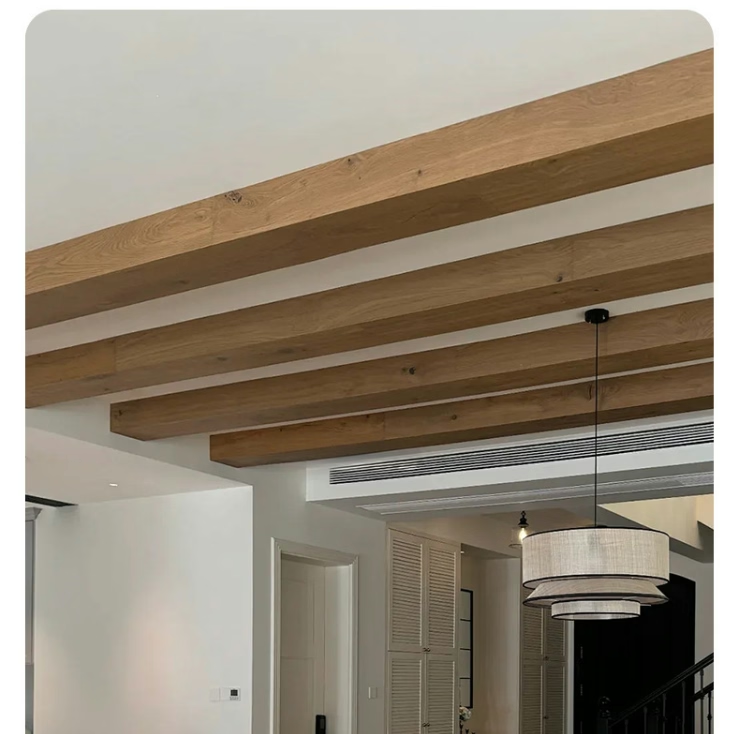
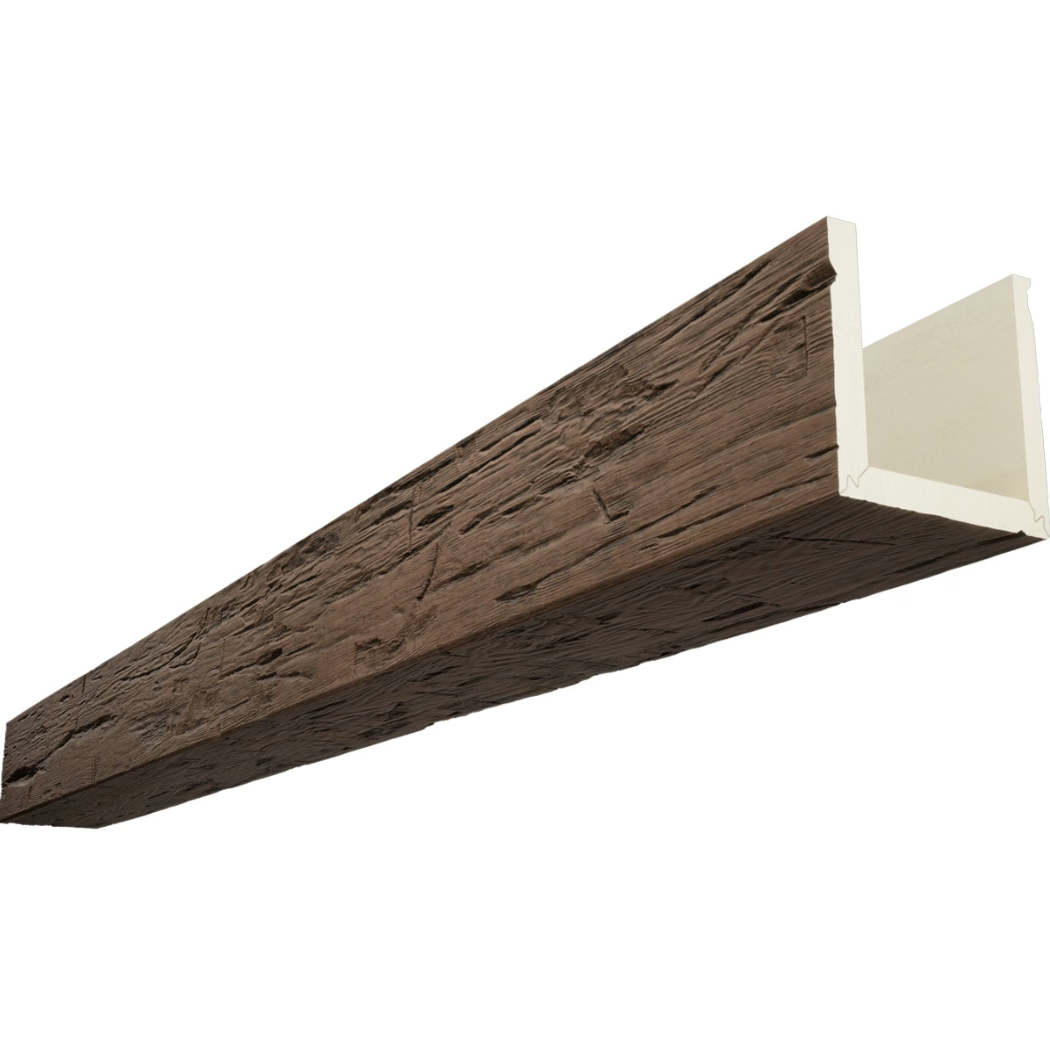
The construction industry has witnessed a quiet revolution in ceiling architectural elements, driven by materials that fundamentally alter the labor equation. Ultra-lightweight polyurethane faux beams have moved from novelty products to standard specification items in the portfolios of progressive contractors and design-build firms. The driving force behind this adoption is simple: these products reduce labor requirements by three-quarters while delivering aesthetic results that satisfy the most demanding clients.
General contractor David Morales tracks his project metrics religiously, and his records tell a compelling story. The average authentic timber beam installation in his commercial portfolio required 48 labor-hours per 100 square feet of coverage. His first polyurethane project came in at 12 hours for equivalent coverage, with the client unable to identify any visual difference in the completed space. That project generated three referrals and established his reputation for efficient ceiling transformations.
The Economics of Labor Reduction
Payroll expenses represent the largest variable cost in most construction operations. Materials costs fluctuate but remain relatively predictable; equipment expenses have defined useful lives and depreciation schedules. Labor, however, responds directly to project complexity, physical requirements, and timeline pressures. Every innovation that reduces labor intensity without compromising quality translates directly to improved margins and competitive positioning.
Lightweight beam technology addresses labor costs at every project phase. Material handling requires fewer workers and no specialized equipment. Installation proceeds faster with simpler attachment methods. Finishing work becomes unnecessary for factory-finished products. These cumulative efficiencies compound throughout the project lifecycle, creating savings that justify specification even before considering the other performance advantages.
Timeline compression produces additional economic benefits beyond direct labor reduction. Faster completion enables faster occupancy, whether the space is a retail store generating revenue, an office building housing productive employees, or a residential project reaching market. Owners increasingly understand that construction delays carry real costs beyond the invoice from contractors, and lightweight materials help minimize those delays.
The relationship between labor intensity and project risk affects contractor economics significantly. Heavy materials require more handling, and more handling creates more opportunities for injury, property damage, and quality defects. Lightweight materials reduce exposure across all three risk categories, potentially lowering insurance costs while improving workplace safety metrics.
Workforce Considerations and Labor Availability
The construction industry faces structural workforce challenges that lightweight materials help address. Aging tradespeople increasingly encounter physical limitations that make heavy material handling difficult or impossible. Rather than forcing senior workers toward retirement, contractors can deploy them on lightweight beam installations that accommodate reduced physical capacity while preserving their valuable skills and experience.
Labor market tightening in many regions has contractors competing for available workers. Projects that require heavy lifting, specialized equipment operation, and extensive physical labor attract a narrower candidate pool than equivalent work with lighter material requirements. Specifying lightweight beams expands the potential workforce for a project, potentially reducing labor sourcing challenges.
Training efficiency improves when workers master simpler installation sequences. Complex joinery, custom fastening systems, and physical manipulation of heavy materials all require practice and skill development. Lightweight beam installation reduces the skill threshold for competent performance, enabling faster progression from trainee to productive worker.
The physical toll on workers affects contractor profitability through turnover, injury claims, and workers' compensation expenses. Lightweight materials reduce the repetitive stress injuries, muscle strains, and back problems that plague workers who handle heavy materials daily. Contractors focused on workforce sustainability recognize this benefit as both ethical imperative and financial optimization.

Installation Workflow Optimization
Professional installation teams approach lightweight beam projects with workflows designed to maximize efficiency. Material staging in the work area eliminates unnecessary movement and handling. Pre-assembled bracket systems reduce field assembly time. Laser alignment tools speed positioning and verification. These workflow optimizations complement the inherent efficiency of lightweight materials.
Coordination with other trades proceeds more smoothly when ceiling work can complete quickly. Modern construction involves extensive trade coordination, with electricians, HVAC installers, and finish workers frequently working in overlapping sequences. Lightweight beam installations that complete in hours rather than days reduce collision points with other trades, minimizing the coordination friction that delays complex projects.
Quality control becomes more straightforward when installation proceeds quickly. Fewer working days mean fewer opportunities for environmental factors to affect work in progress. Temperature fluctuations, humidity changes, and dust accumulation create fewer quality risks for fast installations. The consistency of factory-finished polyurethane products also contributes to predictable quality outcomes.
Cleanup and site preparation integrate more easily with lightweight installation workflows. When installation completes in a single work session, the surrounding area remains relatively clean and undisturbed. Heavy timber installations that span multiple days accumulate debris, require ongoing site protection, and create ongoing logistical challenges that lightweight alternatives avoid.
Client Communication and Expectation Management
Professional contractors understand that client satisfaction depends on accurate expectation setting before projects begin. Lightweight beam technology enables conversations that emphasize value delivered rather than compromises accepted. The messaging shifts from explaining why faux looks as good as real to demonstrating why modern materials serve the project better than traditional alternatives.
Visual presentations and sample installations help clients understand the quality available in contemporary polyurethane products. Showroom visits, installed project photographs, and sample panels allow clients to evaluate appearance comprehensively before committing to specifications. This pre-commitment evaluation reduces post-installation satisfaction concerns and supports premium pricing for high-quality installations.
Timeline commitments become more reliable when installation efficiency improves. Clients who receive accurate completion date projections develop confidence in contractor capabilities. This reliability generates referrals and repeat business that more than compensates for any pricing premium that efficient operations might command.
Warranty discussions benefit from the documented longevity of quality polyurethane products. Contractors can offer warranty coverage that reflects the actual performance characteristics of materials rather than conservative estimates based on unfamiliarity. This warranty confidence enables premium positioning and differentiates professional installations from commodity offerings.

Technical Specifications and Load Considerations
Professional specification of lightweight beams requires understanding the engineering principles that govern ceiling installation. Load calculations, attachment spacing, and fastener selection all follow established principles adapted to the specific characteristics of polyurethane materials. Manufacturers provide technical documentation that supports accurate specification and code compliance.
Structural attachment requirements differ from authentic timber in important ways. Polyurethane's lower density means different withdrawal resistance for fasteners, different bending characteristics under load, and different response to environmental conditions. Professional installers understand these differences and specify accordingly, while avoiding the unsafe assumptions that treating polyurethane identically to timber would create.
Fire resistance ratings have become increasingly important in commercial specification. Quality polyurethane manufacturers offer products with various fire ratings, from standard formulations appropriate for most interior applications through fire-retardant treatments for demanding commercial occupancies. Understanding these ratings enables appropriate specification for specific project requirements.
Thermal expansion considerations affect long-term performance in exterior or semi-exterior applications. Professional installers account for the dimensional changes that temperature cycling produces, providing expansion joints and flexible attachment methods that accommodate movement without distress. This attention to thermal behavior distinguishes professional installations from amateur work.
Competitive Positioning Through Material Selection
Contractors who adopt lightweight beam technology gain competitive advantages that extend beyond individual project economics. Reputation for efficient, high-quality installation attracts clients who value those characteristics. Portfolio diversity increases when projects previously ruled out by weight or complexity become viable opportunities.
Marketing positioning that emphasizes innovation and efficiency resonates with design professionals and property owners aware of construction industry challenges. Projects specified with contemporary materials signal contractor sophistication and market awareness. This positioning supports premium pricing and attracts higher-quality client relationships.
Supplier relationships often provide additional value to contractors who specify consistently. Volume purchasing, technical support access, and specification assistance flow to contractors who represent significant or growing product categories. Polyurethane beam manufacturers increasingly offer these relationship benefits to contractors who become established specifiers.
Industry recognition through awards, publications, and professional association activities frequently follows demonstrated innovation. Contractors who pioneer new applications or achieve exceptional results with lightweight materials attract attention that translates to business development opportunities beyond any single project.
Future Outlook for Lightweight Construction Materials
The trajectory of lightweight construction materials points toward continued expansion and improvement. Manufacturing advances enable increasingly sophisticated products that push performance boundaries while reducing weight further. Specification professionals increasingly recognize these materials as legitimate options rather than compromises, expanding the market for lightweight beam applications.
Sustainability pressures drive adoption across all construction segments. Reduced transportation emissions, lower embodied energy, and extended service life all contribute to environmental performance that regulators and rating systems increasingly reward. Polyurethane beams positioned as sustainable choices benefit from this regulatory and market evolution.
Design evolution creates opportunities for materials that enable previously impossible architectural expressions. Complex geometries, large spans, and innovative forms become viable when weight constraints relax. Architects and designers who embrace these possibilities generate demand for products that support ambitious design visions.
The convergence of economic, environmental, and aesthetic factors suggests that lightweight beams will capture increasing market share from traditional alternatives. Contractors who develop expertise in these materials position themselves advantageously for the evolving construction marketplace, while those who resist the technology trend risk marginalization in a changing industry.

Technical References
ASTM standards cited in every specification
Test Data
Lab results from internal testing program
Updated 2026
Reviewed against current product specs