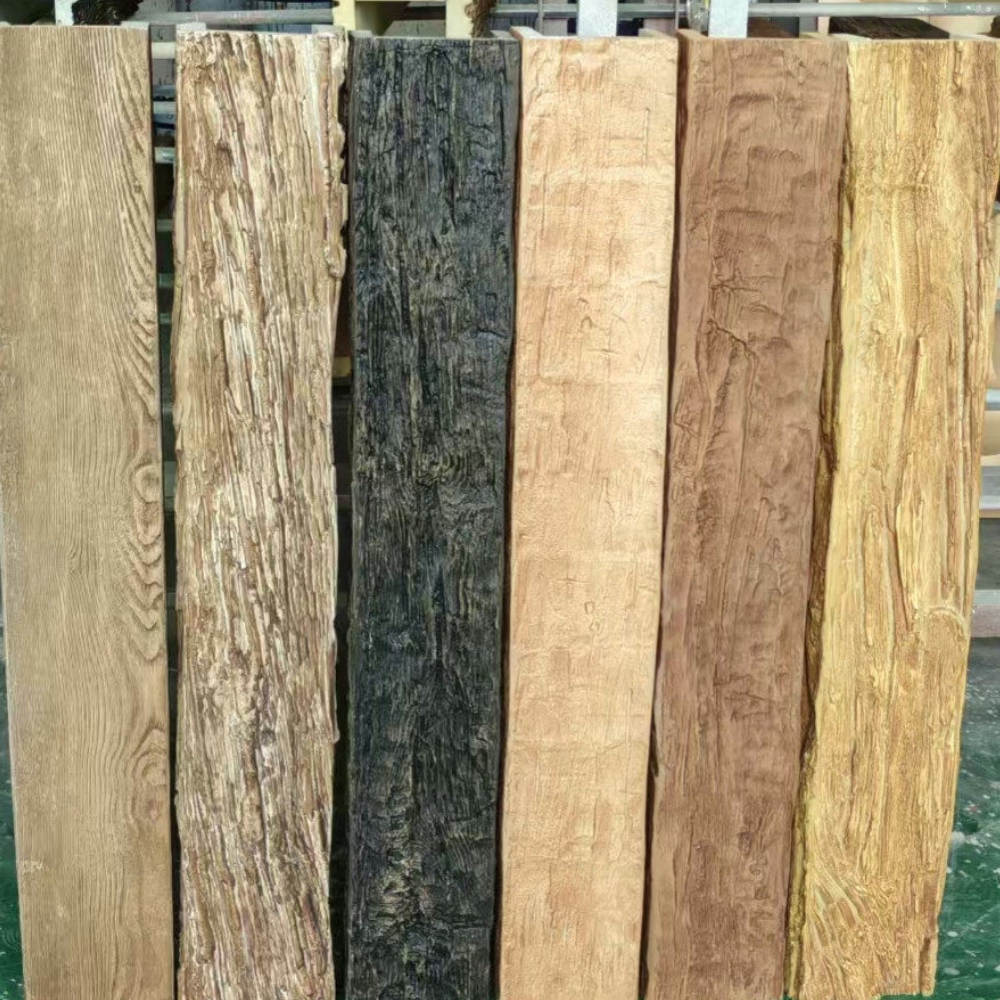
The authenticity question has followed faux wood products since their earliest commercial introductions. Initial generations of artificial wood clearly presented as imitations, with obvious plastic appearance, uniform coloring, and texture patterns that revealed their manufactured origins. Decades of development have transformed these obviously artificial products into materials that require close inspection and sometimes professional knowledge to distinguish from the genuine article.
Richard Huang, a custom home builder with thirty years of experience, recently completed a project where he specified polyurethane beams for the entire development. His original plan called for authentic reclaimed barn wood, but supply constraints and budget pressures led him to explore alternatives. He selected premium polyurethane products after examining samples from multiple manufacturers, and the completed homes have generated zero complaints from buyers who expected authentic timber. One buyer, upon learning the beams were polyurethane, expressed surprise that authentic wood was even being considered as an alternative.
The Evolution of Faux Wood Technology
Early attempts at wood replication relied on simple painting and texturing techniques that could not achieve convincing results. Plastic beams with wood-grain decals, foam products with roller-applied textures, and various composite materials all failed to capture authentic wood character. The fundamental limitation was understanding: manufacturers did not yet fully grasp the complex visual components that wood presents to human perception.
Modern manufacturing approaches began with detailed wood anatomy research that identified the specific visual elements requiring replication. High-resolution scanning captured grain patterns at resolutions that reveal growth ring variations, cellular structure, and seasonal density changes. This research base enabled mold-making techniques that preserved subtle details that earlier methods destroyed or ignored.
Surface texture development progressed through multiple generations of improvement. Initial molded textures captured gross patterns but lacked the microscopic detail that human vision processes subconsciously. Contemporary molds incorporate surface variations at multiple scales, from visible grain patterns through tactile texture down to the cellular level where individual wood fibers create distinctive surface character.
Color application techniques evolved alongside texture development. Where early products relied on uniform paint coatings that obviously differed from natural wood, modern systems employ multi-step coloring processes that replicate wood's complex color variation. Grain highlighting, tonal gradients, and subtle color shifts across growth rings create depth that uniform coatings cannot achieve.
Components of Authentic Wood Appearance
Grain pattern represents the most recognizable visual element of wood species identification. The alternating dense and less-dense zones that create visible grain lines result from anatomical changes between growing seasons. These patterns vary dramatically between species, from the tight, straight grain of maple through the dramatic cathedral patterns of oak to the interlocking irregular grain of walnut. Capturing these species-specific patterns requires detailed reference sampling and precision mold-making.
Color distribution within individual boards affects authenticity perception significantly. Natural wood rarely presents uniform coloring; instead, subtle tonal variations across growth rings and seasonal bands create visual complexity. The transition between earlywood and latewood zones often involves color shifts that add to the overall complexity. Quality faux beams incorporate these variations through careful color formulation and application techniques that replicate natural distribution patterns.
Knots and character marks contribute substantially to wood's visual interest. These features result from branch attachment, growth abnormalities, and environmental influences during tree development. Knots present complex visual patterns that include color variations, grain distortion, and sometimes checks or cracks that penetrate the surrounding wood. Premium faux beam molds capture these character marks with fidelity that matches their surrounding grain patterns.
End grain appearance differs significantly from longitudinal surfaces in authentic wood, creating the challenge of matching face and end surfaces in beam construction. Quality faux beams address this challenge through multi-step molding processes that create appropriately different textures for different surfaces while maintaining overall color consistency. This attention to surface-specific characteristics distinguishes premium products from budget alternatives.

Surface Texture Development and Replication
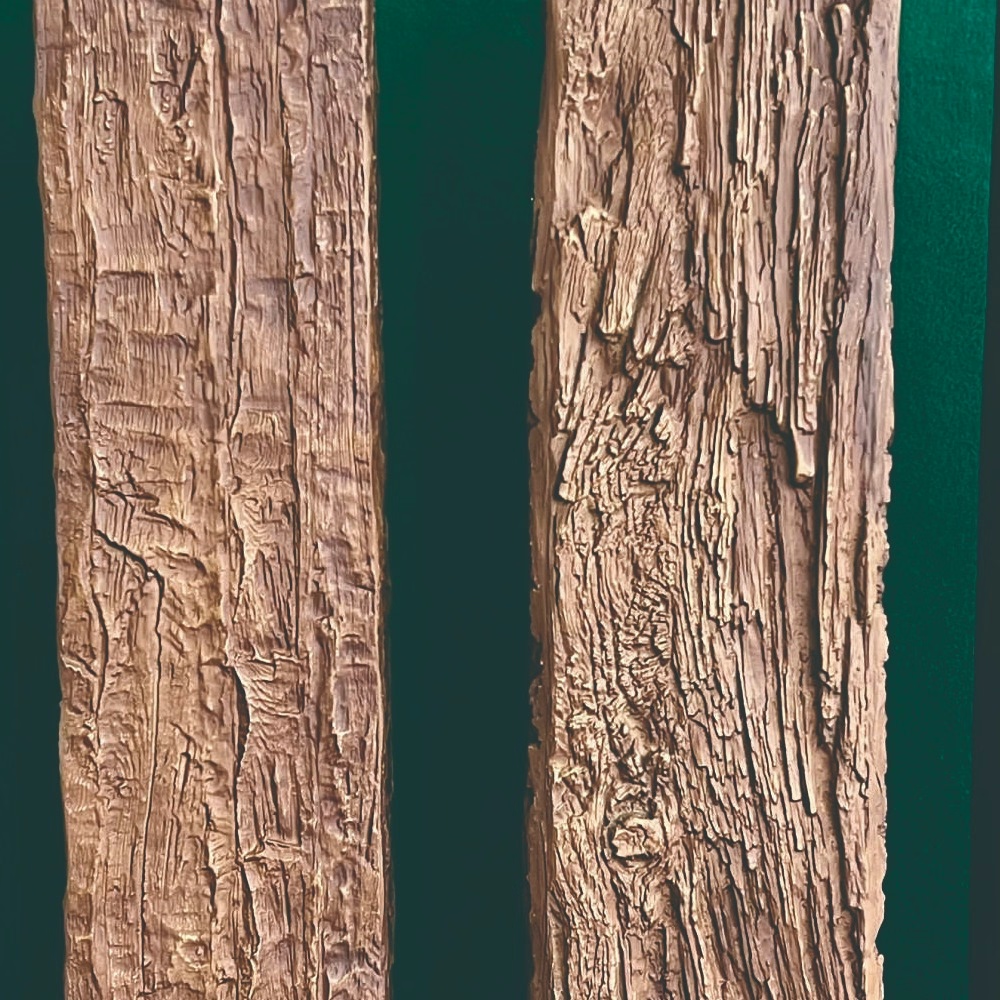
The tactile dimension of wood appearance affects perception as much as visual elements, though this dimension is often overlooked in faux product evaluation. Human fingers unconsciously process texture information that influences authenticity assessment, and surfaces that feel wrong can undermine otherwise excellent visual replication. Quality faux beams present textures that feel consistent with the species they represent.
Surface hardness variation within natural wood affects how finishes adhere and wear over time. Earlywood zones, with their larger, less-dense cells, typically absorb more finish and wear differently than dense latewood bands. This differential wear creates the subtle patina that distinguishes old wood from new. Faux beam surfaces can be formulated to replicate this varied hardness, producing more convincing appearance than uniform hardness alternatives.
Weathering patterns on aged wood present particular replication challenges. Exposure to sun, rain, and temperature cycling creates surface degradation that includes color change, surface checking, and texture modification. Reclaimed wood character requires these weathering patterns to appear authentic, and manufacturers have developed techniques for incorporating weathered appearance into their molds and finishing processes.
The interaction between texture and lighting creates visual effects that pure color matching cannot achieve. Directional lighting that reveals surface relief emphasizes texture variations, while flat lighting can flatten appearance significantly. Quality faux beams perform well under varied lighting conditions because their surface texture creates appropriate shadow patterns regardless of light direction.
Finish Systems and Application Quality
Factory finishing provides significant advantages over field finishing that affect both appearance and durability. Controlled manufacturing environments enable precise finish application that field conditions cannot match. Temperature, humidity, and dust levels all affect finish quality, and factory control of these variables produces more consistent results than job site finishing.
UV-stable finish formulations protect appearance in sun-exposed installations where natural wood would gradually change color. This UV resistance maintains original appearance for years without the refinishing that authentic timber requires in similar conditions. The extended finish life reduces maintenance requirements while preserving the appearance that justified beam specification in the first place.
Finish thickness affects both appearance and durability, with appropriate thickness varying by product and application. Too thin, and the finish fails to provide adequate protection; too thick, and the appearance becomes plastic and artificial. Quality manufacturers calibrate finish application to achieve optimal balance between protection and authenticity.
Edge and end finishing deserves particular attention in quality products. These surfaces present different cellular structures than face grain, and finish absorption differs accordingly. Professional manufacturers apply appropriate finishes to all surfaces, not just the visible face, ensuring that any surface exposed after cutting or installation presents consistent appearance.
Color Matching and Species Selection
Species selection should begin with reference sampling when projects involve existing wood elements. Matching new beams to existing wood requires accurate reference samples that enable color and texture matching. Large, flat reference pieces work better than small corners or irregular fragments. Professional manufacturers employ color matching technology that quantifies visual characteristics for precise replication.
Natural variation within species affects the range of acceptable color matching. Oak beams will not exactly match walnut beams, and even different boards of the same species present color variations. Acceptable matching involves defining acceptable deviation ranges that accommodate natural variation while ensuring visual harmony. Quality manufacturers provide guidance on appropriate matching tolerance for specific species and applications.
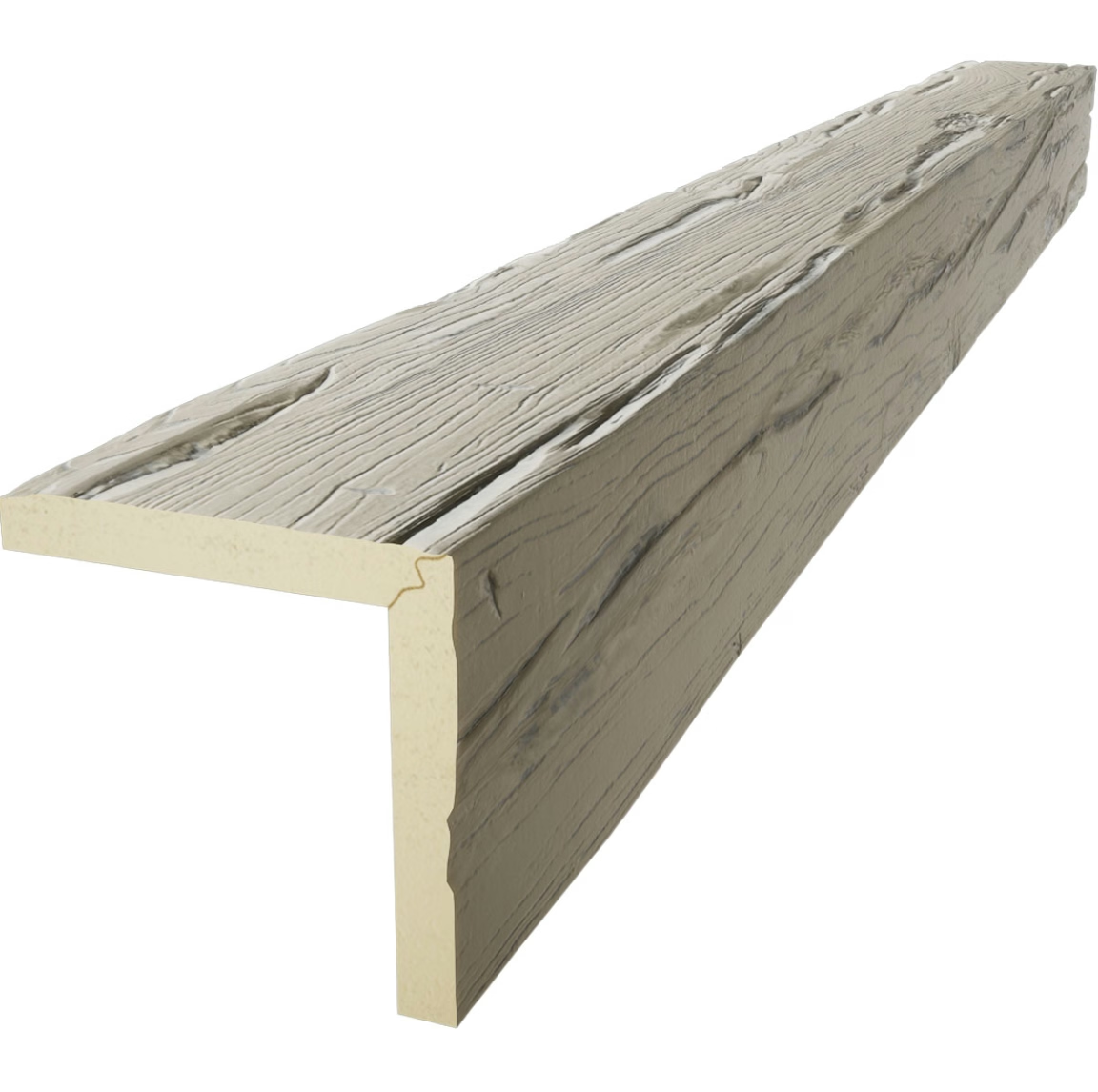
Custom color formulation extends beyond species replication to achieve specific design intentions. Contemporary interiors sometimes feature beams in colors that no natural wood presents, including whitewashed treatments, gray weathered finishes, and even bold accent colors. The flexibility of polyurethane finishing enables these custom colors while maintaining the realistic wood texture underneath.
Aging simulation creates the appearance of established installations without waiting for natural weathering to develop. This technique works particularly well in new construction where beams might otherwise appear too new compared to surrounding finishes. Factory-applied aging treatments create subtle color variations and surface patina that suggest years of service without compromising durability.
Long-Term Appearance and Maintenance
The appearance stability of quality polyurethane beams provides significant advantage over natural wood alternatives. Color consistency that remains stable over decades contrasts with natural wood's continued change throughout its service life. Property owners who specify authentic timber understand that their beams will continue changing, but many prefer the consistent appearance that polyurethane provides.
Surface maintenance for polyurethane beams involves simple cleaning that removes accumulated dust and contaminants. The non-porous surface rejects most staining materials while accepting cleaning with mild soap solutions. This cleanability supports long-term appearance maintenance that requires no special products or professional attention.
Repair capability for damaged surfaces enables restoration that maintains original appearance. Fine sandpaper removes surface scratches, and touch-up finish applications restore color and protection. This repairability contrasts with natural wood where damage often penetrates below refinishable depths, requiring replacement rather than repair.
Finish renewal becomes necessary less frequently for polyurethane than natural wood. The factory-applied finishes that coat quality products typically outlast any field-applied alternatives on natural wood, reducing the frequency of maintenance interventions. When renewal does become necessary, the process involves simple cleaning and possible reapplication of clear protective coating.
Professional Evaluation Techniques
Distinguishing quality faux beams from inferior products requires understanding what differentiates premium manufacturing from budget production. Surface texture resolution provides immediate evidence of manufacturing investment, with premium products presenting detail visible under close inspection while budget products reveal their limitations when examined carefully.
Density consistency throughout the beam cross-section indicates quality manufacturing processes. Variations in density, which may be visible or only detectable through testing, affect fastener holding, impact resistance, and dimensional stability. Professional manufacturers maintain quality control that ensures consistent density throughout production.
Finish adhesion testing provides additional quality evidence. Adhesion failure, where finish separates from the substrate, indicates formulation or application problems that will affect long-term appearance. Professional manufacturers test adhesion as part of quality control, and many provide adhesion warranty that reflects their confidence in formulation quality.
Warranty coverage reflects manufacturer assessment of product performance. Extended warranty periods suggest confidence in long-term durability, while limited coverage may indicate uncertainty about product performance. Quality products typically carry warranties of 10 years or more, with premium products sometimes featuring lifetime coverage.
Economic Considerations and Value Assessment
The true cost comparison between faux and authentic wood requires comprehensive analysis that extends beyond material unit prices. Authentic timber involves not just higher material costs but additional expenses for structural support, specialized installation, and ongoing maintenance. Faux beams eliminate most of these additional costs, often resulting in lower total project cost despite potentially higher material prices.
Long-term value favors quality polyurethane beams in most applications. The durability that provides decades of maintenance-free service contrasts with natural wood's periodic refinishing, repair, and eventual replacement requirements. Lifecycle cost analysis typically favors polyurethane when all factors are properly accounted.
Resale value considerations affect property owner decisions. The aesthetic enhancement that authentic-looking beams provide adds perceivable value to properties, whether those beams are authentic or faux. Homebuyers appreciate the character that beams add, rarely questioning the material composition. The source of that character matters less than its presence for most buyers.
Design flexibility benefits favor polyurethane in many applications. The ability to specify custom profiles, colors, and configurations enables design intentions that authentic timber's limitations might prevent. Projects where timber would require compromise often achieve their full design vision through polyurethane specification.

Technical References
ASTM standards cited in every specification
Test Data
Lab results from internal testing program
Updated 2026
Reviewed against current product specs