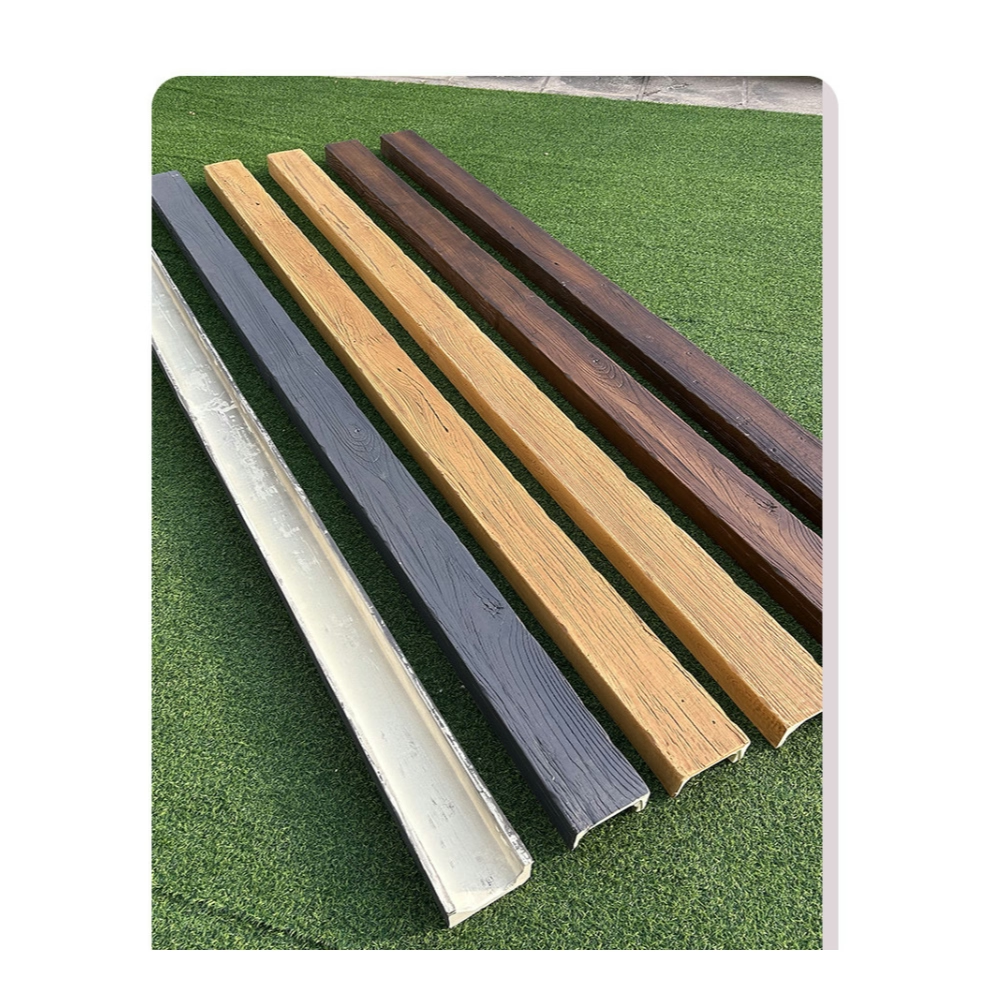
There's something deeply satisfying about creating exactly what you envisioned rather than accepting approximations that others determined. In home design, this desire for authenticity drives many choices—from selecting specific paint colors to hunting for vintage fixtures that match period aesthetics. Unfinished raw grain PU faux ceiling beams speak directly to this creative impulse, providing surfaces that carry authentic wood character ready to receive whatever treatment your imagination suggests.
The Character of Raw Grain Surfaces
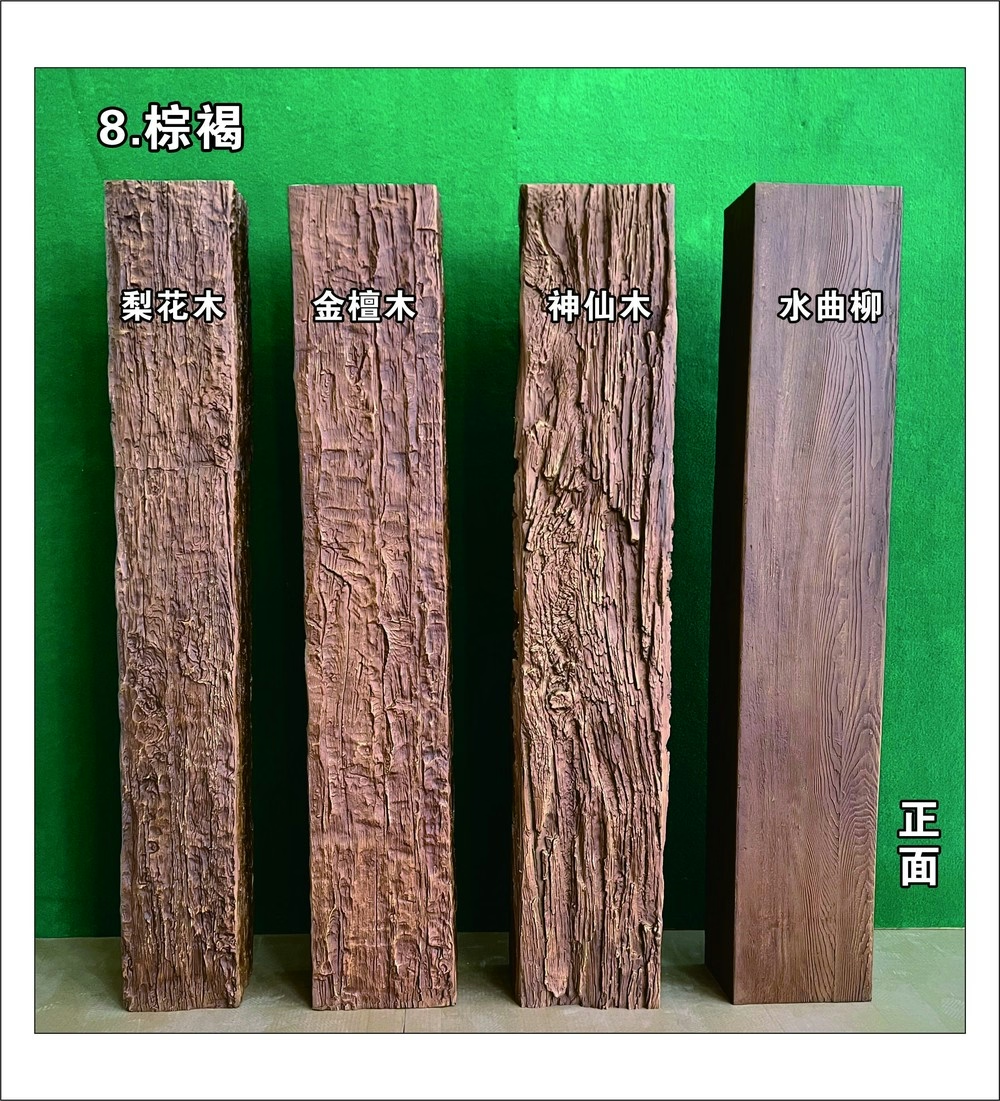
Unlike smooth blanks that provide neutral canvases, raw grain surfaces arrive bearing texture already shaped by careful manufacturing processes. These textures don't emerge from random chance but from deliberate engineering that studies how natural wood ages, weathers, and develops character over time. The result is a surface that communicates authenticity even before any finishing work begins.
The grain patterns themselves follow authentic wood conventions. Whether the intended final appearance involves clean contemporary treatments or heavily distressed rustic aesthetics, the underlying grain structure provides realistic foundation. Subtle variations in pattern density, occasional featured marks, and natural flow that guides the eye along the beam length all contribute to convincing wood character.
Surface depth in raw grain products exceeds what smooth alternatives provide. The dimensional quality creates visual interest that responds to changing light throughout the day. Morning sun rakes across grain patterns differently than afternoon illumination; evening lighting creates entirely different effects. This dynamic quality keeps installations interesting over time rather than appearing static and unchanging.
Preparing Raw Grain for Finishing Work
Raw grain surfaces require thoughtful preparation that respects rather than removes the carefully created texture. The goal is ensuring finish adhesion without stripping away the character that makes these products distinctive.
Assessment begins with examining grain depth and configuration. Some raw grain products feature subtle textures suitable for relatively smooth finishes; others present dramatic patterns intended for heavily styled treatments. Understanding where a particular product falls on this spectrum guides appropriate technique selection.
Cleaning raw grain requires attention to crevices where dust and contamination accumulate. Compressed air, soft brushes, and careful wiping access the complex topography that flat surfaces lack. Taking time on this phase prevents adhesion failures that manifest later when finishes begin peeling or flaking.
Testing finishing approaches on sample areas before committing to complete beams identifies potential problems early. The interaction between specific products and raw grain textures can vary; what works beautifully on one product might underperform on another with different characteristics. Small test areas in inconspicuous locations reveal these variations before they become visible problems.

Stain Application on Grain Textures
Stain on textured grain creates effects that smooth surfaces simply cannot achieve. The way color pools in valleys, builds on ridges, and varies with grain direction produces visual complexity that approaches genuine wood variation. Achieving these effects consistently requires understanding how grain orientation affects application technique.
Application direction matters for textured surfaces. Wiping or brushing along grain direction produces different results than working across grain. Some effects benefit from directional application; others require working at angles to ensure even coverage across the dimensional surface. Experimenting with scrap pieces or test areas reveals how specific stains behave before committing to final application.
Buildup control proves essential because textured surfaces have more surface area than flat equivalents of the same dimensions. What would be adequate coverage on smooth surfaces might appear under-applied on textured products. Multiple thin coats typically produce better control than attempting to achieve final color depth in single applications.
Sealing textured stained surfaces requires attention to reaching into crevices that might otherwise receive inadequate coverage. Spray application often succeeds better than brush application for complex textures, ensuring that sealer reaches all surfaces regardless of their orientation. The goal is complete coverage that protects the entire textured surface uniformly.

Paint Treatments for Grain Textures
Paint on grain textures can emphasize or subdue the underlying character depending on technique choices. The textured surface provides opportunities for visual interest that smooth paint finishes would obscure entirely.
Light paint applications that allow grain to show through create the effect of aged, weathered wood that has been painted many times over years. This approach works particularly well in cottage, farmhouse, and coastal aesthetics where some age and character are desirable. The key is controlling opacity so that underlying texture remains visible without appearing dirty or inconsistent.
Heavy paint applications that fill grain texture produce smooth painted appearances appropriate for contemporary spaces. This requires either products with shallow texture to begin with or willingness to sand between coats to level the surface progressively. The result resembles painted wood trim rather than natural grain, appropriate for modern interiors where rustic character would seem out of place.
Strategic distressing after painting reveals grain character selectively. Rather than committing to either full coverage or full visibility, selective distressing creates effects that appear naturally aged. High points and edges wear first, revealing grain in patterns that look authentic rather than deliberately created.
Advanced Custom Finishing Techniques
Beyond basic paint and stain, raw grain surfaces accommodate advanced techniques that skilled finishers have developed for achieving specific effects.
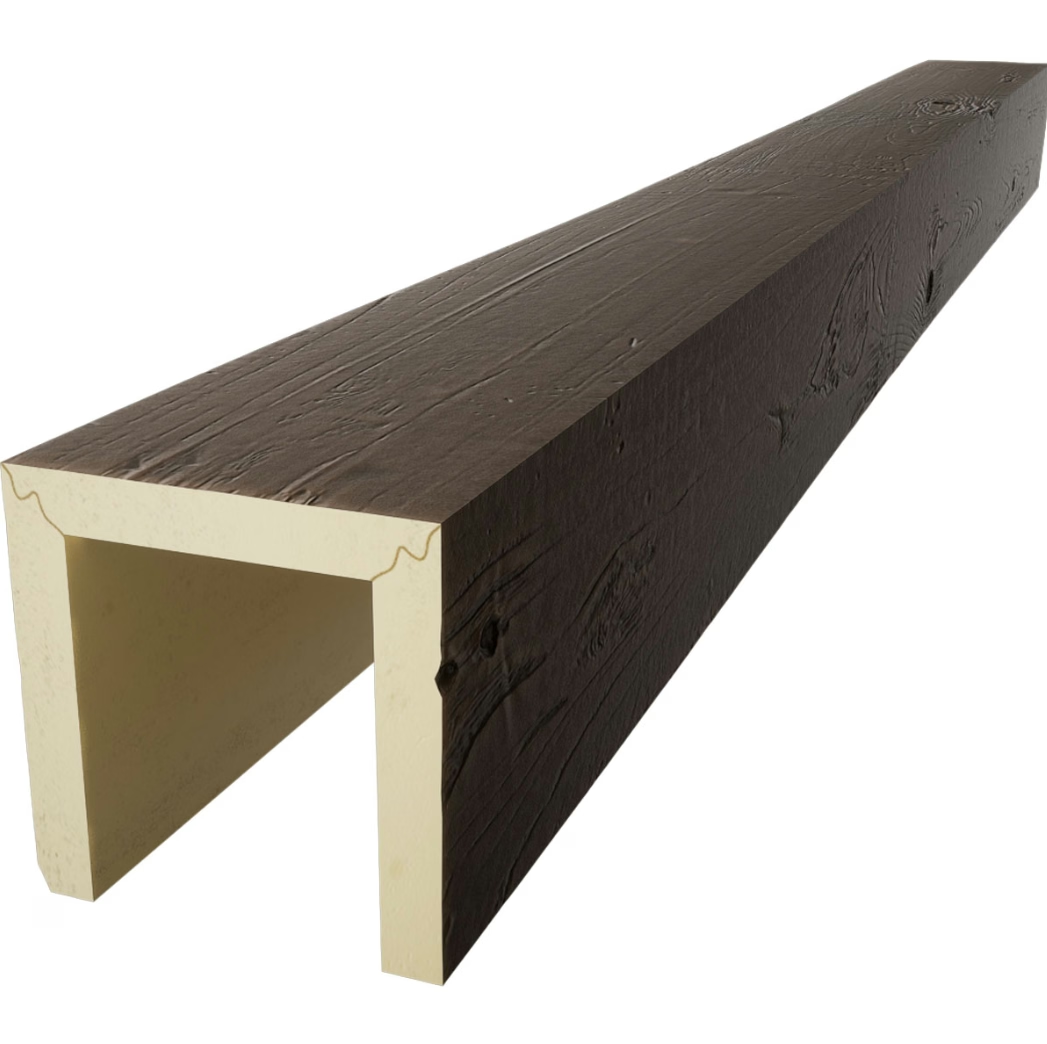
Multi-layer color building creates depth that single-color application cannot achieve. Base colors, mid-tones, and highlights applied in sequence create dimensional interest that reads as authenticity. Each layer might emphasize different aspects of the grain texture, revealing new visual dimensions as viewing angle and lighting change.
Glaze and patina techniques add aging effects that pure paint application lacks. Green patina suggesting copper exposure, amber tones implying years of tobacco smoke, gray weathering indicating sun and rain exposure—all can be simulated through glaze techniques that raw grain surfaces accept readily. These treatments add narrative quality that makes beams appear to carry history.
Specialty effects including crackle finishes, metallic accents, and texture-modifying compounds extend creative possibilities further. Raw grain surfaces provide appropriate foundation for these treatments because their dimensional quality accepts layered applications without appearing artificial. The skilled application of such techniques produces results that distinguish custom work from ordinary finishes.
Protecting Custom Finished Beams
Whatever finishing approach produces the desired appearance, appropriate protection ensures that the investment of time and creativity maintains its value over years of service. Ceiling installations face exposure to light, dust, occasional cleaning, and environmental humidity variations—all of which can affect finished surfaces without adequate protection.
Film-forming finishes provide the most durable protection for heavily used surfaces. These coatings create protective barriers that resist scratches, moisture, and cleaning chemicals. The tradeoff involves some reduction in the natural appearance that raw grain finishes often seek to achieve; higher durability typically means more visible coating.
Penetrating finishes preserve natural appearance more successfully while still providing meaningful protection. These products soak into surfaces rather than building on top, maintaining the tactile quality that characterizes raw grain work. Less durable than film-forming alternatives, penetrating finishes nonetheless provide adequate protection for typical ceiling installations where physical contact remains minimal.
Technical References
ASTM standards cited in every specification
Test Data
Lab results from internal testing program
Updated 2026
Reviewed against current product specs