Design professionals understand that achieving visual harmony requires controlling variables wherever possible. When authentic timber enters a project, its natural variations—beautiful as they may be—introduce unpredictability that can undermine carefully planned aesthetics. A project calling for clean, consistent contemporary style often benefits from the reliability that uniform PU faux beams provide. These products deliver wood's warmth and character without the design risk that natural material variation inevitably carries.
The Case for Consistency in Design
Professional interior design relies on predictable outcomes that satisfy client expectations and meet project specifications. When designers specify particular finishes, colors, or textures, they expect installed products to match those specifications closely. Natural wood's inherent variability makes this certainty impossible—a specimen chosen for its grain character may differ substantially from the material ultimately delivered to the jobsite.
Hospitality brands exemplify the consistency imperative. Chain hotels, restaurants, and retail locations require finishes that maintain brand identity across multiple properties and renovation cycles. A design element that varies unpredictably between installations undermines brand consistency that these organizations work hard to establish and maintain. Uniform faux beams support these requirements by providing identical appearance in every unit produced.
Real estate staging and rental properties present similar challenges. Staged homes need to present particular aesthetics that appeal to target buyers; rental properties benefit from coordinated appearance that suggests quality and care. Uniform beams contribute to these goals without requiring the grading, selection, and potentially expensive rejection of natural wood pieces that achieve similar consistency.
Manufacturing Consistency in PU Beam Production
Quality manufacturers achieve consistency through production processes designed for reproducibility. Every aspect of the manufacturing operation—from compound mixing to molding to finishing—follows specifications that ensure each unit resembles every other unit from the same product line.
Raw material consistency provides the foundation. Polyurethane chemistry depends on precise ratios of components; variations in these ratios affect density, surface quality, and finishing characteristics. Reputable manufacturers source materials consistently and test incoming lots to verify they meet requirements before incorporating them into production.
Mold maintenance directly affects product consistency. Worn molds produce parts with degraded detail and altered dimensions. Preventive maintenance programs replace or refurbish molds before they exceed acceptable wear limits. This investment in tooling ensures that products manufactured months or years apart remain visually and dimensionally consistent.
Color matching between production batches requires careful process control. Pigment dispersion, concentration, and distribution all influence final color. Spectrophotometric quality control verifies that colors fall within specified tolerances before products ship. The result is confidence that new orders will match existing inventory closely enough for seamless integration.
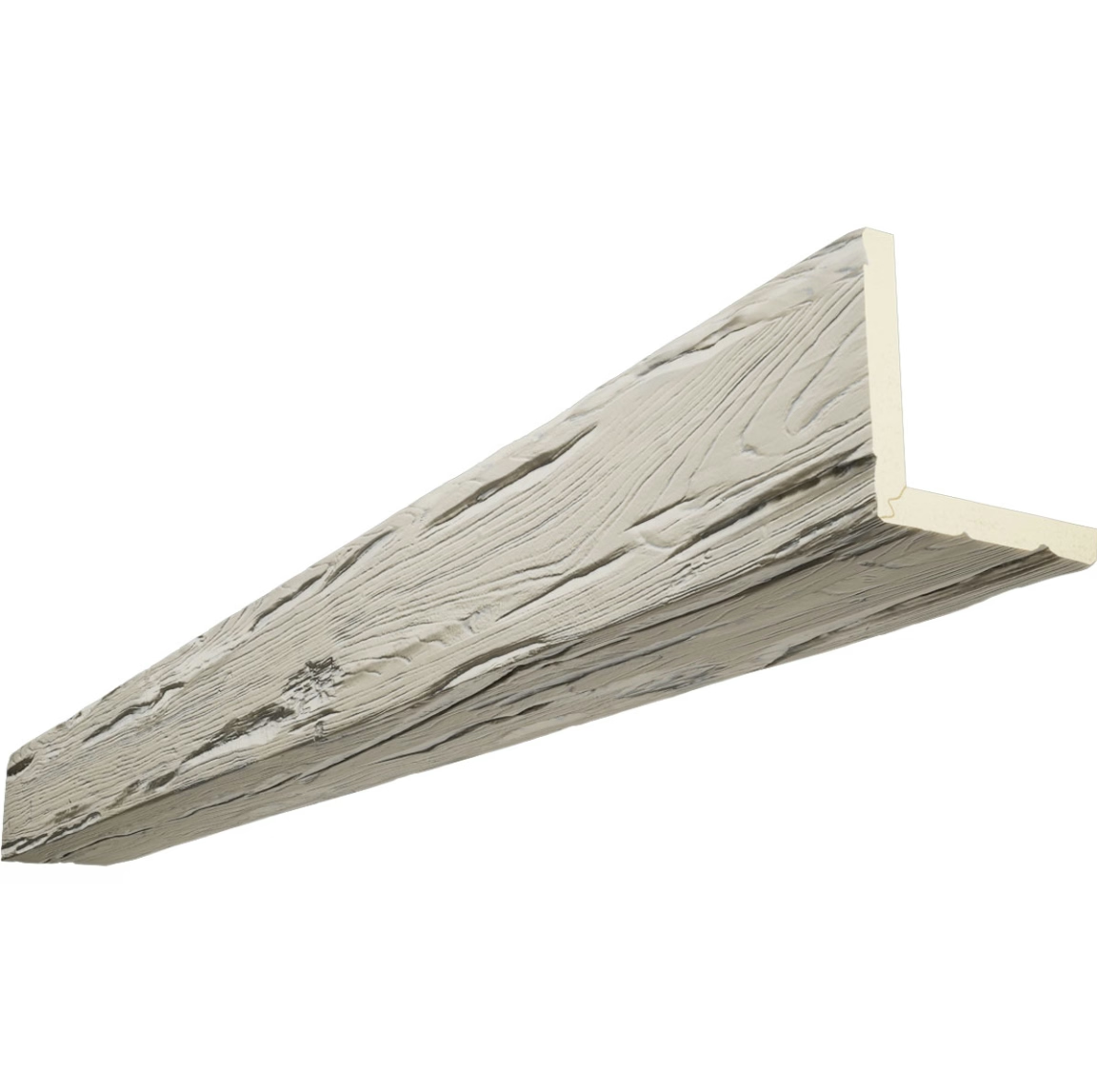
Design Applications Requiring Uniformity
Certain project types benefit more directly from uniform beam aesthetics than others. Understanding these applications helps designers recognize opportunities where consistent faux beams provide meaningful advantages.
Open floor plans with multiple identical beam installations particularly suit uniform products. When beams appear repeatedly across a space or throughout a property, inconsistency between pieces becomes immediately obvious. Uniform beams create the intended repetition without requiring costly selection and matching of natural pieces.
Contemporary and modern design styles often prioritize clean, consistent aesthetics that deliberately avoid the character marks and variations associated with rustic or traditional styles. Uniform faux beams support these minimalist approaches by providing smooth, predictable appearance that contemporary interiors demand.
Multi-unit residential and commercial developments benefit from the coordination that uniform products provide. Condominium complexes, apartment buildings, and office parks frequently feature similar beam installations across multiple units. Consistency ensures that residents or tenants experience the same quality regardless of which unit they occupy.

Balancing Consistency with Authenticity
Achieving consistency need not mean sacrificing all the character that wood aesthetics provide. Quality uniform faux beams still carry convincing wood grain patterns, appropriate texturing, and natural colorations—they simply maintain these characteristics predictably rather than varying randomly.
Grain pattern selection during product development determines what consistency looks like. Manufacturers can choose grain patterns that remain interesting and authentic while maintaining reproducible characteristics. The goal is wood-like rather than wood-identical; viewers should recognize the aesthetic reference without necessarily perceiving exact natural wood replication.
Texture depth and distribution can be standardized while retaining visual interest. Subtle variations within specified tolerances create natural-feeling surfaces without compromising the overall consistency that design applications require. The skilled balancing of these factors distinguishes premium products from lesser alternatives.
Lighting conditions affect how visible consistency becomes. Strong directional lighting emphasizes surface variations; diffuse ambient lighting tends to minimize them. Designers specifying uniform beams for challenging lighting conditions might request samples and review them under lighting similar to intended installation conditions.
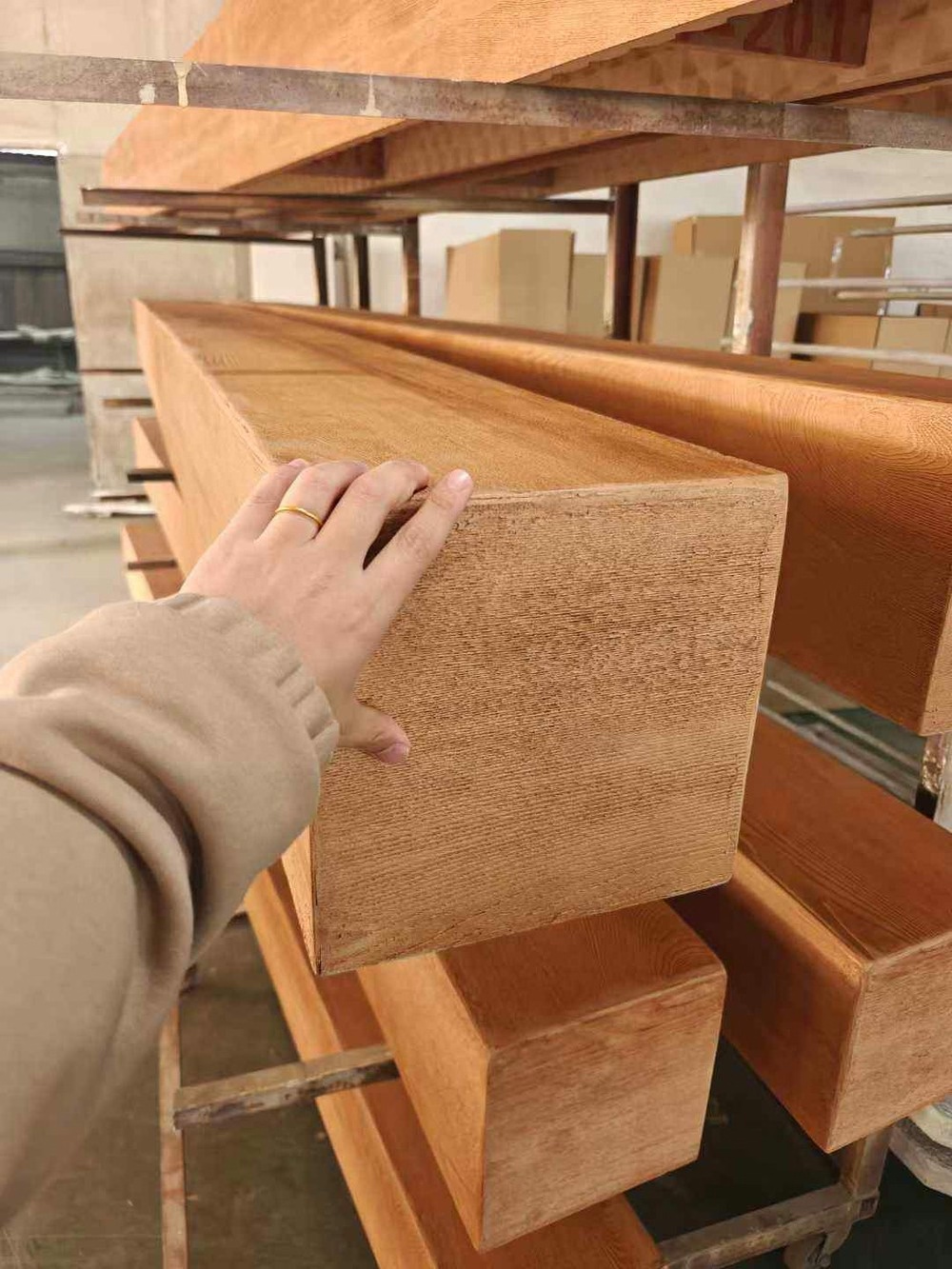
Supply Chain Benefits of Uniform Products
Consistency advantages extend beyond aesthetics into practical supply chain considerations that affect project economics and logistics.
Reorder certainty simplifies project planning for phased installations or future renovations. When beams from a new order match existing installations, designers can specify products by catalog number rather than attempting to match samples from previous purchases. This reproducibility reduces project uncertainty and potential delays.
Inventory management benefits commercial users who stock faux beams for ongoing projects or tenant improvements. Uniform products simplify inventory tracking because any piece can substitute for any other from the same product line. This interchangeability reduces waste from damaged or obsolete stock.
Replacement and repair become straightforward when uniform products are available. A damaged beam can be replaced with an identical unit that integrates seamlessly with surrounding installation. Natural wood would require finding matching pieces or accepting visual disruption; uniform faux beams eliminate this complication entirely.
Selecting Quality Uniform Beam Products
Not all products marketed as uniform actually deliver the consistency that professional applications require. Evaluating uniformity requires examining multiple pieces from the same product to verify meaningful similarity.
Side-by-side comparison reveals variations that single-piece inspection might miss. Color, grain pattern, and surface texture should remain consistent across pieces observed together. Significant variations indicate manufacturing process limitations that might affect real project results.
Requesting samples from current production runs verifies that available inventory matches specification. Products manufactured months earlier might have aged differently or come from different production batches. Current-production samples confirm what will actually ship.
Documentation regarding manufacturing processes and quality control measures provides additional confidence. Manufacturers committed to consistency typically document their approaches and stand behind their products with meaningful warranties. This commitment reflects actual investment in the processes that produce reliable results.
Technical References
ASTM standards cited in every specification
Test Data
Lab results from internal testing program
Updated 2026
Reviewed against current product specs


